

Listen to this podcast in the app for free: Download for free in the App Store
radio.net
Sleep timer
Save favorites
2856 episodes
Ep. 1991: Seven Questions, Clear Answers
10/02/2026 | 24 mins.Seven listeners bring seven practical money decisions, and Don moves through them without the usual detours. He compares ETFs with mutual funds, untangles realistic stock returns and retirement withdrawal rates, and explains where a short-term bond fund may fit.
Then he tackles the tax tail on an expensive legacy fund, why reverse-mortgage proceeds should stay safe, the real job of emergency savings, and what to have ready for a free advisor conversation.
2:13 ETFs vs. mutual funds
4:56 Real returns and retirement withdrawals
9:37 Short-term bonds as dry powder
10:56 Taxes versus an expensive legacy fund
14:15 Reverse-mortgage cash
16:54 Emergency savings
18:44 Preparing for an advisor meeting
Questions? Comments? Click!Ep. 1990: Luck Isn’t Skill
10/01/2026 | 33 mins.One lucky streak can feel like investing genius—but anecdotes are not evidence. Don and Tom examine leveraged ETFs such as TQQQ, the brutal losses leverage can magnify, and why surviving a good run does not prove a strategy is sound. They answer a federal employee’s question about the TSP C, S, and I funds, explaining why a favorable 2003–2025 backtest cannot tell us what comes next and why diversification is still about reducing concentration risk. Then they dissect slick “hybrid pension” annuity pitches and the difference between a withdrawal rate and an investment return. Finally, they look at the other side of higher interest rates: better yields for savers, CDs, Treasuries, and broad bond funds—while reminding investors that fixed income’s main job is relative stability. 0:42 Luck, anecdotes, and leveraged ETFs 12:51 Why a winning backtest can mislead 19:32 The truth behind hybrid pension annuities 25:09 Higher rates, savers, and bond stability
Questions? Comments? Click!Ep. 1989: Two Clocks, One Plan
09/30/2026 | 34 mins.Retirement planning becomes a two-clock problem when spouses are a decade or more apart in age. Don and Tom explain why one household may need to fund two timelines—and why healthcare, Social Security timing, survivor taxes, and account ownership deserve extra attention. The older, higher-earning spouse may need to delay Social Security to age 70 to protect the younger survivor. A strong plan also models the household after one spouse dies, when income and filing status can change abruptly. Listener questions examine unusual model portfolios, rules-based versus discretionary fund management, and an expensive indexed annuity sold to an 81-year-old. The recurring lesson is simple: sound planning beats clever complexity. 0:49 The two-clock retirement problem 4:28 Healthcare and Social Security timing 7:12 The widow's tax and survivor planning 11:37 Portfolio backtests and the Golden Butterfly 19:02 Is rules-based investing active? 23:51 An unsuitable annuity sale
Questions? Comments? Click!Ep. 1988: The Guarantee Mirage
09/29/2026 | 37 mins.Don and Tom examine the promises behind fixed, indexed, and immediate annuities—and why the word ‘guaranteed’ deserves closer scrutiny. They explain how insurers invest policyholder money, what state guaranty pools actually cover, and why complexity can hide both cost and risk. Listener questions cover when to claim Social Security, how delaying benefits can protect a surviving spouse, the interaction between Social Security COLAs and Medicare Part B premiums, and where TIPS may—or may not—belong in a portfolio. 0:58 Insurance Annuity Concerns 6:56 Annuity Guarantees Questioned 10:27 What Annuities Really Guarantee 16:07 Bridge, Banter, and Listener Mail 18:32 Social Security Timing Advice 24:04 Social Security and Medicare Costs 29:31 TIPS and Inflation Protection 35:13 Free Advisor Help
Questions? Comments? Click!Ep. 1987: The Fee Machine
09/28/2026 | 31 mins.Higher fees do not buy higher returns. Don and Tom unpack the fee-to-risk/reward ratio, show how fund costs compound against investors, and compare low-cost index funds with expensive active funds, hedge funds, and private equity.
Then they answer listener questions about converting Vanguard mutual funds to ETFs without triggering taxes, leaving a home to a stepson while preserving the step-up in basis, and spotting financial articles that are really advertisements in disguise.
3:22 The fee-to-risk/reward ratio
9:15 Hedge funds and private equity
13:19 How much is too much to pay
16:05 Converting Vanguard mutual funds to ETFs
17:38 Leaving a home to a stepson
19:53 When financial advice is an advertisement
Questions? Comments? Click!
More Business podcasts
 Young and Profiting (YAP) with Hala Taha: Entrepreneurship and Self-Improvement PodcastBusiness, Entrepreneurship
 The Diary Of A CEO with Steven BartlettBusiness, Education, Society & Culture
 REAL AF with Andy FrisellaBusiness, Entrepreneurship, Marketing
 the bossbabe podcastBusiness, Education, Entrepreneurship, Self-Improvement
 Habits and HustleBusiness, Education, Entrepreneurship, Health & Wellness, Self-Improvement
 Unblinded with Sean CallagyBusiness, Education, News, Sports, Sports News
 Proven PodcastBusiness, Entrepreneurship
 Coffeez with Joe ShalabyBusiness, Careers, Entrepreneurship, Management
 The Level Up Podcast w/ Paul AlexBusiness, Education, Entrepreneurship, Self-Improvement
 Founder's StoryBusiness, Entrepreneurship
Trending Business podcasts
 The Real Eisman PlaybookBusiness, Investing
 Thriving Minds with Alberto ZandiBusiness, Education, Entrepreneurship, Personal Journals, Self-Improvement, Society & Culture
 Heartbeat For Hire with Lyndsay DowdBusiness, Management
 The Tim Ferriss ShowBusiness, Entrepreneurship
 The Next-Level PaycheckBusiness, Careers
 UnhedgedBusiness, Business News, Investing, News
 Embracing Marketing MistakesBusiness, Entrepreneurship, Management, Marketing
 One Part Lion - One Part Lamb with Stephen ScogginsBusiness, Education, Entrepreneurship, Health & Wellness, Mental Health, Religion, Religion & Spirituality, Self-Improvement
 Coffee N° 5 with Lara SchmoismanBusiness, Entrepreneurship, Society & Culture
 The Story of MoneyBusiness, Business News, Education, History, News, Society & Culture
 Hometown JaxBusiness, Careers, Entrepreneurship, Personal Journals, Society & Culture
 Tax Rep Network with Eric GreenBusiness, Management
 PropertyTalesBusiness, Comedy, Comedy Interviews, Investing, Management
 Slate MoneyBusiness, Investing
 Do Good To Lead Well with Craig DowdenBusiness, Management
 The Ramsey Show HighlightsBusiness, Education, Investing, Self-Improvement
 Team Lead TalksBusiness, Entrepreneurship
 Smart Money Happy Hour with Rachel Cruze and George KamelBusiness
About Talking Real Money - Investing Talk
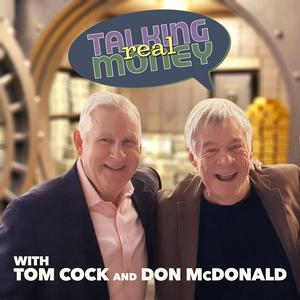
Financial talk radio veteran, Don McDonald and former host of Serious Money on PBS, Tom Cock, join forces to talk about real money issues. In each episode, they solve real money problems, dole out real investing (not speculating) advice, and really explain the financial issues that effect all of us. Plus, it's actually fun! Talking Real Money is a podcast designed to provide the real help we all need to enjoy a really great future. Call in with your questions anytime at 855-935-TALK (8255).
Podcast websiteListen to Talking Real Money - Investing Talk, Young and Profiting (YAP) with Hala Taha: Entrepreneurship and Self-Improvement Podcast and many other podcasts from around the world with the radio.net app
Get the free radio.net app
- Stations and podcasts to bookmark
- Stream via Wi-Fi or Bluetooth
- Supports Carplay & Android Auto
- Many other app features
Get the free radio.net app
- Stations and podcasts to bookmark
- Stream via Wi-Fi or Bluetooth
- Supports Carplay & Android Auto
- Many other app features

Talking Real Money - Investing Talk
Scan code,
download the app,
start listening.
download the app,
start listening.
Talking Real Money - Investing Talk: Podcasts in Family
 USA
USA