
Listen to this podcast in the app for free: Download for free in the App Store
radio.net
Sleep timer
Save favorites
394 episodes
Franchise Insider: The Quiet Millionaires Nobody Talks About (And How They Did It) | Ep. 460 with Alex Smereczniak CEO of Franzy
10/26/2026 | 32 mins.Daniel sits down with Alex Smereczniak to explore why franchising may be a more practical path to entrepreneurship than starting a company from scratch. Alex shares how his college laundry business led him into franchising and how everyday business owners are quietly building substantial wealth through multiple locations, acquisitions, and proven operating systems.
The conversation also explores which franchises offer attractive opportunities, how to finance acquisitions without putting all your savings at risk, why some franchisees fail, and how Franzy is making it easier for aspiring entrepreneurs to compare opportunities and understand the economics before investing.
Key Discussion Points
Franchising versus starting from scratch: Alex explains why the right path depends on personality, risk tolerance, and financial goals. Franchising offers structure and an established playbook, while independent startups give founders greater freedom but require them to figure everything out themselves.
How ordinary people build $100 million franchise portfolios: Alex shares examples of multi-unit operators who have quietly built businesses generating over $100 million in annual revenue by buying additional locations, expanding into multiple brands, and using acquisitions to scale.
Buying franchises without paying everything upfront: Alex explains seller financing, SBA loans, outside investors, and franchise roll-ups. He shares the example of an operator who acquired approximately 30 additional Midas locations through seller financing without borrowing from a bank.
The best and worst franchises to consider: Alex highlights moving companies, garage renovation businesses, and other home services as attractive categories with relatively accessible startup costs. He also warns about expensive, unproven food concepts, questionable franchise operators, unfavorable royalties, and buyers who fail to investigate unit economics.
Why franchise ownership is not passive income: Alex explains the difference between actively operating a franchise, gradually training management, and eventually building a business that runs without daily owner involvement. He shares how his own PopUp Bagels expansion uses an operating partner and outside capital to support multi-unit growth.
Building Franzy and democratizing business ownership: Alex discusses the lack of transparency in traditional franchise brokerage, how Franzy helps buyers compare brands and evaluate opportunities, and his mission to help one million people become entrepreneurs.
Takeaways
You don't have to invent the next billion-dollar startup to become wealthy. Alex believes franchising offers a practical path to ownership for people who want to run a business but don't necessarily have a groundbreaking original idea. Proven systems can give entrepreneurs a starting point without requiring them to build everything from zero.
The first location can unlock the next ten. Alex explains that once an entrepreneur learns how to operate one franchise successfully, adding locations or acquiring other franchisees becomes more manageable. Existing operating systems, management teams, and access to capital can accelerate that growth.
Seller financing can make acquisitions more accessible. Rather than paying the entire purchase price upfront, buyers may negotiate with existing owners to pay over time using cash flow from the business. Alex describes how this approach helped one operator acquire dozens of additional automotive service locations.
Boring businesses can produce extraordinary results. Moving companies, garage renovations, laundromats, and home services may lack the excitement of technology startups, but Alex points to their recurring customer needs, established demand, and potential for multi-location expansion.
Franchising is not a shortcut to passive income. Alex warns that new franchisees often underestimate the work required during the first one or two years. Successful ownership depends on realistic expectations, disciplined execution, sufficient capital, and building a team that can eventually manage daily operations.
The best franchise is the one that fits your skills and goals. Alex recommends matching opportunities to your personality, experience, financial resources, and desired lifestyle. Someone skilled at sales may thrive in a different franchise category than someone whose greatest strength is managing large teams.
Closing Thoughts
Alex Smereczniak's Founder’s Story episode challenges the idea that entrepreneurship requires inventing something entirely new or taking an all-or-nothing financial risk. From washing laundry in college to building a national franchise system and launching Franzy, Alex has seen how ownership can create opportunities for greater financial independence, flexibility, and long-term wealth. His experience reveals that success in franchising is not simply about choosing a recognizable brand. It requires understanding the numbers, finding the right fit, negotiating smart deals, and building the systems and teams needed to scale. Through Franzy, Alex wants to make those opportunities more accessible and help a new generation of entrepreneurs move from working for someone else to building businesses of their own.
Today's Sponsor:
Turn live shopping into a real business with Whatnot, where sellers build relationships, move inventory in real time, and reach buyers across collectibles, electronics, luxury, beauty, and more. Search Whatnot in the App Store and start selling today.
When you need a legal hand, visit LegalZoom. Go to https://www.LegalZoom.com to get started.
Discover how your team actually works with Scribe Optimize, an intelligence platform that identifies workflow inefficiencies and recommends fixes to save time. Visit https://www.scribe.how/founders and mention Founder’s Story for a 30-day risk-free trial.
Simplify your supplement routine with Blueprint’s Longevity Mix, a science-backed, third-party-tested formula designed to support energy, focus, mood, sleep, and healthy aging—all in one daily scoop. For a limited time, new customers get 20% off plus free shipping at https://www.blueprint.brianjohnson.com with code FOUNDERS at checkout.
Hosted by Simplecast, an AdsWizz company. See pcm.adswizz.com for information about our collection and use of personal data for advertising.Serial Founder: I Failed For 3 Years, Sold A Company, Then Raised VC On A Napkin | Ep. 459 with Girish Redekar CEO and Co-founder of Sprinto
10/23/2026 | 33 mins.Daniel sits down with Girish Redekar to explore his journey from a quiet, accidental founder who taught himself programming to building and selling Recruiterbox before launching Sprinto. Girish reflects on three years of failed ideas, the importance of customer validation, and why solving painful problems matters more than building impressive technology.
The conversation also explores why AI is making software easier to create but harder to sell, the realities of enterprise sales, bootstrapping versus venture capital, and Girish's vision for autonomous software that works independently while bringing humans in when needed.
Key Discussion Points
From accidental founder to successful SaaS entrepreneur: Girish explains how he and his co-founder taught themselves programming in their late twenties because they couldn't afford developers. After spending three years experimenting with unsuccessful ideas, they built Recruiterbox around the unglamorous but important problem of managing hiring processes.
Why founders should stop falling in love with their ideas: Girish shares his biggest lesson from failure: become attached to the customer's problem, not your proposed solution. He explains how The Mom Test transformed his approach to validating ideas and why he interviewed roughly 30–50 founders before building Sprinto.
Why AI makes building a business harder: Girish argues that as software becomes cheaper and faster to create, identifying valuable problems and reaching customers become increasingly difficult. He explains why founders must find problems painful enough that customers are genuinely willing to pay to solve them.
The hidden difficulty of enterprise sales: Girish explains why large companies prioritize risk reduction over new features, how multiple decision-makers can derail a deal, and why a startup's product may need to be two or three times better than an established alternative to overcome concerns about adopting something new.
Bootstrapping versus venture capital: Girish compares building Recruiterbox from the ground up with raising capital for Sprinto. He explains how bootstrapping made him the bottleneck at every stage, why Sprinto adopted a more experienced leadership team, and how investors shift their expectations from founder potential to measurable financial performance.
The future of autonomous AI and software: Girish discusses Sprinto's vision for software that works while humans sleep, focusing on outcomes rather than individual tasks. He explains why accuracy, reliability, and bringing humans in when necessary are essential to building trustworthy autonomous systems.
Takeaways
Fall in love with the problem, not the solution. Girish spent years building products that nobody wanted. His biggest breakthrough came when he learned to focus on real customer pain instead of becoming attached to the excitement of creating something new.
Validate before you build. Before writing code for Sprinto, Girish interviewed dozens of founders to understand their challenges with security, privacy, and enterprise trust. Those conversations helped refine the original idea and confirm there was a problem worth solving.
AI is making creation abundant, but customer attention scarce. As anyone can build software faster and cheaper, competition increases. Girish believes the real advantage now comes from identifying valuable problems, understanding customers deeply, and finding effective ways to reach them.
Enterprise customers buy confidence, not just features. A product that is slightly better than an established alternative may not be enough. Girish explains that enterprise buyers need security, reliability, trust, and compelling reasons to accept the risk of working with a newer company.
Fundraising changes from promise to proof. Early investors often back founders based on their experience, capabilities, and potential. As companies mature, subsequent funding rounds increasingly depend on demonstrated growth, margins, retention, and financial performance.
The next generation of AI must work without constant supervision. Girish believes autonomous software should execute toward defined outcomes, handle routine decisions independently, and involve humans when judgment is needed rather than requiring continuous instructions.
Closing Thoughts
Girish Redekar's Founder’s Story episode is a conversation about failure, reinvention, customer obsession, and the changing economics of entrepreneurship. His journey from teaching himself to code and bootstrapping Recruiterbox to building venture-backed Sprinto shows how the lessons of one company can completely reshape the next. As AI makes software creation accessible to more people than ever, Girish believes the most valuable entrepreneurial skills will remain surprisingly human: understanding customers, identifying meaningful problems, building trust, and knowing what deserves to be built. His central message is that technology may change how quickly we create solutions, but lasting businesses are still built by solving problems people genuinely care about.
Today's Sponsor:
Turn live shopping into a real business with Whatnot, where sellers build relationships, move inventory in real time, and reach buyers across collectibles, electronics, luxury, beauty, and more. Search Whatnot in the App Store and start selling today.
When you need a legal hand, visit LegalZoom. Go to https://www.LegalZoom.com to get started.
Sponsored by Scribe: Discover how your team actually works with Scribe Optimize, an intelligence platform that identifies workflow inefficiencies and recommends fixes to save time. Visit https://www.scribe.how/founders and mention Founder’s Story for a 30-day risk-free trial.
Hosted by Simplecast, an AdsWizz company. See pcm.adswizz.com for information about our collection and use of personal data for advertising.Ex Microsoft Exec: Gary Vee Told Me Analog Is The New Digital, Here’s Why He’s Right | Ep. 458 with Vince Menzione Founder/CEO of Ultimate Partner
10/21/2026 | 32 mins.Daniel sits down with Vince Menzione to explore why partnerships remain one of the most powerful and overlooked ways to grow a business. Vince shares how a single phone call unlocked a major government contract, eventually contributing to a company acquisition at 10 times its previous valuation.
The conversation explores why most partnerships fail, what Vince learned from Microsoft's massive partner ecosystem, and why trust, accountability, and personal relationships matter more than ever in the age of AI. Vince also reflects on leaving corporate America, learning from his immigrant grandfather, surviving a serious bicycle accident, and building Ultimate Partner around one belief: being in the right room changes everything.
Key Discussion Points
The phone call that changed everything: Vince recounts calling a General Dynamics executive at 7 a.m. to bypass the usual gatekeepers. That conversation helped establish a partnership, opened access to a major U.S. Army contract, and ultimately led to an acquisition at 10 times the company's earlier valuation.
Why most business partnerships fail: Vince explains that companies often announce exciting partnerships, prepare presentations, and celebrate agreements without creating the accountability needed to execute. Successful partnerships require measurable objectives, executive commitment, and alignment across sales, marketing, product, and delivery teams.
What Microsoft taught him about partnerships: Vince discusses helping Microsoft develop its co-selling strategy and attract software partners to Azure. He explains why growing an ecosystem requires more than great salespeople and why the best partnership leaders must influence the entire organization.
Why AI makes human relationships more valuable: Vince shares a conversation with Gary Vaynerchuk about why face-to-face interactions are becoming increasingly important as AI-generated content, automated messages, and digital interactions make authenticity harder to recognize.
The worst job that inspired his book: After leaving Microsoft, Vince joined a company that claimed to prioritize partnerships but repeatedly failed to support them. Discovering he was its seventh partnership leader in roughly eight years helped him identify the organizational failures that became the foundation of his seven principles.
The accident, the book, and the power of the right room: Vince reflects on being struck by a car while cycling, recovering from multiple fractures, and realizing he needed to document his experience. He also shares how Ultimate Partner's events create environments where meaningful connections turn into lasting business relationships.
Takeaways
One relationship can change the trajectory of a company. Vince's General Dynamics story demonstrates how understanding another organization's needs and creating mutual value can unlock opportunities far beyond a single sale.
Partnerships are an organizational strategy, not a sales tactic. A successful partnership requires commitment across leadership, marketing, product, sales, and operations. Without internal alignment, even the most promising agreements can fail.
Execution is what separates partnerships from announcements. Vince emphasizes that presentations, handshakes, and signed agreements mean little unless both organizations establish clear responsibilities and follow through.
The best partnership leaders operate like entrepreneurs. Vince believes effective partnership leaders need an ownership mentality, the ability to influence multiple departments, and a willingness to create opportunities that benefit both organizations.
Trust becomes more valuable as technology advances. While AI can improve efficiency, Vince argues that authentic relationships, personal conversations, and in-person experiences create the confidence that technology alone cannot provide.
The right room is only the beginning. Vince explains that meaningful networking requires intentional environments, consistent follow-up, and a genuine willingness to help others. Building relationships is not simply about collecting contacts but creating opportunities to grow together.
Closing Thoughts
Vince Menzione's Founder’s Story episode challenges the idea that business growth must come primarily from advertising, technology, or aggressive sales tactics. From an immigrant grandfather who built businesses on his word to a career spanning General Dynamics, Microsoft, and Ultimate Partner, Vince's journey illustrates how trust, integrity, and collaboration create lasting value. His experience shows that the biggest opportunities often begin with a simple conversation, but turning those opportunities into results requires commitment, execution, and accountability. In an increasingly automated business world, Vince's message is clear: technology may accelerate business, but relationships are what make business work.
Today's Sponsor:
Turn live shopping into a real business with Whatnot, where sellers build relationships, move inventory in real time, and reach buyers across collectibles, electronics, luxury, beauty, and more. Search Whatnot in the App Store and start selling today.
When you need a legal hand, visit LegalZoom. Go to https://www.LegalZoom.com to get started.
Sponsored by Scribe: Discover how your team actually works with Scribe Optimize, an intelligence platform that identifies workflow inefficiencies and recommends fixes to save time. Visit https://www.scribe.how/founders and mention Founder’s Story for a 30-day risk-free trial.
Hosted by Simplecast, an AdsWizz company. See pcm.adswizz.com for information about our collection and use of personal data for advertising.Lil Jon Reveals Why He Leaked Usher’s “Yeah!” | Ep. 457 with Lil Jon
10/19/2026 | 48 mins.Daniel sits down with Lil Jon to explore the untold stories behind his biggest hits, his rise from Atlanta DJ to global music icon, and the creative instincts that helped him build a lasting career. Lil Jon shares how one word transformed “Goodies,” how “Yeah!” nearly never became a single, and what it meant to perform at the Super Bowl.
The conversation takes a personal turn as Lil Jon discusses turning 50, going through divorce, discovering meditation, and navigating the loss of his son. He opens up about spirituality, acceptance, gratitude, and why there is much more to him than the loud, energetic persona the world knows.
Key Discussion Points
- The rise of the King of Crunk: Lil Jon explains how growing up around music, learning drums, and discovering DJing helped him develop the ability to control a crowd's energy. He reflects on how crunk evolved from Atlanta club culture into a worldwide movement.
- The untold stories behind his biggest hits: Lil Jon reveals how changing one word from “cookies” to “goodies” transformed Ciara's hit, why Usher's “Yeah!” had to be rebuilt after another artist released a song using the same beat, and how he leaked “Yeah!” to DJs to help turn it into a massive success.
- His first million and the power of intuition: Lil Jon remembers receiving a million-dollar publishing advance and explains why producing hit records requires instinct, timing, perfectionism, and knowing when to stop forcing a creative idea.
- From Dave Chappelle to the Super Bowl: Lil Jon recalls how an exaggerated impersonation on Chappelle's Show expanded his fame, how he eventually improvised a sketch with Dave Chappelle, and what it meant to serve as musical director and performer for Usher's Super Bowl halftime show.
- The transformation from partying to meditation: Lil Jon explains how turning 50, experiencing personal struggles, and going through divorce motivated him to change his mindset. Meditation, affirmations, and spiritual reflection eventually became part of his daily life and creative work.
- Grief, fatherhood, and finding peace: Lil Jon speaks about losing his son, the special bond they shared through music, and why he chose to discuss the loss in his book. He reflects on vulnerability, keeping loved ones' memories alive, and how acceptance and gratitude help him continue moving forward.
Takeaways
Sometimes one small change creates a massive breakthrough. Lil Jon recalls how replacing a single word in “Goodies” helped transform the song, illustrating why creative details can make an enormous difference.
Trust your instincts, but understand timing. Lil Jon says he can sometimes recognize a hit immediately, yet even great music can underperform when released at the wrong moment. Persistence and timing both matter.
Creative excellence requires knowing when to walk away. Lil Jon describes himself as a perfectionist, but explains that forcing creativity can make it worse. Taking a break and returning with a fresh perspective often produces better results.
Success does not eliminate the need for personal growth. Despite worldwide fame and financial success, Lil Jon reached a point where he was unhappy with aspects of his life. He began changing his daily habits, mindset, and approach to emotional well-being.
Acceptance can create peace. One of Lil Jon's most important lessons from the past four years is that acceptance helps him navigate outcomes he cannot control. His spiritual practice has taught him to approach uncertainty with greater trust and gratitude.
Your public persona does not have to define your entire identity. Lil Jon believes many people see only the loud entertainer who shouts catchphrases. Through his book, meditation music, and personal conversations, he wants people to understand the thoughtful, creative, and vulnerable person behind the character.
Closing Thoughts
Lil Jon's Founder’s Story episode reveals a side of the legendary artist that audiences rarely get to see. Behind the Grammy Awards, billion-stream hits, unforgettable catchphrases, and Super Bowl performances is a man who has experienced reinvention, personal struggles, profound loss, and spiritual growth. His journey from creating music that makes millions of people celebrate to creating meditation that helps people find peace reflects a changing definition of success.
Through his stories about music, fatherhood, grief, and gratitude, Lil Jon shares a powerful reminder: the greatest transformation is not always about achieving more. Sometimes it is about learning to accept what life brings, appreciate what remains, and discover a deeper purpose in the gifts you already have.
Today's Sponsor:
Turn live shopping into a real business with Whatnot, where sellers build relationships, move inventory in real time, and reach buyers across collectibles, electronics, luxury, beauty, and more. Search Whatnot in the App Store and start selling today.
When you need a legal hand, visit LegalZoom. Go to https://www.LegalZoom.com to get started.
Discover how your team actually works with Scribe Optimize, an intelligence platform that identifies workflow inefficiencies and recommends fixes to save time. Visit https://www.scribe.how/founders and mention Founder’s Story for a 30-day risk-free trial.
Hosted by Simplecast, an AdsWizz company. See pcm.adswizz.com for information about our collection and use of personal data for advertising.Nobel Prize Economist: 3 Choices Every Country Has On Climate | Ep. 456 with Gary Yohe
10/16/2026 | 45 mins.Daniel sits down with Gary Yohe to explore what four decades of climate research reveal about the future of the planet. Gary explains why climate change is also an economic problem, whether it is too late to reverse course, and why misinformation and inaction concern him as much as rising temperatures.
The conversation also explores Gary's Nobel Peace Prize experience, the threats climate scientists have faced, carbon markets, lessons from successful adaptation programs, and why hope matters even when optimism is difficult.
Key Discussion Points
- Are we past the point of no return? Gary says no, but warns that many climate impacts are already unavoidable and could persist for decades or centuries. He explains why reducing emissions today can still prevent worse outcomes.
- Abate, adapt, or suffer: Gary introduces the three fundamental responses to climate change: reduce greenhouse gas emissions, adapt to unavoidable impacts, and build resilience against the damages that remain.
- The hidden danger of climate misinformation: Gary argues that one of the greatest threats is the spread of misinformation and the resulting inability to coordinate meaningful responses. He also recounts the intimidation and threats faced by climate researchers.
- The Nobel Peace Prize and 195 countries: Gary shares his experience contributing to the IPCC and helping write 30 words on climate risk management that were accepted by consensus by 195 countries, shaping how policymakers approach uncertainty and adaptation.
- What actually works against climate change: The conversation examines carbon markets in Europe and elsewhere, along with an adaptation success story in South Asia where protecting livestock and addressing local evacuation barriers helped dramatically reduce flood deaths.
- AI, climate risk, and the future of science: Gary compares the potential threats of artificial intelligence and climate change, explains why science must be accessible to ordinary people, and shares advice for young researchers facing an increasingly difficult environment.
Takeaways
Climate change is an economic problem as much as an environmental one. Economic activity produces emissions, climate impacts damage communities and infrastructure, and economists help assess the trade-offs involved in reducing those risks.
We are not past the point of no return. Gary says there is still an opportunity to influence future temperatures and damages, but we must recognize that some consequences are already unavoidable.
Climate policy must evolve as science improves. Gary emphasizes iterative risk management, where governments make decisions using the best available evidence and adjust their plans as new information emerges.
Hope and optimism are not the same thing. Gary explains that optimism depends on expecting a positive outcome, while hope means believing your actions can make a meaningful difference even when success is uncertain.
The best solutions are not always the most expensive. Gary's example of flood adaptation in South Asia shows how understanding local communities and addressing practical barriers can save lives without massive infrastructure investments.
Scientists must learn to communicate beyond academia. Gary believes research has its greatest impact when scientists can answer two simple questions for the public: “So what?” and “Why?”
Closing Thoughts
Gary Yohe’s Founder’s Story episode is a conversation about science, resilience, courage, and the responsibility to act in the face of uncertainty. After more than four decades studying climate change, Gary has helped shape international policy, contributed to Nobel Peace Prize-winning research, and continued sharing evidence despite significant opposition. His message is not that the future is hopeless, but that meaningful progress requires honest science, smarter decisions, cooperation, and the willingness to adapt. For Gary, the goal is not simply to predict what happens next. It is to help people understand the risks and make decisions today that protect generations to come.
Today's Sponsor:
Turn live shopping into a real business with Whatnot, where sellers build relationships, move inventory in real time, and reach buyers across collectibles, electronics, luxury, beauty, and more. Search Whatnot in the App Store and start selling today.
When you need a legal hand, visit LegalZoom. Go to https://www.LegalZoom.com to get started.
Stop losing deals in spreadsheets and switch to Pipedrive, the AI-powered sales CRM built by salespeople for salespeople. Get an exclusive 30 days free with no credit card at https://www.pipedrive.com/founders
Hosted by Simplecast, an AdsWizz company. See pcm.adswizz.com for information about our collection and use of personal data for advertising.
More Business podcasts



Trending Business podcasts



















About Founder's Story
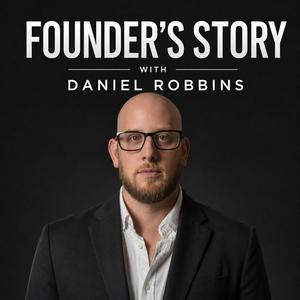
"Founder's Story" by IBH Media isn't a business show. It's the conversation founders don't get to have anywhere else.
Think 60 Minutes, but for entrepreneurs. We sit down with the most interesting people in business and go past the highlight reel, past the pitch, past the polished version they give every other podcast. We go into the mud with them. The 2 a.m. doubts. The bet that almost ended everything. The moment they wanted to quit and didn't.
You'll hear from household names like Gary V, Codie Sanchez, Rob Dyrdek, and Tom Bilyeu, and just as often from founders you've never heard of who are building something the world needs to know about. Either way, the goal is the same: a real conversation that makes you laugh, makes you think, and sometimes catches you off guard with how much it makes you feel.
This is where the story behind the success finally gets told. This is "Founder's Story."
Podcast websiteListen to Founder's Story, Habits and Hustle and many other podcasts from around the world with the radio.net app
Get the free radio.net app
- Stations and podcasts to bookmark
- Stream via Wi-Fi or Bluetooth
- Supports Carplay & Android Auto
- Many other app features
Get the free radio.net app
- Stations and podcasts to bookmark
- Stream via Wi-Fi or Bluetooth
- Supports Carplay & Android Auto
- Many other app features

Founder's Story
Scan code,
download the app,
start listening.
download the app,
start listening.
Founder's Story: Podcasts in Family
 USA
USA