
Listen to this podcast in the app for free: Download for free in the App Store
radio.net
Sleep timer
Save favorites
17 episodes
Sin Is a Sickness, Not a Crime | Fr. Evan Armatas
10/20/2026 | 1h 26 mins.The Church is a hospital, not a courtroom. It is a lifesaving station for the world.
Yes, we are sinners. But what does it actually mean to be a sinner?
Our understanding of sin may be one of the most consequential—and misunderstood—questions in Christianity. I believe many people reject Christianity because they have been given a distorted picture of what sin is and what salvation means.
What if sin isn’t primarily a crime to be punished, but a sickness to be healed? What if salvation is less about a transaction and more about transformation?
In this conversation, Fr. Evan Armatas challenges our assumptions about sin, righteousness, confession, and salvation—offering a different way of understanding what it truly means to be a sinner and what it means to become truly human as we were created to be.
For more information on receiving resources written by Fr. Armatas for your partnering gift, please see Reclaiming the Great Commission: A Roadmap to Parish Health and Toolkit for Spiritual Growth: A Practical Guide to Prayer, Fasting, and Almsgiving.
https://www.equip.org/product/cri-resource-reclaiming-the-great-commission-a-roadmap-to-parish-health-1026ctr/
https://www.equip.org/product/cri-resource-toolkit-for-spiritual-growth-a-practical-guide-to-prayer-fasting-and-almsgiving-ctr1026/
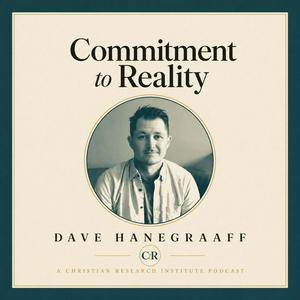
Thank you for joining Commitment to Reality, hosted by Dave Hanegraaff. Follow Commitment to Reality wherever you get your podcasts.Timestamps
0:00 — Fr. Evan Armatas: his story and how he is able to make theology accessible and practical
6:00 — The goal isn’t just right theology; it’s practicing righteousness
11:00 — Have we misunderstood sin? What did the West get wrong?
15:45 — How the debate over faith and works affects spiritual practice
25:15 — What if salvation is a relationship?
29:00 — When we love someone, we glow—almost literally—and what that reveals about salvation
42:15 — Is sin boring?
47:30 — Sin is how we spend our time: how our habits move us toward or away from God
1:03:00 — What is confession, why is it necessary, and why is it different from what many people think?
1:11:15 — The Church is a hospital, not a courtroom
1:18:10 — Have we become Epicureans in our endless pursuit of pleasure?
1:21:50 — Reality is found in relationshipThe Holy Fool: El Tonto Por Cristo | Joshua David Jordan
10/06/2026 | 1h 39 mins.What does it mean to be a fool for Christ? Honestly, it sounds like a contradiction. Those who know Christ are meant to be wise—not fools.
But what if following Christ faithfully means looking foolish in the eyes of the world? For those who seek to conform their lives to Christ rather than the ways of the world, being called a fool might actually be a compliment.
Joshua David Jordan joins Dave for a wide-ranging conversation about holy fools, monasticism, prayer, art, miracles, and what it means to live in alignment with reality—even if it means looking like a fool.
When you’re finished listening, I strongly encourage you to watch his masterpiece film, El Tonto Por Cristo (Spanish for The Fool for Christ), please see their official website by clicking here. https://www.eltontoporcristo.com/
Thank you for joining Commitment to Reality, hosted by Dave Hanegraaff. Follow Commitment to Reality wherever you get your podcasts.
(Timestamps below.)
0:00 — Joshua David Jordan tells his story
6:20 — Fathers and Sons
10:35 — I Arise Today—does how we begin the day matter?
17:00 — The value of simple prayer
21:15 — What is a fool for Christ?
24:00 — A holy fool feels like a contradiction—how do you explain the holy fool?
26:45 — Dave used to be a vagabond and relates to the lack of constraints Holy Fools have
34:00 — Monks, Mount Athos and the value of monasticism for our modern world
47:15 — Monasticism shows us another way of life is possible
50:15— Art as an apologetic for truth (when we create art we imitate the creator)
59:45 — Just make GOOD art—Why Christians shouldn’t try to make “Christian” art
1:02:00 — Art is prayer
1:05:45 — Sweet smelling relics—wishful thinking or mystical reality?
1:12:00 — Believe again—believing in miracles without demanding an explanation
1:18:15 — The greatest lesson Josh David Jordan learned about monasticism
1:29:00 — Closing questions about realityFree Palestine? The Coffee Shop Contradiction | Fares Abraham
09/22/2026 | 1h 25 mins.The Palestinian flag is everywhere these days. Along with the Ukrainian flag, the pride flag and a number of other flags that have come to hold cultural meaning in our modern world. These flags are symbols—but symbolic of what?
Dave likes to call this the coffee shop contradiction. The cognitive dissonance of competing claims about reality crowding the same coffee shop window. What do these flags have in common? More importantly—are they in contradiction? Shouldn’t these contradictions matter?
To discuss this issue and the wider situation in Palestine, Dave is joined by Fares Abraham—Palestinian Christian, founder of Levant Ministries, and a native of Bethlehem. Dave thinks the situation is unbelievably complex. Fares doesn’t deny the complexity, but instead argues that complexity is no excuse for Christians to lose moral clarity. Yet they are both clear on how Christians are called to live. As a child, Fares saw his mother shot in front of their home in Palestine and yet his family has made forgiveness a living reality. In a situation that can often feel hopeless—Fares Abraham is an ambassador of forgiveness and hope.
Thank you for joining Commitment to Reality, hosted by Dave Hanegraaff. Follow Commitment to Reality wherever you get your podcasts.
For related information please see Hank Hanegraaff’s book The Apocalypse Code: Find out What the Bible Really Says About the End Times and Why It Matters Today.
(Timestamps below.)
0:00 — Dave met Fares Abraham in Palestine 10 years ago
0:40 — Who is Fares Abraham?
4:15 — Christ at the checkpoint and Christian Zionism
5:50 — The rise of flag culture—Israel, Palestine, Ukraine, LGBTQ+ flags everywhere—why?
11:25 — The impact of theology in the Middle East?
17:00 — The impact of Jewish and Islamic theology regarding conflict resolution
21:45 — A personal account of life in Palestine
27:55 — Dave describes his first impressions of Palestine and reality of intercultural relations
36:50 — Secular Flags and the Coffee Shop Contradiction
41:05 — The reality of queers for Palestine
44:35— What does it mean to be a sermon on the mount Christian?
47:15 — The reality of religious freedom in the Middle East
52:50 — What is the reality of Islamic theology?
57:20 — Can you support Palestinians without supporting Hamas?
1:04:15 — The real world impact of theology
1:14:45 — Are Palestinians and Israelis asking for the impossible?
1:16:30 — Fares saw his mother get shot in front of his home—how have they made forgiveness a living reality?
1:21:30 — Closing questions about realityA Love Letter to Sleep | Brett McCracken
09/08/2026 | 1h 47 mins.If you could take a pill and never have to sleep again—would you? If sleep is mere utility, like charging your phone at the end of every day, then no one should fault you for making that choice. But Brett McCracken would argue that sleep is so much more—and in this conversation, he asks us to contemplate a deeper question: What if the things we think of as limitations are actually gifts?
Brett McCracken—senior editor at The Gospel Coalition and author of The Wisdom of Sleep: How Rest Reveals God’s Truth and Revives Weary Souls—joins Dave Hanegraaff on Commitment to Reality to talk about why God designed us to sleep—and why embracing our limits in an age obsessed with optimization might be the most revolutionary thing we can do. Because if limitations can be gifts, sleep might be one of the best arguments for it.
Thank you for joining Commitment to Reality, hosted by Dave Hanegraaff. Follow Commitment to Reality wherever you get your podcasts.
(Timestamps below.)
0:00 — Intro and Dave’s Role on Hank Unplugged and Commitment to Reality
0:45 — Who is Brett McCracken?
5:45 — A common grace approach to culture—all truth is God’s truth
9:30 — Why is it so hard for Americans to slow down and rest?
14:30 — We are addicted to technology and are scrolling ourselves to death
18:00 — Rest is not mere utility, but part of God’s design for us—why?
21:35 — A love letter to sleep, having reverence for rest
25:30 — If you could take a pill and not have to eat or sleep—would you do it?
30:30 — What is the argument for beauty beyond utility?
38:00 — The joy of generosity
41:40— What is dreaming and why do we do it?
50:10 — Are nightmares an experience of spiritual warfare?
54:00 — Should we ask God to speak to us through our dreams?
59:00 — Lucid dreaming and the attempt to optimize and control dreams
1:03:00 — Why would a good God allow us to have bad dreams?
1:08:05 — The origins of the 7 day work week, weekends and the Sabbath
1:13:30 — The dystopian future of a world without work
1:20:00 — The importance of work/life balance
1:25:55 — The revolutionary act of being present and content when we are with others
1:31:25 — Describe your best morning ever
1:35:40 — Where are we most eager to ignore reality?
1:41:30 — In a world that feels increasingly unreal what feels most real to you?A Personal Message from Dave: We’re Just Getting Started
08/04/2026 | 1 mins.We’re on a brief summer sabbatical here at Commitment to Reality, but I wanted to reach out and thank everyone who’s joined us on this journey so far. We’re just getting started.
One of my favorite parts of hosting this podcast has been the connections made through these conversations.
To the listeners—Getting your messages and hearing how much these conversations matter to you means the world to me and keeps me going. I thank God for each and every one of you.
To the guests—Some of you were friends before we ever hit record, but it’s been an absolute joy watching total strangers become friends over the course of these conversations. We’re forming an alliance of people committed to reality and that group is only going to keep growing. If there’s someone you think I should talk to send me a message on Instagram or Facebook.
If you haven’t already, subscribe to the podcast wherever you listen—Apple, Spotify, YouTube, wherever. It makes a HUGE difference. Even better, take a minute or two to leave a rating and a review. It truly matters and I can’t tell you how much I’d appreciate it. Help us spread the word!
Again—Thank you for joining me in making a commitment to reality.
Glory to God in all things.
More Religion & Spirituality podcasts


Trending Religion & Spirituality podcasts






About Commitment to Reality
Hosted by Dave Hanegraaff Commitment to Reality is a podcast for a post-truth—and increasingly post-reality—age. We are living through one of the most disorienting periods in human history—leaving many to wonder: What is reality? As artificial intelligence accelerates and institutional trust erodes, our shared sense of what is real continues to crumble. Reality is the way the world truly is—independent of our beliefs, opinions, or illusions. If truth is the map by which we navigate our lives, then it is no surprise that we feel disoriented when we live by lies. The post-truth, post-reality crisis is not merely an intellectual problem; it is an existential one. A commitment to reality is a dedication to discerning what is true and developing the discipline to live in alignment with that truth—with reality. This podcast is an apologetic for reality—each episode serving as an intentional act of grounding our existence together as we commit to what is beautiful, good, and true.
Podcast websiteListen to Commitment to Reality, The Bryce Crawford Podcast and many other podcasts from around the world with the radio.net app
Get the free radio.net app
- Stations and podcasts to bookmark
- Stream via Wi-Fi or Bluetooth
- Supports Carplay & Android Auto
- Many other app features
Get the free radio.net app
- Stations and podcasts to bookmark
- Stream via Wi-Fi or Bluetooth
- Supports Carplay & Android Auto
- Many other app features
Commitment to Reality
Scan code,
download the app,
start listening.
download the app,
start listening.
Commitment to Reality: Podcasts in Family
 USA
USA