

Listen to this podcast in the app for free: Download for free in the App Store
radio.net
Sleep timer
Save favorites
155 episodes
Sober Isn't the Same as Okay — 10 Hard Truths About Addiction Recovery
10/06/2026 | 25 mins.Getting sober doesn't fix your life. It gives you a chance to fix it. Ten harsh truths from 11 years in recovery.
Nobody really tells you about the hard parts of addiction recovery — or if they do, you're not ready to hear them. In this solo episode, Anthony shares ten truths he's learned the hard way across 11 years in and out of recovery, including a relapse after seven and a half years of sobriety. None of it is meant to shame anyone. It stings first. Then it sets you free.
This is lived experience, not a rule book — and definitely not everybody's experience.
In this episode:
- Why getting sober turns up the volume on the problems drinking and using were covering
- Why not everyone will be happy you're sober — and grieving the old drinking buddies
- Amends: clearing your side of the street without expecting a result
- Relapse is common, but it isn't the end (and it isn't a license)
- Why most people take more than one serious run at recovery
- When the pink cloud ends and the boredom shows up
- Dry vs. recovered: you can be sober and still miserable
- The paradox: nobody can do it for you, and you can't do it alone
- Feelings coming back — sitting with them, not in them
- Why recovery has no finish line, and why that's a gift
Numbers mentioned:
- Relapse rates for substance use disorders: 40–60%, comparable to hypertension and asthma — National Institute on Drug Abuse (NIDA), Drugs, Brains, and Behavior.
- Serious recovery attempts before resolving a substance problem: median 2, mean ~5 — Kelly et al. (2019), Alcoholism: Clinical & Experimental Research.
- ~22 million U.S. adults (9.1%) report having resolved a significant alcohol or drug problem — Kelly et al. (2017), Drug and Alcohol Dependence.
If this one landed, follow Recovering Out Loud and leave a rating — it helps someone else find it. Real stories.
Recovering Out Loud is a peer-led podcast sharing lived experience. It is not medical or clinical advice. If you're struggling, reach out to someone you trust or a local support service.The Difference Between Me and a Normal Drinker | Borrowed Wisdom: Bob D.
10/01/2026 | 23 mins.What's the real difference between an alcoholic and a normal drinker? Old-timer Bob D. has an answer.
In this Borrowed Wisdom episode, Anthony breaks down a speaker talk from Bob D. on the disease of alcoholism — and why, in Bob's words, he didn't become an alcoholic because he drank; he drank the way he did because he's an alcoholic.
We get into:
The chicken or the egg — does drinking cause alcoholism, or does something come first? Bob believes he was born this way. Anthony isn't sure — and why that question matters less than the solution.
The geographic cure — why moving cities never fixes it. Wherever you go, there you are.
Two kinds of wiring — a normal drinker feels a buzz and backs off. An alcoholic feels the same buzz and hits the gas. "Losing control" vs. "about to get control."
Never "just right" — the phenomenon of craving, chasing the dragon, and the stimulant/benzo cycle of trying to be your own chemist.
Feeling normal only when half lit — the invisible wall at the party, and how recovery lets you feel "a part of" without substances.
Restless, irritable and discontent — the dog circling the room, and "chronic malcontent": the new car that's the wrong colour three weeks later.
Head vs. heart — the difference between admitting you have a problem and getting it in your innermost self. Watch your feet.
The downside of getting better — how a good life can seduce you into a false sense of okayness, and how that played into Anthony's own 7.5-year relapse.
When the obsession returns — why people who relapse after years often say they'd have bet anything they'd never drink again.
This is lived experience and peer perspective, not clinical advice. 12-step, SMART Recovery, therapy, rehab, sober coaching — find the path that works for you, then do the work.
Want the link to Bob D.'s full talk? DM me on Instagram.
@recoveringoutloudpod
If no one's told you today — we love you. Recovery is simple, not easy.5 Things Alcoholics Still Do After They Get Sober
09/29/2026 | 22 mins.Sobriety didn't switch off my alcoholic thinking. 5 things I still do in addiction recovery — and how I catch them.
Putting down the drink and the drug was the start, not the finish. My problem was never just drugs and alcohol — it's me, my perception, and the way I try to escape pain. Left unchecked, that alcoholic thinking runs quietly in the background and turns into resentment, fear, anxiety and anger. And eventually, a drink.
In this solo episode of Recovering Out Loud, I walk through five things I still catch myself doing almost two years into my second run at sobriety:
More is better — swapping the bottle for something else. Coffee, sugar, vapes, the gym, scrolling, work. Cross addiction is real, and so is channelling an obsessive brain into something that helps.
Right now or never — instant gratification, the text you shouldn't send, and why I make things worse every time I try to force an outcome.
Resentment on repeat — rehearsing arguments in the shower, keeping score, and learning to just let them.
Running the show — control, people pleasing, and the difference between being kind and being nice.
The mask — image management, the highlight reel, and the gap between recovering publicly and recovering honestly.
Plus: the best part of recovery (a 30-day text from a guy I'm working with), an update on my school situation and the "push or pivot" moment that came out of it, and three questions you can ask yourself about each of these.
This is lived experience and peer perspective — not clinical advice. If any of these land for you, tell me which one in the comments.How to Stay Sober Through Hard Times (While You're Still In It)
09/24/2026 | 17 mins.Staying sober through adversity while you're still in it — not the highlight reel after.
This one's recorded from inside the hard middle. I'm in the middle of something with school right now that could change my path, and instead of waiting until it's tied up with a bow, I wanted to talk about what actually gets people through while it's still messy — and why so many come out the other side changed for the better.
We get into pain versus suffering (pain × resistance = suffering), post-traumatic growth and the five places research says growth tends to show up, and the Stockdale Paradox — holding total faith that you'll get through it alongside the discipline to face the brutal facts right now. Faith without facts is denial. Facts without faith is despair.
Then the practical stuff: four inner moves and four outer moves for getting through a hard stretch without picking up.
Inner moves
Accept what's actually here (acceptance isn't approval)
Shrink the timeline to the next right thing
Don't believe everything your mind says in a storm
Protect the boring basics — sleep, food, water, movement
Outer moves 5. Let people in 6. Ask for specific help 7. Do one thing for someone else 8. Find a thread of meaning — carefully, and on your own schedule
Some adversity is just loss, and it stays loss. Growth is something you notice looking back, not something you owe anyone while you're hurting. Two things can be true.
If you're in the hard middle right now: text one person the truth today.
This is lived experience and peer perspective, not clinical advice.The 5 Slow Killers of Sobriety — Why Relapse Is Emotional Before It's Physical
09/22/2026 | 16 mins.Relapse is emotional before it's physical. The 5 slow killers that take us out — and how to get ahead of each one before it gets ahead of you.
None of these five feel like drinking. They feel like normal life — a grudge you're nursing, a secret you're carrying, a Friday night with nothing in it. That's exactly why they're dangerous. By the time a drink is in your hand, the relapse already happened weeks ago, quietly, in your head.
In this solo episode, Anthony walks through the five things he watches for in his own recovery — the quiet stuff that moves first:
This is peer perspective and lived experience, not clinical advice — one person in recovery sharing what's kept him sober. Anthony has been in recovery since 2015, came back from a relapse, and is sharing the tools that help him stay ahead of his own disease.
More Health & Wellness podcasts
 Passion Struck with John R. MilesAlternative Health, Education, Health & Wellness, Mental Health, Self-Improvement
 On Purpose with Jay ShettyBusiness, Health & Wellness, Mental Health
 10% Happier with Dan HarrisHealth & Wellness, Mental Health
 The Dr. John Delony ShowHealth & Wellness, Mental Health, Relationships, Society & Culture
 Extend Podcast with Darshan Shah, MDHealth & Wellness, Medicine, Nutrition
 Culture Apothecary with Alex ClarkHealth & Wellness
 Huberman LabHealth & Wellness, Life Sciences, Science
 Nothing much happens: bedtime stories to help you sleepFiction, Health & Wellness
 Tony Mantor: Why Not Me ?Alternative Health, Health & Wellness, Mental Health
 unPAUSED with Dr. Mary Claire HaverHealth & Wellness, Medicine, Society & Culture
Trending Health & Wellness podcasts
 The Chalene Show | Pop Culture, Women's Health, & FitnessEducation, Entertainment News, Fitness, Health & Wellness, Mental Health, News, Nutrition, Relationships, Self-Improvement, Society & Culture
 Live Beyond the NormsAlternative Health, Fitness, Health & Wellness, Nutrition
 You're Not Too MuchEducation, Health & Wellness, Mental Health, Personal Journals, Self-Improvement, Society & Culture
 The Exam Room by the Physicians CommitteeArts, Food, Health & Wellness, Medicine, Nutrition, Science
 Dr. Berg’s Healthy Keto and Intermittent Fasting PodcastHealth & Wellness
 The Thyroid (and Hormone) Fixer Podcast: Thyropause, Menopause, Metabolism and How to Fix ItAlternative Health, Health & Wellness, Medicine, Nutrition
 OversharingEducation, Health & Wellness, Mental Health, Relationships, Self-Improvement, Society & Culture
 The Sober Mom LifeAlternative Health, Health & Wellness, Kids & Family, Mental Health, Parenting
 The Wellness ProcessAlternative Health, Health & Wellness
 UnF*ck Your Brain: Feminist Self-Help for EveryoneEducation, Health & Wellness, Mental Health, Philosophy, Self-Improvement, Society & Culture
 Savage LovecastHealth & Wellness, Relationships, Sexuality, Society & Culture
 I Have ADHD PodcastEducation, Health & Wellness, Mental Health, Self-Improvement
 Grounded Wellness by Primally PureAlternative Health, Education, Health & Wellness, Self-Improvement
 Hacking Your ADHDHealth & Wellness, Mental Health
 FoundMyFitnessFitness, Health & Wellness, Medicine, Nutrition
 The SqueezeEducation, Health & Wellness
 The Model Health ShowFitness, Health & Wellness, Nutrition
 The Dr. Brighten ShowHealth & Wellness, Medicine
 Tracks To Relax Sleep MeditationsAlternative Health, Health & Wellness, Mental Health
 Sleep Wave: Sleep Meditation & Sleepy StoriesHealth & Wellness, Mental Health
 آدمیزادHealth & Wellness, Mental Health
 EmPowered RadioEducation, Fitness, Health & Wellness, Nutrition, Self-Improvement
 Daily Meditation PodcastBuddhism, Health & Wellness, Mental Health, Religion & Spirituality
 A Zen Mind Guided MeditationsAlternative Health, Education, Health & Wellness, Mental Health, Religion & Spirituality, Self-Improvement, Spirituality
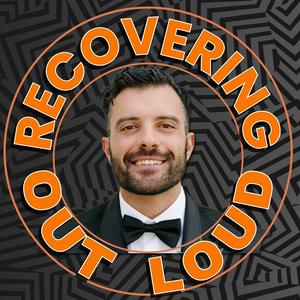
About Recovering Out Loud
Sobriety you can actually use — from someone who lived it twice.
I'm Anthony. I got sober in 2015, relapsed after 7.5 years, and rebuilt from zero. Now I'm an addiction counsellor-in-training sharing what actually works in recovery — not theory, real tools.
Every episode covers the real struggles of staying sober: emotional sobriety, relapse prevention, identity, people-pleasing, shame, trauma, mental health, and the messy middle nobody talks about.
If you're newly sober, years in, or supporting someone you love — this is your space.
New episodes every week. Follow so you never miss one.
Podcast websiteListen to Recovering Out Loud, Passion Struck with John R. Miles and many other podcasts from around the world with the radio.net app
Get the free radio.net app
- Stations and podcasts to bookmark
- Stream via Wi-Fi or Bluetooth
- Supports Carplay & Android Auto
- Many other app features
Get the free radio.net app
- Stations and podcasts to bookmark
- Stream via Wi-Fi or Bluetooth
- Supports Carplay & Android Auto
- Many other app features
Recovering Out Loud
Scan code,
download the app,
start listening.
download the app,
start listening.
Recovering Out Loud: Podcasts in Family
 USA
