
Listen to this podcast in the app for free: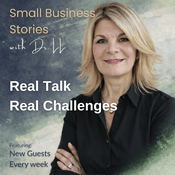 Download for free in the App Store
radio.net
Sleep timer
Save favorites
199 episodes
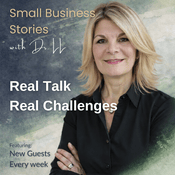
How to Be a Better Leader by Listening More & Leading With Heart Featuring Payman Lorenzo
10/17/2026 | 33 mins.S6:E88
After nearly 450 conversations on his Leaders With a Heart podcast, Payman Lorenzo has heard extraordinary stories of leadership, adversity, failure, resilience, and reinvention. But one of his most important lessons is surprisingly basic:
Listen. Really listen.
Queue up this episode of Small Business Stories for a deeply human conversation about leadership, boundaries, assumptions, patience, setbacks, and why making another person feel seen and heard may be one of the most consequential things a leader can do.
If people don't trust that you're listening, they stop telling you what you need to hear.
If we assign motives before understanding someone's circumstances, we may react to an intention that never existed.
And if leadership is built around our interpretation rather than another person's actual experience, even good intentions can produce the wrong impact.
Loralyn Mears, PhD, aka "Dr. LL," brings you thoughtful conversations with entrepreneurs and small business leaders navigating visibility, leadership, and growth. Thank you for being here.
👤 Guest
Payman Lorenzo
Host, Leaders With a Heart
Leadership, podcasting, human connection, and entrepreneurship
⚠️ Core Problems Discussed
• Listening to respond rather than listening to understand
• Assuming intent from incomplete information
• Confusing kindness with an obligation to say yes
• Allowing poor boundaries to create exhaustion and resentment
• Trying to force someone else's growth before they're ready
• Interpreting setbacks only through "Why me?" rather than asking what can be learned
• Losing sight of the human being while pursuing the business outcome
🥡 Practical Takeaways
• Genuine listening makes people feel seen and heard.
• Service becomes more sustainable when helping another person succeed also creates mutual value.
• Boundaries protect your ability to continue helping others.
• A "no" delivered with respect can be more constructive than a resentful "yes."
• Before reacting to someone's behavior, question the meaning you've assigned to it.
• You can't force someone to change before they're ready.
• Asking "What is this trying to teach me?" can change how we interpret difficult experiences. Payman describes that shift as life-changing.
⏱️ Timestamps
02:05 Why connection and trust changed Payman's life
06:04 "I'm a collector of success stories"
08:17 What genuine leaders do differently
11:21 Leading with heart doesn't mean always being nice
13:47 Why Payman stopped giving everything away for free
14:38 When saying yes to everyone means saying no to yourself
17:07 The dirty-dishes lesson that taught Payman boundaries
19:37 Perceived intent versus what someone actually means
20:10 The question Payman says changed his life
21:43 Failure, depression, and how podcasting helped him rebuild
26:02 What happens when good intentions have the wrong impact?
28:12 A leader with heart is someone who listens
🔖 Who This Episode Is For
Founders, managers, entrepreneurs, and leaders trying to navigate difficult relationships without losing empathy, boundaries, or themselves in the process.
At STEERus, we see Assumption Filling as a recurring source of misinterpretation risk. When information is incomplete, human beings naturally construct meaning from what they can see and then may make decisions based on that interpretation as though it were fact.
Subscribe and share Small Business Stories for grounded conversations about entrepreneurship, leadership, visibility, trust, and what it really takes to build something meaningful.
✅ Subscribe for weekly conversations on entrepreneurship
🔁 Share this episode with someone who needs to be heard
Follow STEERus on social media:
YouTube: https://www.youtube.com/@DrLLSmallBusiness
Instagram: https://instagram.com/steerus
LinkedIn: https://www.linkedin.com/company/steerus
Twitter: https://x.com/steerus_io
#entrepreneurship #smallbusiness #podcast #leadershipWhy Higher Sales Aren't Fixing Your Cash Flow with Matan Bar CEO Xero US
10/07/2026 | 46 mins.S6:E87
Overall, small business sales are growing. So why do so many owners still feeling the squeeze?
The answer is hiding underneath the headline.
Matan Bar, CEO of Xero U.S., joins Dr. LL to unpack what Xero's U.S. Small Business Insights data reveals when you look beyond one encouraging number: sales may be improving, but businesses are also contending with rising costs, longer waits for payment, geographic differences, and a financial picture that varies dramatically depending on what kind of business you actually operate.
This isn't simply a conversation about accounting.
It's about interpretation.
If people don't trust the numbers, they can't confidently make decisions from them.
If a headline accurately reports one measure while obscuring several others, the conclusion can still be wrong.
And if AI can slice, summarize, and visualize enormous amounts of data, the ability to understand what that information actually means becomes more important, not less.
Loralyn Mears, PhD, aka "Dr. LL," brings you thoughtful conversations with entrepreneurs and small business leaders navigating visibility, leadership, and growth. Thank you for being here.
👤 Guest
Matan Bar
CEO, Xero U.S.
Small business technology, payments, financial operations, and AI
⚠️ Core Problems Discussed
• Why improving sales don't necessarily indicate improving business health
• Longer payment cycles and the pressure they create on small-business cash flow
• The tension between businesses wanting to get paid quickly while preserving their own cash as long as possible
• How outdated payment systems add unnecessary friction
• Why national averages obscure substantial geographic and industry differences
• Whether AI will widen the productivity gap between large and small businesses
• The risk of having more data without correctly interpreting what it means
🥡 Practical Takeaways
• Business health requires looking beyond sales to cash flow, costs, payment timing, and the circumstances of the individual business.
• Faster payment technology can benefit both sides by allowing payers to hold cash longer while still delivering payment on time.
• Geographic differences may reflect the industry mix and business characteristics inside each region rather than geography alone.
• Small businesses may adopt AI differently from enterprises because limited budgets force them to focus on demonstrated value.
• Matan believes AI ultimately has the potential to give small businesses capabilities once reserved for much larger companies.
• Better dashboards don't automatically produce better decisions; interpretation remains essential.
• For financial decisions where accuracy matters enormously, Matan argues for keeping knowledgeable humans in the loop.
⏱️ Timestamps
02:25 The encouraging small-business headline and what it misses
05:02 Are small businesses actually underperforming?
07:48 New businesses, AI, and changing economic averages
11:49 Why businesses are waiting longer to get paid
14:10 The overlooked problem of non-payment
17:20 Are generous payment terms hurting small businesses?
23:27 Why faster payments can actually mean holding cash longer
24:19 State-by-state differences hidden inside national averages
29:14 Could AI create a productivity divide?
30:15 Why Matan thinks AI will level the playing field
34:41 Dr. LL introduces misinterpretation risk
36:11 Matan on "accountable intelligence" and human judgment
39:09 What Matan wishes every small business owner knew
🔖 Who This Episode Is For
Small business owners, entrepreneurs, advisors, accountants, and leaders trying to make sense of what economic headlines, financial data, and AI actually mean for the decisions they need to make.
At STEERus, Data Distortion is one expression of misinterpretation risk: information can be factually correct while the conclusion drawn from it is incomplete or wrong. Increasing the volume of information doesn't solve that problem; businesses need clearer signals and better interpretation.
Subscribe and share Small Business Stories for grounded conversations about entrepreneurship, visibility, leadership, AI, and what business owners are actually experiencing behind the headlines.
✅ Subscribe for weekly conversations on entrepreneurship
🔁 Share this episode with someone who needs to be heard
Follow STEERus on social media:
YouTube: https://www.youtube.com/@DrLLSmallBusiness
Instagram: https://instagram.com/steerus
LinkedIn: https://www.linkedin.com/company/steerus
Twitter: https://x.com/steerus_io
#entrepreneurship #smallbusiness #podcast #CEO #cashflow #money #financeHow an Overlooked Service Business & Dirty Job Makes Money with Mark Regan
10/02/2026 | 32 mins.S6:E86
The businesses people overlook may be the ones worth examining. Especially those ew - yucky - services!
Entrepreneurship culture gives enormous attention to innovation, technology, and businesses that sound impressive. Mark Regan built something very different: a recurring-revenue company around a simple problem many people do not want to solve themselves.
In this episode of Small Business Stories, Mark and Dr. LL unpack what it actually takes to turn an unglamorous idea into a durable service business from pricing and route density to customer retention, franchising, and the unexpected challenge of getting AI to understand what kind of business you actually are.
If people don't understand what you do, they may underestimate its value.
If AI doesn't understand what you do, you may never surface when someone is looking for it.
Loralyn Mears, PhD, aka "Dr. LL," brings you thoughtful conversations with entrepreneurs and small business leaders navigating visibility, leadership, and growth. Thank you for being here.
👤 Guest
Mark Regan
Co-founder, Poop Away
Service-business operations, recurring revenue, customer retention, and franchising
⚠️ Core Problems
• Looking past viable businesses because they lack status or glamour
• Mistaking revenue for profitability without understanding the operating math
• Getting categorized incorrectly when a business crosses traditional industry boundaries
🥡 Practical Takeaways
• Start with a problem people genuinely want solved.
• Recurring revenue only works when the operating economics work.
• Customer trust can become a competitive advantage even in a seemingly transactional service.
• In the AI-search era, business categorization is becoming part of business strategy.
⏱️ Timestamps
03:15 — "Who would pay for that?" becomes a business
07:35 — The operating mistakes Mark wishes they had avoided
11:29 — Customer service as a retention strategy
21:16 — The operator mindset required for franchising
23:27 — Misinterpretation risk meets AI search
🔖 Who This Episode Is For
Entrepreneurs searching for realistic business opportunities, service-business owners trying to build recurring revenue, and founders whose businesses do not fit comfortably inside one familiar category.
At STEERus, we study what happens when the value is real, but the signals people and machines use to interpret that value are not clear enough.
Subscribe to Small Business Stories for more real-world conversations about what it actually takes to build, operate, and sustain a business and share this episode with an entrepreneur who may be overlooking the opportunity right in front of them.
✅ Subscribe for weekly conversations on entrepreneurship
🔁 Share this episode with someone who needs to be heard
Follow STEERus on social media:
YouTube: https://www.youtube.com/@DrLLSmallBusiness
Instagram: https://instagram.com/steerus
LinkedIn: https://www.linkedin.com/company/steerus
Twitter: https://x.com/steerus_io
#entrepreneurship #smallbusiness #podcast #dogsThe Ripple Effect of Intentional Leadership with Lisa Even
09/30/2026 | 30 mins.S6:E85
People experience your leadership long before you make a formal leadership decision.
It's in how you enter a room. How you react when you're stressed. Whether you acknowledge someone. The story you tell. The difficult interaction you choose not to pass along to the next person.
Lisa Even calls it the ripple effect: everything we say and do creates one, whether we're consciously choosing it or not.
In this episode, Lisa and Dr. LL explore intentional leadership, workplace culture, experimentation, small moments of human connection, and why impact doesn't have to be enormous to become meaningful.
If people don't trust what version of you is going to walk into the room, they start preparing for you.
If employees repeatedly experience something different from the leadership values an organization claims, those interactions become more credible than the words.
And if we're unaware of the signals we're continually sending, other people are left to interpret them for themselves.
Loralyn Mears, PhD, aka "Dr. LL," brings you thoughtful conversations with entrepreneurs and small business leaders navigating visibility, leadership, and growth. Thank you for being here.
👤 Guest
Lisa Even
Founder, Lisa Even International
Leadership, workplace culture, intentional impact, and keynote speaking
⚠️ Core Problems Discussed
• How stress and chaos affect the energy leaders bring into interactions
• Why employees remember small experiences that leaders may barely notice
• The difficulty of influencing people when you may never see the downstream outcome
• Leading different people as individuals rather than using one leadership approach for everyone
• Perfectionism preventing leaders and entrepreneurs from testing new approaches
• Passivity creating outcomes leaders never consciously chose
• Assuming meaningful impact requires a grand gesture
🥡 Practical Takeaways
• Everything you say and do creates a ripple, even when you never see where it travels.
• Stories can make abstract leadership principles easier for people to remember and apply.
• Small experiments give entrepreneurs permission to learn without needing perfection.
• Different employees may require different questions, communication styles, and approaches.
• Intentional leadership doesn't guarantee outcomes, but it makes those outcomes less accidental.
• Small interactions can become disproportionately memorable.
• Think of your energy like weather: people may already be preparing themselves for what you bring into the room.
⏱️ Timestamps
01:34 What "ripple effect" actually means
04:08 The coffee-shop encounter that illustrates how behavior travels
07:15 Choosing your impact even when you never see the result
09:32 How to gently interrupt someone's negative ripple
15:53 Why Lisa treats business like a laboratory
17:21 Different people require different leadership experiments
18:35 Intentional versus accidental leadership
19:56 What happens when leaders become passive about outcomes
23:24 Mr. Dale and the tiny interaction Lisa's family remembered
26:32 Lisa's "weather" experiment for leaders
🔖 Who This Episode Is For
Leaders, managers, entrepreneurs, and business owners who want to create stronger relationships and healthier cultures without turning leadership into another overwhelming initiative.
At STEERus, we see Accidental Signaling as a recurring source of misinterpretation risk. Organizations carefully manage what they intend to communicate, but trust is often formed through hundreds of smaller signals nobody thought to manage at all.
Subscribe and share Small Business Stories for grounded conversations about entrepreneurship, leadership, visibility, trust, and building businesses people can understand.
✅ Subscribe for weekly conversations on entrepreneurship
🔁 Share this episode with someone who needs to be heard
Follow STEERus on social media:
YouTube: https://www.youtube.com/@DrLLSmallBusiness
Instagram: https://instagram.com/steerus
LinkedIn: https://www.linkedin.com/company/steerus
Twitter: https://x.com/steerus_io
#entrepreneurship #smallbusiness #podcast #leadership #personalbrandingHow to Become an Expert in Your Field with Katrena Friel
09/26/2026 | 39 mins.S6:E84
It has never been easier to look like an expert. That may be precisely why genuine expertise matters more.
AI can help produce polished content, sophisticated branding, books, social posts, and an increasingly convincing professional presence. But none of those things automatically demonstrate depth, judgment, experience, or the ability to create results.
In this episode, Katrena Friel, founder of Becoming the Expert, joins Dr. LL to explore the increasingly important difference between being visible and being trusted. In my opinion, Katrena is AMAZING. She speaks her truth and knows her subject.
If people don't trust the evidence behind your expertise, reach alone won't create authority.
If your personal brand requires you to perform someone you're not, consistency eventually becomes exhausting.
And if AI makes everyone sound increasingly polished, the messy, specific, deeply human evidence of real expertise may become even more important.
Loralyn Mears, PhD, aka "Dr. LL," brings you thoughtful conversations with entrepreneurs and small business leaders navigating visibility, leadership, and growth. Thank you for being here.
👤 Guest
Katrena Friel
Founder, Becoming the Expert
Expert positioning, personal branding, business ecosystems, and entrepreneurship
⚠️ Core Problems Discussed
• Mistaking influence or reach for genuine authority
• Building audiences that don't translate into meaningful business
• Using AI to create polished content without substantive expertise underneath it
• Chasing automation and low-touch products when clients may want direct access to expertise
• Becoming indistinguishable inside increasingly similar AI-generated content
• Building multiple revenue streams that fragment rather than reinforce a core business
• Performing a personal brand that doesn't feel authentic
🥡 Practical Takeaways
• Authority is deeper than visibility; evidence and substance matter.
• Social media can support due diligence without needing to become the entire business strategy.
• A book can function as positioning even when it isn't primarily a revenue generator.
• Multiple offers work better when they're expressions of one underlying philosophy.
• Authenticity doesn't mean eliminating strategy; Katrena describes it as strategically "editing" distractions without becoming someone else.
• AI can save enormous amounts of time without needing to replace the human voice or expertise itself.
• Longevity comes from refining durable expertise rather than continually chasing the next shiny object.
⏱️ Timestamps
01:18 Influence versus authority
02:31 Visibility isn't the same as being trusted
04:45 "Cardboard cutouts" and performed expertise
07:15 Why Katrena believes high-touch expertise is returning
11:49 AI and Dr. LL's "sea of sameness"
15:05 Building multiple revenue streams from expertise
19:32 Personal branding without becoming a persona
25:10 Can we still trust content in an AI-generated world?
29:48 Seven revenue streams but one philosophy
32:34 Where authority building actually begins
🔖 Who This Episode Is For
Experienced consultants, coaches, speakers, founders, and subject-matter experts trying to turn what they genuinely know into a clearer, more sustainable business.
At STEERus, we see Authority Theater as an emerging misinterpretation risk: the digital signals associated with expertise are becoming easier to reproduce while the underlying substance remains much harder to manufacture. Visibility works best when the signals people and AI encounter accurately represent the expertise behind them.
Subscribe and share Small Business Stories for thoughtful conversations about entrepreneurship, visibility, leadership, AI, and building businesses people can understand and trust.
✅ Subscribe for weekly conversations on entrepreneurship
🔁 Share this episode with someone who needs to be heard
Follow STEERus on social media:
YouTube: https://www.youtube.com/@DrLLSmallBusiness
nstagram: https://instagram.com/steerus
LinkedIn: https://www.linkedin.com/company/steerus
Twitter: https://x.com/steerus_io
#entrepreneurship #smallbusiness #podcast #AI #mentorship
More Business podcasts





Trending Business podcasts
















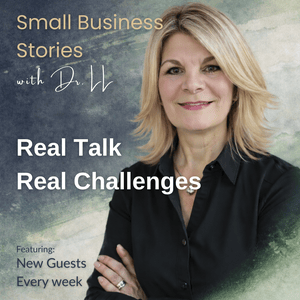
About Small Business Stories
Welcome to Small Business Stories, the podcast where we celebrate the real-life journeys of small business owners. We dig into inspiring tales of triumphs, challenges, and the tough lessons we learned along the way. Each episode is packed with relatable anecdotes and practical tips that you can use to fuel your own entrepreneurial dreams. Whether you're just starting out or looking to grow your business, you'll find motivation and insight in every story. Tune in and get ready to be inspired by the heart and hustle of small business owners just like you! We say it like it is - no filters. Being an SMB owner isn't easy, but we're compelled to do it.
Podcast websiteListen to Small Business Stories, Founder's Story and many other podcasts from around the world with the radio.net app
Get the free radio.net app
- Stations and podcasts to bookmark
- Stream via Wi-Fi or Bluetooth
- Supports Carplay & Android Auto
- Many other app features
Get the free radio.net app
- Stations and podcasts to bookmark
- Stream via Wi-Fi or Bluetooth
- Supports Carplay & Android Auto
- Many other app features

Small Business Stories
Scan code,
download the app,
start listening.
download the app,
start listening.
Small Business Stories: Podcasts in Family
 USA

