
Listen to this podcast in the app for free: Download for free in the App Store
radio.net
Sleep timer
Save favorites
282 episodes
The Knowing-Doing Gap: AI Ethics in Public Relations
10/20/2026 | 16 mins.There's a gap between knowing AI ethics and practicing them, and it's where reputations go to die. Research for PRSA's Board of Ethics and Professional Standards mapped it across 10 essential AI ethics competencies, from critical thinking and ethical judgment to privacy, accountability, and governance. The finding that stings most: critical thinking is both the most essential competency and one of the profession's biggest gaps. Communicators know the principles. They still fail to apply them when it counts.
Doug caught up with researcher Marlene Neill in Orlando at PRSA ICON 2026 to dig into what that gap looks like inside real organizations, the perfect storm of pressure for speed without the training or guardrails to match. They get into why communicators are weakest at judgment when judgment is the job, what value the practitioner still provides when AI can draft the release in seconds, and the one thing a solo practitioner or small team can do Monday morning to start closing it. If AI touches your comms work, this is the episode about the part no tool can do for you.
Listen For
:13 The Surgical Safety Checklist: What Atul Gawande Teaches PR Pros About the Knowing-Doing Gap
2:57 AI Ethics in Public Relations: Why Human Judgment Still Matters
4:13 AI Hallucinations in PR: Why You Must Verify Every Output
6:19 How AI Is Changing PR Agency Billing and Value-Based Pricing
12:01 How to Speak Up on Ethics at Work: Giving Voice to Values
Guest: Marlene Neill, Professor and Graduate Program Director at Baylor University (Journalism, Public Relations and New Media). Ph.D., APR, Fellow PRSA
Email | PRSA Bio
Doug
Substack | Website | LinkedIn
Subscribe to the Stories and Strategies PR podcast newsletter
Are you a brand with a podcast that needs support? Book a meeting with Doug Downs to talk about it.
Apply to be a guest on the podcast
Connect with us
LinkedIn | X | Instagram | You Tube | Facebook | Threads | Bluesky | Pinterest
Send us a note about this episode. We'll reply and thank you on a future episode
Support the showThe Hidden Rules of Workplace Emojis: What Gen Z Wants You to Know
10/13/2026 | 20 mins.Three out of four office workers now feel like they need to use emojis at work, according to Statista's research on workplace communication. But almost nobody stops to ask what that emoji is actually doing once it lands in an inbox, a Slack thread, or a client email.
That's the gap Stacy Jo Dixon from Statista has been studying, and it's the gap this episode sits inside: not whether emojis belong in business, but what they're quietly signalling about generation, culture, gender, and judgment every time someone hits send.
In this episode we work through what the data actually shows, and where it gets complicated. Why older professionals default to the thumbs up, while younger ones have developed what Stacy calls emoji literacy. And why the same emoji that reads as friendly in one country can land as an insult in another culture, and what any of this means for a brand's voice once it starts showing up in pixels instead of words. It's a more surprising conversation than the stat sheet suggests.
Listen For
03:49 Which emojis should you never use in the workplace?
05:49 What is emoji literacy and why does it matter at work?
08:10 Can the thumbs-up emoji be offensive across cultures?
12:40 When should you use emojis with executives, bosses, or clients?
14:13 Should companies create workplace emoji policies?
Guest: Stacy Jo Dixon, Statista
LinkedIn |IG | Website | Emoji usage – statistics & facts |Off the Charts Podcast (hosted by Stacy): YouTube | Off the Charts Podcast (hosted by Stacy): Spotify
Doug Downs
Substack | Website | LinkedIn
Subscribe to the Stories and Strategies PR podcast newsletter
Are you a brand with a podcast that needs support? Book a meeting with Doug Downs to talk about it.
Apply to be a guest on the podcast
Connect with us
LinkedIn | X | Instagram | You Tube | Facebook | Threads | Bluesky | Pinterest
Send us a note about this episode. We'll reply and thank you on a future episode
Support the showA “Jolly” Rebranding Case Study
10/06/2026 | 20 mins.What do you do when the name that built your reputation suddenly makes you look stuck in the past?
Jolly SEO was a company founded on solid SEO strategies and infrastructure.
But “S E O?” Ugh that’s soooo 2021.
So cofounder Greg Heilers had a dilemma. Suddenly he had a name that kinda conveyed old thinking.
In this episode he explains the surprisingly complicated journey from Jolly SEO to a brand built for an AI-driven search world.
Greg also explains why “SEO” began sending the wrong signal, how the company preserved the valuable “Jolly” identity while embracing a broader definition of search, and why finding the perfect domain helped settle months of debate.
Listen For
03:12 Why did Jolly SEO need to change its name in the age of AI search?
05:41 How did Jolly SEO finally land on the name Jolly Search?
09:54 Does your company name affect whether AI and LLMs recommend your brand?
12:06 How do you know whether a rebrand has actually worked?
16:56 What should businesses know before rebranding an established company?
Guest: Greg Heilers, Co-Captain | Jolly Search
Website | LinkedIn
Doug Downs
Substack | Website | LinkedIn
Are you a brand with a podcast that needs support? Book a meeting with Doug Downs to talk about it.
Apply to be a guest on the podcast
Connect with us
LinkedIn | X | Instagram | You Tube | Facebook | Threads | Bluesky | Pinterest
Send us a note about this episode. We'll reply and thank you on a future episode
Support the showWhat it Takes to Sell Your Brand Across the Atlantic
09/29/2026 | 22 mins.Every brand that crosses the Atlantic faces the same unspoken question, and almost nobody asks it out loud before they've already spent the budget: should we act like ourselves, or should we act like we belong here?
Volkswagen bet on staying unmistakably German and won over American drivers. Other brands have made the opposite bet and won too. There's no universal answer, and that's exactly what makes it a hard call to get right.
Daisy Pack, managing director of HUNTER's London office, has spent more than two decades sitting inside that decision for American and British brands trying to win over each other's audiences. In this episode, she walks through how she actually makes the call, using a real campaign for Premier Protein that skipped the obvious American fitness playbook entirely, and explains why the right answer for a brand crossing the Atlantic in 2026 might be the opposite of what worked ten years ago.
Listen For
4:09 Should American brands emphasize or downplay their identity when entering the UK?
8:13 How did Premier Protein make an American brand culturally relevant in Britain?
14:05 Why do American and British audiences respond differently to brand storytelling?
15:49 When can leaning into Americana actually help a brand connect with British consumers?
19:28 What should an American brand do before launching or expanding in the UK?
Guest: Daisy Pack, Managing Director, Hunter PR London
IG | Website | Company LinkedIn | LinkedIn | Hunter UK LinkedIn | Email
Doug Downs
Substack | Website | LinkedIn
Subscribe to the Stories and Strategies PR podcast newsletter
Are you a brand with a podcast that needs support? Book a meeting with Doug Downs to talk about it.
Apply to be a guest on the podcast
Connect with us
LinkedIn | X | Instagram | You Tube | Facebook | Threads | Bluesky | Pinterest
Send us a note about this episode. We'll reply and thank you on a future episode
Support the showWorld PR Forum Wants Your Say on Public Relations Rules
09/22/2026 | 21 mins.Take the Global Alliance Survey before October 2, 2026
Who actually makes up the rules for public relations? Who decided what counts as good measurement, how you're supposed to structure a comms team, what you tell an executive when they ask "why does this function even exist"? Your local or national association has a voice in that, but the actual standards, the ones you're governed by and quoted to and inspired by, came out of delegate rooms in Madrid, Melbourne, and Stockholm. The US sends delegates to those rooms.
You don't get a personal say in what they bring back.
Well, NOW you do. You… personally!!
The Global Alliance has opened 15 questions to the entire profession, not just the delegates, asking what society actually has the right to expect from a communication professional. This episode looks at what's being asked, why regions like Africa and Asia are answering in force while North America stays quiet, and what happens to the next set of rules if you skip your turn to answer.
Listen For
5:02 Why Should Communication Professionals Care About the Abuja Declaration?
7:30 Should Public Relations Professionals Be Licensed or Regulated?
9:44 What Should Society Expect From a Professional Communicator?
14:29 How Will the Abuja Research Prevent Regional Bias From Shaping the Results?
17:20 What Happens After the Abuja Declaration Is Created?
Guest: Adrian Cropley, Centre for Strategic Communications Excellence,
Website | LinkedIn | Adrian’s Podcast A View from the Top | CSCE Website
Doug Downs
Substack | Website | LinkedIn
Subscribe to the Stories and Strategies PR podcast newsletter
Are you a brand with a podcast that needs support? Book a meeting with Doug Downs to talk about it.
Apply to be a guest on the podcast
Connect with us
LinkedIn | X | Instagram | You Tube | Facebook | Threads | Bluesky | Pinterest
Send us a note about this episode. We'll reply and thank you on a future episode
Support the show
More Business podcasts





Trending Business podcasts



















About Public Relations Stories and Strategies
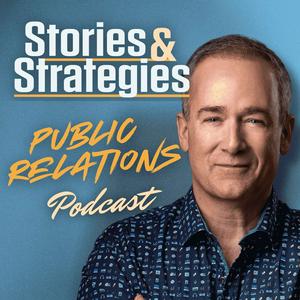
Every organization has a story people believe about it. Most leaders didn't choose that story. They inherited it, stumbled into it, or lost control of it somewhere along the way.Stories and Strategies is the Public Relations podcast that changes that.Host Doug Downs talks with the communicators, executives, and strategists who understand that narrative isn't a marketing function. It's a leadership one. Each episode unpacks what actually shapes reputation, trust, and public perception at the highest levels, drawing on behavioral science, media intelligence, and the ethics that keep persuasion honest.This is public relations at the level serious leaders need it. Not tactics and press releases. The thinking behind why some stories win and others disappear.Ranked among the most listened-to public relations podcasts in the world, Stories and Strategies reaches leaders and communicators across six continents every week.If you are responsible for the story people believe about your organization, you cannot afford to guess. Follow Stories and Strategies wherever you listen to your public relations content.
Podcast websiteListen to Public Relations Stories and Strategies, Coffeez with Joe Shalaby and many other podcasts from around the world with the radio.net app
Get the free radio.net app
- Stations and podcasts to bookmark
- Stream via Wi-Fi or Bluetooth
- Supports Carplay & Android Auto
- Many other app features
Get the free radio.net app
- Stations and podcasts to bookmark
- Stream via Wi-Fi or Bluetooth
- Supports Carplay & Android Auto
- Many other app features

Public Relations Stories and Strategies
Scan code,
download the app,
start listening.
download the app,
start listening.
 USA

