
Listen to this podcast in the app for free: Download for free in the App Store
radio.net
Sleep timer
Save favorites
173 episodes
I Wanna Be Like You Hoo Hoo
11/20/2026 | 27 mins.You've heard the expression 'raised by wolves' but what would actually happen if a baby was raised by chimpanzees?
Humans and chimps are nearly 98 per cent similar when it comes to their genetics but their physical differences set them apart from an early age, and while our bigger brains have enabled us to develop language and speech, it turns out that primates are far than us at spatial navigation. Dara and Hannah discover this firsthand when they undertake - and fail - a memory test that is routinely aced by our ape cousins.
If you have a scientific mystery for the team to investigate, contact them on curiouscases@bbc.co.uk
Contributors:
Professor Gilly Forrester - University of Sussex
Professor Andrew Whiten - University of St Andrews
Stephanie LaFarge - Participant in Project Nim
Producer: Marijke Peters
Executive Producer: Sasha Feachem
A BBC Studios ProductionRocket Science
11/13/2026 | 28 mins.Fireworks have been lighting up our autumn skies for centuries - but what’s actually going on inside those dazzling bursts of colour, sound and stars?
Hannah and Dara set out to discover the science behind the sparkle. From the chemistry that creates vivid reds, greens and blues, to the physics that launches shells high above our heads before exploding into perfectly planned patterns, they learn that every firework is a carefully choreographed feat of engineering.
Along the way, they explore why some fireworks whistle while others crackle, trace the remarkable history of fireworks from ancient China to modern-day spectacles, and ponder whether drones and laser shows could one day replace the traditional fiery festivities.
If you have a curious question for our team, get in touch via curiouscases@bbc.co.uk.
Contributors:
Jackie Akhavan - Professor of Explosive Chemistry at Cranfield University
John Withington - histroian broadcaster and author of ‘A History of Fireworks from Their Origins to the Present Day’
Darryl Fleming - Director of Titanium Fireworks
Producer: Lucy Taylor
Executive Producer: Sasha Feachem
A BBC Studios ProductionToo Cute
11/06/2026 | 28 mins.Why do we find the young of other species cute?
Finding baby humans adorable makes evolutionary sense, ensuring that we care for them properly. But what about babies of other species? Hannah and Dara go down a fluffy rabbithole of cuteness: pondering the science behind things that make us go 'ahhhh'; exploring the phenomenon of 'cute aggression'; and discovering there can be such a thing as cuteness overload.
We also discover what Dara would look like as an elf, and what happens when you make Hannah scientifically less cute. Brace yourselves...
If you have a scientific mystery for the team to investigate, contact them on curiouscases@bbc.co.uk.
Contributors:
Anthony Little – Reader in Psychology at the University of Bath
Daniel Mills – Emeritus Professor of Veterinary Behavioural Medicine at the University of Lincoln
Chris Holliday – Senior Lecturer in Liberal Arts and Visual Cultures Education at King's College London
Producer: Lucy Taylor
Executive Producer: Sasha Feachem
A BBC Studios ProductionTessellation Proliferation
10/30/2026 | 28 mins.We may think of tessellation as being about how to tile a flat plane but this week we reveal how repeating patterns actually occur all over the place, and can even help us solve some of nature's most complex problems.
The presenters start with the simple principal that for shapes to fill a space without leaving any gaps or overlapping, the angles in the corners have to add up to exactly 360° - which means squares, triangles and hexagons are all strong contenders. Then they try their hand at creating their own tiles, based on a technique referred to as the 'Escher' method.
If you have an everyday mystery for the team to investigate, contact them on curiouscases@bbc.co.uk.
Contributors:
Dr Katie Steckles
Prof Mark Miodownik
Dr Vince Gallo
Producer: Lucy Taylor
Executive Producer: Sasha Feachem
A BBC Studios ProductionYawn Chorus
10/23/2026 | 28 mins.We often associate yawning with being tired or bored - but this week's episode explores whether it could be a clever way to cool down our brains?
Hannah and Dara discover humans aren't the only species that yawn. From cats to chimpanzees and even fish, plenty of other vertebrates engage in this ancient behaviour which scientists believe evolved hundreds of millions of years ago. And it doesn't always happen as a spontaneous reflex to feeling tired but can also be triggered by watching other people do it.
If you have an everyday mystery for the team to investigate, contact them on curiouscases@bbc.co.uk
Contributors:
Stephen Jackson - Professor of Cognitive Neuroscience, University of Nottingham
Laura Kelley - Associate Professor in Behavioural Ecology at University of Exeter
Dr Andrew Gallup - Professor of Behavioral Biology at Johns Hopkins University
Producer: Lucy Taylor
Executive Producer: Sasha Feachem
A BBC Studios Production
More Science podcasts




Trending Science podcasts














About Curious Cases
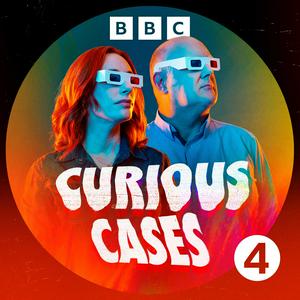
Hannah Fry and Dara Ó Briain tackle listeners' conundrums with the power of science!
Podcast websiteListen to Curious Cases, Science Vs and many other podcasts from around the world with the radio.net app
Get the free radio.net app
- Stations and podcasts to bookmark
- Stream via Wi-Fi or Bluetooth
- Supports Carplay & Android Auto
- Many other app features

Curious Cases: Podcasts in Family
 USA

