

Listen to this podcast in the app for free: Download for free in the App Store
radio.net
Sleep timer
Save favorites
12 episodes
Straight Outta RivCo: How Ordinary People Can Change Broken Systems | Chris Castorena (Part 2 of 2)
07/12/2026 | 21 mins.Chris Castorena, Planning Commissioner for the city of Banning, Calif., is known for innovative, community-driven initiatives and advocating for equity and infrastructure improvements. In this second half of this interview, "Joy of Democracy" correspondents Anyse Smith and Francisco Ramos (via "Straight Outta Rivco") highlight how intentional, local efforts—such as walking your block, writing advocacy letters, and initiating intentional, person-to-person connections—can ripple outward and create meaningful local change. You'll discover why integrated neighborhoods are so important, and why systemic change isn’t achieved by individuals alone, but through unified community demand. Real power begins at the local level, and Castorena urges listeners to ask: "Development for whom?" as a first step toward a more equitable, connected community.
Mentioned in this episode:
Andrea Garcia for Judge v2 — Q3 2026Straight Outta Rivco: Banning Planning Commissioner Chris Castorena on Growth and Development Part 1
06/23/2026 | 24 mins.In this episode of The Joy of Democracy, Joy Silver welcomes Straight Outta Rivco correspondents Anyse Smith and Francisco Ramos for the launch of a new collaboration highlighting overlooked communities across Riverside County.
Their first feature is Part 1 of a conversation with Chris Castorena, planning commissioner for the City of Banning. Together they explore the challenges facing rural and semi-rural communities as development accelerates throughout the region.
Castorena discusses the importance of meaningful public engagement, responsible land-use planning, economic opportunity, and ensuring residents have a voice in decisions that shape their neighborhoods. He also explores how local governments can better serve their communities while balancing growth, infrastructure, housing, and quality of life concerns.
This episode offers valuable insight into the future of Riverside County development and the critical role community participation plays in creating sustainable and equitable outcomes.
Key Takeaways
Rural communities deserve greater attention in regional discussions.
Local residents should play a central role in development decisions.
Community outreach is essential for effective governance.
Economic opportunities should be created close to where people live.
Land-use planning affects quality of life for future generations.
Public participation strengthens local decision-making.
Sustainable growth requires balancing development and community needs.
Listening to local voices leads to better long-term outcomes.
Keywords: Riverside County, Banning California, Chris Castorena, community engagement, local government, city planning, land use planning, economic development, sustainable growth, affordable housing, public participation, rural communities, civic engagement, California politics, urban planning, community outreach, local democracy, economic opportunity, planning commissioner, Riverside County development
Mentioned in this episode:
Andrea Garcia for Judge v2 — Q3 2026
Intro: Leigh McGowan, PoliticsGirlA Broad Talks to a Bro | Joy Silver with Michael Johnson: The Masculinity Reset
06/05/2026 | 31 mins.A lively and important conversation between Host Joy Silver and her guest Michael Johnson, about the evolving definitions of masculinity, and the societal pressures that accompany them.
Takeaways:
The current societal landscape affords young women unprecedented advantages due to the dismantling of legal barriers and the accumulation of emotional intelligence from historical struggles.
Young men face unique societal challenges, particularly in the context of shifting political dynamics and the pressures imposed by toxic masculinity and cultural norms.
Conversations surrounding masculinity should include recognition of men's emotional struggles and the impact of patriarchy on their identities and social roles.
The necessity of fostering meaningful friendships, particularly across genders, is crucial for young men to navigate societal expectations and develop emotional resilience.
Links referenced in this episode:
unitedamericanetwork.com
politicsgirl.com
Mentioned in this episode:
Intro: Leigh McGowan, PoliticsGirl
Andrea Garcia for Judge v2 — Q3 2026Joyce Callo, Filmmaker and Playwright | A Deeper Dive | Seeing Through The Beauty Bubble
05/12/2026 | 19 mins.In this A Deeper Dive episode of The Joy of Democracy, host Joy Silver welcomes filmmaker and first-time playwright Joyce Callo to discuss her heartfelt new comedy, The Beauty Bubble. Inspired by a real Joshua Tree beauty salon and museum, the play explores grief, reinvention, chosen family, and the healing power of community. Callo shares how the story grew from lived experiences, cultural division, and a desire to create art that reconnects people instead of pulling them apart. Through colorful characters including a grieving hairstylist, a widowed socialite, a compassionate drag queen, and a lonely landlord, the play blends humor and humanity while examining inclusion, loss, and redemption. Joy and Joyce dive into storytelling, representation, aging, resilience, and why laughter can become a force for healing. The conversation also explores the future of The Beauty Bubble as it moves toward possible full-stage production and wider audiences.
Takeaways:
The Beauty Bubble is inspired by a real Joshua Tree beauty salon and museum.
Joyce Callo wrote the play to counter division with connection and compassion.
The story centers on grief, healing, and the creation of chosen family.
Humor and comedy are used to explore deeply emotional experiences.
The characters reflect people navigating loss, reinvention, and belonging.
Wilma Fingerdoo serves as both comic relief and emotional heart of the play.
The play highlights the importance of inclusion and seeing humanity in others.
The Beauty Bubble is being considered for a full production through Coachella Valley Rep.
#TheJoyOfDemocracyPodcast #JoySilver #UnitedAmericaNetwork #UAN #ADeeperDive #JoyceCallo #BeautyBubble #ChosenFamily #JoshuaTree #NewPlay #StagePlay #TheaterCommunity #InclusiveStorytelling #HealingThroughComedy #DragQueens #IndependentTheater #WomenPlaywrights #CommunityMatters #ArtsAndCulture #ComedyAndHealing
Mentioned in this episode:
Andrea Garcia for Judge v2 — Q3 2026
Intro: Leigh McGowan, PoliticsGirlUnderstanding the Complexities of No Tax on Tips with Cindy Barone
04/13/2026 | 10 mins.The "No Tax on Tips" proposal, while seemingly straightforward, harbors a multitude of complexities that warrant thorough examination. In this installment of "Money Talks," I, Joy Silver, am joined by financial expert Cindy Barone, a Certified Financial Planner with extensive experience, to elucidate the intricacies of this policy. We delve into critical concepts such as the differentiation between "above the line" and "below the line" tax adjustments, as well as the pertinent income thresholds and qualification criteria that determine who may benefit from this initiative. Furthermore, significant caveats are highlighted, including the limitations on eligibility and employer reporting obligations, which can complicate the intended benefits for tipped workers. Ultimately, our discussion reveals that, for some low-income individuals, the implementation of this policy may inadvertently jeopardize access to essential tax credits, thereby underscoring the need for a nuanced understanding of its implications.
The discussion surrounding the much-publicized proposal of eliminating taxes on tips is far more intricate than the initial allure of tax relief might suggest. In this segment of 'Money Talks,' financial expert Cindy Barone, a Certified Financial Planner with extensive experience, elucidates the multifaceted nature of this policy. She articulates the fundamental differences between 'above the line' and 'below the line' tax adjustments, shedding light on how these classifications impact the taxable income of tipped workers. The episode meticulously unpacks the eligibility criteria, highlighting the income thresholds that dictate who stands to benefit from this policy. As Barone explains, while the proposal purports to assist those who rely heavily on tips, it is laden with caveats that could undermine its intended effect. Notably, some low-income workers may inadvertently forfeit access to critical tax credits, thereby complicating their financial situations. This nuanced exploration provides listeners with a grounded understanding of a proposal that, on the surface, seems beneficial but, upon closer examination, reveals a landscape fraught with complexities and potential pitfalls. The conversation serves as an important reminder that financial policies have real-world consequences, urging listeners to scrutinize the fine print before celebrating any perceived gains.
Takeaways:
The 'No Tax on Tips' proposal is an above-the-line adjustment that complicates tax calculations for tipped workers.
Eligibility for the proposed tax exemption is limited and contingent upon specific income thresholds that may exclude many workers.
Automatic gratuities and mandatory service charges do not qualify as tips under the new proposal, which could adversely affect income for some workers.
Low-income workers may inadvertently lose access to valuable tax credits as a result of their adjusted income from this proposal.
The success of the 'No Tax on Tips' policy hinges significantly on employer participation and accurate reporting of tips.
The complexity of the proposal necessitates a thorough understanding of tax implications for all stakeholders involved.
Companies mentioned in this episode:
United America Network
Cindy Barone, CFP and Associates
Mentioned in this episode:
Andrea Garcia for Judge v2 — Q3 2026
Intro: Leigh McGowan, PoliticsGirl
More Education podcasts
 Becoming UnDone® with Dr. Toby BrooksDocumentary, Education, Health & Wellness, Self-Improvement, Society & Culture
 Digital Social HourBusiness, Careers, Daily News, Education, Entrepreneurship, News, Self-Improvement, Society & Culture, Sports
 Makes Sense - with Dr. JC DoornickEducation, Self-Improvement
 The Daily StoicBusiness, Education, Self-Improvement, Society & Culture
 How to Be a Better HumanEducation, Self-Improvement
 Mick UnpluggedBusiness, Education, Entrepreneurship, Management, Self-Improvement
 The Jamie Kern Lima ShowBusiness, Education, Entrepreneurship, Health & Wellness, Mental Health, Self-Improvement
 Finding Peak with Ryan HanleyBusiness, Education, Entrepreneurship, Management, Self-Improvement
 Living Your LegacyBusiness, Education, Entrepreneurship, Film Interviews, Self-Improvement, TV & Film
 Business Alchemy with Jackie MinskyEducation
Trending Education podcasts
 New DiscoursesEducation
 Am I the Genius?Education, Self-Improvement
 صلح درونEducation, Self-Improvement
 Planet Money Summer SchoolEducation
 The Saad Truth with Dr. SaadEducation, Science, Society & Culture
 Before BreakfastEducation, Self-Improvement
 Platypus Economics with Justin WolfersBusiness, Courses, Education, Science, Social Sciences
 Organize 365 PodcastBusiness, Education, Entrepreneurship, Self-Improvement
 Paring Down: Realistic minimalism, decluttering, & intentional livingEducation, Home & Garden, Leisure, Self-Improvement
 The Other Side NDE (Near Death Experiences)Education, Religion & Spirituality
 Martha DebayleEducation, Self-Improvement
 Pulling The Thread with Elise LoehnenEducation, Religion & Spirituality, Self-Improvement
 رادیو راه با مجتبی شکوریEducation
 Grounded Wellness by Primally PureAlternative Health, Education, Health & Wellness, Self-Improvement
 10 MINUTES TO LESS SUFFERINGEducation, Health & Wellness, Mental Health, Religion & Spirituality, Self-Improvement, Spirituality
 The Scriptures Are RealCourses, Education, Religion & Spirituality
 Weekly Motivation by Ben Lionel ScottEducation, Self-Improvement
 Better Than HappyChristianity, Education, Religion & Spirituality, Self-Improvement
 This Naked Mind PodcastEducation, Self-Improvement
 Habits of A GoddessEducation, Self-Improvement
 BPLUS بیپلاس پادکست فارسی خلاصه کتابEducation, Kids & Family, Self-Improvement
 MODERN STOICISMEducation, Self-Improvement
 The PreambleEducation, Government, History
 جافکری | JafekriEducation, Self-Improvement
About The Joy of Democracy
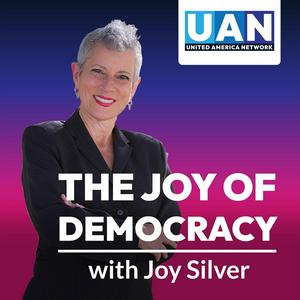
The Joy of Democracy is a public affairs podcast hosted by Joy Silver, chair of the Riverside County Democratic Party. Episodes cover local government, grassroots organizing, voting rights, public policy, community issues, and the choices that shape quality of life. The show also spotlights the work of candidates, community leaders, volunteers, organizers, and everyday activists who are driving change at the local and state level.
Through in-depth interviews and real-world stories, listeners gain insight into the people and movements shaping the future of Riverside County and California politics. Perfect for listeners interested in California politics, local government, civic action, and grassroots movements and people who believe in democracy as lived practice, civic responsibility, public power—and political consequence.
Podcast websiteListen to The Joy of Democracy, Becoming UnDone® with Dr. Toby Brooks and many other podcasts from around the world with the radio.net app
Get the free radio.net app
- Stations and podcasts to bookmark
- Stream via Wi-Fi or Bluetooth
- Supports Carplay & Android Auto
- Many other app features
Get the free radio.net app
- Stations and podcasts to bookmark
- Stream via Wi-Fi or Bluetooth
- Supports Carplay & Android Auto
- Many other app features
The Joy of Democracy
Scan code,
download the app,
start listening.
download the app,
start listening.
The Joy of Democracy: Podcasts in Family
 USA
USA