
Listen to this podcast in the app for free: Download for free in the App Store
radio.net
Sleep timer
Save favorites
405 episodes
Why You Take Everything Personally (And How To Stop Believing It’s Always About You)
11/04/2026 | 23 mins.Why do we take everything so personally? Do you overthink text messages, assume someone's upset with you when they're just having a bad day, or interpret feedback as proof you're not good enough? If you constantly read into other people's behaviour and assume the worst, this episode is a must-listen.
This week, I share how I've been working on taking things less personally, managing rejection sensitivity, and overcoming the social hypervigilance that can cause us to read into every single interaction.
I explore the psychology behind why we’re so quick to perceive rejection and criticism, even when it has literally nothing to do with us.
We cover practical strategies and reframes to stop taking things personally, including how to separate facts from the stories you're telling yourself, assuming positive intent, and getting curious about the other, instead of immediately turning inward and overanalyzing.
The goal definitely isn't to stop being a sensitive person or pretend you don't have feelings (I really do believe my sensitivity is a superpower)… it's to stop interpreting every unanswered text, cancelled plan, or bad mood as evidence that you aren’t loved, accepted, or included.
Ultimately, not everything is about you—and that’s a good thing. Remembering that it’s usually not personal can free up SO MUCH mental energy and allow you to be more present in your life. You can be a sensitive person who cares deeply about your relationships without taking responsibility for every little thing people do.
Tune in to learn about:
Why some people are more sensitive to perceived rejection, criticism, and exclusion
Rejection sensitivity and social hypervigilance: why we monitor other people's moods and behaviour
The impact on taking things personally in every pillar of life
The spotlight effect and why we overestimate how much other people notice us
How to separate what actually happened from the stories and assumptions you're creating
Why we fall into mind-reading, overthinking, and rumination when we feel rejected or insecure
The power of assuming positive intent and considering other person’s circumstances
Why getting curious, asking questions, and communicating directly changes everything
How to manage emotional reactivity without suppressing your feelings
Practical questions to help challenge anxious assumptions
For advertising and sponsorship inquiries, please contact Frequency Podcast Network.
Subscribe to my Substack:
teachmehowtoadult.substack.com
Follow us on the ‘gram:
@teachmehowtoadultmedia
@gillian.berner
Follow on TikTok: @teachmehowtoadult
Subscribe on YouTube
Hosted by Simplecast, an AdsWizz company. See pcm.adswizz.com for information about our collection and use of personal data for advertising.ICYMI: Stuck In Dating? A Framework To Overcome Common Self-Sabotaging Patterns, with Amy Chan
11/02/2026 | 7 mins.If modern dating feels like an episode of Black Mirror, you're not alone. So we're throwing it back to dating advice that can help you date smarter and build healthy relationships that last.
Welcome to today’s ICYMI, where we kick off the week with a quick game-changing tip from an episode that you might have missed.
Relationship expert Amy Chan breaks down the toxic dating patterns that can keep people from finding the relationships they want, the mistakes singles are most commonly making, and how to stop self-sabotaging your love life. Plus, Amy’s Dating Funnel framework for approaching your dating life with clarity and confidence.
Amy has been a trusted voice in modern relationships for almost two decades. She’s the author of UNSINGLE: How to Date Smarter and Create Love that Lasts (which comes out this April 28th!) and her popular first book, Breakup Bootcamp: The Science of Rewiring Your Heart, was featured in The New York Times. She’s the founder Renew Breakup Bootcamp, the world's first heartbreak retreat, and she’s on faculty at Esalen and The Omega Institute.
Listen to the full episode with Amy here!
Tune in every Monday for an expert dose of life advice in under 10 minutes.
Follow Amy on Instagram and her website.
You can order her new book, Unsingle, here.
Subscribe to my Substack:
teachmehowtoadult.substack.com
Follow us on the ‘gram:
@teachmehowtoadultmedia
@gillian.berner
Follow on TikTok: @teachmehowtoadult
Subscribe on YouTube
Hosted by Simplecast, an AdsWizz company. See pcm.adswizz.com for information about our collection and use of personal data for advertising.How to Stop Overthinking Decisions and Trust Yourself, with Therapist Jenna Overbaugh
10/28/2026 | 1h 12 mins.Why is it so damn hard to make decisions? And why are we so afraid of making the wrong choice? If you overthink every option, struggle with decision anxiety, second-guess yourself, or feel like you’re always chasing 100% certainty, this episode is for you.
Whether you’re questioning your relationship, contemplating a career change, navigating a major life transition, or struggling with everyday choices, the fear of making the wrong decision can feel paralyzing. So I called in licensed therapist, Jenna Overbaugh, to talk about overcoming analysis, ending the anxiety loop that keeps us stuck in decision-making, and building the confidence and self-trust to stick to our decisions… even when we feel uncertain. My biggest takeaway? Self-trust isn't knowing you'll make the "perfect" decision — it's knowing you can handle the consequences of an imperfect one.
We explore the fantasy of the “perfect life”, why endlessly researching, analyzing, and seeking reassurance can worsen decision anxiety, how cognitive distortions can skew our perception of our options, and how to build your tolerance for uncertainty.
The goal isn't to make decisions you’ll never regret. It’s to become someone who trusts themselves to handle uncertainty, discomfort, and whatever happens next. By the end of this episode, I hope you’ll have a roadmap for developing self-trust, without waiting until you feel completely ready.
Jenna Overbaugh is an internationally recognized expert in OCD, anxiety disorders, and intrusive thoughts. She has worked at world-renowned treatment facilities, and her work reaches hundreds of thousands of people through her courses, her popular social media channels, and her podcast/Substack. Her debut book, Making Peace With A Noise Mind, is coming this February.
Tune in to learn about:
Decision anxiety and analysis paralysis: why we get stuck trying to find the perfect choice
How to overcome the fear of making the wrong decision, and choose based on your values
How to distinguish your feelings and intuition from your anxiety
How to build self-trust and increase your tolerance discomfort
What to do when your brain gets stuck in “what if” thinking
How to tell the difference between productive problem-solving and overthinking or rumination
How to navigate doubts about big life choices, like your partner, your career, or your kids
Understanding cognitive distortions, like black-and-white thinking and mental filtering
What exposure and response prevention (ERP) is and how it can help with anxiety, OCD, and uncertainty
Why you don't need to feel completely ready or confident before making a meaningful change
Resources mentioned:
https://jennaoverbaughlpc.com/
The Yerkes Dodson Curve
For advertising and sponsorship inquiries, please contact Frequency Podcast Network.
Subscribe to my Substack:
teachmehowtoadult.substack.com
Follow us on the ‘gram:
@teachmehowtoadultmedia
@gillian.berner
Follow on TikTok: @teachmehowtoadult
Subscribe on YouTube
Hosted by Simplecast, an AdsWizz company. See pcm.adswizz.com for information about our collection and use of personal data for advertising.ICYMI: The 3 Stages Of Relationships, And How To Move From Enmeshment To Differentiation To Interdependence, with Baya Voce
10/26/2026 | 12 mins.Are you deep in the infatuation stage? Or is your relationship stuck in the power struggle of trying to change each other, trying to protect your independence, or falling into an avoidant-pursuer dynamic? It turns out, we all have to go through that phase. Welcome to today’s ICYMI, where we kick off the week with a quick game-changing tip from an episode that you might have missed.
We're throwing it back to invaluable advice from renowned relationship repair expert Baya Voce, MSW, on how to move through the three stages of relationships to land in the healthy spaciousness of interdependence. We talk about the journey from infatuation, to power struggle, to disillusionment, to interdependence, with proven tools and insights for transforming conflict into deeper connection.
If you’re in love, want love, or care about love, this is the guide we all need for working towards interdependence, and creating love that lasts.
With an MSW from Columbia University, Baya specializes in couples counselling and MDMA-assisted couples therapy research, and is supervised by Esther Perel. Her work has been featured in a TED Talk, on Vice, Forbes, MTV, and ABC, and her videos on everything from boundaries, to using AI for therapy, to navigating jealousy, have been viewed by millions.
Listen to the full episode with Baya here!
Tune in every Monday for an expert dose of life advice in under 10 minutes.
Resources & Links:
Follow Baya on Instagram: @bayavoce
Baya’s website: https://bayavoce.com/
Subscribe to my Substack:
teachmehowtoadult.substack.com
Follow us on the ‘gram:
@teachmehowtoadultmedia
@gillian.berner
Follow on TikTok: @teachmehowtoadult
Subscribe on YouTube
Hosted by Simplecast, an AdsWizz company. See pcm.adswizz.com for information about our collection and use of personal data for advertising.The Psychology of Trauma Responses: Freezing, Fawning, and The Unconscious Ways We Survive Traumatic Experiences
10/21/2026 | 14 mins.Trigger warning: This episode discusses sexual assault, trauma, and survivor experiences. Please take care of yourself and skip this one if you need to.
I’ve been thinking a lot about the Cornell 7 case recently, and how, a decade after the #MeToo movement, we’re still seeing the same backlash, criticism, victim-blaming, and lack of understanding about what actually happens to so many people during and after a traumatic experience.
So today, in hopes of creating more compassion and understanding in how we respond to victims who experience trauma, we’re unpacking the psychology of trauma responses — and why the ways people react to fear and coercion are so often misunderstood.
We hear a lot about the fight-or-flight response, but what happens when your body freezes, shuts down, or tries to appease the threat? In this episode, we explore the two lesser-understood survival responses: freeze and fawn. Fawning is when someone tries to stay safe by placating, appeasing, or complying with a threat. Freezing is a mental or physical shutdown that can involve immobility, silence, numbness, or dissociation.
These trauma responses are not conscious choices. When someone freezes instead of fights, that isn’t evidence of consent. These are involuntary responses to perceived danger, shaped by our nervous system, past experiences, and the circumstances we find ourselves in.
Whether you’re trying to make sense of your own experience, support someone you love, or better understand the psychology of trauma responses, I hope this offers some clarity and compassion.
Tune in to learn about:
How trauma responses actually work
Why survivors of a traumatic experience may freeze, shut down, dissociate, or be unable to fight back
What fawning is, why we appease or comply when we feel threatened, and how people-pleasing can become a survival response
The shame, guilt, and self-blame that often accompanies freezing or fawning
How social conditioning around politeness and people-pleasing can shape women's responses to threatening situations
Why processing and reporting sexual assault is so difficult
How to respond with more compassion and understanding when someone shares a traumatic experience
If you’re struggling with a traumatic experience, please talk to someone you love and trust, or visit a resource like RAINN.org for support.
For advertising and sponsorship inquiries, please contact Frequency Podcast Network.
Subscribe to my Substack:
teachmehowtoadult.substack.com
Follow us on the ‘gram:
@teachmehowtoadultmedia
@gillian.berner
Follow on TikTok: @teachmehowtoadult
Subscribe on YouTube
Hosted by Simplecast, an AdsWizz company. See pcm.adswizz.com for information about our collection and use of personal data for advertising.
More Business podcasts







Trending Business podcasts
























About Teach Me How To Adult
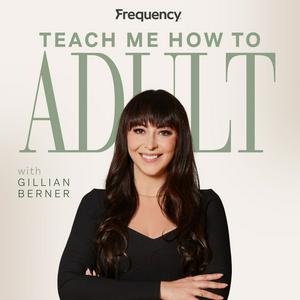
Teach Me How To Adult tackles the deep questions that help us know ourselves, and each other, a little better… how do we have better conversations? How do we grow together in our relationships, instead of apart? How do we stay optimistic when the world is a dumpster fire? Are we really in a loneliness epidemic? How do we cultivate more awe? Why are everyone’s hormones so out of whack? Is everyone having more sex than me?
Join host and writer Gillian Berner every week for expert interviews and meaningful conversations on the growth, changes, and transitions of adulthood. Wherever you are on your journey, we’re here to figure out the messiness of being human, together.
Podcast websiteListen to Teach Me How To Adult, REAL AF with Andy Frisella and many other podcasts from around the world with the radio.net app
Get the free radio.net app
- Stations and podcasts to bookmark
- Stream via Wi-Fi or Bluetooth
- Supports Carplay & Android Auto
- Many other app features
Get the free radio.net app
- Stations and podcasts to bookmark
- Stream via Wi-Fi or Bluetooth
- Supports Carplay & Android Auto
- Many other app features

Teach Me How To Adult
Scan code,
download the app,
start listening.
download the app,
start listening.
 USA

