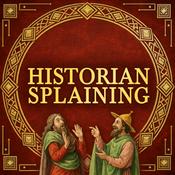
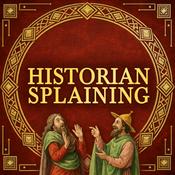
PodcastsHistoryHistoriansplaining: A historian tells you why everything you know is wrong

Historiansplaining: A historian tells you why everything you know is wrong

Samuel Biagetti, PhD
Historiansplaining: A historian tells you why everything you know is wrong
Latest episode

211 episodes

  • Historiansplaining: A historian tells you why everything you know is wrong

    Virginia, pt. 2 -- A Dominion on Fire, 1646-1685

    04/28/2026 | 1h 47 mins.
    We consider Virginia’s tumultuous rise to wealth and prominence as the so-called “Old Dominion” and one of the largest European settler colonies in the world –from the colony’s dangerous stand in the English Civil War, through the subsequent demographic boom, and the codification of chattel slavery – as all the while, social tensions escalated, with the growing underclass of smallholders and landless laborers chafing against gentry rule. We disentangle how a trade dispute between planters and the Doeg Indian tribe on the Potomac River touched off a massive rebellion that overthrew the royal governor, laid waste to Jamestown and many of the great plantations, and threatened to destroy the English colonial enterprise, before order was restored, and the colony was set a new path towards becoming a slave society.

    Please become a patron to hear all patron-only lectures, including “Virginia, pt. 1,” on Jamestown and the creation of the colony: www.patreon.com/c/u5530632

    Suggested further reading: Morgan, “American Slavery, American Freedom: The Ordeal of Colonial Virginia”; Wertenaber, “The Planters of Colonial Virginia”; Kupperman, “The Jamestown Project”; Billings, Selby, & Tate, “Colonial Virginia: A History”

    Image: Depiction of Nathaniel Bacon & the burning of Jamestown, from Jamestown-Yorktown Foundation
  • Historiansplaining: A historian tells you why everything you know is wrong

    Excerpt: Virginia, pt. 1 -- The Successful Failure, 1607-1646

    04/17/2026 | 10 mins.
    Virginia began from a small, undersupplied wooden fort immersed in a brackish and malarial marsh to become, after 30 years, the largest and most valuable colony in North America, pulling in thousands of indentured workers and African slaves each year and pumping out millions of pounds of tobacco. In achieving this shocking metamorphosis, the colonists had to contend with the Powhatan Confederacy, one of the strongest indigenous states in the Americas, which ruled the Tidewater region; and they had to to choose among different forking paths that might have led to an entirely different relationship between Indians and English.
    We consider the unrealized possible histories that iconic figures like John Smith and Pocahontas came to symbllize, and the reasons why the English backers poured so many resources and human lives into this endeavor of conquest and colonization, ultimately supplanting Powhatan civilization and creating a cash-crop colony.

    Please become a patron to hear all patron-only lectures: www.patreon.com/c/u5530632

    Suggested further reading: Morgan, “American Slavery, American Freedom: The Ordeal of Colonial Virginia”; Wertenaber, “The Planters of Colonial Virginia”; Kupperman, “The Jamestown Project”; Billings, Selby, & Tate, “Colonial Virginia: A History”

    Image: Portrait of Matoaka / Pocahontas / Rebecca Rolfe, by WL Sheppard, 1891, based on an unknown original allegedly from life, 1616
  • Historiansplaining: A historian tells you why everything you know is wrong

    Unlocked: History of United States in 100 Objects -- Beaver Fur Hat, 1590-1670

    04/11/2026 | 51 mins.
    Unlocked after 1 year for patrons only: A tall “stovepipe” hat, which was made in the 1600s out of felt from beaver fur and likely belonged to a powerful member of the English Parl

    A tall “stovepipe” hat, which was made in the 1600s out of felt from beaver fur and likely belonged to a powerful member of the English Parliament, illustrates the extraordinary value of finely made hats, which fueled centuries of colonization, exploration, diplomatic feuding, and warfare all across North America, as European empires and Native American nations competed fiercely for control of the lucrative fur trade.

    Costume history blog post on beaver hats, with comtemporary artworks, by Gail Kellogg Hope: https://artbeautyandwell-orderedchaos.blogspot.com/2011/04/beaver-hats.html

    Dissertation by Elizabeth McFadden, on “Fur Dress, Art, and Class Identity in Sixteenth- and Seventeenth-Century England and Holland,” at: https://escholarship.org/content/qt79w6n34n/qt79w6n34n.pdf?t=q6z2rg

    Alice Morse Earle’s “Two Centuries of Costume in America,” vol. 1, 1620-1820: https://www.gutenberg.org/cache/epub/10115/pg10115.txt

    Weiss Gallery page with portrait of Sir Rowland Cotton (1581-1634) holding a felt hat: https://www.weissgallery.com/artworks/categories/2/9411-paul-van-somer-c.1577-1622-sir-rowland-cotton-1581-1634-of-alkington-painted-1618/
  • Historiansplaining: A historian tells you why everything you know is wrong

    The Elizabethan Dream: How England Became a Sea Power

    03/20/2026 | 2h 6 mins.
    We follow the adventures and the atrocities of the English “sea dogs,” from raiding ports in West Africa and Spanish mule trains in Central America to scrounging for gold in the Canadian tundra, as the Tudor regime exploited England’s expertise in sailing and navigation to undermine the Spanish empire and try to turn the Atlantic into a massive free-trade zone. We uncover why Elizabethan England never created lasing colonies of their own, until the accession of the first Stuart king in 1603 led to a profound shift in policy, paving the way for the first English colonies beyond Ireland and the extension of the “British empire” to America.

    Patrons: comment on this post to let us know which country or state you are in: https://www.patreon.com/posts/tell-me-where-153392904

    Please become a patron to hear all patron-only lectures: https://www.patreon.com/c/u5530632

    My previous lecture on England in the Tudor Age: https://soundcloud.com/historiansplaining/age-of-absolutism-2-tudor-england-1485-1603

    My interview with historian Melissa Morris on the early European colonies in Guiana, South America: https://soundcloud.com/historiansplaining/before-jamestown-when-england-colonized-the-amazon-a-conversation-with-melissa-morris

    Image: the “Armada Portrait” of Queen Elizbeth I, version probably commissioned by Francis Drake; notice English & Spanish ships seen over queen's shoulders, & queen’s hand resting on North America on the globe, representing her purported claim to that land

    Suggested further reading: Armitage, “Ideological Origins of the British Empire”; Kupperman, “The Jamestown Project”
  • Historiansplaining: A historian tells you why everything you know is wrong

    Acadia: First Foothold in the North

    02/27/2026 | 1h 34 mins.
    We follow the tortuous beginnings of Acadia, the first northern European colony in America -- a string of remote fishing and fur trading outposts, Catholic missions, and French farming villages, which had to withstand a harsh, remote environment, religious and political feuding, a near civil war, and frequent privateer attacks, in order to persist through the seventeenth century and finally begin to develop a distinctive Acadian provincial society which would later survive global war and ethnic cleansing.

    Please become a patron to hear patron-only lectures -- www.patreon.com/user?u=5530632

    My previous lecture on Bourbon France in the same period: https://www.patreon.com/posts/age-of-3-bourbon-44146424

    Suggested further reading: N. Griffiths, “The Contexts of Acadian History” & “From Migrant to Acadian: A North American Border People”; Arseneault, “History of the Acadians”

    Image: Depiction of Belle-Isle area just outside of Port Royal from French census of 1686

    Music: “Danse des Sauvages,” from “Les Indes Galantes” by Rameau, performed by Les Arts Florissants

More History podcasts

About Historiansplaining: A historian tells you why everything you know is wrong

So much of what we learn in a standard history class, and in the culture around us, are just cliff-note narratives, crafted to explain how things appear, rather than how things actually came to be. Peel back the layers of time and place with this thoroughly researched, college-level history podcast with over 200 episodes that uncover the forgotten forces that shaped – and that are still shaping – our world today. There are no commercials in this long-form podcast. More information can be found at Historiansplaining.com, where you can hear Quick Samples of every episode, easily find related episodes based on topic, discover episodes by geographic location on a map of the world or on a timeline of world history, and much more. There’s so much to explore with Samuel Biagetti, PhD, in these conversational lectures and interviews, each one presenting hidden landscapes from the past that put the moments and movements of today’s world in a tangible, thought-provoking light. Press play for the joy of a great college-level course in history, without any of the homework! Unlock the most content by becoming a supporter through Patreon. You choose the amount you want to contribute, and your support helps keep the podcast commercial free! Visit patreon.com/user?u=5530632 Support through Patreon from listeners like you is the only source of ongoing funding for this podcast.
Podcast website

Listen to Historiansplaining: A historian tells you why everything you know is wrong, The Rest Is History and many other podcasts from around the world with the radio.net app

Get the free radio.net app

  • Stations and podcasts to bookmark
  • Stream via Wi-Fi or Bluetooth
  • Supports Carplay & Android Auto
  • Many other app features
Social
v8.8.16| © 2007-2026 radio.de GmbH
Generated: 5/11/2026 - 4:19:41 AM