

Listen to this podcast in the app for free: Download for free in the App Store
radio.net
Sleep timer
Save favorites
242 episodes
Midwifing the Diamond Approach: How the Teaching Found and Transformed Hameed Ali & Karen Johnson
09/17/2026 | 1h 3 mins.Ep. 242 | What a gift to have Karen Johnson and A. H. Almaas (Hameed Ali) together in conversation to explore their extraordinary journeys of awakening and share the remarkable ways presence found to transform their hearts and minds—all of which culminated in the contemporary spiritual path known as the Diamond Approach. Karen’s book, The Jeweled Path (the basis for this Jeweled Path Series), chronicles Karen and Hameed’s spiritual adventures from the beginning: what happened in their childhoods, how they first met, the emerging realization that what they were experiencing was shaping into a unique path of awakening that others could follow and benefit from also, through the establishment of the Ridhwan School, home of the Diamond Approach.
In this dialogue, Karen tells how incredible spiritual experiences would come to them right in the midst of life—in the grocery store, on the way to work, in a bar… And we hear the resonant story of when Hameed poured a life-changing transmission of presence into her hand. Karen and Hameed’s vivid descriptions of what they experienced—“explosions of consciousness,” “streams of awakening,” “becoming a body of light, fullness, and presence, nowness embodied”—are awakening transmissions in their own right. And the point they drive home—that they were not the founders of the Diamond Approach, rather the teaching found them—has the magical effect of opening us to see reality in a different way. Listening to Karen and Hameed discuss their experiences, insights, and the emergence of the Diamond Path is simply an amazing experience on its own. Recorded August 13, 2026.
“The interesting thing about presence is, if you talk about it when it’s not there, it’s just an idea—because presence is only now.”
Topics & Time Stamps
Introducing Karen Johnson, co-founder of the Diamond Approach, who joins Hameed Ali in The Jeweled Path Series which focuses on her book The Jeweled Path: The Biography of the Diamond Approach to Inner Realization (00:42)
How did it come about that Karen & Hameed were able to found a spiritual path together? (01:51)
The personal element in the Diamond Approach allows for the spiritual possibilities of relationship (10:01)
Hameed & Karen’s conversations evolved into the student/teacher practice of inquiry so essential to the Diamond Approach (15:42)
How Hameed switched from training to be a scientist to investigating the nature of reality (17:16)
Hameed kept disciplined notes which allowed them to track their experiences, make sense of them over time, and realize this teaching was for others too (20:51)
For Hameed, it wasn’t one awakening but a stream of awakenings (22:39)
If Hameed talked about an experience, Karen would start to feel it (28:28)
Karen’s experience of Hameed pouring a transmission into her hand (30:36)
For some an awakening flushes out blocks & barriers, for others not (34:18)
Hameed was able to collect presence in his hand and then give it away (36:53)
For Karen, the transmission wasn’t just an experience, it was realizing: this is what you are (37:47)
When a bubble of pure awareness came to Karen & Hameed in a bar (38:49)
What is a transmission? (40:56)
How Hameed’s motorcycle accident brought in the diamond structure (46:08)
This is a spiritual path of felt understanding, not merely intellectual understanding (49:24)
A teacher isn’t just transmitting all the goodies, they’re also transmitting all the grit (51:19)
Hameed would receive transmissions from other teachings encompassing their whole path (52:32)
Hameed & Karen were sure they would find explanations for their experiences in other teachings (54:40)
Other twosome spiritual relationships: Aurobindo & the Mother, the founders of A Course in Miracles, Rumi & Shams, and more (56:19)
Resources & References
A. H. Almaas (Hameed Ali) and Karen Johnson, co-founders of The Ridhwan School, home of The Diamond Approach
Karen Johnson, The Jeweled Path: The Biography of the Diamond Approach to Inner Realization
A. H. Almaas & Karen Johnson, The Power Of Divine Eros: The Illuminating Force of Love in Everyday Life
A. H. Almaas, The Pearl Beyond Price: Integration of Personality into Being: An Object Relations Approach
The 16th Karmapa and the Black Hat Ceremony
Sri Aurobindo
A Course in Miracles, Helen Schucman and the Foundation for Inner Peace
The Jeweled Path Series is based on Karen Johnson’s wonderful, in-depth recounting of how the Diamond Approach came into being through Hameed Ali and herself in her book The Jeweled Path: The Biography of the Diamond Approach to Inner Realization, so listeners may want to get a copy of this book to study and follow along on this journey of awakening to presence.
---
Karen Johnson is the co-founder of the Diamond Approach as it is taught in the Ridhwan School today, having worked alongside Hameed Ali (A. H. Almaas) for the last 50 years. Karen was trained in art and dance and began the journey into the spiritual universe at 14 years old with the guidance of her parents. First, she was introduced to yoga and meditation, and then learned about other forms of spiritual practice. After attending California College of Arts and Crafts, she befriended Hameed Ali, and began a new trajectory where journeying into the secrets of the universe of Being became central to her life.
The joy of discovery turned out to be a unique and specific approach to inner experience, which became the Diamond Approach. Karen received an MA in psychology JFK University in 1990. She continues to venture into the endless realms of the miraculous with her spiritual companion. She is the author of The Jeweled Path: The Biography of the Diamond Approach to Inner Self-Realization, and co-author with A. H. Almaas of The Power Of Divine Eros.
---
Hameed Ali (A. H. Almaas) was born in Kuwait in 1944. At the age of eighteen, he moved to the U.S. to study at the University of California in Berkeley. Hameed was working on his Ph.D. in physics when he reached a turning point in his life and destiny that led him to inquire into the psychological and spiritual aspects of human nature rather than the physical nature of the universe. He left the academic world to pursue an in-depth journey of inner discovery, applying his scientific precision and discipline to personal, experiential research. This included study with different teachers in different modalities, extensive reading, and continuous study of his own consciousness in an effort to understand the essential nature of human experience and reality in general.
Hameed’s...Transmuting Life’s Tragedies: Embracing a Post-Tragic Perspective
09/03/2026 | 1h 19 mins.Ep. 241 | A deeply engaging conversation in which Alexander Love, adult development expert and coach, and author of the soon-to-be-published trilogy Evolutionary Gestures, introduces us to the post-tragic perspective, with all of its potential to nourish, ground, and open us to a world of possibilities. Alexander explains that post-tragic is not a developmental stage per se, but a dimension available to anyone willing to do the work. It’s part of a triad—pre-tragic innocence, tragic disillusionment, and post-tragic possibilities—encountered in every wisdom tradition, the hero’s journey, and every good story. Post-tragic is not about leaving the tragedy (trauma, pain, loss) behind, but about turning toward it and dropping into a dimension of being that can interface with it in a new way, from a place that isn’t divided or broken. It’s also about asking, what happens next, after the tragedy? How does the story proceed?
Shattering our certainty, a tragic event in our lives makes our world more diaphanous, Alexander continues, opening the way for us to lean further into the mystery. Here we encounter the vastness of possibility, the mystery being the first imagined wholeness, the seed of all potentiality, and we begin to see the sacred and the beauty in everything. Though the healing notion of facing our trauma and working through it is not new, Alexander’s pre-tragic, tragic, and post-tragic framework (deeply informed by his own experience) is compelling. With it, he has painted in the entire landscape around the core tragedy or trauma, giving us the full picture, the before and after, and connected us with a dimension of compassion and forgiveness that is liberating and full of promise. A wise, gentle, intense, warm, humble conversation. Recorded April 23, 2026.
“It’s not forgive and forget… It’s remember deeply. Become so intimate with what happened, feel every aspect of it, and let it be transformed by love.”
Topics & Time Stamps
Introducing Alexander Love, adult development expert, coach, acupuncturist & founder of eos, an organization focused on deep transformation (00:52)
What brought Alexander to the field of adult development? (02:03)
The sacred gap: the space between knower and known (03:46)
The alternative to uncertainty and chaos is leaning into the mystery (05:53)
Turning away from our traumas deepens our sense of separation (06:59)
Meeting with his father’s murderer: an infinite degree of forgiveness is available (09:32)
What is forgiveness? (13:00)
How do we get closer to our pain? (16:52)
Pre-tragic, tragic & post-tragic: innocence, disillusionment, possibility (19:38)
Protecting children so they can internalize a sense of fundamental goodness (24:20)
With tragic disillusionment our meaning becomes shattered (26:01)
Both pre-tragic innocence & tragic disillusionment are within us (33:06)
Orienting towards tragedy from an unbroken dimension of being; transmuting our pain by developing relationship (34:15)
The arc of transformation requires going beyond awareness of our patterns to embracing them (39:13)
The first 3 phases of transformation: fusion, differentiation, relationship (42:20)
The post-tragic architecture includes finding sacred beauty in the world (44:20)
Primordial purity: even with all the suffering, there is perfection (50:17)
The tragic fracturing of meaning makes the world more diaphanous (52:05)
Post-tragic possibility is a depth dimension, it’s not just “growing up” (54:04)
Compassion is embracing another’s suffering with a quality of loving presence that transmutes the suffering (58:49)
The Mystery is the first imagined wholeness, the seed of potentiality (1:04:47)
An invitation to be curious, to ask how we are using our capacity to witness (1:07:15)
Alexander’s book-in-progress, The Evolutionary Gestures Trilogy (1:13:20)
We need a new chapter in history to address the complexity and the horrors of this time (1:17:10)
Resources & References
Alexander Love, facilitator, developmental coach, acupuncturist, senior faculty at the Newfield Network & founder of eōs wellness center
Alexander Love’s The Evolutionary Gestures Trilogy is expected to be published in the fall of 2026
“The Room: A Story from the Evolutionary Gestures Trilogy” read by Alexander (YouTube video)
Ken Wilber’s Integral Theory: What is the Integral Approach? (Integral Life website)
Oscar Mandel, A Definition of Tragedy
Judy Schavrien, “Shakespeare’s Cymbeline and the Mystical Particular: Redemption, Then and Now, for a Disassembled World”
Frederick Perls, Gestalt Therapy Verbatim
Joseph Goldstein, Living on the Spiritual Edge (Deep Transformation podcast)
---
Alexander Love, MCC, NCC, M.Ac. is an acupuncturist, developmental coach, and facilitator. He serves as Director of Curriculum Development and Senior Facilitator at the Newfield Network, an international coach training, personal transformation, and leadership development organization, where he facilitates trainings in the United States and leads advanced trainings in Chile. He also teaches with Stages International and is a certified STAGES scorer.
Alexander’s forthcoming book, The Evolutionary Gestures Trilogy, is a mythopoetic exploration of the sacred gap — the space between self and world where insight awakens alongside the deep pain of separation. The work is grounded in the story of his father’s murder and the restorative justice dialogue he later held with the man who took his father’s life — an experience that profoundly shaped his understanding of healing, accountability, and reconciliation, and continues to inform his work today. Through magic realist memoir, evocative artwork, and a novel articulation of human becoming, this volume opens toward post-tragic possibility while introducing a distinctive developmental vision. You can learn more about Alexander at alexanderlove.org and newfieldnetwork.com.
---
Podcast produced by Vanessa Santos and Show Notes by Heidi MitchellMany Truths, Many Teachings: Why Spiritual Paths Unveil Reality Differently
08/20/2026 | 1h 12 mins.Ep. 240 | Co-host Roger Walsh found the novel concepts that A. H. Almaas presents in The Inner Journey Home’s Appendix G so intriguing, he asked Hameed for one last discussion to complete Deep Transformation’s systematic exploration of Hameed’s magnum opus. In Appendix G (and in this conversation), Hameed says that while there are many valid paths of awakening, different paths do not culminate in the same realization or experience. In other words, the Chinese proverb that says there are many ways to the top of the mountain, but the view is always the same is not accurate. Each spiritual teaching has its own logos, Hameed explains, its own “logic of experience and logic of practice that will naturally unfold the consciousness to open up to the secrets of reality and the depth of it, according to that particular logos.” This makes it possible for all different types of people, also from very different cultures, to “open to the perfection of reality in a way that liberates and makes sense to them.”
The logos of a spiritual teaching is not created by anyone, Hameed continues. This is reality practicing its intelligent, creative, and loving magic by manifesting through an individual or community to provide us with different ways of realizing true nature. When we find the right path, the teaching will “click,” Hameed says, and with time and practice, we may crack the code of the logos of our chosen path and fulfill our spiritual destiny. The conversation weaves in and out of the fascinating implications of Hameed’s teaching, clarifying why Eastern and Western spiritual teachings are so different, and what differentiates the logos of the Diamond Approach. In wrapping up, Roger and John acknowledge that their intensive study of The Inner Journey Home provided them with a transmission—and a transformation. Hameed agrees; by deeply contemplating this book, he says, we open ourselves to the transmission, to the understanding and experiencing of what is presented. Recorded July 16, 2026.
“Each path takes a human being deeper, vaster, bigger places… each particular logos can be seen as an expression of the optimizing force of the universe and logos.”
Topics & Time Stamps
Introducing dialogue #20 in the A. H. Almaas Wisdom Series, focusing on Appendix G of The Inner Journey Home: “Logoi of Teachings” (00:54)
Defining “logos”: reality has an order to it, it’s not haphazard (03:13)
Each teaching has its own logos, its own order & logic (08:34)
Comparing the goals of Mahayana Buddhism & Advaita Vedanta: clarity & emptiness versus beingness (11:27)
Getting beyond the idea of the “transcendental unity of religions” (14:59)
For the logos to reveal the mystery of the teaching, you have to crack the code (19:31)
The optimizing force of the logos: some are aligned with it, most people are not (21:56)
Why are Eastern traditions very different from Western traditions? (25:40)
Most masters don’t explore other teachings (28:07)
Matching the teaching to the student (35:23)
The challenge is to find the wisdom path that speaks to you so you can fulfill your spiritual destiny (39:38)
Krishnamurti and the pathless path (42:08)
The logos manifests through an individual or community; it’s not created by anyone (44:44)
The logos of the Diamond Approach does not cloak reality by calling it illusion (45:55)
The absolute: the dimension of mystery (49:05)
Different traditions emphasize different spiritual qualities; some don’t even mention qualities (51:51)
The logos of the shamanic realm (56:18)
What differentiates the Diamond Approach’s logos from other traditions? (57:45)
Contemplating The Inner Journey Home deeply, it becomes a transmission (1:04:48)
The Deep Transformation journey with Hameed will continue (1:09:27)
Resources & References
A. H. Almaas (Hameed Ali), founder of The Ridhwan School, home of The Diamond Approach
A. H. Almaas, The Inner Journey Home: Soul’s Realization of the Unity of Reality
The Rigveda, the oldest known Vedic Sanskrit text
A. H. Almaas Wisdom Series, Dialogue #15 focuses on the chapter “Logos & Creative Dynamism” in The Inner Journey Home (YouTube video)
Mahayana Buddhism, Advaita Vedanta, Dzogchen
The Rimé movement, spearheaded by Jamyang Khyentse Wangpo and Jamgön Kongtrul Lodrö Taye in Eastern Tibet
Krishnamurti, Truth is a Pathless Land
A. H. Almaas, Runaway Realization: Living a Life of Ceaseless Discovery
Kashmir Shaivism
The Path of Love Series with A. H. Almaas (Deep Transformation podcast series)
On the qualities of the Diamond Path: A. H. Almaas Wisdom Series Dialogue #4, Discovering the Soul’s Treasures
Karen Johnson, co-developer of the Diamond Approach, The Jeweled Path: The Biography of the Diamond Approach to Inner Realization
---
The A. H. Almaas Wisdom Series generally follows the sequence of Hameed’s magnum opus, The Inner Journey Home (which John describes as psychoactive and spiritually, psychologically, and intellectually transformative), so listeners may want to get a copy of this book, to study and follow along on this exhilarating path of awakening.
---
More Conversations with A. H. Almaas to Come
Deep Transformation is excited to let you know that our talks with A. H. Almaas will continue. Following this A. H. Almaas Wisdom Series, we plan to release a delightful and deep Jeweled Path Series with Karen Johnson, author of The Jeweled Path, and Hameed Ali together, as co-founders of the Diamond Approach. After that, we plan on exploring Hameed’s Runaway Realization: Living a Life of Ceaseless Discovery, which gets into the further turnings of his teaching, in the same systematic way we have enjoyed exploring The Inner Journey Home.From Lifespan to Joyspan: Embracing a Growth Mindset for Aging
08/06/2026 | 50 mins.Ep. 239 | Renowned gerontologist and author Dr. Kerry Burnight is passionate about changing the way we think about aging. Growing older isn’t a bad thing, she emphasizes, let’s look at what gets better as we get older! Early in Dr. Kerry’s career, she marveled at how elderly people with the same degree of physical health could be absolutely miserable or happily engaged with life, and she dug into finding out why. Her research revealed four pillars of aging that together make all the difference in the quality of our well-being. Kerry urges us to adopt these practices as soon as we can, because just like with cardiovascular training, the earlier we start, the more benefit we accrue. In fact, the evidence is clear: research shows that people who have a “decline mindset” about aging die an average of seven years earlier than their counterparts with a “growth mindset.” It seems our beliefs about aging can easily become self-fulfilling prophecies.
Finding joy in the second half of life involves not only cultivating connection and growth among other things, but also, very importantly, countering our own internalized ageism. Dr. Kerry gives some telling examples of common derogatory thoughts we have about ourselves as we age, and shows us how we can turn this around and step into our power as older people. In a moving testament to the special beauty and authenticity of the elderly, Kerry expresses gratitude for her opportunities as a gerontologist to be infused with the presence of her patients, in all their humility and greater appreciation of friendships, nature, music, art—of life itself. A poignant, lovely, illuminating, and inspiring conversation with someone who lives her talk and is making a meaningful difference in a culture that has lost its way in its approach to aging and caring for elders. Recorded September 18, 2025.
“When we step into our power, we can revolutionize longevity.”
Topics & Time Stamps
Introducing “America’s gerontologist,” Dr. Kerry Burnight, author of Joyspan, The Art and Science of Thriving in Life’s Second Half (00:59)
What is missing in the field of gerontology in America? (01:52)
Lifespan, healthspan…what does “joyspan” signify? (02:44)
The multibillion dollar anti-aging industry works on fear (04:57)
Stepping into our internalized ageism (06:11)
From revering elders for their wisdom to depending on youth to help us with technology (07:38)
How is AI dividing us? (10:05)
Kerry’s 4 pillars of aging: grow, connect, adapt, give (12:55)
The psychological & physical benefits of service & the ripple effects of joy (21:51)
Differentiating joy from happiness: practicing soul-centric activities (23:07)
Beliefs about aging become self-fulfilling prophecies: the decline mindset vs the growth mindset (27:02)
What gets better with aging? (30:23)
How to get this research out to people? (33:24)
Elder abuse, neglect & exploitation: the critical need to protect elders’ access to healthcare & housing (35:01)
World wide poverty and the future for elders (40:47)
Leaning into the older version of ourselves (43:37)
We will all face tough stuff on this journey… but there are things that get better as we age (44:46)
Counter your internalized ageist thoughts! When we step into our power, we can revolutionize longevity (46:56)
Resources & References
Dr. Kerry Burnight, Joyspan: The Art and Science of Thriving in Life’s Second Half
Roger Walsh, Essential Spirituality: The 7 Central Practices to Awaken Heart and Mind
Dr. Laura Mosqueda at UC Irvine (Dr. Kerry’s partner in aging research)
M. T. Connolly, The Measure of Our Age: Navigating Care, Safety, Money, and Meaning Later in Life
Bernadette Boden-Albala, founding dean of public health at UC Irvine
---
Dr. Kerry Burnight, known as America’s Gerontologist, is on a mission to help people fall in love with the rest of their lives. Fed up with the fear-driven, anti-aging hysteria, millions of people turn to her for a proven approach to navigating the new longevity—one based upon a profound truth: the key to good longevity isn’t the length of your life, it’s the quality of your life. Efforts to maximize lifespan, and even healthspan, don’t address the whole picture. Longevity is meaningless if you don’t like your life. In her New York Times best-seller, Dr. Burnight introduces the critical concept of “joyspan,” based on the science of well-being, contentment, connection, meaning, growth, and choice.
Dr. Kerry Burnight taught Geriatric Medicine and Gerontology for 18 years at the University of California, Irvine School of Medicine, where she co-founded and directed the nation’s first Elder Abuse Forensic Center. She currently teaches at the University of Chicago and has been featured in The New York Times, The Guardian, Time Magazine, CBS Mornings, Oprah Daily, CNN, and BBC News. She is the longevity health advisor at Forbes Health and in the TIME 100 Health.
---
Podcast produced by Vanessa Santos and Show Notes by Heidi MitchellMeeting the Pain of the World: A Path to Collective Healing
07/23/2026 | 59 mins.Ep. 238 | In this brilliantly articulated and illuminating conversation, renowned international facilitator Thomas Hübl shares his deep understanding of the dynamics of collective trauma as well as practical wisdom about how we can heal the large, often inherited, wounds we carry. Thomas conveys the magnitude of problems created by shoving our collective wounds out of sight and mind, perhaps the worst consequence of which is when we do this, we are destined to repeat the same horrors over again. What we need, Thomas explains, is to develop an architecture that would provide a healing space to deal with our wounds (racism, genocide, and immigration, to name a few). Meeting our collective pain in this way would allow us to mature to a level of forgiveness where we could collaborate globally on urgent issues like AI and climate change. Without this healing, Thomas says, the energy that can forgive remains frozen in the wound.
The dialogue becomes profoundly hopeful as Thomas describes someone who has met their pain and healed themselves of individual and collective trauma. Listening is like receiving a transmission—for a moment we feel ourselves to be this person: integrated, authentic, vulnerable, fully attuned to our reality, at peace with both the beauty and the difficulties, free of false hopes and unrealistic dreams. If we could embrace the power of collective healing that Thomas has witnessed again and again in his work, and “melt the permafrost of our collective trauma,” we could step out of the never-ending cycle of violence, cruelty, and misunderstanding that will otherwise continue to haunt us. This conversation goes right to the heart of things: if we recognize our interrelatedness and find a way to practice interdependence, we can grow beyond our individual and collective pain into a tremendously more hopeful future. Recorded October 30, 2025.
“Unconscious information is destiny. Conscious information has a choice, has a future.”
Topics & Time Stamps
Introducing teacher, author & facilitator Thomas Hübl, who offers a deep understanding of collective trauma—and collective healing (00:49)
How is Thomas able to stay attuned and hold this large field he works with? (02:43)
Attunement is another way to say interdependence (05:56)
A grounded spiritual practice helps to hold the space & learn from the process, rather than direct the process (06:57)
How does Thomas understand the healing process? (10:51)
Bringing awareness to a collective wound allows it to give its gift (14:03)
Has Thomas found a way of working with the Israel/Gaza situation? (16:03)
Hot trauma is different from historical or ancestral trauma (21:55)
Without processes to deal with large wounds, the repetition compulsion will keep happening (23:00)
How to deal with authoritarian regimes whitewashing history? (25:47)
Huge trauma wounds in the U.S.: racism, genocide, and now immigration (27:07)
We need a collective healing space; everybody who is alive has been born into this legacy and it has become normalized (28:22)
In this global village, there is no “them” anymore (30:25)
Cultural amnesia allows us to live with violence; nonviolence is a natural consequence of realizing interdependence (32:06)
Ethics and health are inherently interrelated (34:17)
You cannot erase history; it’s a felt experience in our bodies (36:14)
The exaggeration of separation & self-righteousness by social media (37:11)
The reality we create with each other is painful; hope lies in a sense of agency (40:16)
How can we forgive horrific violations of life? Melting the permafrost of our collective trauma (42:58)
What does a person look like who has faced these deep issues and healed? (49:08)
The power of healing collectives is very hopeful for accelerating social transformation (55:58)
Resources & References
Thomas Hübl’s website: https://thomashuebl.com/
Thomas Hübl’s podcast: Point of Relation
Thomas Hübl, Healing Collective Trauma
Thomas Hübl, Attuned: Practicing Interdependence to Heal Our Trauma—and Our World
Thomas Hübl & Richard Schwartz (founder of Internal Family Systems), Releasing Our Burdens: A Guide to Healing Individual, Ancestral, and Collective Trauma
Global Restoration Institute, promoting global interconnectivity & long-term peace through integrating innovative trauma-informed practices with conflict resolution & prevention methods
---
Thomas Hübl, PhD, is a renowned teacher, author, and international facilitator who works within the complexity of systems and cultural change, integrating the core insights of the great wisdom traditions and mysticism with the discoveries of science. Since the early 2000s, he has led large-scale events and courses on the healing of collective trauma.
Thomas is the author of Attuned: Practicing Interdependence to Heal Our Trauma—and Our World, Healing Collective Trauma: A Process for Integrating Our Intergenerational and Cultural Wounds, and most recently, co-author of Releasing Our Burdens: A Guide to Healing Individual, Ancestral, and Collective Trauma, with Richard Schwartz. Hübl has served as an advisor and guest faculty for universities and organizations, as a coach for CEOs and organizational leaders, and is currently a visiting scholar at the Wyss Institute at Harvard University.
---
Podcast produced by Vanessa Santos and Show Notes by Heidi MitchellMore Education podcasts Mick UnpluggedBusiness, Education, Entrepreneurship, Management, Self-Improvement
 Living Your LegacyBusiness, Education, Entrepreneurship, Film Interviews, Self-Improvement, TV & Film
 Ready For Love with Hilary SilverEducation, Health & Wellness, Mental Health, Relationships, Self-Improvement, Society & Culture
 The Jamie Kern Lima ShowBusiness, Education, Entrepreneurship, Health & Wellness, Mental Health, Self-Improvement
 Makes Sense - with Dr. JC DoornickEducation, Self-Improvement
 Becoming UnDone® with Dr. Toby BrooksDocumentary, Education, Health & Wellness, Self-Improvement, Society & Culture
 Law of Attraction SECRETSEducation, Self-Improvement
 The Mel Robbins PodcastEducation, Health & Wellness, Mental Health, Relationships, Self-Improvement, Society & Culture
 Finding Peak with Ryan HanleyBusiness, Education, Entrepreneurship, Management, Self-Improvement
Trending Education podcasts The Art of AccomplishmentBusiness, Education, Health & Wellness, Management, Mental Health, Self-Improvement
 Better Than HappyChristianity, Education, Religion & Spirituality, Self-Improvement
 The Symbolic WorldEducation, Religion & Spirituality, Society & Culture
 Españolistos | Learn Spanish With Fun Conversations!Education
 Heal Squad x Maria MenounosEducation, Health & Wellness, Mental Health, Self-Improvement
 Grounded Wellness by Primally PureAlternative Health, Education, Health & Wellness, Self-Improvement
 The Scriptures Are RealCourses, Education, Religion & Spirituality
 Organize 365 PodcastBusiness, Education, Entrepreneurship, Self-Improvement
 Finding Mastery with Dr. Michael GervaisEducation, Health & Wellness, Mental Health, Self-Improvement
 Am I the Genius?Education, Self-Improvement
 Listening Time: English PracticeEducation, Language Learning
 EconTalkCourses, Education, Philosophy, Science, Social Sciences, Society & Culture
 A Changed Mind | Mindset That MattersEducation, Philosophy, Religion & Spirituality, Self-Improvement, Society & Culture, Spirituality
 BPLUS بیپلاس پادکست فارسی خلاصه کتابEducation, Kids & Family, Self-Improvement
 The Rollercoaster PodcastBusiness, Education, Self-Improvement
 EPIC Begins With 1 Step ForwardBusiness, Careers, Education, Management, Self-Improvement
 Adult ChildEducation, Health & Wellness, Mental Health, Relationships, Self-Improvement, Society & Culture
 Success Story With Thomas WilliamBusiness, Education, Entrepreneurship, Relationships, Self-Improvement, Society & Culture
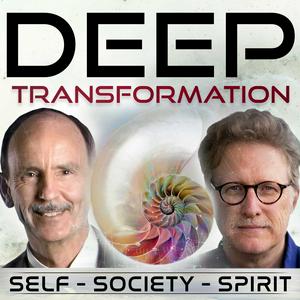
About Deep TransformationDeep Transformation offers dialogues with cutting-edge thinkers, artists, contemplatives, and activists who combine big-picture, integrative perspectives with profound, contemplative depths. With these remarkable people, we explore the great questions of our time, such as how best to live, and how best to heal, learn, create, and contribute in our era of unprecedented challenges and opportunities. Visit our website at https://deeptransformation.io/ to learn more.Podcast websiteListen to Deep Transformation, Mick Unplugged and many other podcasts from around the world with the radio.net app
Get the free radio.net app
- Stations and podcasts to bookmark
- Stream via Wi-Fi or Bluetooth
- Supports Carplay & Android Auto
- Many other app features
Get the free radio.net app
- Stations and podcasts to bookmark
- Stream via Wi-Fi or Bluetooth
- Supports Carplay & Android Auto
- Many other app features

Deep Transformation
Scan code,
download the app,
start listening.

Company
Legal
Service
Apps
 USA
USAv8.17.1 | © 2007-2026 radio.de GmbH
Generated: 9/20/2026 - 3:06:53 PM
