
Listen to this podcast in the app for free: Download for free in the App Store
radio.net
Sleep timer
Save favorites
81 episodes
Metallica vs. Napster & The Price of Free Music
11/24/2026 | 1h 9 mins.In May of 2000, Metallica drummer Lars Ulrich arrived at Napster's headquarters armed with thirteen boxes of paperwork and the usernames of more than 300,000 people.
What followed was one of the biggest public relations nightmares in rock history. But, was Metallica really the villain of this particular story?
This week on Tape Spaghetti, Scott and Blake transport us back to the glory days, when downloading a single song took an eternity and music piracy was becoming America's favorite pastime.
And while Napster ultimately succumbed to an avalanche of lawsuits, the genie was well and truly out of the bottle. From LimeWire to iTunes to Spotify, the guys trace the legacy of the digital music revolution and ask an uncomfortable question: when did music stop feeling valuable? And do we owe Lars Ulrich an apology?
See Privacy Policy at https://art19.com/privacy and California Privacy Notice at https://art19.com/privacy#do-not-sell-my-info.Elvis Was Dead. Then Came Orion.
11/17/2026 | 48 mins.Imagine having a voice so extraordinary that people refuse to believe it belongs to you. Now imagine that voice sounds exactly like Elvis Presley's, and a record executive decides there's serious money to be made from the confusion.
Welcome to the strange world of Jimmy Ellis, better known as Orion.
This week on Tape Spaghetti, Scott and Blake revisit one of rock and roll's most peculiar stories: a masked singer, a suspiciously familiar voice, and an elaborate publicity campaign that encouraged fans to wonder whether Elvis had faked his own death.
But, what happens when the man behind the mask wants some recognition for his own talent? It's a crazy tale of ambition, exploitation, mistaken identity, and the complicated price of cashing in on somebody else's stardom.
See Privacy Policy at https://art19.com/privacy and California Privacy Notice at https://art19.com/privacy#do-not-sell-my-info.Girl Talk, Danger Mouse, and the Art of "Stealing" Music
11/10/2026 | 1h 21 mins.If you take the vocals from a Jay-Z song, combine them with a Beatles recording, and create something nobody's ever heard before... have you made a new piece of music?
For a brief, glorious moment in the 2000s, mashup music was everywhere. And then, almost as quickly as it arrived, it vanished.
This week on Tape Spaghetti, Scott and Blake explore the musical movement that turned stolen (or borrowed, depending on whom you ask) recordings into an art form, made laptop DJs into unlikely superstars, and gave record company lawyers lots of reasons to lose sleep.
From the groundbreaking sampling techniques of early hip-hop to Danger Mouse's controversial Grey Album and the chaotic dance parties of Girl Talk, the guys examine how technology changed the very definition of making music, and how, just when the internet seemed poised to liberate an entire generation of musical experimenters the platforms started pulling the plug.
So, who really killed the mashup?
See Privacy Policy at https://art19.com/privacy and California Privacy Notice at https://art19.com/privacy#do-not-sell-my-info.Wilco and the Spy Radio Mystery
10/20/2026 | 52 mins.What do Wilco, Cold War espionage, and creepily cryptic radio messages have in common? ...Quite a bit, actually.For decades, mysterious shortwave radio broadcasts from "numbers stations" have sent out eerie transmissions of seemingly random numbers and words representing incomprehensible messages to unknown recipients.
Numbers stations have long fascinated radio enthusiasts and intelligence agencies alike. In the late '90s, they caught the attention of Wilco frontman Jeff Tweedy, who incorporated one particularly unsettling recording into the band's masterpiece, Yankee Hotel Foxtrot.
On this episode of Tape Spaghetti, Scott and Blake investigate the shadowy history of numbers stations, their documented connections to real espionage, and the remarkable journey of one intercepted transmission from the airwaves to alternative rock history.
Throw in some record label infighting, a copyright controversy, and a little Cold War intrigue, and you've got a musical mystery that remains tantalizingly unsolved.
See Privacy Policy at https://art19.com/privacy and California Privacy Notice at https://art19.com/privacy#do-not-sell-my-info.Frank Sinatra, Whiskey, and the Birth of the Concept Album
10/13/2026 | 58 mins.When you think of the first great concept albums, what comes to mind? Sgt. Pepper’s Lonely Hearts Club Band? Pet Sounds? The Dark Side of the Moon? Well, what if we told you the origins of this exceptionally innovative format actually trace back to a super bummed out Frank Sinatra, a bottle of whiskey, and 16 songs about being miserable?
In this episode of Tape Spaghetti, Scott and Blake tackle In the Wee Small Hours, Ol' Blue Eyes' remarkably cohesive collection of songs about heartbreak, loneliness, and late-night regret.
Recorded in 1955 during a period of extreme personal and professional turbulence, Wee Small Hours traded radio-ready hits for an immersive experience.
Its songs, arrangements, artwork, and atmosphere all served one unified vision, helping establish the album itself as a legitimate artistic medium.
Pour something strong and dig into this tale of love, loss, artistic reinvention, and a man who could make beautiful music... while being an absolute nightmare to everyone around him.
See Privacy Policy at https://art19.com/privacy and California Privacy Notice at https://art19.com/privacy#do-not-sell-my-info.
More Music podcasts






Trending Music podcasts


















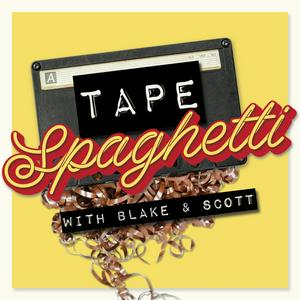
About Tape Spaghetti
Welcome to Tape Spaghetti—where music history gets tangled. Hosts Blake Wyland and Scott Marquart dive into the wildest, weirdest, and most unexpected stories from the music industry. From legendary feuds to bizarre scandals, insane characters… and even murder! On this show we unravel the chaos behind the songs you love, the musicians you know, and stories that you need to hear.
Podcast websiteListen to Tape Spaghetti, DISGRACELAND and many other podcasts from around the world with the radio.net app
Get the free radio.net app
- Stations and podcasts to bookmark
- Stream via Wi-Fi or Bluetooth
- Supports Carplay & Android Auto
- Many other app features
 USA