SD51 in collaboration with Dream Academy and SASUSU Radio
Jakob Jakobsen “The Ghost of Jakob Jakobsen”
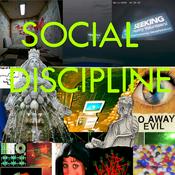
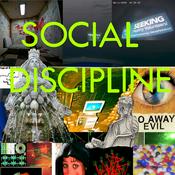
For the first time publicly, we recorded Social Discipline live at Tromsø Kunstforening (TKF) on March 1, 2026, with Henrik Sørlid from Dream Academy and an engaged audience.
We begin with Jakobsen’s Letter of Resignation (2021), his farewell to the art scene, where he explains his motivations for the first time ever. However his practice has involved not only gestures of negation but also of affirmation. Deeply rooted in the punk ethos of DIY and unskilled practice, the underground industrial tape music networks of the 1980s, and strongly influenced by Dadaism, Surrealism, and Situationism, he has taken the radical proposition that “you can also do it” to the level of institutions, founding a university (Copenhagen Free University) and even a hospital (The Hospital for Self-Mediation). Over many years, he has been engaged in collaborative practices and self-organisation, for example through alternative television (tv tv), publishing initiatives (Infopool Magazine and Nebula), and activist spaces (Info Centre).
Jakobsen might have abolished himself as an artist but following Walter Benjamin’s conception of history, he understands these projects as unfinished struggles that can be reactivated as revolutionary tools for the present and future. In turn, he has excavated radical experiments that are often forgotten, such as Antiuniversity London and antipsychiatric movements like the Sozialistisches Patientenkollektiv, reactivating their potential. An eerieness frames these practices as animated by the ghosts of unrealised futures, traces of abandoned struggles and suppressed possibilities that continue to unsettle the present and open new possibilities within the limits imposed by the state and capitalism, in opposition to the prevailing sense of doom and gloom.
At the same time, he interrogates the darker, exclusionary histories of the Danish welfare state, which he describes as a “work state.” He has a personal experience, specially in regards to mental institutions. He had lived with anxiety and depression since puberty and the last years he has been in and out of this institutions. His whole practice questions the state's production of subjectivity. Situated between activism, art, and everyday life, and informed by psychoanalysis, he engages in creating spaces where knowledge, relations, and forms of life are collectively produced, focusing on the construction of social relations, infrastructures, architectures, and modes of living.
This podcast also contains sounds from unpublished tapes that Jakobsen recorded in 1985, a hauntological soundtrack against today's hopelessness.
Thank you to the Dream Academy, SASUSU Radio and Tromsø Kunstforening (TKF)































 USA
USA