

Listen to this podcast in the app for free: Download for free in the App Store
radio.net
Sleep timer
Save favorites
136 episodes
GHK-Cu vs AHK-Cu – The Copper Peptides That Are Changing Skin & Hair | Peptide of the Week Podcast
10/05/2026 | 45 mins.JD's Socials: https://hoo.be/jddenhamofficial
Will's Socials: https://hoo.be/williamthaas
Peptide Of The Week Socials: https://hoo.be/peptideoftheweekpodcast
Join The Community: https://www.skool.com/peptideresearchinstitute/about
Subscribe to our Newsletter: https://potwnewsletter.beehiiv.com/
Warrior Coaching: https://www.warrior-makerscoaching.com
Peptide Of The Week Website: https://peptideoftheweekpod.com
Medical Disclaimer: We are not doctors. The content in this video is for educational and informational purposes only and is not intended to diagnose, treat, cure, or prevent any disease. Any compounds discussed may be intended for research purposes only. Use at your own risk.
Most people know GHK-Cu. Very few know AHK-Cu. JD Denham and William T. Haas break down both copper peptides, how they differ, how to stack them, and why one of them may be the most underrated hair growth compound available right now.
🔬 Topics Covered:
• What GHK-Cu actually is and how it was discovered
• How GHK-Cu rebuilds collagen types 1, 2, and 3
• Why copper levels in your body drop 50% by age 60 and what that means for your skin
• The copper uglies: what to expect in the first two weeks and why you should push through
• Injectable vs topical vs shampoo: which to use and when
• Why you cannot overdose on the Wolverine stack the way you can when copper is in the blend
• Laser facial recovery cut in half using the GHK-Cu face serum
• Snap-8: why it is called Botox in a bottle and why it belongs in your serum
• Microneedling protocol for face and scalp: how to do it right
• What AHK-Cu is and how it differs from GHK-Cu
• The three things AHK-Cu does inside the hair follicle
• Hair growing back darker on AHK-Cu: what people are reporting
• Why JD's folliculitis makes him the perfect use case for running both
• Brand new GHK-Cu plus AHK-Cu shampoo blend: what to expect
• Dosing protocol for both: 2.5mg total copper, 2 to 3x per week injectable
• Why nighttime is the best time to inject healing peptides
Chapters:
00:00 – Cold Open: GHK-Cu & Laser Facial Healing
00:50 – Intro
00:59 – Welcome Back & Mold Update
05:07 – Today's Compounds, School & VIP Zoom Call Updates
08:32 – GHK-Cu: The Copper Peptide Explained
10:56 – Benefits: Anti-Aging, Wound Healing & Scars
12:29 – Injectable vs. Topical vs. Shampoo
14:53 – How to Use It: Laser Facials & Microneedling
17:35 – Fun Facts: "Copper Uglies" & Injection Sting
19:49 – What to Avoid & Best Stacks
24:19 – AHK-Cu: How It Grows Hair
29:14 – Hair Transplants, DHT & Non-Hormonal Benefits
35:15 – Dosing Protocols
40:12 – FLGR-242, Clotho & Why Insulin Is Dangerous
44:20 – Outro & Coaching UpdatesTelehealth vs Research Peptides: The Truth Nobody Tells You | Peptide of the Week Q&A #61
10/01/2026 | 1h 1 mins.Follow us on social media:
JD's Instagram: https://www.instagram.com/jddenhamofficial/
Will's Instagram: https://www.instagram.com/williamthaas/
Peptide Of The Week Socials: https://hoo.be/peptideoftheweekpodcast
Join The Community: https://www.skool.com/peptideresearchinstitute/about
Subscribe to our Newsletter: https://potwnewsletter.beehiiv.com/
Warrior Coaching: https://www.warrior-makerscoaching.com
Peptide Of The Week Website: https://peptideoftheweekpod.com
Medical Disclaimer: We are not doctors. The content in this video is for educational and informational purposes only and is not intended to diagnose, treat, cure, or prevent any disease. Any compounds discussed may be intended for research purposes only. Use at your own risk.
JD Denham and William T. Haas are back fresh from the Olympia where they connected with some of the biggest names in the peptide space. This week they settle the telehealth vs research peptide debate once and for all, break down how to mix multiple compounds into one syringe the right way, introduce FLGR 242 as the most exciting new muscle building peptide on the market, cover ALS protocols, foot injury dosing for a teenage athlete, osteoporosis in a 60 year old with celiac, and what to stack when you cannot gain muscle despite doing everything right.
🔬 Topics Covered
• Is your telehealth rep actually lying to you about research peptides?
• The one thing that exposes a fake or underdosed peptide company immediately
• Why mixing the wrong peptides in one syringe could ruin your whole stack
• The new muscle building peptide that is showing 23% growth in early data
• Down 125 pounds and training for HYROX at 49: what his stack actually looks like
• Why this 59 year old functional medicine doctor still cannot gain muscle
• Peptides for a 15 year old athlete with sesamoiditis: what is safe and what is not
• Can Wolverine actually target multiple pain areas at the same time?
• ALS at 72: the best theoretical peptide protocol when nothing is guaranteed
• Osteoporosis with celiac disease: why injectables change everything
Chapters:
00:00 – Cold Open
00:21 – Intro
00:31 – Welcome Back & Olympia Recap
03:40 – School & Coaching Program Updates
06:15 – New Website & YouTube Ban Update
07:58 – JD's Mold-Related Cough Update
08:52 – Q&A: Telehealth vs. Research Peptides
18:15 – Q&A: Combining Multiple Peptides in One Syringe
25:05 – Q&A: TRT Protocol for a 21-Day Costa Rica Hike
31:30 – Q&A: Reconstituting ARA-290 Properly
34:31 – Q&A: Best Peptides for a BJJ Practitioner's Recovery
40:24 – Q&A: Somatropin & Peptide Stack at Goal Weight
45:30 – Q&A: BPC/TB500/KPV for a Teen's Foot Injury
50:01 – Q&A: Peptides to Slow ALS Progression
51:28 – Q&A: Wolverine Stack for Multiple Pain Points
56:38 – Q&A: Osteoporosis, Celiac Disease & OutroPeptide of the Week: Epithalon & Glutathione – Longevity, Sleep & Detox
09/28/2026 | 47 mins.Medical Disclaimer: We are not doctors. The content in this video is for educational and informational purposes only and is not intended to diagnose, treat, cure, or prevent any disease. Any compounds discussed may be intended for research purposes only. Use at your own risk.
Welcome back, warriors! In this episode of Peptide of the Week, JD Denham and William T. Haas get back to basics with two compounds that belong in almost everyone's stack. Epithalon for longevity, sleep, and cellular aging. Glutathione for detox, liver protection, and immune support. Simple, powerful, and underutilized.
Chapters:
00:00 – Intro
00:09 – Show Updates & Shirt Talk
02:15 – Heading to the Olympia
02:58 – Behind the Scenes of Bodybuilding Prep
05:26 – JD's Mold-Related Cough Diagnosis
07:50 – New Podcast Format & Upcoming Compounds
10:01 – School & Coaching Program Updates
10:41 – Carnivore vs. Macros: Finding What Works
13:33 – Epitalon: Origins in Russian Bioregulator Science
15:03 – Why Most Peptides Lack FDA Clinical Trials
17:20 – Big Pharma's Incentives & Hidden Cures
21:53 – Epitalon: Longevity, Immune Support & Sleep
27:53 – What to Stack With & Avoid on Epitalon
32:13 – Glutathione: Why Everyone Should Take It
34:57 – Delivery Methods & Global Uses
39:49 – Dosing Protocols: Epitalon & Glutathione Math
We cover:
🧬 What is Epithalon?
– A four amino acid synthetic peptide made of alanine, glutamate, aspartate, and glycine
– One of Dr. Khavinson's Soviet bioregulators developed in the 1970s military research program
– Works directly on the pineal gland, the pea-sized gland in your brain that regulates sleep and hormones
– In 2026, an FDA advisory committee voted 7 to 4 to recommend adding it to the approved compound list (advisory only, not yet policy)
– Cannot be patented because it is a naturally occurring compound, so there is no financial incentive for big pharma to fund large trials
🔬 What Epithalon does
– Telomere lengthening: Dr. Khavinson's studies showed it extends the telomere caps on your chromosomes, theoretically slowing cellular aging. Animal models showed extended lifespan
– Sleep and circadian rhythm reset: deepens sleep, reduces nighttime waking, helps reset disrupted sleep cycles. One of the top reasons people run it
– Immune resilience: lowers free radical damage systemically, especially helpful for overtrained athletes and chronically stressed people
⚠️ What to avoid with Epithalon
– Alcohol
– High-dose melatonin (it can replace melatonin, do not stack them)
– Extra sedatives while running it for sleep
– Theoretical caution with active cancer due to pineal gland's role in cell regulation (not proven, just noted)
– Not WADA banned but classified as a non-approved substance for tested athletes
🛡️ What is Glutathione?
– Discovered in 1888, actively used in Italy to treat Parkinson's after independent human trials
– Your body's master antioxidant and the most important detox compound available
– Scavenges free radicals, recycles vitamins C and E so they keep working, and escorts toxins out of the body
🔬 What Glutathione actually does
– Liver detox and protection: number one clinical use in Western medicine, especially post-alcohol and for fatty liver support
– Parkinson's and neuroprotection: proven in human trials to protect nerves from chemotherapy damage
– Immune support and long COVID recovery: being used in post-viral fatigue and long COVID protocols
– Skin lightening: the number one global use. High doses will make you pale. Low doses for wellness will not
Follow us on social media:
JD's Socials: https://hoo.be/jddenhamofficial
Will's Socials: https://hoo.be/williamthaas
Peptide Of The Week Socials: https://hoo.be/peptideoftheweekpodcast
Join The Community: https://www.skool.com/peptideoftheweekcommunity
Subscribe to our Newsletter: https://potwnewsletter.beehiiv.com/Does Your COA Even Match Your Vial? | Peptide of the Week Q&A #60
09/24/2026 | 1h 11 mins.Medical Disclaimer: We are not doctors. The content in this video is for educational and informational purposes only and is not intended to diagnose, treat, cure, or prevent any disease. Any compounds discussed may be intended for research purposes only. Use at your own risk.
Welcome back, warriors! In this week's Peptide Q&A, JD Denham and William T. Haas are live from South Carolina touring a 503A/503B FDA-approved compounding facility. They cover how to vet a peptide source beyond the COA, HGH as a long-term play, seborrheic dermatitis triggered by HGH, SIBO and Candida gut protocols, peptides for eye health, and longevity tools for women over 60.
Chapters:
00:00 – Intro
00:10 – Welcome Back & South Carolina Trip
00:27 – Visiting a 503A/503B Lab
02:01 – Why They Take These Trips & Dealing With Online Hate
05:28 – Skool Platform & Coaching Program Updates
09:42 – New Format: Feedback From Listeners
10:34 – Recap: The Elkins Cattle Co Episode
14:08 – Q&A: Tracking a COA to a Specific Bottle
19:40 – Q&A: HGH vs. TESA/IPA Secretagogues
25:36 – Q&A: Statin/Blood Pressure Meds & SS-31 for Eye Health
29:02 – Q&A: HGH Causing Seborrheic Dermatitis
33:59 – Q&A: Fixing SIBO & Candida
39:06 – Q&A: How Much Visceral Fat Is Normal?
44:05 – Q&A: Reducing Inflammation & Blood Pressure Naturally
48:47 – Q&A: BAM-15 & SLU-PP-332 Coupling Explained
1:01:12 – Q&A: CJC/Ipa Reactions & the Ideal Longevity Stack
We cover:
• Can You Trust a COA Is From the Right Batch?: Why there's no perfect answer, why cost and transparency are the best vetting tools, and why good companies test the same batch multiple times
• HGH vs Tesamorelin —The Long Game: Why Tesamorelin still retains its visceral fat-burning properties even alongside HGH, why secretagogues are redundant on HGH, and why five-plus years is the real timeline
• HGH Causing Seborrheic Dermatitis: Why elevated IGF-1 increases sebaceous gland activity, why switching to a secretagog may reduce but not eliminate the issue, and when dropping HGH altogether is the right call
• SIBO and Candida Protocol: Why oral BPC and KPV are the foundation, the role of fasting and carnivore in starving off gut overgrowth, and why Dr. Scott and holistic practitioners are the right people to guide this
• Peptides for Eye Health After Statin Damage: Why SS-31 is the most promising compound with clinical trials behind it, and why BPC, TB-500, Epithalon, and Visalutin are also worth researching
• 8% Body Fat Firefighter Overtraining: Why one or two rest days accelerate results, why sleep and stress management outrank adding compounds, and why fasting is JD's top lean-out tool for men
• Longevity Stack for Women Over 60: Why HGH is the unanimous pick for bone density and belly fat, why SS-31 before MOTS-C is non-negotiable, and why creatine is the most underrated supplement for older women
• Klotho Peptide — Early Impressions: Why JD and Will are both running it now and will report back once they have firsthand experience to share
You're a warrior. Act like one.
Follow us on social media:
JD's Instagram: https://www.instagram.com/jddenhamofficial/
Will's Instagram: https://www.instagram.com/williamthaas/
Peptide Of The Week Socials: https://hoo.be/peptideoftheweekpodcast
Peptide Of The Week Website: https://peptideoftheweekpod.com
Join The Community: https://www.skool.com/peptideresearchinstitute/about
Subscribe to our Newsletter: https://potwnewsletter.beehiiv.com/
Warrior Coaching: https://www.warrior-makerscoaching.comPeptide of the Week: What's Really in Your Beef With Tim Elkins
09/21/2026 | 57 mins.Medical Disclaimer: We are not doctors. The content in this video is for educational and informational purposes only and is not intended to diagnose, treat, cure, or prevent any disease. Any compounds discussed may be intended for research purposes only. Use at your own risk.
Welcome back, warriors! In this episode of Peptide of the Week, JD Denham and William T. Haas sit down with Tim Elkins, JD's first mentor in business and now owner of Elkins Cattle Co., one of Texas's largest cattle operations spanning 40 to 50 thousand acres. This one is not about peptides. It is about what is actually in your food and why it matters just as much.
Chapters:
00:00 – Intro
00:13 – Meeting Tim Elkins
01:36 – Tim's Background: Finance to Cattle Ranching
07:53 – The Time Management Lesson That Changed JD's Career
10:35 – Cattle Ranch to Table: How the Industry Really Works
12:23 – The "Big Four" Monopoly Explained
14:24 – Why Elkins Cattle Co Refuses to Cut Corners
18:46 – The Truth About Foreign Beef
21:00 – Why Ribeye Prices Doubled & Who Profits
25:03 – Grocery Store Ground Beef: What's Really In It
29:44 – What's Legal But Should Shock You
34:29 – How to Tell a Cheated Steak From a Real One
39:10 – The Truth About "Wagyu" Labels at Costco
42:47 – Grass-Fed vs. Grain-Finished Explained
47:26 – Inside a Feedlot: How They Track Every Animal
54:08 – How Buying Local Can Starve Out the Big Four & Outro
We cover:
🐄 How beef actually gets to your table
– 90% of American beef passes through just four companies: JBS, Cargill, Tyson, and National Beef
– These four have a stranglehold monopoly on the entire industry and prioritize speed and profit over quality
– 70% of beef consumed in America is foreign beef. Most people have no idea
– Animals are often slaughtered at under 12 months old or as old non-producing cows to cut costs
– Horse meat in fast food chains: confirmed. And it is more widespread than just Taco Bell
🚫 What store-bought beef actually contains
– Hormones, antibiotics, mRNA vaccines, and artificial additives are standard practice in commercial beef production
– Wagyu labeling loophole: a product only needs 0.001% wagyu genetics to legally use the wagyu label. That ribeye at Costco is not what you think it is
– "Grass-fed" on a label means almost nothing. Every cow has eaten at least one piece of grass. The label has no meaningful standard
– Pink slime in ground beef is real and it comes from reputable-looking places, not just fast food
– Veal in most restaurants is almost certainly a calf that died in transit or in a pen, not one that was intentionally raised for that purpose
🥩 What Elkins Cattle Co. does differently
– Zero hormones, zero antibiotics, zero mRNA vaccines, zero shortcuts
– All animals are 30 months old at slaughter, not 12 months
– 40 to 50 thousand acres across Texas, nearly 9,000 head of cattle
– Consumer direct: order by Monday, ships frozen to your door by Tuesday
– Retina scanning technology tags every animal daily, tracking food intake, water, health markers, and time spent laying down. Red X spray marks any animal that needs attention that morning
– Grass-fed AND grass-finished: fed four specific grasses including coastal Bermuda, Klein, native grasses, and winter oats to mimic the intramuscular fat quality of grain-finished beef without any GMO grain inputs
– Animal welfare is non-negotiable: a stressed, unhappy cow does not gain weight properly and the difference shows up in the meat
Follow us on social media:
JD's Instagram: https://www.instagram.com/jddenhamofficial/
Will's Instagram: https://www.instagram.com/williamthaas/
Follow Tim Elkins:
Website: https://www.elkinscattleco.com
X (Twitter): https://www.x.com/elkinscattleco
Instagram: https://www.instagram.com/elkinscattleco/
Join The Community: https://www.skool.com/peptideoftheweekcommunity
Subscribe to our Newsletter: https://potwnewsletter.beehiiv.com/
Coaching Website: https://www.warrior-makerscoaching.com/
More Health & Wellness podcasts
 Passion Struck with John R. MilesAlternative Health, Education, Health & Wellness, Mental Health, Self-Improvement
 Nothing much happens: bedtime stories to help you sleepFiction, Health & Wellness
 Get Sleepy: stories for sleepAlternative Health, Drama, Fiction, Health & Wellness, Kids & Family, Stories for Kids
 10% Happier with Dan HarrisHealth & Wellness, Mental Health
 The Dr. John Delony ShowHealth & Wellness, Mental Health, Relationships, Society & Culture
 Huberman LabHealth & Wellness, Life Sciences, Science
 Extend Podcast with Darshan Shah, MDHealth & Wellness, Medicine, Nutrition
 On Purpose with Jay ShettyBusiness, Health & Wellness, Mental Health
 unPAUSED with Dr. Mary Claire HaverHealth & Wellness, Medicine, Society & Culture
 The Dylan Gemelli PodcastAlternative Health, Health & Wellness
Trending Health & Wellness podcasts
 The Chalene Show | Pop Culture, Women's Health, & FitnessEducation, Entertainment News, Fitness, Health & Wellness, Mental Health, News, Nutrition, Relationships, Self-Improvement, Society & Culture
 The SqueezeEducation, Health & Wellness
 Biohack-itAlternative Health, Health & Wellness
 You're Not Too MuchEducation, Health & Wellness, Mental Health, Personal Journals, Self-Improvement, Society & Culture
 DR. GUNDRY PODCAST: GUT HEALTH, WEIGHT LOSS, AND NUTRITIONHealth & Wellness, Nutrition
 The Sober Mom LifeAlternative Health, Health & Wellness, Kids & Family, Mental Health, Parenting
 The Genius LifeHealth & Wellness
 UnF*ck Your Brain: Feminist Self-Help for EveryoneEducation, Health & Wellness, Mental Health, Philosophy, Self-Improvement, Society & Culture
 Being Known PodcastHealth & Wellness, Mental Health
 Straight A Nursing: Study for nursing school exams & NCLEXEducation, Health & Wellness, Medicine
 Conversations with CamHealth & Wellness, Kids & Family, Mental Health, Nutrition, Parenting, Society & Culture
 Happier with Gretchen RubinEducation, Health & Wellness, Self-Improvement
 Tracks To Relax Sleep MeditationsAlternative Health, Health & Wellness, Mental Health
 Sleep Wave: Sleep Meditation & Sleepy StoriesHealth & Wellness, Mental Health
 The Modern Therapist's Survival Guide with Curt Widhalm and Katie VernoyAlternative Health, Health & Wellness
 EmPowered RadioEducation, Fitness, Health & Wellness, Nutrition, Self-Improvement
 I Can’t SleepAlternative Health, Health & Wellness, Mental Health, Science
 Two Percent with Michael EasterHealth & Wellness, Life Sciences, Science
 The Dr. Brighten ShowHealth & Wellness, Medicine
 ADHD Experts PodcastHealth & Wellness, Mental Health
 FoundMyFitnessFitness, Health & Wellness, Medicine, Nutrition
About Peptide of The Week
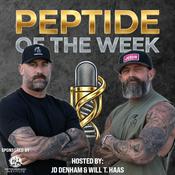
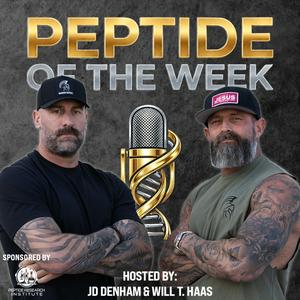
Hosted by JD Denham and Will Haas, The Peptide of The Week Podcastis your no-BS guide to peptides, performance, and total body optimization. Whether you’re an athlete, a high performer, or just hungry to feel better, move better, and live stronger this show’s for you. JD and Will dive deep into real-world protocols, hard-earned lessons, and the science behind what actually works. With expert guests and raw conversations, you’ll get everything from cutting-edge peptide talk to diet, training, recovery, and mindset. No fluff. No filters. Just the tools to rebuild your body and upgrade your life.
Podcast websiteListen to Peptide of The Week, Passion Struck with John R. Miles and many other podcasts from around the world with the radio.net app
Get the free radio.net app
- Stations and podcasts to bookmark
- Stream via Wi-Fi or Bluetooth
- Supports Carplay & Android Auto
- Many other app features
Get the free radio.net app
- Stations and podcasts to bookmark
- Stream via Wi-Fi or Bluetooth
- Supports Carplay & Android Auto
- Many other app features

Peptide of The Week
Scan code,
download the app,
start listening.
download the app,
start listening.
 USA
USA