
Listen to this podcast in the app for free: Download for free in the App Store
radio.net
Sleep timer
Save favorites
hol+ with Dr. Taz MD | The Future of Medicine is Holistic
Dr. Taz MD
Latest episode
412 episodes

How to Get Candida Under Control: Understanding Triggers, Exploring Treatment and Supporting Your Gut
10/22/2026 | 8 mins.Join The Circle (use code YOUTUBE): ➡️ https://holplus.co/circle/
What should you know about Candida, recurring yeast infections, and the broader symptoms often associated with gut health?
In this mini solo episode, Dr. Taz shares her functional medicine perspective on Candida overgrowth. She discusses possible contributing factors, the tests used in her practice, and how she approaches nutrition, antifungal treatment, and support for the gut microbiome.
IN THIS EPISODE
• Antibiotics and other potential contributors to yeast overgrowth
• Symptoms Dr. Taz considers during an evaluation
• Stool analysis, organic acid testing, and the limitations of home spit tests
• Dietary changes, prescription antifungals, and botanical products discussed in her practice
• Why similar symptoms can have different underlying causes
Symptoms such as bloating, fatigue, cravings, and brain fog are nonspecific and do not confirm Candida. Consult a qualified healthcare professional for an individual evaluation.
Ready to take a closer look at your health?
Schedule a consultation with a hol+ provider to explore your symptoms, lab results, and personal health goals:
➡️ https://holplus.co/appointments
Explore holistic health resources and integrative care:
➡️ https://holplus.co/
STAY CONNECTED
Dr. Taz: https://www.instagram.com/drtazmd/
Hol+: https://www.instagram.com/liveholplus/
Hol+ Show: https://www.instagram.com/holplushow/
Subscribe to the audio podcast: https://holplus.transistor.fm/subscribe
Subscribe to the video podcast: https://www.youtube.com/@HolPlusShow/podcasts
Get your copy of ➡️ The Hormone Shift: https://amzn.to/44yYhZd
Produced by https://ClipGrowth.com (Producer: Pat Gostek)Candida Overgrowth: How to Actually Spot the Signs, Understand Your Symptoms and Know What to Do Next
10/20/2026 | 17 mins.Join The Circle (use code YOUTUBE): ➡️ https://holplus.co/circle/
Bloating, brain fog, fatigue and sugar cravings: could candida overgrowth be part of the picture? Dr. Taz explains the signs she considers, how she approaches candida testing, and what to discuss with your healthcare provider about next steps.
Candida is a yeast that naturally lives in the body. In this episode, Dr. Taz explores the debate surrounding gut yeast overgrowth, shares observations from her clinical practice, and discusses the limitations of current research.
Learn about the testing approaches she uses, the connections she considers between the gut microbiome and hormonal health, and why she has moved away from highly restrictive candida diets toward more personalized plans.
IN THIS EPISODE
• Symptoms often discussed alongside candida, including bloating, brain fog, fatigue, sugar cravings and a white tongue
• Research on antibiotics and changes in candida levels
• Blood, stool and other candida testing approaches
• How diet, stress, medications and hormones fit into Dr. Taz’s assessment
• Her evolving approach to the candida diet
• Probiotics, antifungal treatments and individualized care
CHAPTERS
00:00 Could your symptoms be related to candida?
01:20 What the research says and where questions remain
03:20 White tongue, bloating, brain fog and other symptoms
06:15 How Dr. Taz approaches candida testing
07:20 Go deeper with The Circle
08:05 Diet, hormones, medications and stress
11:00 Rethinking restrictive candida diets
12:10 Probiotics and personalized treatment approaches
13:25 The debate, clinical observations and next steps
#CandidaOvergrowth #GutHealth #candida
Ready to take a closer look at your health?
Schedule a consultation with a hol+ provider to explore your symptoms, lab results, and personal health goals:
➡️ https://holplus.co/appointments
Explore holistic health resources and integrative care:
➡️ https://holplus.co/
STAY CONNECTED
Dr. Taz: https://www.instagram.com/drtazmd/
Hol+: https://www.instagram.com/liveholplus/
Hol+ Show: https://www.instagram.com/holplushow/
Subscribe to the audio podcast: https://holplus.transistor.fm/subscribe
Subscribe to the video podcast: https://www.youtube.com/@HolPlusShow/podcasts
Get your copy of ➡️ The Hormone Shift: https://amzn.to/44yYhZd
Produced by https://ClipGrowth.com (Producer: Pat Gostek)7 Blood Tests You Need After 40 (That Doctors Often Miss)
10/15/2026 | 5 mins.Join The Circle (use code PODCAST): ➡️ https://holplus.co/circle/
Are your blood tests coming back normal even though you're struggling with fatigue, weight gain, hair loss, or hormonal changes after 40?
In this solo episode of hol+, Dr. Taz MD breaks down 7 important blood tests and lab panels that may provide a more complete picture of your metabolic, hormonal, and overall health.
Learn why fasting insulin and hemoglobin A1c matter for blood sugar regulation, what ferritin reveals about iron stores, why thyroid testing sometimes deserves a closer look, and how vitamin D, inflammation markers, and sex hormones can contribute to conversations about your health.
Dr. Taz also explains why tracking lab results over time can be helpful, how symptoms provide important context, and what questions to bring to your next doctor's appointment.
In this episode:
The limitations of routine annual blood work
Fasting insulin and early insulin resistance
Hemoglobin A1c and long-term blood sugar
Ferritin, vitamin D, and thyroid testing
High-sensitivity CRP and inflammation
Estrogen, progesterone, and testosterone after 40
How to track and discuss your lab results
Ready to take a closer look at your health?
Schedule a consultation with a hol+ provider to explore your symptoms, lab results, and personal health goals:
➡️ https://holplus.co/appointments
Explore holistic health resources and integrative care:
➡️ https://holplus.co/
Stay Connected:
Dr. Taz: https://www.instagram.com/drtazmd/
Hol+: https://www.instagram.com/liveholplus/
Hol+ Show: https://www.instagram.com/holplushow/
Subscribe to the audio podcast: https://holplus.transistor.fm/subscribe
Subscribe to the video podcast: https://www.youtube.com/@HolPlusShow/podcasts
Get your copy of ➡️ The Hormone Shift
Produced by https://ClipGrowth.com (Producer: Pat Gostek)What Men Get Wrong About Testosterone, Stress & Recovery | Shawn Stevenson
10/13/2026 | 1h 16 mins.Join the hol+ Circle with code PODCAST: https://holplus.co/circle/
What are men missing when they focus on testosterone but overlook sleep, stress, and recovery? Shawn Stevenson shares a reported testosterone level of 1,038 without testosterone replacement therapy or peptides, and walks Dr. Taz through the everyday habits he prioritizes.
Shawn is the host of The Model Health Show and bestselling author of Eat Smarter, Sleep Smarter, and the Eat Smarter Family Cookbook. In this conversation, he discusses the research connecting daily walking with testosterone levels, his approach to strength training, and the morning routine he has practiced for more than two decades.
He also shares the story behind his health transformation: a degenerative disc disease diagnosis at 20, years of chronic pain, and the moment he began asking a different question. Together, Shawn and Dr. Taz explore the grind mentality, the role of sleep in men’s health, moving beyond rigid diets, and why asking for help and investing in relationships matter.
IN THIS EPISODE:
• Shawn’s testosterone lab results and personal health routine
• Walking, strength training, and metabolic health
• Cortisol, stress, and the pressure to keep pushing
• Morning habits, meditation, and recovery
• Chronic pain, identity, and changing your mindset
• Sleep and testosterone
• Real food and flexible approaches to nutrition
• Relationships, connection, and longevity
CHAPTERS:
00:00 Walking, testosterone & the missing pieces of men’s health
04:10 What men get wrong about health
09:51 Shawn’s testosterone results: 1,038 without TRT
16:13 Cortisol, stress & reaching a breaking point
22:02 Outdoor walks, meditation & Shawn’s morning routine
32:15 Chronic pain & the story behind Shawn’s transformation
48:20 The questions that shape your mindset
55:05 Sleep, testosterone & moving beyond strict diets
1:03:09 Longevity, relationships & permission to change
About Shawn Stevenson:
Shawn Stevenson is a bestselling author, health and fitness expert, and host of The Model Health Show, one of the world’s leading health podcasts. He is the author of Sleep Smarter, Eat Smarter, and The Eat Smarter Family Cookbook. His work translates research on sleep, nutrition, exercise, metabolism, and human performance into practical strategies people can use in everyday life.
Connect with Shawn Stevenson:
https://themodelhealthshow.com/
https://www.instagram.com/shawnmodel/
Explore Shawn Stevenson’s books:
Eat Smarter Family Cookbook: https://link.amazon/B07xO8W3P
Sleep Smarter: https://link.amazon/B01v3jeyX
Join The Circle, Dr. Taz’s private membership featuring live sessions, practical demonstrations, research discussions, real guidance, and a supportive community.
Start your one-month trial at: ➡️ https://holplus.co/circle/ (use the code PODCAST)
Learn more about hol+ and schedule an appointment:
https://holplus.co/
Listen to more episodes of the hol+ podcast:
https://holplus.co/podcast/
Stay Connected:
Dr. Taz: https://www.instagram.com/drtazmd/
Hol+: https://www.instagram.com/liveholplus/
Hol+ Show: https://www.instagram.com/holplushow/
Subscribe to the audio podcast: https://holplus.transistor.fm/subscribe
Subscribe to the video podcast: https://www.youtube.com/@HolPlusShow/podcasts
Get your copy of ➡️ The Hormone Shift
Produced by https://ClipGrowth.com (Producer: Pat Gostek)
(00:00) - Walking, testosterone & the missing pieces of men’s health
(04:10) - What men get wrong about health
(09:51) - Shawn’s testosterone results: 1,038 without TRT
(16:13) - Cortisol, stress & reaching a breaking point
(22:02) - Outdoor walks, meditation & Shawn’s morning routine
(32:15) - Chronic pain & the story behind Shawn’s transformation
(48:20) - The questions that shape your mindset
(55:05) - Sleep, testosterone & moving beyond strict diets
(01:03:09) - Longevity, relationships & permission to changeMicroinflammation: The Slow Burn Behind Symptoms You Can’t Explain
10/08/2026 | 8 mins.What if your fatigue, achy joints, brain fog, stubborn weight, skin issues, and frequent illnesses aren't six separate problems, but different signs of the same underlying pattern? In this episode, Dr. Taz explains microinflammation, the chronic low-grade inflammatory activity that can quietly affect multiple systems throughout the body.
She breaks down six common signs to watch for and explains how blood sugar instability, gut health, cortisol and chronic stress, poor sleep, ultra-processed foods, visceral fat, environmental exposures, and other factors can contribute to persistent inflammation.
You'll also learn the foundational strategies Dr. Taz uses at hol+ to help calm inflammatory signaling, including stabilizing blood sugar, prioritizing protein, fiber and healthy fats, improving sleep and gut health, lowering chronic stress, and looking at markers such as hs-CRP, fasting insulin, and hemoglobin A1C.
Inflammation isn't necessarily a life sentence. It can be a signal that something in the system needs attention.
Learn more or schedule a consultation with a HOL+ provider at holplus.co/appointments.
Join The Circle, Dr. Taz’s private membership featuring live sessions, practical demonstrations, research discussions, real guidance, and a supportive community.
Start your one-month trial at: ➡️ https://holplus.co/circle/ (use the code PODCAST)
Learn more about hol+ and schedule an appointment:
https://holplus.co/
Listen to more episodes of the hol+ podcast:
https://holplus.co/podcast/
Stay Connected:
Dr. Taz: https://www.instagram.com/drtazmd/
Hol+: https://www.instagram.com/liveholplus/
Hol+ Show: https://www.instagram.com/holplushow/
Subscribe to the audio podcast: https://holplus.transistor.fm/subscribe
Subscribe to the video podcast: https://www.youtube.com/@HolPlusShow/podcasts
Get your copy of ➡️ The Hormone Shift
Produced by https://ClipGrowth.com (Producer: Pat Gostek)
More Health & Wellness podcasts

Trending Health & Wellness podcasts




About hol+ with Dr. Taz MD | The Future of Medicine is Holistic
hol+ with Dr. Taz MD is redefining modern medicine through a comprehensive, evidence-based holistic approach; integrating functional medicine, integrative medicine, and time-tested healing systems to treat the whole human, not just symptoms.
Hosted by Dr. Tasneem Bhatia (Dr. Taz), triple board-certified physician in integrative, functional, and holistic medicine, bestselling Penguin Random House author, and founder of hol+; a comprehensive evidence-based holistic medicine platform with clinics in Atlanta, New York City, and Los Angeles, and virtual care available nationwide.
At the heart of hol+ is a revolutionary framework: the Five Body Map- physical, mental, emotional, energetic, and social/community bodies that create whole health. This whole-human approach connects hormone imbalances, gut dysfunction, microinflammation, cortisol dysregulation, metabolic disease, autoimmune conditions, perimenopause, and stress-driven illness to the full spectrum of who we are; body, mind, and spirit.
Each episode explores Dr. Taz’s original clinical frameworks ;The Cortisol Loop, Microinflammation, and The Invisible Load alongside conversations with leading experts, celebrities, and thought leaders including Sophie Grégoire Trudeau, Katherine Schwarzenegger, Cameron Mathison, Carol Alt, Jane Seymour, Tamsen Fadal, and Kris Carr.
Topics include hormone health, gut health, GLP-1 and metabolic therapy, thyroid dysfunction, weight loss, inflammation, autoimmune disease, mental and emotional wellness, energetic health, and the future of holistic medicine.
This is the show where science and spirit converge- driving health, happiness, relationships, and family ecosystems.
Want to go deeper? Join Dr. Taz’s private community, the hol+ Circle ; medicine beyond the exam room. (holplus.co/circle)
A 2025 Webby Award honoree, recognized alongside the Mel Robbins Podcast in the 29th Annual Webby Awards, hol+ is built on the foundation of Super Woman Wellness, which surpassed 1 million downloads over 8 years.
This is medicine beyond the exam room. Welcome to hol+
Podcast websiteListen to hol+ with Dr. Taz MD | The Future of Medicine is Holistic, We're Out of Time and many other podcasts from around the world with the radio.net app
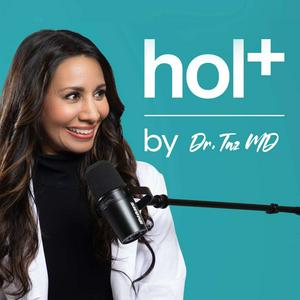
Get the free radio.net app
- Stations and podcasts to bookmark
- Stream via Wi-Fi or Bluetooth
- Supports Carplay & Android Auto
- Many other app features
Get the free radio.net app
- Stations and podcasts to bookmark
- Stream via Wi-Fi or Bluetooth
- Supports Carplay & Android Auto
- Many other app features
hol+ with Dr. Taz MD | The Future of Medicine is Holistic
Scan code,
download the app,
start listening.
download the app,
start listening.
 USA
USA