
Listen to this podcast in the app for free: Download for free in the App Store
radio.net
Sleep timer
Save favorites
329 episodes
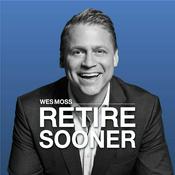
Beyond Net Worth: Roth IRA Rules, Retirement Withdrawals & Happiness
10/22/2026 | 25 mins.Retirement is about more than your net worth. In this listener Q&A episode of the Retire Sooner Podcast, Wes Moss and Christa DiBiase discuss Roth IRA conversions, retirement withdrawals, empty-nest moves, and the personal side of life after leaving the workforce.
· Unpack Roth IRA conversions and tax considerations, including tax withholding questions and how to cover the conversion tax bill.
· Investigate financial advising as a potential career path for other professionals amid industry staffing shortages.
· Look beyond net worth to examine how income, accessible assets, and overall wealth may fit into the broader picture of retirement readiness.
· Weigh the financial and emotional considerations of relocating after the kids leave home, including how to stay connected with adult children.
· Examine retirement withdrawal decisions across brokerage accounts, traditional IRAs, and Roth IRAs, including the roles of required minimum distributions (RMDs), taxes, and individual circumstances.
· Revisit the connection between wealth and happiness, including how inflation may influence financial benchmarks and your definition of “enough.”
· Untangle the two Roth IRA five-year rules and explore why account history and conversion timing may matter when evaluating withdrawals.
· Compare brokerage accounts, traditional IRAs, and Roth IRAs as potential homes for retirement “dry powder,” with a look at asset location considerations.
· Explore bunching charitable contributions through donor-advised funds, including potential tax benefits, applicable limitations, and timing considerations during higher-income years.
Listen and subscribe to the Retire Sooner Podcast for lively, educational conversations about investing, retirement planning, and finding fulfillment beyond work.
Learn more about your ad choices. Visit megaphone.fm/adchoicesHigh Yields, Big Retirement Questions: What Should You Consider?
10/15/2026 | 33 mins.Cut through noisy financial headlines on this episode of the Retire Sooner Podcast with Wes Moss and Christa DiBiase as they seek to make retirement planning less overwhelming. Explore retirement income, investing, taxes, Social Security, insurance, and the potential trade-offs behind major financial decisions.
· Decode what “high yield” means, its risks, and where it may fit within a retirement portfolio.
· Compare stock dividends and bond yields as potential income sources with added context from Wes’s Forbes article, “5 Keys to Happy Investing and Retiring Sooner.”
· Visualize your income sources with a yield ladder as interest rates evolve.
· Assess early retirement readiness by considering spending, interest income, and the path to Social Security.
· Explore the roles stocks, bonds, and TIPS (Treasury Inflation-Protected Securities) may play in a diversified portfolio, and read “How to Protect Your Retirement Savings From Inflation” for additional perspective.
· Weigh pension lump sums against annuities while accounting for payouts, liquidity, longevity, costs, and personal circumstances.
· Consider long-term HSA investing and qualified medical-expense receipt tracking.
· Examine how HIFO, FIFO, and other cost-basis methods may affect investment taxes.
· Uncover the possible costs, restrictions, liquidity concerns, and market-exposure limitations of fixed indexed annuities.
· Evaluate whether term life insurance may still help address a surviving spouse’s income needs after retirement.
· Explore how multiple income sources may work together in “8 Planning Strategies That Can Help Address Retirement Money Fears.”
· Hear additional listener questions about portfolio construction and retirement income planning.
Listen and subscribe to this episode of the Retire Sooner Podcast for an educational look at financial choices and retirement-planning conversations with Wes Moss and Christa DiBiase.
Learn more about your ad choices. Visit megaphone.fm/adchoicesRising Interest Rates and Retirement Planning: Bonds, Healthcare, Taxes, and Key Ages
10/08/2026 | 27 mins.Do you find rising interest rates, bond-market swings, healthcare costs, and retirement account rules overwhelming? In this episode of the Retire Sooner Podcast, Wes Moss and Christa DiBiase help bring the headlines down to earth, exploring retirement planning questions that may matter as you prepare for, enter, or navigate retirement.
· See how interest-rate changes may be associated with bond prices, investment portfolios, consumer borrowing costs, and the broader economy.
· Follow the forces that may help influence Treasury yields and the bond market, including inflation expectations, economic data, government borrowing, Federal Reserve policy, and investor demand.
· Put GDP growth, federal debt, oil prices, and inflation into context as you consider the economic environment surrounding retirement and investment planning; read Wes Moss’s perspective on inflation and retirement savings for related educational context.
· Revisit the role fixed-income investments may play in a diversified portfolio when bond yields are generally higher than they were in recent years.
· Explore health insurance before Medicare, including Affordable Care Act marketplace plans, household-income estimates, premiums, deductibles, provider networks, and out-of-pocket expenses.
· Consider whether holding cash, Treasury securities, or bonds for near-term retirement expenses may be appropriate in light of your time horizon, liquidity needs, risk tolerance, tax circumstances, and overall financial plan.
· Weigh how an HSA may be used for qualified medical expenses and the tradeoffs between current healthcare spending and retaining funds for future eligible costs.
· Mark retirement-planning milestones at ages 55, 59½, 62, 65, 67, 70, 73, and 75, as Wes and Christa discuss how these ages may relate to workplace-plan withdrawals, Medicare eligibility, Social Security claiming, and required minimum distributions.
· Evaluate how withdrawals from traditional IRAs, Roth IRAs, inherited IRAs, and taxable accounts may involve different tax treatment, timing rules, and beneficiary requirements; Wes also explores related retirement-income considerations in 8 Planning Strategies That Can Help Address Retirement Money Fears.
· Check whether umbrella liability insurance might belong in your broader risk-management discussion by considering assets, income, property ownership, existing coverage, and insurer-specific policy terms.
· Compare traditional and Roth deferred-compensation plan features, including current taxation, potential future taxable income, investment options, costs, employer provisions, distribution rules, and applicable tax regulations.
· Explore The Retire Sooner Method to learn more about Wes Moss’s research-driven framework for considering the financial and personal factors that may contribute to a fulfilling retirement.
Listen and subscribe to the Retire Sooner Podcast with Wes Moss and Christa DiBiase for more educational conversations about retirement planning, investing, healthcare, taxes, insurance, and financial decision-making.
Learn more about your ad choices. Visit megaphone.fm/adchoicesAre Retirees Underspending? Pensions, Trump Accounts, and Aging Alone
10/01/2026 | 35 mins.Could you be spending more in retirement than you think? On this episode of the Retire Sooner Podcast, Wes Moss and Christa DiBiase dig into new research on retiree spending, a possible comeback for pensions, and a wide-ranging batch of listener questions about saving, investing, and planning for the future.
· Explore research suggesting many retirees may underspend, and why money that arrives as an income stream may feel easier to spend than money pulled from savings.
· Climb the "yield ladder" and see how dividends and interest from different types of investments may factor into retirement income.
· Examine why more employers seem to be offering pensions again, and how cash balance plans may differ from traditional pensions.
· Unpack where extra cash flow may go once the mortgage is paid off, from Roth 401(k) catch-up contributions to brokerage accounts.
· Learn when a 529 plan may be "enough," and how Trump accounts and future Roth conversions may fit into a child's long-term savings.
· Review how withdrawals from a 403(b) with both pretax and Roth money may be taxed.
· Compare investing a lump sum all at once versus dollar-cost averaging over time.
· Follow how the U.S. government and Federal Reserve may add money to the system, and what that may have meant for post-COVID inflation.
· Discover options for people aging alone, including financial powers of attorney, professional fiduciaries, and trust companies.
From Jean Chatzky’s new book on retiree spending and pensions to 529s, Roth conversions, and estate planning, Wes and Christa take on some of the money questions many listeners may be facing. Listen and subscribe to the Retire Sooner Podcast for more educational conversations about retirement planning, investing, and financial independence.
Learn more about your ad choices. Visit megaphone.fm/adchoicesBeyond the Numbers: Retirement Happiness, Housing, Pensions, and 401(k)s
09/24/2026 | 37 mins.Retirement planning is often about more than reaching a number; it’s also about what life looks like once you get there. On this episode of the Retire Sooner Podcast, Wes Moss and Christa DiBiase explore the financial decisions, relationships, and sense of purpose that may factor into retirement life.
Explore research on retirement happiness and the factors often associated with well-being as we age.
Examine sobering trends involving suicide, overdose deaths, and social isolation among older Americans.
Discover how purpose, community, and meaningful connections may relate to retirement well-being.
Consider the “friendship recession” and what shrinking social circles may mean for life after work.
Start meaningful conversations with loved ones about some of the tougher realities of aging and retirement.
Compare the financial considerations of upsizing in retirement versus staying put.
Weigh renting versus buying and the financial trade-offs that may come with each option.
Review concentrated stock positions, step-up in basis, capital gains, and inheritance considerations.
Clarify factors to consider when consolidating multiple 401(k) accounts after changing jobs.
Evaluate pension lump sums versus monthly payments, including the 6% test as one way to compare the options.
Explore factors to consider when deciding whether to invest HSA assets for potential long-term healthcare expenses.
Balance retirement account contributions against the financial trade-offs of paying down a mortgage.
Compare target-date funds with customized portfolios during the retirement accumulation and distribution phases.
Read Wes’s new book, The Retire Sooner Method, and explore the research behind the financial and lifestyle characteristics often associated with a happier retirement.
Listen and subscribe to the Retire Sooner Podcast for an engaging, educational conversation about retirement planning, financial independence, and life beyond the paycheck.
Learn more about your ad choices. Visit megaphone.fm/adchoices
More Business podcasts





Trending Business podcasts
















About Retire Sooner with Wes Moss
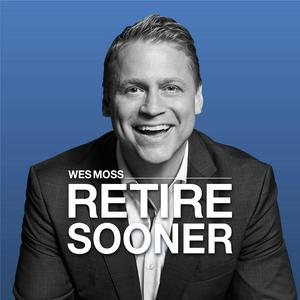
Wes Moss is on a mission: help at least 1 million Americans of any age retire sooner and find joy along the way. A seasoned finance professional, best-selling author, broadcaster, and teacher, Wes has done extensive research on the habits of the happiest retirees. On this podcast, Wes shares key lifestyle and money habits you can implement now to prepare for a secure future while not depriving yourself of happiness in the present. In addition to leveraging his 20+ years of knowledge as an investment advisor, Wes brings in guests and specialists to teach you how to set and work towards your financial and lifestyle objectives. Refreshingly-free of mind-numbing financial jargon and unrealistic money goals, Retire Sooner with Wes Moss gives listeners the tools on how to retire sooner in the real world.
Podcast websiteListen to Retire Sooner with Wes Moss, Unblinded with Sean Callagy and many other podcasts from around the world with the radio.net app
Get the free radio.net app
- Stations and podcasts to bookmark
- Stream via Wi-Fi or Bluetooth
- Supports Carplay & Android Auto
- Many other app features
Get the free radio.net app
- Stations and podcasts to bookmark
- Stream via Wi-Fi or Bluetooth
- Supports Carplay & Android Auto
- Many other app features

Retire Sooner with Wes Moss
Scan code,
download the app,
start listening.
download the app,
start listening.
Retire Sooner with Wes Moss: Podcasts in Family
 USA
USA