

Listen to this podcast in the app for free: Download for free in the App Store
radio.net
Sleep timer
Save favorites
FORDIFY LIVE: The Business Growth Show with Ford Saeks
Ford Saeks
Latest episode
201 episodes
S1Ep300 Leadership from the Front with David Druker
10/08/2026 | 32 mins.Leadership from the front becomes increasingly important as an organization grows. More employees, more customers, more locations, and more layers of management can give leaders greater reach, but they can also create greater distance from what is actually happening inside the business.
That distance can be dangerous. Reports, dashboards, meetings, and performance metrics provide valuable information, but they cannot always tell a leader how customers are being treated, where employees are struggling, or why a proven system is not producing the expected results.
David Druker, President and CEO of The UPS Store Canada, has spent decades in retail and franchising and leads an organization with more than 400 locations across Canada. His perspective on leadership is shaped by experience on multiple sides of the business, including being an entrepreneur, franchise owner, multi-unit operator, and eventually a master franchisor.
That experience reinforces a fundamental leadership principle: staying close enough to the business to understand reality while building a team capable of succeeding without the leader controlling everything.
Strong Leaders Stay Close to the Business
For David, leadership from the front means being active. He joked that his office chair probably has the "lowest mileage" of anyone's because he would rather be in the field than sitting in an office waiting for information to reach him.
He regularly visits franchise locations because that is where the business actually happens. Leaders can analyze, plan, and make assumptions from headquarters, but being around employees, franchisees, and customers provides a different level of understanding.
That does not mean a CEO should personally manage every decision. In fact, David emphasized the opposite. Leaders have to develop people and give them enough freedom to make decisions, experience mistakes, and become stronger.
"You can't be in everybody's face," David said. "Human beings learn by making errors."
This is one of the more difficult balances in leadership. Staying involved is not the same as micromanaging. Leadership from the front means remaining close enough to understand the business while giving capable people room to execute.
As organizations grow, leaders need people who can take responsibility without waiting for permission at every turn. If everything depends on one person, the organization has not truly developed leadership capacity.
Leadership Is Not a Popularity Contest
Accountability becomes especially complicated in franchising because franchisees are independent business owners operating within a larger system. They have invested their own money and accepted responsibility for their businesses, but they have also agreed to follow a model designed to create consistency across the brand.
David describes franchising as a collaborative sport. The franchisor provides systems, coaching, resources, marketing, operational support, and the strength of the brand. The franchisee still has to execute within the local business.
Problems arise when someone begins believing that the proven system applies everywhere except their location.
As David put it, "Your store isn't different. Your situation might be different."
That distinction applies far beyond franchising. Leaders frequently encounter people who explain disappointing results entirely through external circumstances. Markets change. Competition increases. Costs rise. Technology disrupts established practices. Those factors are real, but strong leadership requires identifying what can still be controlled.
Accountability means looking honestly at execution before blaming circumstances.
It also means leaders must sometimes deliver messages people do not want to hear.
"Leadership is not a popularity contest," David said. He described quality leadership as being built around honesty, integrity, and a willingness to tell people what they need to know rather than simply what they want to hear.
That can mean enforcing standards, making investments that do not produce an immediate visible return, or standing behind a decision that some people initially resist.
Leaders should explain the reasoning whenever possible. But leadership cannot become an endless search for unanimous approval. At some point, someone has to make the decision and accept responsibility for it.
Customer Experience Reveals the Strength of Leadership
One of the clearest tests of leadership happens far away from the executive office: the moment an employee interacts with a customer.
David describes The UPS Store as a people business. Customers may initially walk through the door because they need shipping, printing, shredding, passport photos, or another service. Whether they return often depends on how they were treated.
"People come in the first time because they have to. They come back because they want to."
That simple idea connects leadership directly to customer experience.
Employees need more than technical training. They need to understand how the organization expects customers to feel. David tells new franchisees that the fundamentals are remarkably straightforward: look people in the eye, smile, be honest, listen, and genuinely care about helping them.
Those behaviors may sound basic, but consistent execution is difficult when hundreds of independently operated locations are representing the same brand.
Leadership establishes the standard. Training reinforces it. Management monitors it. Employees and franchisees ultimately bring it to life.
David summarized the competitive advantage of the business this way: "It's being full service in a self-service world and being pleasant while doing it."
As automation and AI continue changing how customers interact with companies, that principle becomes even more valuable. Technology can remove friction and improve efficiency, but businesses still need people capable of creating trust, solving problems, and making customers feel valued.
Leadership from the front helps executives see whether those standards are actually reaching the customer.
Build a Team That Can Execute Without You
Leadership changes as a business grows. A founder or executive who once made nearly every important decision eventually has to depend on other people to carry the organization forward.
That transition requires trust, but trust does not mean abandoning accountability.
David's philosophy is to give people the opportunity to develop while allowing reasonable mistakes along the way. The objective is not perfection. It is building people who can think, execute, and improve.
The same principle applies when evaluating new opportunities.
The UPS Store Canada continually considers additional services that might make sense for customers, but David emphasized the importance of testing before rolling something out across hundreds of locations. He pointed to 3D printing as an example. It once appeared poised to become a major consumer opportunity, but testing did not demonstrate enough demand to justify a network-wide rollout.
That willingness to test rather than chase every trend is another form of leadership discipline.
"Just because you can doesn't mean you should" is an important principle for any growing company. New technology, services, revenue streams, and ideas should be evaluated against the organization's core competencies and the value they create for customers.
Strong leaders listen. They gather information. They test ideas. They develop people. Then they make decisions.
David acknowledged that leadership can sometimes be lonely because executives may have information they cannot share with everyone. In those situations, leaders need enough experience, confidence, and conviction to make the decision they believe is right for the organization.
That responsibility comes with the position.
Leadership from the front does not mean having every answer. It means remaining engaged enough to ask better questions, surrounding yourself with people capable of executing, communicating clearly, and being willing to take responsibility when a decision has to be made.
Watch the full episode on YouTube.
Join Fordify LIVE every Wednesday at 11 a.m. Central across your favorite social media platforms and catch the replay on The Business Growth Show Podcast for more conversations with today's leading business experts, entrepreneurs, and growth-minded leaders.
About David Druker
David Druker is President and CEO of The UPS Store Canada, one of Canada's largest franchised business service organizations with more than 400 locations across the country.
David has spent decades in retail and franchising, with experience as an entrepreneur, franchise owner, multi-unit owner, and master franchisor. That background gives him a firsthand understanding of both franchise leadership and the realities facing local business owners responsible for executing within a larger system.
He has also been deeply involved in the broader franchise community, including leadership and board involvement with the Canadian Franchise Association and participation with the International Franchise Association. His approach to leadership emphasizes visibility, accountability, teamwork, customer experience, and staying connected to the people responsible for bringing a brand to life.
About Ford Saeks
Ford Saeks is a Business Growth Accelerator who has generated more than a billion dollars in sales worldwide by helping businesses attract loyal customers, increase visibility, and accelerate growth. As President and CEO of Prime Concepts Group, Inc., Ford has founded more than ten companies, authored eleven books, earned three U.S. patents, and advised organizations ranging from startups to Fortune 500 companies.
A recognized expert in business growth, customer acquisition, leadership, franchising, marketing, and AI-driven business strategies, Ford helps business owners and leaders identify opportunities, improve performance, and achieve sustainable results. Learn more at ProfitRichResults.com and watch Fordify LIVE at Fordify.tv.S1Ep299 Building a Business Through Responsible Growth with Don Varady
10/01/2026 | 28 mins.Responsible growth requires more than opening new locations, increasing revenue, or expanding into new markets. Growth has to strengthen the business, not simply make it bigger.
That distinction becomes increasingly important as a company moves beyond its original founders and locations. What worked when the business was small may become too expensive, too complicated, or simply ineffective at scale. Leaders have to recognize those changes early enough to adapt without abandoning the qualities that made the company successful.
Don Varady, CEO and Co-Founder of Clean Eatz, understands that evolution firsthand. What began as a small healthy-food café eventually developed into a franchise organization with more than 120 locations. The path was anything but perfectly mapped out. It involved starting over, taking significant risks, entering franchising without years of industry experience, making mistakes, changing the model, and becoming increasingly disciplined about how the company grows.
That experience points to an important reality for any entrepreneur: responsible growth is not about having every answer before you begin. It is about building the ability to make better decisions as the business becomes more complex.
Build the Business Around What Customers Value
Clean Eatz did not begin with a master plan to create a national franchise system. Don and his wife and co-founder, Yvonne, were initially focused on building a healthy-food concept that served their local community.
As the business developed, they found additional ways to serve customers. Today, the Clean Eatz model includes dine-in and carryout business, third-party delivery, rotating weekly meal plans, grab-and-go meals, catering, and marketplace products. A sister company also provides shipped meals and serves additional accounts outside traditional franchise territories.
Those revenue streams matter, but the larger business principle is even more valuable. Growth can come from understanding what customers already value and finding additional ways to provide it.
The grab-and-go component is a good example. It originated as a practical solution for excess food. Instead of allowing usable ingredients to go to waste, meals were prepared and frozen. Over time, that simple operational solution became another revenue stream and an important source of variety and convenience for customers.
Responsible growth often develops this way. Leaders pay attention to what is happening inside the business, identify opportunities that fit the customer, and turn successful ideas into repeatable parts of the model.
The key is alignment. Adding revenue streams simply because they might produce additional sales can create unnecessary complexity. The strongest opportunities reinforce the value the company already provides.
Be Willing to Change What Used to Work
One of the more difficult responsibilities of leadership is recognizing when yesterday's successful model no longer fits today's business environment.
Clean Eatz faced that challenge with its restaurant prototype. Don explained that a model the company had used successfully for years eventually became less attractive as construction costs increased and real estate became more expensive. Rather than continuing to force the existing approach, the company began moving toward a tighter, smaller footprint that could reduce equipment and development costs for franchisees.
That is responsible growth in practice.
A strategy does not have to be a failure before it deserves to be reconsidered. Economic conditions change. Customer expectations change. Technology changes. Labor markets change. Real estate changes. What produced strong results five years ago may create unnecessary friction today.
Leaders can become emotionally attached to systems they created, particularly when those systems were once successful. But scaling requires separating the principle behind the business from the specific way it has always been executed.
The goal is not to protect the old model. The goal is to protect the business.
For Clean Eatz, that means continuing to evaluate how locations are developed and how franchisees are positioned for success. Don also emphasized the importance of site selection before a franchisee signs on the dotted line, along with using newer tools, including AI, to improve vetting and decision-making.
Technology can make those decisions more informed, but the objective remains fundamentally human: put the right people into better situations where they have a stronger opportunity to succeed.
Growth Depends on the Right People
As organizations grow, leadership decisions become increasingly important because the founder can no longer personally execute every part of the business.
Don acknowledged that choosing the right people around him has produced some significant lessons. Some hires worked extremely well. Others did not. Over time, those experiences helped clarify what to look for and what to avoid when building the team.
This challenge is especially important in franchising.
A growing franchise brand may be tempted to view every qualified candidate as another opportunity for expansion. But adding locations without properly evaluating the people responsible for operating them can create problems that affect the entire system.
Ford pointed out during the interview that strong franchise organizations often think about awarding franchises rather than simply selling them. The distinction matters because the relationship should involve mutual evaluation. The franchisor needs to determine whether the candidate has the characteristics, commitment, resources, and willingness to follow the system required to succeed.
Don's experience has made responsible franchisee vetting an increasingly important part of Clean Eatz's growth strategy. After years of seeing what works and making mistakes along the way, the company now has more experience and better tools available to evaluate prospective franchisees and potential locations.
More growth is not automatically better growth.
The wrong hire, franchisee, location, or expansion decision can consume resources that could have been invested in stronger opportunities. Responsible growth requires leaders to become increasingly selective as the stakes get higher.
Keep Adapting Without Losing the Foundation
There is a natural tension in a growing company. The organization needs consistency, but it also needs the ability to change.
Too much change can make a business difficult to replicate. Too little change can leave it operating with systems and assumptions that no longer make sense.
Clean Eatz's journey demonstrates how those two priorities can coexist. The company has evolved its restaurant model, developed multiple revenue streams, expanded its franchise system, and built a second business around meal distribution. At the same time, the underlying focus on healthy food, convenience, customer experience, and the fitness and wellness community has remained central to the brand.
That balance is essential to responsible growth.
Leaders need to understand which parts of the business are foundational and which are simply methods of delivering the result. Methods should evolve when better options become available. The foundation should remain clear enough that customers, employees, and partners still understand what the company stands for.
The same principle applies to leadership itself. Experience should make leaders more confident, but it should also make them more aware of how much can go wrong.
Don's advice to other entrepreneurs reflects that experience: "Trust your gut." He explained that mistakes will happen, but experience develops instincts that leaders should not ignore.
Instinct should not replace information, due diligence, or accountability. It can, however, become an important signal when years of experience are telling a leader that something does not fit.
Responsible growth combines both. Use better information. Build stronger systems. Ask harder questions. Surround yourself with capable people. Then be willing to act when experience tells you something needs to change.
Watch the full episode on YouTube.
Join Fordify LIVE every Wednesday at 11 a.m. Central across your favorite social media platforms and catch the replay on The Business Growth Show Podcast for more conversations with today's leading business experts, entrepreneurs, and growth-minded leaders.
About Don Varady
Don Varady is the CEO and Co-Founder of Clean Eatz, a healthy food and meal plan concept he built alongside his wife and co-founder, Yvonne. Without traditional restaurant backgrounds, they turned an early café concept into a growing business focused on convenient, healthy food and a strong customer experience.
Today, Clean Eatz has more than 120 locations and a business model that includes cafés, weekly meal plans, grab-and-go offerings, catering, marketplace products, and meal delivery. Don continues to lead the company's growth with an emphasis on responsible expansion, stronger franchisee vetting, smarter site selection, and adapting the business model as market conditions evolve.
About Ford Saeks
Ford Saeks is a Business Growth Accelerator who has generated more than a billion dollars in sales worldwide by helping businesses attract loyal customers, increase visibility, and accelerate growth. As President and CEO of Prime Concepts Group, Inc., Ford has founded more than ten companies, authored eleven books, earned three U.S. patents, and advised organizations ranging from startups to Fortune 500 companies.
A recognized expert in business growth, customer acquisition, leadership, franchising, marketing, and AI-driven business strategies, Ford helps business owners and leaders identify opportunities, improve performance, and achieve sustainable results. Learn more at ProfitRichResults.com and watch Fordify LIVE at Fordify.tv.S1Ep298 Why Franchise Success Starts with Relationships with Brad Fishman
09/24/2026 | 34 mins.Franchise success depends on much more than selling franchises, opening locations, or generating leads. A franchise system can grow quickly on paper while problems develop underneath if franchisees are struggling, communication is weak, or the people involved stop trusting one another.
For more than three decades, Brad Fishman, CEO of Fishman PR, has had a front-row seat to the franchise industry. He has worked alongside emerging brands, established franchisors, franchisees, suppliers, and industry leaders, giving him a broad perspective on what separates healthy franchise systems from those that struggle.
One principle consistently rises above the others: franchise success is closely tied to the quality of the relationships throughout the system. Strong brands create an environment where franchisors and franchisees can succeed together, where communication flows both ways, and where decisions consider the long-term health of the entire organization.
Growth Gets Easier When Franchisees Are Successful
It is easy to assume that a franchise brand experiencing slower growth simply needs more leads. More prospects, more marketing, and more franchise sales can seem like the obvious solution.
Brad looks at the issue differently. Before concentrating on generating more demand, leaders should consider whether the underlying opportunity is strong enough to support the people already investing in it.
As Brad put it, "Growth becomes really easy when your franchisees are doing well."
That idea gets to the heart of franchise success. Existing franchisees are more than operators within the system. Their experiences can become some of the strongest evidence that the business model works.
When franchisees are profitable, engaged, and confident in the organization, they can become advocates for the brand. Prospective owners can speak with people who are actually operating the business and hear firsthand what the experience is like.
The opposite is also true. Aggressively selling franchises before existing operators have a strong foundation can magnify weaknesses rather than solve them. More units do not automatically create a healthier franchise system.
Brad's perspective is grounded in a simple question: Can the franchisee make money at this?
That question should remain important even as a brand becomes larger and more sophisticated. Franchise success requires a model where both sides have the opportunity to achieve meaningful results.
Relationships Create a Stronger Franchise System
Franchising creates an unusual business relationship. Franchisees are independent business owners, but they are also operating within a larger brand and following a system established by the franchisor.
That structure requires trust.
Franchisors need franchisees to follow the model, protect the brand, and take responsibility for building their businesses locally. Franchisees need confidence that the franchisor is continuing to strengthen the system, provide appropriate support, and make decisions with the health of the network in mind.
When either side begins viewing the relationship as purely transactional, tension can build quickly.
Brad has spent decades watching franchise relationships develop across different brands and stages of growth. His experience reinforces the importance of building genuine connections throughout the franchise community, including among franchisors, franchisees, suppliers, advisors, and other industry professionals.
Those relationships become especially valuable when leaders face challenges they have not encountered before. Instead of trying to solve every problem independently, they can draw on people who have already faced similar decisions.
That willingness to share experience is one of franchising's greatest advantages. A leader may be encountering a particular growth challenge for the first time, but someone else in the franchise community has probably experienced a version of it before.
Franchise success does not require leaders to have every answer themselves. It requires being open-minded enough to ask questions, listen to experienced people, and remain coachable as the business evolves.
Protect Trust Before Problems Happen
Relationships become even more important when something goes wrong.
Brad and his team at Fishman PR have extensive experience helping franchise organizations manage communications and public relations. Over the years, that has included helping brands navigate crisis situations where franchisors, franchisees, employees, customers, attorneys, and the media may all need information.
His advice emphasizes preparation and consistency.
When a crisis happens at an individual location, there should already be clarity about who needs to be contacted, who is authorized to communicate, and what process the organization will follow. Without that preparation, people may react independently, creating conflicting messages and potentially making the situation more difficult.
A consistent message is important, but crisis preparation is really another example of relationship management. Franchisees need to know where to turn. Corporate leaders need reliable communication from the field. Marketing, public relations, operations, and legal teams may need to coordinate quickly.
Trust is much easier to rely on during difficult circumstances when it has already been built during normal ones.
This is why franchise success cannot be measured only by unit count or systemwide sales. Healthy systems also create communication structures that help people navigate challenges together.
Culture Has to Be Deliberate
As organizations grow, another challenge emerges: the behaviors and values that once seemed obvious can become harder to maintain.
Early employees may understand how the founders think simply because they have worked alongside them for years. Newer employees do not have that same history. As the organization adds people, locations, departments, and leadership layers, relying on employees to absorb the culture informally becomes increasingly risky.
Fishman PR has addressed this by deliberately teaching what the organization calls the "Fishman Way." Brad credits the agency's president, Deborah Vilchis, with formalizing that effort and creating opportunities to train employees around the principles and skills that matter to the organization.
The larger lesson applies to almost any growing company. Culture cannot remain entirely dependent on the founder.
If certain standards, behaviors, or values are essential to the organization, leaders need ways to communicate and reinforce them. Training should not be treated as something employees complete once. It should be an ongoing part of improving performance and maintaining consistency.
The same principle applies within franchise systems. As the organization grows, franchisees need opportunities to provide feedback, understand expectations, strengthen their capabilities, and remain connected to the larger mission of the brand.
Systems provide structure, but relationships help those systems work.
Franchise Success Requires Shared Responsibility
Perhaps the most important idea is that neither the franchisor nor the franchisee can create franchise success alone.
The franchisor is responsible for developing a viable model, strengthening the system, protecting the brand, and providing the support promised to franchisees. Franchisees are responsible for following the system, operating effectively, developing relationships within their local markets, and taking accountability for their own performance.
Both sides have responsibilities, and both sides need the other to succeed.
Brad's perspective also highlights the importance of honesty before a franchise is ever sold. Not every successful business should become a franchise, and not every concept is ready to expand simply because there is interest in it.
Brad shared that there have been situations where he advised businesses to reconsider whether they were ready to franchise or whether investing in public relations made sense at that stage. His reasoning was not about securing the immediate engagement. It was about whether growth would ultimately create a healthy opportunity for franchisees.
That long-term thinking matters.
The first franchisees in a system are particularly important because their results can influence future validation and growth. Helping those operators establish a strong foundation can ultimately be more valuable than racing to sell the next group of territories.
Franchise success is therefore not simply about getting bigger. It is about building something worth growing.
That requires strong economics, clear systems, honest communication, accountability, and people who understand that their individual success is connected to the success of others throughout the organization.
Relationships do not replace strategy. They make good strategy easier to execute.
Watch the full episode on YouTube.
Join Fordify LIVE every Wednesday at 11 a.m. Central across your favorite social media platforms and catch the replay on The Business Growth Show Podcast for more conversations with today's leading business experts, entrepreneurs, and growth-minded leaders.
About Brad Fishman
Brad Fishman is CEO of Fishman PR, a public relations and marketing agency specializing in the franchise industry. Brad joined the company shortly after its founding and has spent more than three decades working with franchise brands and leaders to build visibility, credibility, and stronger reputations.
His experience extends throughout the franchise community, including work with emerging and established franchise brands and leadership roles within the International Franchise Association. Brad is also a co-founder of Franchise Springboard, an initiative designed to bring franchise professionals together to share experience, build relationships, and help growing franchise organizations succeed.
Throughout his career, Brad has built his reputation around relationships, honesty, industry involvement, and a commitment to helping franchisors and franchisees create healthier opportunities for shared success.
About Ford Saeks
Ford Saeks is a Business Growth Accelerator who has generated more than a billion dollars in sales worldwide by helping businesses attract loyal customers, increase visibility, and accelerate growth. As President and CEO of Prime Concepts Group, Inc., Ford has founded more than ten companies, authored eleven books, earned three U.S. patents, and advised organizations ranging from startups to Fortune 500 companies.
A recognized expert in business growth, customer acquisition, leadership, franchising, marketing, and AI-driven business strategies, Ford helps business owners and leaders identify opportunities, improve performance, and achieve sustainable results. Learn more at ProfitRichResults.com and watch Fordify LIVE at Fordify.tv.S1Ep297 Business Systems That Turn a Great Idea Into a Global Brand with Pete Hull
09/17/2026 | 28 mins.Business systems are what separate a great idea from a business that can grow beyond its founder. A concept may work brilliantly in one location with the right people, the right customers, and the founder closely involved. The bigger test comes when that same experience has to work in another location, another market, or another country.
That challenge becomes even more significant when the customer experience depends heavily on people. Processes can be documented, technology can be standardized, and performance can be measured, but culture, service, and human connection are harder to replicate.
Pete Hull has experienced that challenge firsthand. As Founder and CEO of Fitstop, he has helped grow a fitness concept that began in his parents' garage in Australia into a global brand with more than 170 locations across Australia, New Zealand, Singapore, and the United States.
Fitstop's growth provides a useful example of how business systems can support expansion without removing the human elements that made the original concept successful. It also demonstrates why sustainable growth requires more than simply duplicating what worked once.
Turn What Works Into a Repeatable System
Pete's path to entrepreneurship began long before Fitstop became an international franchise. After two knee reconstructions ended his pursuit of becoming a professional motocross athlete, he moved into coaching and became deeply interested in strength and conditioning, human performance, and helping people make measurable progress.
Eventually, Pete began considering how he could take the benefits of one-on-one coaching and create something that could serve more people. The challenge was not simply putting more people into the same workout. He wanted to preserve the progressive nature of athletic training while creating a model that could work in a group environment.
That distinction matters in almost every industry. Scaling effectively requires identifying what actually produces the result for the customer and building business systems around those elements.
For Fitstop, that meant developing a centralized training methodology rather than allowing every location or coach to independently decide what the customer experience should look like. Studios operate from the same underlying programming, while individual owners and coaches can still bring their personalities and energy to the local community.
Pete described the balance simply: "Your vibe attracts your tribe."
That balance between standardization and personalization is one of the more difficult parts of building a multi-location business. Too much variation can weaken the brand. Too much standardization can make the experience feel disconnected from the local market.
Strong business systems establish the non-negotiables while creating room for people to deliver those standards authentically.
Build Systems Around the Customer Experience
Operational consistency matters, but consistency alone does not create customer loyalty. A business also needs to understand what keeps customers engaged and what ultimately produces the outcome they came for.
Pete's approach starts with the member experience. He explained that the fundamental responsibility of a gym, personal trainer, or fitness business is to serve its members by helping them achieve their goals. Fitstop's systems were built around that objective rather than around simply getting people through a workout.
The company's group training model deliberately creates interaction among members. People train together, support one another, push each other, and celebrate progress together. Pete describes the formula as combining the science of strength and conditioning with "the art of human connection."
That connection becomes part of the business model rather than something the company hopes will happen organically.
Fitstop also tracks progress and gives members milestones to pursue. Members advance through statuses based on participation, testing is incorporated into programming, results can be logged in the company's app, and achievements are celebrated inside the studio.
Those systems do more than encourage participation. They create opportunities for customers to recognize their own progress.
Progress can be one of the most powerful forms of customer retention. When customers can see evidence that the product or service is helping them move toward something they value, they have a compelling reason to continue.
That satisfaction can also become a growth engine. Pete talks about creating "raving fans" who naturally promote the business because they are proud of what they have accomplished. Fitstop supports that behavior with a referral model that allows members to invite friends into the experience.
The broader business principle applies well beyond fitness. Referrals become much easier when customers have a result worth talking about.
Protect the System as the Business Grows
Business systems become increasingly important as an organization adds locations and moves farther away from the founder's direct oversight.
Fitstop began franchising in 2017 after Pete and his wife had self-funded the first two studios. Pete had been transparent with his managers about the financials, the direction of the business, and what they were trying to build. When managers wanted to buy the studios, it helped propel Pete into franchising.
The model eventually expanded internationally. New Zealand provided an important test because Fitstop had to launch during a period when the team could not simply travel there and manage everything in person. The circumstances forced the company to improve onboarding, presales, coaching education, and other systems that could be delivered remotely.
That experience demonstrated something important about scalability: if a business requires the founder or corporate team to physically solve every problem, it has not truly built a scalable system.
International growth increased the stakes even further. Fitstop needed enough consistency that members could recognize the brand while still allowing local operators to build relationships within their own communities.
This is where franchising creates both an opportunity and a challenge. Franchisees are business owners, and strong owners will inevitably have ideas. But allowing every operator to independently change the model can quickly erode the consistency that gives the brand its value.
Pete's philosophy for handling that tension is captured in another memorable phrase: "We're curious, not furious."
Instead of immediately rejecting an idea, his team asks questions and looks at the data. Fitstop can compare performance across studios and examine what its strongest operators are doing. If an idea has merit, it can move through the Franchise Advisory Council and potentially become a pilot program. Successful ideas can then be introduced more broadly.
Pete summarized the approach another way when describing how he responds to changes that may be premature: "I'm not saying no, I'm just saying not right now."
This creates a path for innovation without turning the franchise system into more than 170 independent experiments.
Use Data to Strengthen Business Systems
As an organization grows, intuition becomes less reliable as the primary management tool. Leaders need visibility into what is happening across the business.
Pete describes Fitstop as a highly data-driven organization. The company uses performance information to support franchisees, compare locations, evaluate ideas, and identify where an operator may need additional support.
Technology and AI are increasingly part of that infrastructure. Pete specifically points to Claude as a tool Fitstop uses for business modeling, financial modeling, and evaluating studio performance. The company also has systems that allow it to monitor planning, statistics, and other performance indicators across the network.
The technology, however, does not eliminate the need for human observation.
Pete says he blocks out time to look at studio social media because even a short story can provide clues about the culture inside a location. Fitstop's business performance coaches also conduct annual health checks that include studio visits, financial audits, and planning reviews.
That combination is important. Dashboards can tell leaders what is happening numerically, but they may not fully explain why it is happening.
The best business systems create visibility at both levels. Leaders need quantitative measures that reveal trends and qualitative signals that show what customers and employees are actually experiencing.
As Pete noted, people who are progressing tend to be happier and more motivated. When performance begins moving backward, whether in fitness or business, intervention may be needed.
Consistency Creates the Foundation for Growth
There is a temptation to associate business growth with constant innovation. New markets, new products, new campaigns, and new strategies are exciting. Yet much of sustainable growth comes from doing the fundamentals exceptionally well and repeating them.
That philosophy is evident in Pete's approach to both business and personal performance.
When asked about his own routines, he did not point to an elaborate productivity system or unusual high-performance ritual. Instead, he emphasized a stable lifestyle built around basics such as sleep, nutrition, hydration, training, and physical activity.
"Do the basics really, really well, but just keep showing up and be consistent with it."
The same principle applies to organizations.
A company does not become scalable because it documented a few procedures. Business systems have to become part of how the organization operates every day. People need to understand the standards, follow them, measure the results, and improve them when the evidence supports a change.
Consistency is especially important when the company is expanding into new markets. Customers should not have to wonder whether the experience they receive depends entirely on which location they happen to visit.
At the same time, consistency should not eliminate humanity. Pete's approach to Fitstop illustrates how a company can globalize the underlying brand and methodology while allowing local owners and coaches to build meaningful relationships in their communities.
That may ultimately be one of the most important lessons for any leader trying to turn an idea into a larger organization. Growth does not require removing people from the equation. It requires building business systems that help people consistently deliver what made the idea valuable in the first place.
Watch the full episode on YouTube.
Join Fordify LIVE every Wednesday at 11 a.m. Central across your favorite social media platforms and catch the replay on The Business Growth Show Podcast for more conversations with today's leading business experts, entrepreneurs, and growth-minded leaders.
About Pete Hull
Pete Hull is the Founder and CEO of Fitstop, a global functional strength and conditioning brand with more than 170 locations across Australia, New Zealand, Singapore, and the United States.
Pete's journey into the fitness industry began after two serious injuries ended his pursuit of becoming a professional motocross athlete. His rehabilitation sparked a passion for strength and conditioning, human performance, and helping people make measurable progress. That passion eventually led him to create a training model that brought structured programming, progressive training, and real coaching to everyday athletes.
What began in his parents' garage in Australia grew into Fitstop, a franchise brand built around consistent business systems, a strong member experience, and genuine human connection. Today, Pete continues to lead Fitstop's global growth while maintaining the training methodology, culture, and community at the heart of the brand.
About Ford Saeks
Ford Saeks is a Business Growth Accelerator who has generated more than a billion dollars in sales worldwide by helping businesses attract loyal customers, increase visibility, and accelerate growth. As President and CEO of Prime Concepts Group, Inc., Ford has founded more than ten companies, authored eleven books, earned three U.S. patents, and advised organizations ranging from startups to Fortune 500 companies.
A recognized expert in business growth, customer acquisition, leadership, franchising, marketing, and AI-driven business strategies, Ford helps business owners and leaders identify opportunities, improve performance, and achieve sustainable results. Learn more at ProfitRichResults.com and watch Fordify LIVE at Fordify.tv.S1Ep296 Hiring a Keynote Speaker Who Delivers Real Value with Katrina Mitchell
09/10/2026 | 38 mins.Hiring a keynote speaker can be one of the most important decisions an organization makes when planning a convention, conference, leadership meeting, or company event. The right speaker can reinforce business priorities, create meaningful connections with the audience, and give attendees ideas they can actually put to work.
The wrong speaker can consume valuable agenda time without creating much value at all.
That distinction becomes even more important when organizations consider the total investment involved in bringing people together. Attendees may be stepping away from their businesses, traveling, paying for hotels, and giving up several days of productive time. The organization itself is investing in venues, production, food, travel, staff, programming, and countless other details.
With that much at stake, hiring a keynote speaker should not begin with a demo video, celebrity name, or speaking fee. It should begin with a much more important question: What does the organization want the audience to think, feel, understand, or do differently when they leave?
Katrina Mitchell, Founder and Chief Matchmaker at Franchise Speakers, has spent more than 17 years helping franchise organizations answer that question and match outside speakers with their audiences, cultures, objectives, and investment levels. Her experience as a former franchisee gives her an additional perspective on what franchise owners need from the limited time they spend together at conventions and meetings.
For meeting planners and business leaders, her approach offers a valuable reminder. Hiring a keynote speaker is not about filling an hour on an agenda. It is about making that hour contribute to the larger purpose of the event.
Start With the Business Outcome, Not the Speaker
One of the easiest mistakes when hiring a keynote speaker is beginning the search too early.
A planning committee decides it needs a speaker, starts watching videos, asks colleagues for recommendations, or begins searching for recognizable names. Before long, the selection process becomes focused on personalities rather than outcomes.
Mitchell recommends approaching the decision from the opposite direction.
"Start with the end in mind."
Imagine the audience walking out of the ballroom after the presentation. What transformation should have taken place? What should attendees understand that they did not understand before? What action should they be prepared to take? How should the presentation support the broader goals of the organization?
Those questions help turn a vague request into a meaningful speaker specification.
An organization may initially say it wants someone who can motivate the audience. Motivation, however, is difficult to connect to a specific business result. Digging deeper may reveal that the real objective is improving leadership, increasing local marketing activity, strengthening customer experience, building better teams, improving franchise relationships, or reinforcing the company's culture.
The same principle applies outside franchising. A sales organization may need its people to adopt a different approach to prospecting. A leadership conference may need managers to improve accountability. A company navigating rapid technological change may need employees to understand how AI affects their roles without losing sight of the importance of human relationships.
Once the desired outcome is clear, the search for a keynote speaker becomes considerably more focused.
This is also why the most entertaining speaker is not automatically the best choice.
Celebrity can bring recognition and excitement to an event, but recognition and business relevance are not the same thing. Mitchell challenges the assumption that a celebrity speaker will necessarily increase attendance or create greater value for franchisees. A compelling story may entertain an audience for an hour, but meeting planners should still ask what attendees will be able to do with that experience when they return to their businesses.
Entertainment absolutely has a place at events. The question is whether entertainment is the objective or whether it can be combined with a meaningful message.
That distinction can help organizations avoid paying for attention when what they really need is impact.
Look Beyond the Demo Reel When Hiring a Keynote Speaker
A polished video is useful when evaluating a speaker, but it cannot tell a meeting planner everything that matters.
The person on stage represents only one part of the speaker experience.
Professionalism begins long before the introduction and continues after the applause. Preparation, responsiveness, understanding of the organization, interaction with the event team, willingness to customize, reliability on site, and the ability to connect with the audience can all affect the success of the engagement.
Mitchell's philosophy at Franchise Speakers reflects that broader view. Her goal is to identify the right speaker based on what she describes as the "right person, right time, right fee, right culture, right message."
Culture deserves particular attention.
A speaker who is highly effective for one organization may be completely wrong for another. Different audiences have different expectations, personalities, levels of experience, and relationships with their brands. A presentation that succeeds with corporate executives may not connect the same way with franchise owners. A speaker accustomed to entrepreneurial audiences may need a different approach when addressing frontline managers or employees.
Industry understanding can matter as well.
Mitchell emphasizes that franchise audiences are not simply generic groups of entrepreneurs. Franchisees operate within a specific business model involving brand standards, systems, franchisor relationships, local execution, and shared responsibilities. A speaker who understands those dynamics can frame ideas in ways that are more relevant to the audience.
That does not mean every speaker must spend an entire career in the industry. It does mean meeting planners should evaluate whether the speaker is willing and able to understand the audience they are being hired to serve.
Customization is part of that evaluation.
A strong professional speaker should understand the organization's objectives, terminology, challenges, and priorities. Listening to executive presentations, speaking with leadership before the event, understanding the conference theme, and incorporating relevant examples can make a keynote feel like part of the event rather than a presentation that could have been delivered anywhere.
The speaker's attitude toward service matters, too.
Mitchell developed what Franchise Speakers calls its "No Diva" philosophy after an experience with a speaker who created problems for a client before ever stepping onto the stage. Her distinction is simple: some speakers arrive primarily to serve the audience, while others are primarily interested in being the center of attention.
A meeting planner should be evaluating both.
A speaker can have excellent stagecraft and still make life unnecessarily difficult for the event team. The best engagements happen when professionalism offstage matches performance onstage.
Treat the Keynote as an Investment in the Event
Speaking fees inevitably become part of the selection process. They should not, however, be evaluated in isolation.
The least expensive speaker is not necessarily the best value, just as the highest-priced speaker is not automatically the most effective.
The better question is what the organization expects its investment to accomplish.
Consider the total economics of a major convention. Hundreds or thousands of people may be traveling to one location. The company may have a limited number of hours to reconnect attendees with the organization, strengthen relationships, communicate its vision, provide business education, and create an experience people believe was worth leaving their businesses to attend.
Mitchell describes convention time as "precious," particularly within franchise systems. In her view, one of the opportunities created by bringing franchisees together is helping them reconnect with the brand and with one another.
That makes every hour on the agenda valuable real estate.
A keynote should therefore connect to the larger event rather than exist as an isolated attraction.
If leadership is emphasizing a strategic priority, the outside speaker can reinforce it from a different perspective. If franchise owners are facing a common business challenge, the speaker can provide frameworks or tools that help them address it. If an organization wants to create stronger alignment, the presentation can support language and ideas that continue throughout the conference.
Mitchell points to one indicator of a successful presentation: people continue referencing the speaker's message later in the event. The ideas have moved beyond the stage and become part of hallway conversations, meetings, and discussions among attendees.
That is a considerably higher standard than whether the audience applauded.
It also creates a different way to think about return on investment.
Event organizers can use surveys and attendee feedback, but they can also consider whether the speaker's ideas are being retained and applied. Did the presentation support the organization's priorities? Did attendees receive something useful? Are leaders able to reinforce the message after everyone goes home?
One of Mitchell's strongest recommendations is to avoid overwhelming people with information simply because there is time available to present it. A speaker who provides one, three, or a handful of useful ideas that people actually implement may create more value than someone who races through dozens of concepts.
That principle has become even more important as information itself becomes easier to obtain.
In an AI World, the Human Experience Matters More
The role of a keynote speaker is changing because access to information has changed.
Audiences no longer need to attend a conference simply to receive facts they could find through an online search or an AI platform. If a presentation consists entirely of information that attendees could generate for themselves in a few minutes, its value becomes increasingly difficult to justify.
Live events offer something technology cannot easily replicate: a shared human experience.
Stories, emotion, interaction, context, credibility, humor, and the energy created when people experience an idea together can make information memorable. A talented keynote speaker does not simply transfer knowledge. The speaker helps the audience connect that knowledge to their own circumstances and gives them a reason to act on it.
That does not make technology irrelevant. Quite the opposite.
AI is affecting virtually every area of business, and speakers need to understand how those changes intersect with their expertise. But Mitchell cautions against treating AI as a replacement for meaningful human relationships. She argues that authentic, present conversations are becoming more important as technology becomes more prevalent.
The same principle should influence how organizations design conferences.
Technology can support registration, communication, content delivery, follow-up, personalization, and countless other parts of an event. It can make the experience more efficient. The gathering itself, however, creates an opportunity for relationships and conversations that people cannot get from another automated interaction.
That is why hiring a keynote speaker should involve evaluating the experience the speaker creates, not merely the information delivered.
The audience should leave with something memorable enough to survive the flight home and useful enough to matter when they return to work.
What to Consider Before Hiring a Keynote Speaker
There is no single specification that guarantees a successful keynote. Different events require different speakers, styles, expertise, and outcomes. But the selection process becomes stronger when meeting planners evaluate the complete engagement instead of relying on a recognizable name or impressive video.
Before making the decision, an organization should be able to answer five fundamental questions.
First, what business outcome should the presentation support? If the desired result cannot be clearly articulated, it will be difficult to determine which speaker is best equipped to create it.
Second, does the speaker understand the audience? Industry knowledge, business-model familiarity, audience demographics, organizational culture, and the challenges attendees are facing can all influence whether a message connects.
Third, what will attendees take home? A great story can be memorable, but the strongest business presentations give people something useful. That might be a framework, a new perspective, a tool, a process, or a specific action they can implement.
Fourth, what kind of professional will the organization be working with? Preparation, flexibility, communication, reliability, customization, and a service mindset are part of the engagement. The experience should be positive for the people behind the scenes as well as those sitting in the audience.
Finally, how does the keynote support the larger event? The best speaker choice should reinforce the purpose of the gathering rather than compete with it.
Hiring a keynote speaker becomes much easier when those specifications are established before names and fees enter the conversation.
The objective is not to find the most famous person, the cheapest option, or even the speaker with the most impressive demo reel. It is to identify the person who can create the right experience for that particular audience at that particular moment.
For organizations investing heavily in bringing their people together, that distinction can determine whether a keynote simply fills time or becomes one of the most valuable hours of the entire event.
Watch the full episode on YouTube.
Join Fordify LIVE every Wednesday at 11 a.m. Central across your favorite social media platforms and catch the replay on The Business Growth Show Podcast for more conversations with today's leading business experts, entrepreneurs, and growth-minded leaders.
About Katrina Mitchell
Katrina Mitchell is the Founder and Chief Matchmaker at Franchise Speakers, where she helps franchise organizations connect with franchise-savvy keynote speakers, thought leaders, subject matter experts, and business growth trainers. A former franchisee herself, Katrina brings firsthand experience with the challenges of franchise ownership, franchisee-franchisor relationships, and the importance of a strong system culture.
Katrina founded Franchise Speakers in 2008 and has spent more than 17 years matching franchise brands with outside talent based on their audience, culture, business objectives, and desired outcomes. Known as a natural connector, she has built her business around helping franchise organizations create greater value from their conventions and events by finding the right speaker for the right opportunity.
About Ford Saeks
Ford Saeks is a Business Growth Accelerator who has generated more than a billion dollars in sales worldwide by helping businesses attract loyal customers, increase visibility, and accelerate growth. As President and CEO of Prime Concepts Group, Inc., Ford has founded more than ten companies, authored eleven books, earned three U.S. patents, and advised organizations ranging from startups to Fortune 500 companies.
A recognized expert in business growth, customer acquisition, leadership, franchising, marketing, and AI-driven business strategies, Ford helps business owners and leaders identify opportunities, improve performance, and achieve sustainable results. Learn more at ProfitRichResults.com and watch Fordify LIVE at Fordify.tv.
More Business podcasts





Trending Business podcasts












About FORDIFY LIVE: The Business Growth Show with Ford Saeks
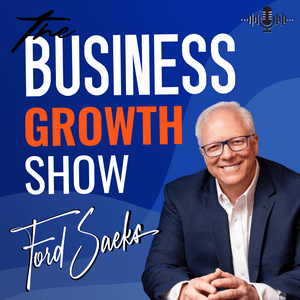
FORDIFY LIVE: The Business Growth Show with Ford Saeks is a business growth podcast for entrepreneurs, franchise leaders, executives, and sales and marketing professionals who want practical strategies to grow revenue, improve performance, leverage artificial intelligence, and stay ahead of change.
Hosted by Ford Saeks, Hall of Fame Keynote Speaker, Business Growth Accelerator, AI Integration Strategist, and author of Accelerate, AI Mindshift, and AI Alchemy, each episode delivers real-world business strategies you can put to work immediately.
Ford has helped organizations generate more than $1 billion in sales by improving how they think, market, sell, innovate, and serve their customers. On FORDIFY LIVE, he brings those insights directly to you through practical conversations with CEOs, franchise executives, entrepreneurs, marketing experts, sales leaders, customer experience authorities, and AI innovators.
Each episode explores the strategies, trends, and ideas shaping business today, including:
**Business Growth Strategies:** Discover practical ways to accelerate revenue, improve profitability, increase performance, and gain a competitive advantage.
**AI for Business:** Learn how to use artificial intelligence, ChatGPT, and emerging AI tools to improve productivity, streamline operations, make smarter decisions, and create better customer experiences while keeping the human touch.
**Franchise Growth and Performance:** Explore strategies for franchise leadership, local marketing, franchisee performance, sales growth, customer engagement, and scalable success.
**Sales and Marketing:** Learn how to attract high-value prospects, build trust, improve conversions, strengthen your brand, and generate more repeat and referral business.
**Leadership and Innovation:** Discover how successful leaders navigate disruption, improve accountability, develop stronger teams, embrace innovation, and turn change into opportunity.
**Customer Experience:** Learn how to create remarkable customer experiences that strengthen loyalty, generate referrals, and build long-term brand value.
Whether you're a business owner, entrepreneur, franchise executive, franchisee, sales professional, marketing leader, or corporate executive, FORDIFY LIVE gives you actionable ideas to solve real business challenges and achieve measurable results.
If you want to grow your business, increase sales, use AI more effectively, strengthen your leadership, improve franchise performance, or stay competitive in a rapidly changing marketplace, you're in the right place.
Subscribe to FORDIFY LIVE: The Business Growth Show with Ford Saeks and turn today's ideas into tomorrow's results.
Podcast websiteListen to FORDIFY LIVE: The Business Growth Show with Ford Saeks, The Code To Winning and many other podcasts from around the world with the radio.net app
Get the free radio.net app
- Stations and podcasts to bookmark
- Stream via Wi-Fi or Bluetooth
- Supports Carplay & Android Auto
- Many other app features
Get the free radio.net app
- Stations and podcasts to bookmark
- Stream via Wi-Fi or Bluetooth
- Supports Carplay & Android Auto
- Many other app features

FORDIFY LIVE: The Business Growth Show with Ford Saeks
Scan code,
download the app,
start listening.
download the app,
start listening.
 USA
USA