Listen to this podcast in the app for free: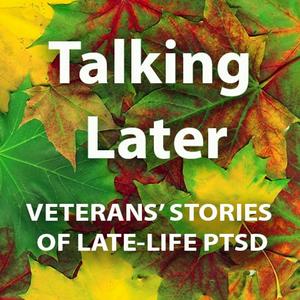 Download for free in the App Store
radio.net
Sleep timer
Save favorites
Talking Later: Veterans' Stories of Late-Life PTSD
Veterans Health Administration
Latest episode
Available Episodes
5 of 20
- S2E10: The FriendTwo young men leave to fight, but only one comes back. Meet a Vietnam Veteran who mourns the death of his best friend. Afterwards, the hosts discuss grief, what draws people to work with older adults, and this podcast series. The following episode may contain descriptions of violence. Please use discretion. For this episode, our co-hosts are Rachel Weiskittle, an assistant professor in the department of psychology at the University of Colorado, Colorado Springs. Her research focuses on grief, trauma, aging, and the role of creative art therapies in helping people heal from loss. Hannah Heinz is a graduate student pursuing geropsychology at Virginia Commonwealth University interested in a career serving older adults as a therapist and researcher.Resources for this episode:Understanding PTSD and Aging: English Version ; Spanish VersionThe My Life My Story PodcastVHA Office of Rural HealthFurther Reading: National Center for PTSDVA Mental HealthAre you a Veteran in crisis or concerned about one? Find support anytime day or night To connect with a Veterans Crisis Line responder anytime day or night:Call 800-273-8255, then select 1.Start a confidential chat.Text 838255.If you have hearing loss, call TTY: 800-799-4889.--------28:21
- S2E9: The Skyhook ManWhat does it mean to survive trauma? Sometimes you take a new path, one that’s unexpected, but full of the love and hope you thought you’d never get to experience again. Meet a Vietnam Veteran who did just that. The following episode may contain descriptions of violence. Please use discretion. For this episode, our co-hosts are Rachel Weiskittle, an assistant professor in the department of psychology at the University of Colorado, Colorado Springs. Her research focuses on grief, trauma, aging, and the role of creative art therapies in helping people heal from loss. Jenn Daks is a clinical psychologist at VA Boston Healthcare System. Her work focuses on promoting resilience in late life, particularly among older adult couples and families, as well as pain management. Resources for this episode: Understanding PTSD and Aging: English Version ; Spanish VersionThe My Life My Story PodcastVHA Office of Rural Health Further Reading: National Center for PTSD VA Mental Health Are you a Veteran in crisis or concerned about one? Find support anytime day or night To connect with a Veterans Crisis Line responder anytime day or night: Call 800-273-8255, then select 1. Start a confidential chat. Text 838255. If you have hearing loss, call TTY: 800-799-4889.--------25:02
- S2E8: The Most Difficult ThingBeing brave and being courageous can get you through war. But asking for help? Well, sometimes that’s the hardest part. Today we hear from a Veteran who asked for help. Our hosts discuss therapy for PTSD and the VA’s commitment to rural Veterans. The following episode may contain descriptions of violence. Please use discretion. Rachel Weiskittle is an assistant professor in the department of psychology at the University of Colorado, Colorado Springs. Her research focuses on grief, trauma, aging, and the role of creative art therapies in helping people heal from loss. Bret Hicken is a clinical psychologist and the Aging Program Manager with the VHA Office of Rural Health’s Veterans Rural Health Resource Center in Salt Lake City, Utah. His research and policy work focuses on improving access to and quality of healthcare for aging rural Veterans and those who care for them.Resources for this episode: ·Understanding PTSD and Aging: English Version ; Spanish VersionThe My Life My Story PodcastVHA Office of Rural HealthFurther Reading:National Center for PTSDVA Mental HealthAre you a Veteran in crisis or concerned about one? Find support anytime day or nightTo connect with a Veterans Crisis Line responder anytime day or night:Call 800-273-8255, then select 1.Start a confidential chat.Text 838255.If you have hearing loss, call TTY: 800-799-4889.--------31:02
- S2E7: The HusbandSometimes it’s the people closest to you who first notice that something just isn’t quite right. A Sunday morning brunch guides a Vietnam Veteran and his wife on the path to recovery. This podcast is brought to you by the VHA Office of Rural Health. The contents do not represent the views of the U.S. Department of Veterans Affairs or the United States Government. The following episode may contain descriptions of violence. Please use discretion. Rachel Weiskittle is an assistant professor in the department of psychology at the University of Colorado, Colorado Springs. Her research focuses on grief, trauma, aging, and the role of creative art therapies in helping people heal from loss. Lola Baird is a licensed clinical social worker at the Boston VA Healthcare System. Lola received her bachelor’s degree from the University of Michigan, Ann Arbor and her Masters in Social Work from Boston College in 2011. Lola has spent the last decade providing direct clinical care support to different Veteran populations. Currently, Lola works as the clinic manager and senior social worker for the Polytrauma/Traumatic Brain Injury clinic.Resources and Further Reading for this episode: · Understanding PTSD and Aging: English Version ; Spanish Version The My Life My Story Podcast VHA Office of Rural Health National Center for PTSD VA Mental Health Are you a Veteran in crisis or concerned about one? Find support anytime day or nightTo connect with a Veterans Crisis Line responder anytime day or night:Call 988, then select 1.Start a confidential chat.Text 838255.If you have hearing loss, call TTY: 800-799-4889.--------25:17
- S2E6: The RunnerHow far can we run? The chaos of war doesn’t always end with survival. Meet a Vietnam Veteran who vividly remembers each loss but refuses to forget everything he has gained. This podcast is brought to you by the VHA Office of Rural Health. The contents do not represent the views of the U.S. Department of Veterans Affairs or the United States Government. The following episode may contain descriptions of violence. Please use discretion. Rachel Weiskittle is an assistant professor in the department of psychology at the University of Colorado, Colorado Springs. Her research focuses on grief, trauma, aging, and the role of creative art therapies in helping people heal from loss. Kelly O’Malley is a licensed clinical psychologist and the Clinical Director of the Mental Health Consult-Liaison Service at the VA Boston Community Living Center. Her research focuses on examining the re-emergence of PTSD in later life and developing policies and training for trauma-informed care for older adults in VA CLCs. Resources and Further Reading for this episode: · Understanding PTSD and Aging: English Version ; Spanish Version The My Life My Story Podcast The Honor Flight Network Coming Home: Vietnam Veterans in American Society Why Were Vietnam War Vets Treated Poorly When They Returned? Mental Health Impact of Homecoming Experience Among 1730 Formerly Deployed Veterans From the Vietnam War to Current Conflicts: Results From the Veterans' Health Study - PubMed (nih.gov) Are you a Veteran in crisis or concerned about one? Find support anytime day or nightTo connect with a Veterans Crisis Line responder anytime day or night:Call 988, then select 1.Start a confidential chat.Text 838255.If you have hearing loss, call TTY: 800-799-4889.--------23:22
More Health & Wellness podcasts
 Huberman LabHealth & Wellness, Science, Life Sciences
 On Purpose with Jay ShettyBusiness, Health & Wellness, Mental Health
 Nothing much happens: bedtime stories to help you sleepFiction, Health & Wellness
 The Dr. John Delony ShowHealth & Wellness, Society & Culture, Mental Health, Relationships
 The Dylan Gemelli PodcastHealth & Wellness, Alternative Health
 The School of GreatnessBusiness, Education, Health & Wellness, Entrepreneurship, Mental Health, Self-Improvement
 unPAUSED with Dr. Mary Claire HaverHealth & Wellness, Society & Culture, Medicine
 We're Out of TimeHealth & Wellness, Mental Health
 The Ultimate Human with Gary BreckaHealth & Wellness
 The NightlyComedy, Health & Wellness
Trending Health & Wellness podcasts
 The Dr. Gundry PodcastHealth & Wellness
 SHE MDEducation, Health & Wellness, Medicine, Self-Improvement
 Savage LovecastHealth & Wellness, Society & Culture, Relationships, Sexuality
 the goop podcastEducation, Health & Wellness, Society & Culture, Self-Improvement
 I Have ADHD PodcastEducation, Health & Wellness, Mental Health, Self-Improvement
 Drift Off - Bedtime Stories for AdultsHealth & Wellness, Alternative Health, Mental Health
- The NightlyComedy, Health & Wellness
 Three of Seven PodcastHealth & Wellness, Religion & Spirituality, Christianity, Fitness
 ADHD ChatterEducation, Health & Wellness, Mental Health
 The Dr. Gabrielle Lyon ShowHealth & Wellness, Science, Life Sciences, Medicine
 OversharingEducation, Health & Wellness, Society & Culture, Mental Health, Relationships, Self-Improvement
 Tracks To Relax Sleep MeditationsHealth & Wellness, Alternative Health, Mental Health
 Juicebox Podcast: Type 1 DiabetesHealth & Wellness, Kids & Family, Medicine, Nutrition, Parenting
 Intermittent Fasting StoriesHealth & Wellness, Nutrition
 We're All InsaneHealth & Wellness, Mental Health
 The Cabral ConceptHealth & Wellness, Kids & Family, Alternative Health, Fitness
 The Genius LifeHealth & Wellness
 Rain SoundsHealth & Wellness, Society & Culture, Mental Health
 TED HealthHealth & Wellness
 UnF*ck Your Brain: Feminist Self-Help for EveryoneEducation, Health & Wellness, Society & Culture, Mental Health, Philosophy, Self-Improvement
 The Dr. Josh Axe ShowEducation, Health & Wellness, Religion & Spirituality, Christianity, Self-Improvement
 Recovery ElevatorEducation, Health & Wellness, Mental Health, Self-Improvement
 Boring Books for Bedtime Readings to Help You SleepArts, Health & Wellness, Books, Mental Health
 8 Hour Sleep MusicHealth & Wellness, Alternative Health
 You Make SenseEducation, Health & Wellness, Society & Culture, Mental Health, Relationships, Self-Improvement
 Rain Sounds - 10 HourHealth & Wellness, Science, Alternative Health, CATEGORY_NATURE
 8 Hour Binaural BeatsHealth & Wellness, Alternative Health
 Dr. Berg’s Healthy Keto and Intermittent Fasting PodcastHealth & Wellness
 Hacking Your ADHDHealth & Wellness, Mental Health
 The Empty BowlHealth & Wellness
About Talking Later: Veterans' Stories of Late-Life PTSD
This podcast is about Post-Traumatic Stress Disorder, or PTSD in later life; it is also about resilience as we age. PTSD is a mental health condition that can occur by experiencing or witnessing a traumatic event. While some of us may be familiar with the idea of PTSD as a result of combat or natural disasters or other traumatic events, many people are less familiar with the ways PTSD can resurface, or emerge for the first time, as we age. Each episode of “Talking Later” begins with a real Veteran’s story. They’ll share their ups and downs, and sometimes the ways that they coped – or found meaning – in what they’ve gone through. Then we’ll discuss what the Veteran’s story can teach us about PTSD in later life. We hope these stories and conversations will help people with PTSD, as well as those who care for them.
Podcast websiteListen to Talking Later: Veterans' Stories of Late-Life PTSD, Huberman Lab and many other podcasts from around the world with the radio.net app
Get the free radio.net app
- Stations and podcasts to bookmark
- Stream via Wi-Fi or Bluetooth
- Supports Carplay & Android Auto
- Many other app features
Get the free radio.net app
- Stations and podcasts to bookmark
- Stream via Wi-Fi or Bluetooth
- Supports Carplay & Android Auto
- Many other app features

Talking Later: Veterans' Stories of Late-Life PTSD
Scan code,
download the app,
start listening.
download the app,
start listening.
 USA
USA