

Listen to this podcast in the app for free: Download for free in the App Store
radio.net
Sleep timer
Save favorites
15 episodes
How Railway says no to 90% of ideas and keeps winning | Jake Cooper (Founder, CEO)
10/13/2026 | 1h 16 mins.Jake Cooper never set out to start a company. After leaving Uber in 2020, he put together a box of databases for his own side projects, kept coming back to it, and eventually posted it on Twitter asking who he should talk to about a job working on it. He got no job offers, just a few angel checks. That side project became Railway, the cloud platform now used by millions of developers, and Jake still runs it as a solo founder.
Railway is run by around 40 people and is closing in on $100 million in annual revenue. The path there wasn’t a straight line. In the free-tier era, Railway was losing about $500K a month, and it switched the free tier off until owning its own bare-metal data centers made the economics work. The throughline since has been focus: say no to 90% of ideas, find the biggest problem each week, and move it forward, brick by brick.
In this conversation, Jake walks through the operating system behind that leverage. Why he won’t look at how other companies solve a problem until Railway has tried its own answer. Why he thinks two co-founders is the worst number of co-founders. How a six-week onboarding built on trust, clarity, and judgment turns new hires into owners. And why his phone goes on do not disturb from Friday night to Sunday afternoon, because 996 buys 20% more cycles at best, but stillness is where the step-change ideas show up.
Listen on YouTube, Spotify, and Apple Podcasts
Jake Cooper is the founder and CEO of Railway, the cloud platform for deploying applications, databases, and agents, which he founded in 2020. Railway runs on its own bare-metal data centers, serves more than 2 million developers, and counts companies including MGM Resorts, Bilt, and TripAdvisor’s Cruise Critic among its customers. In January 2026, Railway raised a $100 million Series B, bringing its total funding to roughly $124 million. Before founding Railway, Cooper worked as a software engineer at Wolfram Research, Bloomberg, and Uber, where he scaled infrastructure for Jump bikes and scooters. He studied engineering at the University of Victoria in Canada.
Where to find Jake Cooper:
* Railway
* X
* LinkedIn
Where to find Nakul:
* Audacious Ventures
* X
* LinkedIn
Where to find Audacious Ventures:
* Website
* LinkedIn
In this conversation with Jake Cooper:
00:00 Who is Jake Cooper?
02:54 How did Railway survive losing $500K a month?
06:01 What made Railway’s growth chart go vertical?
09:45 Why won’t Jake look at how other companies solve problems?
14:34 Is two the worst number of co-founders?
20:04 How does a 40-person team get near $100M in ARR?
22:41 Why does Railway say no to 90% of ideas?
28:55 How do you compete for talent against the AI labs?
32:25 What does a technical interview look like after Opus 4.5?
35:34 Trust, clarity, judgment: how does Railway’s six-week onboarding work?
44:59 What does HARD stand for, and which value costs the most?
48:49 Why does Jake go dark from Friday night to Sunday?
54:54 What breaks first in a world with 10,000x more software?
59:49 Where does Railway play in two years?
1:01:37 How has Jake had to grow as a CEO?
1:09:29 Is burnout just an input-output mismatch?
1:12:27 Why does Jake think most startup advice is overrated?
Jake’s sharpest lines from this conversation:
On studying other companies’ playbooks:
“To me, it’s almost like cheating on your homework when you go and look at somebody else’s solution. You pollute your own brain with whatever that is.”
On having a co-founder:
“Two is awful. Do they make couples counselors for co-founders?”
On being a solo founder:
“I am the last and only person that picks up the phone. If somebody has a problem for me, it means that probably the whole rest of the org could not solve that problem.”
On following conventional startup advice:
“I think most startup advice is overrated, because you have to plot your own journey.”
On taking weekends off:
“There are massive step functions buried inside of everybody’s business that they can go and unlock by simply, what I would say, finding stillness.”
On running a fully remote company:
“It like never even really crossed my mind to like have this in person because remote allows us to pull the best people from literally every, every facet of the world.
This is a public episode. If you would like to discuss this with other subscribers or get access to bonus episodes, visit knuckleuphq.substack.comHow Juicebox is building for the AI talent war | David Paffenholz (CEO)
09/22/2026 | 1h 21 mins.David Paffenholz says Juicebox has not lost a single employee in two years, at a company that has grown from three people to ninety. He credits it to a formula: independence, visible impact, and real equity, what he calls the preconditions for a place where someone feels they can do their life’s work. That formula sits inside a deliberately intense culture: five days a week in the office, no exceptions, but explicitly not 996.
Paffenholz co-founded the company in 2022 with Ishan Gupta, first as PeopleGPT, on a narrow bet: that the hardest part of recruiting was never the workflow, it was search, and that large language models would make search fundamentally different from what LinkedIn and Indeed had already built. That bet has taken Juicebox from $1.5 million in ARR with a three-person team to an $850 million valuation on an $80 million Series B, serving more than 5,000 customers from AI-native startups to large financial services and defense organizations, and positioning itself as the agent-native alternative to LinkedIn’s roughly $8 billion Talent Solutions business.
In this conversation, David walks through why he thinks the “AI recruiter” hype mostly missed the point, how much autonomy he’s willing to give Juicebox’s own agents, why there are still zero engineering managers at a 90-person company, and what changed once he could no longer track what everyone was working on day to day. He’s candid about the calls he’s gotten wrong, including the MCP server he resisted and then had to reverse, and what he’d tell his 22-year-old-self who bet his company on a search bar.
Listen on YouTube, Spotify, and Apple Podcasts
David Paffenholz is the co-founder and CEO of Juicebox, the AI-native recruiting platform he built with co-founder Ishan Gupta out of Y Combinator’s Summer 2022 batch, first under the name PeopleGPT. Juicebox raised an $80 million Series B led by DST Global in 2026 at an $850 million valuation, with Sequoia Capital, Coatue, Y Combinator, and others also participating, and now serves more than 5,000 customers, from early-stage AI startups to large enterprises in financial services and defense. Before founding Juicebox at 22, Paffenholz worked at New Enterprise Associates and Moonfare and on international expansion at Snap Inc., and studied economics at Harvard University. He grew up in Germany. Juicebox has since opened an office in London and grown to roughly 90 employees without losing one in the past two years.
Where to find David Paffenholz:
* Juicebox
* X
* LinkedIn
Where to find Nakul:
* Audacious Ventures
* X
* LinkedIn
Where to find Audacious Ventures:
* Website
* LinkedIn
In this conversation with David Paffenholz:
0:00 Who is David Paffenholz?
2:42 Why did betting everything on search beat the “AI recruiter” hype?
6:57 From search to copilot to agents: how has the product evolved?
10:02 Why hasn’t LinkedIn already built this?
11:34 What’s stopping OpenAI or Anthropic from just building this instead?
13:14 How does Juicebox stay ahead as competitors ship just as fast?
16:25 What made David’s first 60-second LinkedIn video actually work?
18:12 “Message market fit” vs product market fit: what’s the real difference?
19:12 What was the brutal six months after launch actually like?
22:50 Why are large enterprises still slow to adopt AI recruiting?
30:49 What are Juicebox’s only two company values?
32:17 How does Juicebox mandate five days in office without going 996?
35:17 How has Juicebox never lost an employee in two years?
45:32 Does David think 90% of employees need to be “AI-pilled”?
56:57 What happens when a candidate gets 240 outreaches and answers four?
1:05:50 What was David’s biggest mistake as a first-time CEO?
1:10:30 Quickfire: red flags, overrated advice, and Cursor’s hiring machine
1:16:10 How is David thinking about kids and life at 25?
David’s sharpest lines from this conversation:
On the insight the whole company was built on:
“Almost everything comes down to search. Are they finding the right talent, and are they bringing net new talent into their funnel?”
On the difference between hype and traction:
“Message market fit is when you have people signing up and starting to use the product. Product market fit is when they retain.”
On staying narrow instead of building everything:
“We want to stay narrow on sourcing. We want to help you find the best candidates, and do just that.”
On empowering fast decisions:
“Everyone is empowered to make those decisions, and it’s totally okay if someone gets them wrong.”
On what makes people stay:
“There’s this concept of being the place where someone feels that they can do their life’s work.”
On why founders should trust their recruiters:
“The recruiter is their ally in that process.”
On the advice he’d give his earlier self:
“I’d tell the earlier version of myself to be even more comfortable in being wrong and telling others that I was wrong.”
This is a public episode. If you would like to discuss this with other subscribers or get access to bonus episodes, visit knuckleuphq.substack.com$7B AI founder: "AI is not capable of replacing you right now"
09/09/2026 | 47 mins.In 2024, OpenAI asked its own investors to avoid funding five companies it saw as competitive threats: Anthropic, Elon Musk's xAI, Ilya Sutskever's Safe Superintelligence, the search engine Perplexity, and one enterprise AI company, Glean. Arvind Jain built Glean after a decade as a distinguished engineer at Google and after co-founding the data security company Rubrik, starting it in 2019, years before most of the world had heard of generative AI.
–
Glean is now valued at $7.2 billion, generates more than $300 million in annual recurring revenue, and employs roughly 1,500 people, one of the largest pure-play enterprise AI companies in the world. Its bet is that enterprises don't need Glean to build its own frontier model. They need it to be the context and intelligence layer that plugs into whichever model, Claude, GPT, Gemini, or an open source one, actually gets the job done.
–
In this conversation, Arvind walks through why he doesn't believe AI will let companies meaningfully shrink their workforce, even as it reshapes what people do all day. How Glean's own leaders, not just its engineers, are required to build their own AI agents, no exceptions. And why, after seven years running one of the most AI-native companies in the world, the feeling of having "arrived" still hasn't shown up.
–
Arvind Jain is the founder and CEO of Glean, an enterprise AI platform valued at $7.2 billion that he founded in 2019 after spending more than a decade at Google as a distinguished engineer, leading teams across Search, Maps, and YouTube. Before Glean, Jain co-founded Rubrik, the publicly traded cloud data security company, where he led R&D. Glean has raised more than $765 million from investors including Sequoia Capital, Kleiner Perkins, Lightspeed Venture Partners, ICONIQ, and Wellington Management, most recently a $150 million Series F in June 2025. In 2024, OpenAI reportedly asked its own investors not to fund Glean, placing it on a list alongside Anthropic, xAI, and Safe Superintelligence. Jain holds a BTech in computer science from the Indian Institute of Technology, Delhi, and a master's in computer science from the University of Washington.
–
Where to find Arvind Jain:
• Glean
• X
• LinkedIn
–
Where to find Nakul:
• Audacious Ventures
• X
• LinkedIn
–
Where to find Audacious Ventures:
• Website
• LinkedIn
–
In this conversation with Arvind Jain:
00:00 Who is Arvind Jain?
01:56 What is Glean's edge as OpenAI, Google, and Notion pile in?
04:56 MCP vs. context graphs: why did Glean go its own way?
07:56 What structural advantage does Glean claim over the frontier labs themselves?
11:00 How does Glean stack up against AI-native platforms like Notion?
12:38 What happens to the SaaS stack by 2027 and 2028?
14:52 Is Glean an app, an agent platform, or core infrastructure?
19:22 How much of Glean's use today is questions versus real agent work?
20:52 What does a knowledge worker's life look like in three years?
24:08 Why doesn't Arvind think AI will let companies shrink their workforce?
27:32 How does Arvind self-serve strategy, talent, and customer insight with AI?
33:19 Is every department at Glean AI-native, not just engineering?
36:44 What did Arvind find flawed in the AI SDR dream?
38:19 How has AI reshaped hiring at Glean, and who thrives there now?
41:07 Are Glean's 1,500 employees secretly doing the work of 2,500?
41:55 Why does Arvind say you never feel like you've "arrived"?
45:38 What's Arvind's advice for anyone who wants his life?
–
Arvind's sharpest lines from this conversation:
On why headcount survives AI:
"Ultimately, the business success is indeed proportional to the human capital that you have inside the company."
–
On AI closing the skill gap:
"Take a calculator. Does everyone know how to use it today equally well? I think that's what's gonna happen with AI."
–
On the real job of a CEO:
"As a CEO, most of my job is understanding, and I think these are actually harder problems, frankly."
–
On AI SDRs and human judgment:
"AI should be used as a tool, not something that replaces the entire human task. It can replace 90% of the task."
–
On spotting AI-written text:
"My high school kids can tell you very quickly what text is written by AI and which one is not."
–
On why nothing feels defensible now:
"Everything that you build, instead of it feeling like your moat or your IP, sometimes it feels like a liability, because you have to quickly get rid of it."
–
On what AI still can't do:
"AI is not capable of replacing you right now. Let's be clear, it's not ready to replace even a single human today, no matter what job they do today."
–
On advice for someone starting out:
"Work very, very hard until the very last day. You'll be building connections with the people who've worked with you, and your impressions always carry forward. That's the one that actually gives you those rewards."
This is a public episode. If you would like to discuss this with other subscribers or get access to bonus episodes, visit knuckleuphq.substack.comInside Vercel's AI-era playbook: "Recursive Founder Mode"
08/25/2026 | 1h 30 mins.Guillermo Rauch’s kindergarten teachers had a question for his parents: “What do you guys give this kid? He’s a freaking ball of energy.” Today Guillermo is at the gym every morning, has five kids with a sixth on the way, does Vercel’s customer support rotations himself, and measures his own keystrokes with an app he vibe coded. He is also the founder and CEO of one of the defining infrastructure companies of the AI era.
–
If you have built anything on the internet, you have probably touched his work. Guillermo created Socket.IO, co-created Next.js, the most popular React framework in the world, and founded Vercel, now valued at $9.3 billion with a revenue run rate of more than $500 million, powering frontends for OpenAI, Stripe, and Nike. The throughline of this episode is his answer to Paul Graham’s Founder Mode essay: founder mode doesn’t scale, so Vercel runs on what Guillermo calls Recursive Founder Mode, finding people who are founders at heart and making them the CEOs of their own products. It’s the machine that builds the machine.
–
In this conversation, Guillermo walks through what that looks like in practice. Why he is still involved in every hire at nearly 800 people, and why nobody at Vercel except security can stop a launch. How V, the internal agent the company runs on, replaced ticket queues and bent the headcount curve. What the new engineering meta skill is when models write the code. And the inner game: the energy budget, the lulls, and why he calls 996 rookie numbers.
–
Guillermo Rauch is the founder and CEO of Vercel, the AI cloud company behind Next.js, v0, the AI SDK, and the AI Gateway, valued at $9.3 billion following a $300 million Series F led by Accel and GIC in September 2025. Rauch created Socket.IO and Mongoose, two of the most widely used libraries in the JavaScript ecosystem, and co-created Next.js, the most popular React framework. Born in Lanús, Argentina, he taught himself to program, moved to San Francisco at 18, and co-founded LearnBoost and Cloudup, acquired by Automattic in 2013. He founded Vercel, originally called ZEIT, in 2015; the company now employs nearly 800 people and serves customers including OpenAI, Stripe, and Nike.
–
Where to find Guillermo Rauch:
• Vercel
• X
• LinkedIn
–
Where to find Nakul:
• Audacious Ventures
• X
• LinkedIn
–
Where to find Audacious Ventures:
• Website
• LinkedIn
–
In this conversation with Guillermo Rauch:
00:00 Who is Guillermo Rauch?
02:01 What is Recursive Founder Mode?
07:28 Why did Vercel open source its playbook with skills.sh?
10:14 What is a “work prompt” interview?
14:33 Why is Guillermo still involved in every hire at nearly 800 people?
18:17 What keeps founders at Vercel when seed money is everywhere?
23:41 Do urgency and taste pull against each other?
26:43 What is the new engineering meta skill?
32:21 How does a 17-year-old show they’re exceptional today?
35:47 Why does Vercel route the whole company through one agent?
38:47 Which software survives the agent era?
42:11 How has AI changed Guillermo’s job as CEO?
51:39 Does Vercel even need executives anymore?
54:40 If Guillermo started Vercel today, what would he build first?
57:45 What’s the story behind v0?
1:03:48 Are there still moats when anyone can build fast?
1:11:24 How does a legendary coder learn the inner game of being a CEO?
1:19:21 Where does Guillermo’s energy actually come from?
1:23:07 Quickfire: overrated advice, Chrome, voice AI, Demo Fridays
1:28:38 What does the journey actually require?
–
Guillermo’s sharpest lines from this conversation:
On scaling founder mode:
“The founder CEO can only go so far. You kind of want to build the machine that builds the machine.”
–
On agents being the first port of call:
“If I DM you, it probably meant that my agent couldn’t figure it out.”
–
On AI and taste:
“I think people sometimes create this false dichotomy between AI and taste. You know what’s tasteless is grabbing the model and having it output as it is.”
–
On why AI doesn’t write his tweets:
“I think the best connection I’m gonna be able to make with you is if you get my legitimate, authentic farm-to-table next token from me, not from a machine.”
–
On working out consistently:
“You have to spend energy to increase your energy budget.”
This is a public episode. If you would like to discuss this with other subscribers or get access to bonus episodes, visit knuckleuphq.substack.comHow a first-time CEO is taking on Google: No process, no NPC hires, and extreme shipping velocity
08/04/2026 | 59 mins.Will Bryk was working as one of the first engineers at Cresta, writing a book about the history of civilization on the side, when the research started to feel absurd. “Google is great for surface-level investigations,” he says. “But it is not built to find every article on what people ate in medieval times across different regions of the world.” The frustration with accessibility of information went back to high school. He recalls thinking how ridiculous it is that we can split the atom and get to the moon, but still find it hard to understand what is happening at the border. To him, that’s an error in humanity.
–
Then GPT-3 arrived, and with it, the possibility of a different kind of search engine. Will and his college roommate Jeff Wang started Exa in 2021 with the lofty goal of building one better than Google. Five years on, Exa has raised $250 million at a $2.2 billion valuation led by a16z, its crawlers track over 500 billion URLs, and it powers search for Cursor, Cognition, HubSpot and more than 5,000 companies.
–
In this conversation, Will walks through how he runs the company making that bet. Why he gets genuinely upset when someone tries to introduce a process. What a non-playable character is and why Exa screens them out. Why the “bitter lesson” works on compute but not on people. And why a founder whose role models are Spider-Man and Ethan Hunt from Mission Impossible says he has not had a single thought about burnout in the past couple of years.
–
Listen on:
• Spotify: https://open.spotify.com/show/5KorHDryscDzLwPkWEgAH1
• Apple Podcasts: https://podcasts.apple.com/us/podcast/knuckle-up-with-nakul/id1893213920
–
Will Bryk is the co-founder and CEO of Exa, which builds web search infrastructure for AI agents. Exa’s search API powers Cursor, Cognition, HubSpot, OpenRouter and Monday.com, and the company says it serves more than 400,000 developers. Bryk co-founded Exa with Jeff Wang out of Y Combinator’s Summer 2021 batch, and the company raised its $250 million round from Andreessen Horowitz in May 2026. Before Exa he was one of the first engineers at Cresta, where he built real-time AI products. He studied computer science and physics at Harvard University, where he researched human-AI interaction and led the robotics club.
–
Where to find Will Bryk:
• Exa: https://exa.ai
• X: https://x.com/WilliamBryk
• LinkedIn: https://www.linkedin.com/in/william-bryk
–
Where to find Nakul:
• Audacious Ventures: https://www.audacious.co/
• X: https://x.com/nakul
• LinkedIn: https://www.linkedin.com/in/nakulmandan/
–
Where to find Audacious Ventures:
• Website: https://www.audacious.co/
• LinkedIn: https://www.linkedin.com/company/audaciousventures/
–
In this conversation with Will Bryk:
00:00 Who is Will Bryk?
01:49 Why do agents need a different search engine than humans?
02:53 How can an independent search company survive the big labs?
07:33 What does the internet look like when agents do the searching?
10:19 How did writing a book on the history of civilization lead to Exa?
15:39 Why does Exa hire first-principles thinkers, not rebels?
18:05 What is a “non-playable character,” and why does Exa screen for it?
19:49 How does Exa win engineers against the labs’ packages?
21:30 Why does Will kill process “before it lays eggs”?
26:27 Does the “bitter lesson” apply to humans?
29:52 What breaks when a company outgrows a single room?
34:47 Are there 100x and 1000x engineers now, not just 10x?
37:32 Why should nothing at Exa ever take a month to ship?
45:30 Where does Will’s drive actually come from?
48:28 Why are Will’s role models fictional, not real?
51:05 What does “We’ll figure it out” mean at Exa?
54:05 Why do Will’s best thoughts happen at 2:00 AM?
57:47 Quickfire: red flags, young founder myths, and Will’s mission impossible
–
Will’s sharpest lines from this conversation:
On why information is the mission:
“That to me is just an error in humanity. Why can’t they figure out how to share information in a normal way? Why is everything politicized? I always thought this was ridiculous, and I don’t accept it.”
–
On process:
“I think you could solve a lot of problems with culture, not process.”
–
On the pace at Exa:
“A month is an insane amount of time. Nothing should ever take a month to ship at Exa.”
–
On why his heroes are fictional:
“It’s almost like an oxymoron for there to be a famous real superhero, because if you’re a real superhero, you’re anonymous.”
–
On what burnout actually is:
“If you actually think about what burnout is, it’s wheels turning but not moving.”
–
On what he is still trying to solve:
“Perfect alignment within the company, on what is most important and why this matters. This is my mission, if I choose to accept it.”
–
On what he screens out:
“We really try to avoid non-playable characters. People who just go through life as if they’re on a stream and they have no agency over themselves.”
This is a public episode. If you would like to discuss this with other subscribers or get access to bonus episodes, visit knuckleuphq.substack.com
More Business podcasts









Trending Business podcasts






















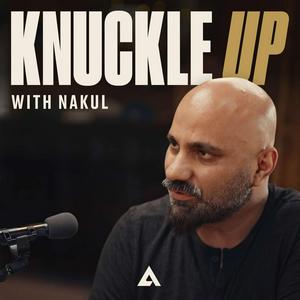
About Knuckle Up with Nakul
Knuckle Up is about the HOW of building iconic companies. Recruiting, culture, intensity, the inner game of being a founder CEO. The stuff that actually separates great companies from good ones. Hosted by Nakul Mandan (GP, Audacious Ventures), each episode goes deep with founders who’ve done it at the highest level. Not highlight reels. Operating playbooks, straight from the best of the best. knuckleuphq.substack.com
Podcast websiteListen to Knuckle Up with Nakul, Coffeez with Joe Shalaby and many other podcasts from around the world with the radio.net app
Get the free radio.net app
- Stations and podcasts to bookmark
- Stream via Wi-Fi or Bluetooth
- Supports Carplay & Android Auto
- Many other app features
Get the free radio.net app
- Stations and podcasts to bookmark
- Stream via Wi-Fi or Bluetooth
- Supports Carplay & Android Auto
- Many other app features

Knuckle Up with Nakul
Scan code,
download the app,
start listening.
download the app,
start listening.
 USA
USA