
Listen to this podcast in the app for free: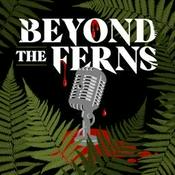 Download for free in the App Store
radio.net
Sleep timer
Save favorites
94 episodes
94. The Cold Case Homicide of Chris Jenkins - "The Halloween Disappearance Shrouded in Mystery "
10/26/2026 | 1hOn this week's episode, we are headed to Minnesota to explore the cold case of Chris Jenkins.
On Halloween night in 2002, 21-year-old Chris Jenkins, a University of Minnesota student and lacrosse player, headed out with friends to celebrate in downtown Minneapolis. Dressed in a Halloween costume, Chris spent part of the evening at the Lone Tree Bar and Grill. Reports indicate he was kicked out of the bar, leaving him alone in the freezing Minnesota night without his coat, wallet, or a way to contact anyone.
Chris never made it home.
Nearly four months later, his body was discovered in the Mississippi River, but instead of providing his family with answers, the discovery only raised more questions. The circumstances surrounding his disappearance, the condition in which he was found, and conflicting accounts of his final known moments left investigators with a complicated and deeply troubling case.
Over the years, the investigation would take numerous unexpected turns, involving suspicious individuals, questionable witness accounts, and overlooked leads. With many mistakes made by the police.
What initially appeared to be a tragic accident eventually became a homicide investigation, but the question of what happened to Chris Jenkins has never been fully answered.
Learn more about your ad choices. Visit megaphone.fm/adchoices93. Listener's Paranormal Encounter - "A Presence Too Powerful To Ignore"
10/20/2026 | 23 mins.In this week's episode, Beyond the Ferns listener John takes us back to the late 1990s, to a haunted house in Texas where an unsettling presence seemed to lurk within its walls. But what began as an eerie atmosphere took a terrifying turn when his family witnessed something they could hardly comprehend—someone desperately grasping at their family member's throat, struggling against an unseen force. They could see the terror unfolding right in front of them, but whatever had its grip on him was unknown.
Join us as we explore what the paranormal truly means to us and delve into the unsettling possibility that hauntings aren't always tied to places. Sometimes, it's the people themselves who are haunted.
Learn more about your ad choices. Visit megaphone.fm/adchoices92. The Haunted Epperson House - The Organ That Refuses to Stop Playing
10/12/2026 | 27 mins.Learn more about your ad choices. Visit megaphone.fm/adchoices91. The Mysterious Discovery of the Hexham Heads - The Faces Dug Up Beneath the Garden
10/05/2026 | 42 mins.On this week's episode, we are headed to London!
In the spring of 1971, two young brothers were pulling weeds in the garden of their family home in England, when they uncovered something strange beneath the soil: two small, formed stone-like heads.
At first, they seemed like little more than an unusual discovery.
Then, according to the families involved, things began to happen.
Objects reportedly moved on their own. Strange noises traveled through otherwise empty rooms. Glass shattered without explanation. An overpowering animal-like smell appeared and disappeared. And eventually, witnesses began describing something far more disturbing—a large, dark figure that seemed to exist somewhere between human and animal.
When the mysterious heads were later taken from the home and examined by Celtic scholar Dr. Anne Ross, the story should have become easier to explain.
Instead, it became even stranger.
Were the Hexham Heads ancient artifacts pulled from ground that had kept them hidden for centuries? A modern creation surrounded by coincidence and fear? Or had two ordinary objects somehow become attached to something no one could explain?
Learn more about your ad choices. Visit megaphone.fm/adchoices90. The Wholaver Family Christmas Massacre - "The Cries Heard from Upstairs"
09/28/2026 | 51 mins.In this week's episode, we are headed to Pennsylvania!
Christmas morning, 2002. As record-breaking snow blanketed Middletown, Pennsylvania, a family gathering that should have happened the night before had never taken place.
When Jean Wholaver and her daughters, 20-year-old Victoria and 15-year-old Elizabeth, failed to show up for their traditional Christmas Eve celebration, concern quickly grew. By the following morning, police were sent to the family's home to check on them.
Inside, they discovered a scene that would forever change Christmas for those who loved the Wholaver family. Jean, Victoria, and Elizabeth had all been murdered. Yet amid the silence of the house, investigators heard something from upstairs—a baby crying.
What initially appeared to be a horrific triple homicide would soon unravel into a much darker story involving the who and why would someone do this...
Join along to hear everything from the murders to the investigation to justice served.
Learn more about your ad choices. Visit megaphone.fm/adchoices
More Arts podcasts





Trending Arts podcasts





























About Beyond the Ferns
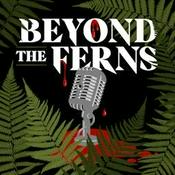
Beyond the Ferns is a true crime, paranormal, and all things spooky podcast. Each episode is built upon meticulous research and immersive storytelling—bringing you in-depth details you didn’t even know you needed... until now. No episode is complete without some comedic relief, Y'ALL ...he did what?!?!?, and hot takes.
At the heart of it all is a commitment to preserving the humanity behind person's story. Victims and survivors are not reduced to headlines—they are given a face, a name, and a legacy. Through a justice-centered lens, Beyond the Ferns sheds light on cases that have gone cold, gives voice to those who no longer have one, and works to uncover the deeper understanding behind each story.
Podcast websiteListen to Beyond the Ferns, The Chef's Cut and many other podcasts from around the world with the radio.net app

Get the free radio.net app
- Stations and podcasts to bookmark
- Stream via Wi-Fi or Bluetooth
- Supports Carplay & Android Auto
- Many other app features
Get the free radio.net app
- Stations and podcasts to bookmark
- Stream via Wi-Fi or Bluetooth
- Supports Carplay & Android Auto
- Many other app features
Beyond the Ferns
Scan code,
download the app,
start listening.
download the app,
start listening.
 USA
USA