
Listen to this podcast in the app for free: Download for free in the App Store
radio.net
Sleep timer
Save favorites
200 episodes

Welcome Lori Boisjoli, 229Project's Newest Principal
10/22/2026 | 21 mins.October 22, 2026: Lori Boisjoli has sat at 229 tables as a CIO. Now she is joining 229Project as a Principal, and this conversation with Bill Russell is her welcome to the community. She learned BASIC in high school, took a coding job at IDX in Burlington, Vermont, and soon decided she could not just sit in a cube. She later became CIO of the six-hospital University of Vermont Health system, which went through a cyber attack nearly five years ago. Other CIOs still ask her to share that experience with their executives, sometimes to "scare the hell out of our C-suite."
Now she will host those tables, and she wants each room to leave with more than a takeaway: if a group agrees AI belongs in contract language, she wants that group to propose the language. That instinct goes back to Sharp HealthCare, where she spent the better part of nine months building the hospital side, and the team threw her a baby shower for her firstborn. "It is about the relationships," Lori said. For members, that means a host who was recently in their chair and wants every session to give them something they can use.
Key Points:
0:00 Welcome, Lori
1:03 Atlanta and the resilience panel
3:52 Restore by service, not by tier
5:07 Sharing the story with other C-suites
7:01 AI before joining 229Project
9:25 Agents that work while you sleep
11:31 Carve out time for innovation
12:53 From IDX and Allscripts to the provider side
16:27 "It is about the relationships"
19:20 What she hopes to build with members
21:08 Hosting the room
LinkedIn: 229Project
Donate: Alex's Lemonade Stand: Foundation for Childhood CancerA Lot of the AI Value Is Still Anecdotal | The 229 Podcast
10/15/2026 | 29 mins.October 15, 2026: The same AI panel opened four 229 Regional Staff Roundtables in September: New Orleans (September 10), Portland (September 15), San Diego (September 17), and Atlanta (September 22). Health system IT leaders on stage. Their teams at the tables. This episode pulls the four rooms together by topic.
Sarah Richardson opens it the way she opened Portland, with the Signal Check the room filled out before it walked in. In Portland, 65% named competing priorities and capacity as the top challenge.
Shane Thielman at Scripps Health went after cost, not revenue. Autonomous coding on emergency department facility coding. About a 50% decrease in the cost per encounter. About 70% coverage in certain areas of that work. It has since moved into professional billing for radiology.
A Piedmont physician built a mock ICU tracker on personal time. Fake patients, a personal AWS server, a GitHub account, so he could show what the tool should look like. He knew the governance. Lacy Knight: "something we can't support today."
Takeaways:
Julie Eastman (PeaceHealth) would defend the initiative that gives clinicians more time to be present with their patients, and that gives the evidence the time was truly returned. A lot of the value is still anecdotal.
Lisa Johnson (Providence): about five minutes saved per patient contact on the provider side, before the workflow was refined. An operational leader had set aside four to five hours to compare policies. Copilot did it in about 10 minutes.
Falyn Curtis (Ochsner Health) turned on Epic's billing assistant and saw fewer calls about bills, and more of those bills paid once patients could ask what the bill was for. Will Landry (FMOL Health) saw the same drop the day they turned it on. He put it at 60% fewer calls on that topic.
Glynis Cowart (Woman's Hospital): ambient listening has to be turned off for a phone call, or the conversation lands in the chart.
Lacy Knight: the EHR made bad processes obvious, and "AI has done that a hundredfold." The value is in rethinking the work.
Drex DeFord: take a train wreck of a process and it becomes a fast and efficient train wreck.
Josh Glandorf (UC San Diego Health): the bottleneck is operational transformation time, not IT time, "with much bigger boulders."
Bonnie Boles (Tanner Health) will not move a project until an EVP names the top three. Julie Eastman asks why AI is governed separately from the rest of the portfolio.
Same tool, different result. Epic chart summarization in ambulatory was not helping at Tanner. Clinicians found it slow, mistrusted a miss, and could not turn it off. Lacy Knight called the same tool a home run at Piedmont. Her first Copilot rollout went the other way: access went to people who do not live in Microsoft tools, and adoption was poor.
Will Landry chose not to block ChatGPT, so FMOL could see the traffic, including on guest Wi-Fi. Pete D'Addio (LCMC Health) is watching the token bill. Steve LeBlond (Prisma Health) treats shadow IT as a need IT did not meet.
Jeremy Meller (Children's Healthcare of Atlanta) has hired more AI literacy specialists than AI engineers. On ambient listening for nursing, the more experienced nurses are having an easier time, because the tool requires them to talk to the patient. Lisa Johnson: this is the time to double down on clinical informatics.
Will Landry is telling FMOL's 250 certified Epic analysts that he will not need 250 people building in Epic three years from now. At-the-elbow support on the floor is the work he tells them will last.
John Henderson (Rady Children's Health) spent a Saturday coding a check-in app for a middle school running club, then stopped. He could not support it. The club uses a spreadsheet.
Maili Boynay (Legacy Health): start with the people who have to deploy it. They need capacity, and they need to know what is in it for them.
In this episode:
Sarah Richardson, Principal, 229 Project
Julie Eastman, SVP and CIO, PeaceHealth
Lisa Johnson, VP, Clinical IT Solution Delivery, Providence
Falyn Curtis, VP, IS Clinical Systems, Ochsner Health
Will Landry, CIO, Franciscan Missionaries of Our Lady Health System (FMOL Health)
Glynis Cowart, SVP and CIO, Woman's Hospital
Shane Thielman, Corporate SVP, Chief Information and Digital Officer, Scripps Health
Terri Couts, SVP and Chief Information and Digital Officer, Sharp HealthCare
Drex DeFord, Principal, 229 Project
Lacy Knight, VP and Chief Health Informatics Officer, Piedmont Healthcare
Josh Glandorf, CIO, UC San Diego Health
Bonnie Boles, SVP and CMIO, Tanner Health
Pete D'Addio, CTO and VP, Technology, LCMC Health
Steve LeBlond, Chief Information and Digital Officer, Prisma Health
John Henderson, Chief Information and Digital Officer, Rady Children's Health
Jeremy Meller, CIO, Children's Healthcare of Atlanta
Maili Boynay, VP, IS Applications, Legacy Health
Bill Russell, Founder and CEO, 229 Project
Key Points:
0:00 Four cities, one panel
0:46 One initiative to defend
2:36 Where the value shows up
7:46 The bad process, a hundredfold
11:19 Capacity
16:06 What did not work
18:45 Shadow AI
23:36 The people
28:02 Why these rooms exist
LinkedIn: 229Project
Donate: Alex's Lemonade Stand: Foundation for Childhood CancerLast 3 Years Outgrew the Previous 20 | Executive Interview with Jim Jacobs
10/14/2026 | 19 mins.October 14, 2026: Jim Jacobs, President and CEO at MediQuant, sits with Bill Russell. Cold storage looks cheap until a team has to open the file. The last 3 years of MediQuant's own archive are greater than the previous 20-odd years, back to 1999. Bill asks what it costs a health system to leave an old system running.
Jim has seen the monthly bill go up after too much data moved to the cheap tier. The use case has to be planned before the data moves. Older revenue-cycle data can sit for retention. Imaging, DICOM, and sleep studies are a different cost decision. Leaving an old system on has a second login, a repeated test, and unpatched software when a team stops paying maintenance.
Guest: Jim Jacobs (MediQuant)
Key Points:
0:00 Margin Pressure on Both Lines
2:46 Not All Data Is Equal
3:25 MediQuant
5:09 Get Out Your Checkbook
9:28 Last 3 Years
11:48 What It Costs to Leave a System On
14:14 Just Turn It Off
16:56 A Good Engagement
19:08 Close
LinkedIn: 229Project
Donate: Alex's Lemonade Stand: Foundation for Childhood CancerThe Clerical Work Should Leave the Visit | The 229 Podcast with Michal Nedoszytko
10/08/2026 | 40 mins.October 8, 2026: Michal Nedoszytko, Member of Clinical Staff at Abridge, sits down with Bill Russell. He is a cardiologist. He practiced in Belgium and Poland for 17 years. As an intern he was making 50 lab sheets a day. He says a PDF generator took that from 25 minutes to about 2 minutes, and the cardiology department started using it. In 2013 the Ministry of Health in Poland required reimbursement amounts on paper prescriptions, from a spreadsheet of about 15,000 medications. He built a site for that. He says about 100,000 doctors a month still use it, almost 15 years later. He says 13,000 people applied to an Anthropic hackathon and he finished third with a post-visit tool he built between patients. He says Abridge shipped real-time voice chart pull about a month before this recording, and he credits Eric Topol with the term Keyboard Liberation. He says the clerical work should leave the visit, and the decision stays with the patient and the doctor.
Key Points:
0:00 Doctors who build
2:31 50 sheets a day
5:57 Between the STEMIs
7:33 15,000 medications
9:54 Still used, almost 15 years later
13:31 One hackathon, 13,000 applications
29:36 Keyboard Liberation
32:49 The patient and the note
35:35 The clerical work leaves the visit
37:29 The decision stays human
LinkedIn: 229Project
Donate: Alex's Lemonade Stand: Foundation for Childhood Cancer7,500+ Experts. One Version of Clinical Truth | Executive Interview with Yaw Fellin
10/07/2026 | 25 mins.October 7, 2026: Yaw Fellin, Senior Vice President and General Manager, Clinical Decision Support and Provider Solutions at Wolters Kluwer Health, sits with Bill Russell. Clinicians used to come to UpToDate for an answer. He is building that evidence into the workflow, including Epic's Art, with 7,500-plus expert contributors behind it. Bill asks what a CIO puts in place so every agent lands on one version of clinical truth.
At Becker's, a clinician using one of the large AI suites thought she knew every medication that patient was on. The system found one in the chart that was not on her radar. She changed the care plan.
Yaw's answer for a CIO is governance first, then room to experiment, as long as the experiments stay safe and get narrowed to the systems that can hold that layer. The closer is cognitive scaffolding: support a resident and a clinician who has been at it for 20 years, and leave the thinking with the person.
Guest: Yaw Fellin (Wolters Kluwer)
Key Points:
0:00 7,500+ Experts, One Clinical Truth
1:32 From a Destination to the Workflow
3:54 Wolters Kluwer
4:17 Evidence Inside Art
13:08 How the Clinician Knows
16:45 What a CIO Puts in Place
20:00 Translation in Five Years
22:50 Cognitive Scaffolding
25:17 Close
LinkedIn: 229Project
Donate: Alex's Lemonade Stand: Foundation for Childhood Cancer
More Business podcasts





Trending Business podcasts













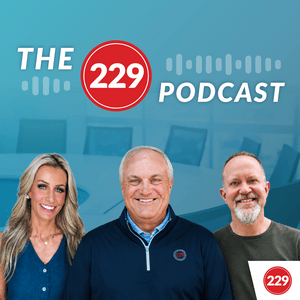
About The 229 Podcast
Some conversations are too important to stay in the room. The 229 Podcast, hosted by Bill Russell, Sarah Richardson, and Drex DeFord, continues the dynamic discussions from our community events, bringing together healthcare leaders who are actively transforming the industry.
Podcast websiteListen to The 229 Podcast, Young and Profiting (YAP) with Hala Taha: Entrepreneurship and Self-Improvement Podcast and many other podcasts from around the world with the radio.net app
Get the free radio.net app
- Stations and podcasts to bookmark
- Stream via Wi-Fi or Bluetooth
- Supports Carplay & Android Auto
- Many other app features
Get the free radio.net app
- Stations and podcasts to bookmark
- Stream via Wi-Fi or Bluetooth
- Supports Carplay & Android Auto
- Many other app features
The 229 Podcast
Scan code,
download the app,
start listening.
download the app,
start listening.
The 229 Podcast: Podcasts in Family
 USA
USA