PodcastsFictionSlow Read: The Stand

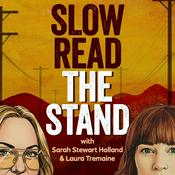
Slow Read: The Stand

Sarah Stewart Holland & Laura Tremaine
Slow Read: The Stand
Latest episode

12 episodes

  • Slow Read: The Stand

    SLOW READ: The Stand (Chapters 43 - 44)

    03/09/2026 | 49 mins.
    SLOW READ: The Stand reading schedule
    Welcome to Welcome to Slow Read The Stand. We are your hosts Sarah Stewart Holland and Laura Tremaine
    This is the fifth episode of Slow Read The Stand.
    If you prefer to read instead of listen, below is a cleaned up transcript of the episodes as well as links to all the books and Substacks we mentioned in this episode…and several fun bonus links and videos!
    Sarah: We are currently reading Stephen King’s The Stand. Today, we’re diving into Chapters 43 and 44. Society has fully collapsed, new groups are forming, and it’s time to answer the age-old question: What is more dangerous—a tornado or a woman scorned?
    Laura: I really relished the tornado scene because it happened in Oklahoma—my home state! My tiny little hometown, Ardmore, actually gets a mention when King is rattling off empty towns. Though, to be fair, he says it burned to the ground.
    Sarah: Before we get to the weather, a quick reminder: our third book club meeting is next week, March 18th. We are at the halfway point! If you want the full experience—the Zooms, my Spotify playlist of every song mentioned in the book, and our rewatch of the 1994 film Outbreak.
    Chapter 43: Nick, Tom, and the Oklahoma Sky
    Sarah: We start with Nick Andros meeting Tom Cullen on the Oklahoma-Kansas border. We think we’re encountering a dead body, but it’s just a very, very drunk Tom passed out in the road.
    Laura: I wonder how King decides whose backstory you get. With Lucy Swan, he says her pandemic story is like everybody else’s—awful. But we meet Tom right when Nick does. King has said in On Writing that he’s often meeting the characters as we are.
    Sarah: There’s an urgency now. I underlined this: “Dreams were only dreams, but he did feel an inner urge to hurry... a subconscious command.” Everyone is feeling it. They’re dreaming of Mother Abagail in Nebraska or the Dark Man in the corn.
    Sarah: I’m struck by how quickly society regresses to a total fear of infection. You cannot have an accident. There’s no one to save you. It’s a vulnerability we don’t usually deal with.
    Laura: How did you feel about Tom Cullen? In 2026, the repeated use of the “R-word” is shocking and offensive. Nick uses it clinically, but when Julie Lawry says it, Nick slaps her across the face. So much slapping in the 70s!
    Sarah: Nick has a sixth sense about people; he understands he should look out for Tom. But then King puts them in the pitch black with corpses in a storm shelter!
    Laura: As an Oklahoman who has lived through tornadoes, they don’t just drop out of the sky like that. But I loved the line about the animal instinct of sensing a radical drop in air pressure.
    Sarah: They both feel the presence of the Dark Man in that shelter. I think he shows up where there is the most fear. It’s like the monsters in It or a Boggart in Harry Potter—he manifests as your dread.
    Laura: Then they meet Julie Lawry. She has a “hard, mirthless shine.” She asks Nick for sex almost immediately. I don’t know if it’s because I’m a 40-something mom, but I’m not just going to be on a CVS floor with a stranger! But I buy it more because she was the pursuer. She’s scary—I envision Sydney Sweeney in The White Lotus
    .
    Chapter 44: Larry, Nadine, and “The Before”
    Sarah: We start with Larry. He’s sun-poisoned and dehydrated. In the last section, Stu talked about walking as healing, but for Larry, walking is depleting. He’s having an identity crisis. He lost Rita, and his inner monologue is a constant refrain: “I ain’t no nice guy.”
    Sarah: He encounters Nadine Cross and Joe. I do not like Joe. I know he’s a child, but he’s creepy. King keeps calling him “Chinese-eyed” and talking about his skin—it hit me as a little weird.
    Laura: I was picturing him as Mowgli—skinny and in his underwear—but Mowgli is sweet. Joe is feral. He has a butcher knife as a comfort item.
    Sarah: Larry wakes up and sees their footprints in the dewy grass. King goes out of his way to say Larry isn’t a detective; anyone could see them! But Larry’s senses are heightened because there’s no TV or cell phones. He’s moving away from grief and toward survival.
    Sarah: I was worried Larry would be drawn to the dark side. When Mother Abagail shows up in his dream and he listens to her, I was so happy! Nadine, on the other hand, screams at Mother Abagail in the dream.
    Laura: I desperately need to know your thoughts on Nadine. She’s a 37-year-old virgin. I pictured her like a pretty black-haired princess, like Vanessa in The Little Mermaid.
    Sarah: I was picturing her way more hippie! What interested me was how they keep talking about “before.” It reminds me of when my child was diagnosed with Type 1 Diabetes. You have those hard breaks where you don’t even remember what life was like before.
    Laura: Larry doesn’t even tell them he was famous! He doesn’t even play “Can You Dig Your Man?” around the campfire. It’s very equalizing.
    Sarah: Mother Abagail tells them to come to Nebraska so they can get to Colorado. The Rockies are a natural barrier. But Larry gives in to Nadine and they go to Stovington first, where they see Franny and Stu’s message. Everyone is dead. We’re going to Nebraska, and Nadine faints.
    The Blue and Lonely Section of Hell
    Sarah: I have an addendum. I liked King’s use of the word pissant. I just read Kurt Vonnegut’s Cat’s Cradle, which defines a pissant as someone who thinks he’s so damn smart he can never keep his mouth shut.
    Laura: I like that definition. It’s a good word.
    Sarah: We have to end on this quote from Chapter 44. It’s part of Larry’s story:
    “No one can tell you what goes on in between the person you were and the person you become. No one can chart that blue and lonely section of hell. There are no maps of the change. You just come out the other side or you don’t.”
    Laura: It’s good. And it’s true. We’ll see you on the other side.


    This is a public episode. If you'd like to discuss this with other subscribers or get access to bonus episodes, visit slowread.substack.com/subscribe

  • Slow Read: The Stand

    SLOW READ: The Stand (Chapters 35 - 42)

    02/23/2026 | 1h 5 mins.
    SLOW READ: The Stand reading schedule
    Welcome to Welcome to Slow Read The Stand. We are your hosts Sarah Stewart Holland and Laura Tremaine
    This is the fifth episode of Slow Read The Stand.
    If you prefer to read instead of listen, below is a cleaned up transcript of the episodes as well as links to all the books and Substacks we mentioned in this episode…and several fun bonus links and videos!
    Mentioned in this episode:
    Lord of the Rings by Tolkein
    Carrie by Stephen King
    Knives Out Wake Up Dead Man (movie)
    Blazing Eye Sees All: Love Has Won, False Prophets, and the Fever Dream of the American New Age by Leah Sottile
    The Green Mile by Stephen King
    Shawshank Redemption by Stephen King
    Laura: This is Slow Read, where we tackle the books you’ve always wanted to read at a pace you can handle. We are already about a third into The Stand by Stephen King.
    And today we’re going to be talking about chapters 35 through 42, which will bring us to the end of book one. And things are starting to come together or fall apart. I’m not sure which one.
    Initial Impressions: The Lincoln Tunnel and Mother Abagail
    Laura: Okay, Sarah, chapters 35 through 42, the end of book one. In this section, we get the infamous Lincoln Tunnel scene. We meet Mother Abagail for the first time, sort of. And to me, it feels like the threads of this story that we’ve been reading for 400 pages are finally starting to come together. What do you think?
    Sarah: Well, I understand why that scene is infamous, because it was bananas. Bananas. Bananas. Oh, my Lord. I just was like, dude, there are other ways to exit the city. What are you doing? So that was very intense, even as a person who doesn’t get scared usually with text on a page. Very intense.
    Sarah: And I was ready for Mother Abagail to show up. I know enough to know about her a little bit. I knew she was like the Randall Flagg—the hero to his villain, sort of. So I was like, okay, I’ve spent some time with Randall. When is the light going to show up in the face of all this darkness? So I was really excited for her to show up.
    Sarah: And there is a little more grotesqueness than I expected. I don’t know why. Because I think when you hear about Stephen King and you hear “scary,” you think maybe just violence primarily. And so the gore and strong aversion I feel reading some of it... it hasn’t caught me in total surprise, but I guess it was a little unexpected. But it’s not taking me out. I’m fine. I’m not having nightmares.
    Laura: That’s interesting though, that when you think of Stephen King, you think the scariness is going to be violent. I think most people think of monsters.
    Sarah: Yeah, like the monster, the violent dad in The Shining. Oh right, I see what you’re saying. As opposed to like Pennywise the clown. But Pennywise is still—I mean, I don’t know if I’ve read it or seen the movies—I’m assuming he actually kills people.
    Laura: Yes. Okay, so there you go. Violence. I hear what you’re saying. I think I’m less afraid of the actual violent act as I am the anticipation of it happening. Whether that’s a monster or a psychologically damaged person or both. That fear factor is what’s super scary to me.
    Sarah: I will say this: I continue to be so impressed. I think one of our commenters, Michelle, talked about how good Stephen King is at articulating the emotions, particularly articulating fear and fear responses and terror and the way you shut down and shock. Man, he’s just so good at it. And it’s probably because he sees the universe of threat so much bigger and wider than I do. His galaxy of fear is so wide.
    Chapter 35: Larry Underwood and the Smell of New York
    Laura: Is the story itself what you expected?
    Sarah: Well, we’re going to get into it. Because the timeline was never what I expected. From the beginning, I’ve said, like, I just never thought it was going to be such a short timeline. This happens in, like, a couple of weeks. That’s the part that’s been the most unexpected to me.
    Laura: Okay, well, then let’s get right into it. So, all right. Chapter 35. It opens with Rita and Larry playing house in her apartment like nothing’s going on. Larry’s inner monologue is like: everything seems to be fine except for the smell. The city is starting to smell.
    Sarah: Yeah. And again, because of this timeline, so many things are coming to my attention that I had not thought of even living through a pandemic. You’re like walking into the rooms and they’re like decomposed corpses and you’re just like looking at bones or whatever. And you just don’t think about, like, well, they had to get to that point. And this is the summer in New York City. And if everybody dies, oh, it’s just so bad. I can’t fathom. Because part of me was like, why wouldn’t you just stay in New York City? You’d get the hell out because it would smell. Of course you would.
    Laura: I want to circle back to this because obviously this section that we’re talking about today is kind of when they all start to be on the move. And I guess I have questions about that because I don’t know that that’s what I would do. Now, all these side sort of side character vignettes that we’re getting, not everybody is on the move. Some people are just staying put in their houses. And I feel like that would be me.
    Sarah: Maybe you want to find other people, I guess, if you’re alone. I think that’s what he does a good job of articulating over the section, like the quiet. You don’t realize like, oh, I really do. Even if it’s as annoying as someone like Rita, you just want somebody. You’ll stick with Harold? Fine. It’s somebody. We’re social creatures. It’d be like, you know, so many people just immediately in solitary confinement.
    Laura: What is interesting about how Stephen King is playing that out is he’s not hitting us over the head with that logic necessarily. He’s sort of just letting it be a human reaction for why they’re all on the move.
    Sarah: Well, here since I just complimented him, here is my critique: this is what’s wearing me out. I really struggle with how he describes time. So the beginning of this chapter, Larry’s like, he remembers meeting her in the park. Well, yeah, I hope you remember it. It was like two days ago. He says that a lot as if they’ve been together for months. He writes about some of these relationships as if they’ve been hanging out for months. And I’m like, what? They just met.
    Critiquing the Women: Rita and Franny
    Laura: I have a critique here in this section of—well, it’s kind of a big picture critique, actually. But first, let me start by saying in this section where they’re hanging out in Rita’s apartment in this chapter, I think we’re getting the first hints that maybe Rita was abused or something. She’s very afraid of him. Not afraid of him in, like, a stranger way. Afraid of him in, like, a man-woman dynamic way where she really doesn’t want to disappoint him. She eats the eggs like an abused woman. Now, we know from Larry’s kind of inner monologue that he ain’t a nice guy. But it’s not like he’s hit her or anything that we can see.
    Sarah: Maybe this is generational. She’s older. Yeah, I think it’s—listen, I have just decided to, in my mind, ignore any attempts he has made to move this timeline to the nineties and just keep it in the seventies where it was originally written. To me, this is all taking place in the seventies. And to me, that makes a lot of sense for a woman of her age in the seventies. And like Franny’s attitudes make a lot of sense for a woman of her age in the seventies.
    Laura: Yeah, that was my point. The women characters, and so far there are very few of them that we’re getting to know on a deep level. Really, Rita and Franny. That’s it. Well, I’m just not loving the way he’s writing women. Some of them feel a little bit more caricature-y to me than the men do. And I don’t love that. There’s just some like fantasy of a woman, like the short description of Rita being like very sexually in charge. Like I was like, really, is this necessary?
    Sarah: At the end of the day, a book that is as plot-heavy as this book is, it’s just going to lose something character-wise. It’s just hard. It’s really, really hard to do, I think, to have this many moving parts.
    Laura: Well, I was just infuriated about Rita starting on their walk to nowhere in silk pants and strappy sandals. And I’m like, she’s not dumb. This woman’s supposed to be older, she wouldn’t do that unless she literally has no data that you cannot walk in those.
    Sarah: A New Yorker, like even a New Yorker with a driver, is not planning to walk to New Jersey in her Valentinos or whatever. She’s just not. No. It made me mad because it diminished Rita. I know no New York woman—not the same woman who’s gonna walk into a dark Lincoln Tunnel, I can tell you that much.
    The Lincoln Tunnel Scene
    Laura: Okay, tell me your impressions of the Lincoln Tunnel sitch. Again, first of all, there are other ways to exit the city! The Brooklyn Bridge, for example. I did look it up. It is 1.5 miles long. And to walk that in the pitch black, oh, hell no. I kept this line: “The solid darkness provided the perfect theater screen on which the mind could play out its fantasies. Or nightmares.” I was like, no, no, no, no, no. I wouldn’t do it.
    Sarah: Well, also just like get a flashlight. Word. You went to stores. Everything’s available to you. That was such a gaping hole in the story because it’s not the medieval times. Like you need more than your Bic lighter.
    Laura: I guess now that I’m trying to be fair about it, maybe Larry Underwood with his Bic lighter is the equivalent of Rita in her sandals. Like this is just unbelievable. It makes for a good story, but it’s not real. And also think about this: Of all those cars, none of them’s lights were still on?
    Sarah: It was really scary. And just—well, I loved that he also used the term “terror locked mind,” which I thought was like such an incredible phrase. Because, yeah, you just, your mind locked, you locked down.
    Laura: It’s one of the more infamous scenes, I feel like, in the book is this Lincoln Tunnel. They’re in that tunnel for a while. He almost kills her. He comes across the family, the Jewish family who had clearly been shot by the stationed military there who were meant to shoot people trying to escape. There’s so much. Have you ever had to run in the dark?
    Sarah: Not in adulthood. When I was a teenager, we had an abandoned hospital in my town. And it was freaky. There were like autopsy tables and medical records on the ground. It was terrifying. And we were in there one time and a police officer shouted, “Get back here!” All my friends took off running and I was like, nope, if it’s a killer, I’ll just die. I’m not running. And I literally just stopped. I was the only one who didn’t get in trouble because I did not run. True story.
    Sarah: I thought it was so interesting how much of this section we talked about traffic jams. Humanity’s last traffic jam was quite a dilly. That was such a funny way to put it, but I’d never thought about it. I’d be like, oh yeah, of course.
    Laura: The car thing, including in the tunnel, but just all the cars, it’s very cinematic. Like that is one of the things that you can really picture that everyone has a reference point for is this kind of traffic jam. You know, and it’s what everybody sort of fears in a way.
    Chapter 36: Harold, Franny, and the Realities of Pregnancy
    Sarah: Chapter 36. Harold and Franny. I thought this was so, so sweet where he talks about like, “I didn’t think I cared that they died... I got fooled. I miss them more and more every day.” Poor sweet Harold. Also, I think this is a fairly accurate portrayal of grief. Pregnant Franny has decided she’s got to go find the only other living being in their town, which is Harold.
    Laura: The visual of Harold in his swim trunks run mowing is almost as cinematic as the Lincoln Tunnel.
    Laura: Well, Harold’s 17 and he doesn’t have much emotional EQ. He does not. But we’re getting a lot of his backstory here. We’ve had a lot of Franny’s backstory, and with Harold, this is where we’re sort of learning that he felt like he was the black sheep in his family. We’re getting sort of a little more understanding of where his obnoxious personality might have stemmed from.
    Sarah: But he’s really smart, actually. He has all this nerdy science knowledge. He’s also the one that comes up with the plan that is not a bad plan to try to walk to Stovington where he knows there’s a CDC situation. He has sort of like a logistical brain.
    Laura: Look, I’m not going to get into, like, a total male-female binary, but I’ll tell you right now, when it says in this section that this was the first time that Franny has thought about who was going to deliver her baby, I call bullshit. What are you talking about? No pregnant woman would have not thought of that for multiple weeks.
    Sarah: Well, she’s 19. The timeline is so short. And she wasn’t even sure she was going to keep it like a week ago. I can almost buy that your timeline just gets closer and closer to your life. Oh, right, nine months I’m going to have a baby. Wonder what that’s going to be like.
    Laura: The second I peed on that stick, I was like, how’s this thing going to get out? I thought about it constantly.
    Fear and Human Nature
    Laura: Did you notice in this whole section how many rape references there were? Apparently it only takes two weeks for every man to either become a wild, untamed rapist or for every man to be worried about a wild, untamed rapist. I mean, it just, it was everyone’s first thought.
    Sarah: I think his thesis is that what prevents the breakdown of civilization is this is gonna be one of the first things. If that structure breaks down, then you have these instincts. I mean, I think we can safely assume here that Stephen King is pretty pessimistic on human nature. He believes that humans are capable of terrible, terrible things.
    Chapter 37: Glenn Bateman
    Sarah: Let’s get to Glenn Bateman. I just loved him. I thought he was a trip. I understand why Stu meets up with Glenn Bateman, then leaves him and is like, boy, I’m lonely, and goes with Harold and Franny. I’m like, you should stick with Glenn. He’s a good hang.
    Sarah: I don’t know if I was in Los Angeles and I needed to walk somewhere, where would I go? I would probably start walking towards Fort Campbell. I would walk towards a military installation.
    Laura: Well, wait. So we’re still in Chapter 37 where Stu has met up with Glenn Bateman, who is a sociology professor. He also serves from a story point of view as a guide, like in The Hero’s Journey. He is explaining to Stu a little bit about society.
    Sarah: Well, and he’s like throwing up some red flags. Like, I think the future of babies in utero is very uncertain. I will be stealing the toast: “May we have happy days, satisfied minds, and little or no low back pain.” It’s so funny.
    Laura: Bateman talks a lot about religion. He says: “It’s during the last three decades of any given century that your religious maniacs arise with facts and figures showing that Armageddon is finally at hand.” This is an interesting thing to note because this is as close to Armageddon as human history has experienced.
    In every, every Stephen King story I’ve ever read, there is an aspect of religion. He is constantly examining how extreme religion has affected society. It’s going to come up over and over again. You can already see with Randall Flagg that there’s clearly like devil imagery.
    Chapter 38: The Second Epidemic (No Great Loss)
    Sarah: Chapter 38. The second epidemic. Poor Sam Tauber. That was the saddest thing. I hadn’t even thought about a little kid being abandoned like that.
    Laura: The second epidemic is survivors who were immune to Captain Trips, but they end up dying anyway of natural causes. I hadn’t really thought about like, oh, yeah, in the immediate aftermath, like people will just have accidents. And the theme was like: “no great loss.” I thought that was so, so interesting, that sort of narrative and the repetition of that particular phrase.
    Laura: This is my favorite type of King writing. My favorite, favorite, favorite. Just like the pop, pop, pops all over. Just the little vignettes. He gives them a full name, a tiny bit of backstory where you know enough about their backstory to kind of be invested.
    Sarah: Does he sit around and keep a running list of all the absolute worst ways to die? I think he does. I think this is why I love it so much. It feels fun. It feels creative. And that’s one of the reasons I like horror as a genre. His mind is deep and wide, yo.
    Chapter 39: Lloyd and the Man with Red Eyes
    Sarah: Chapter 39. Lloyd is starving and miserable in his stupid jail cell and he’s eating a rat. He’s trying to eat the guy in the neighboring cell.
    Laura: I don’t care about cannibalism! That is annoying to me. I really didn’t. The unnerving part to me is him singing “Camp Town Races” over and over again.
    Sarah: I made a note of that, too, because I think that this is fascinating as a writer that Stephen King gives us these refrains. In this one, it’s just “do-da, do-da.” That is artistic writing. He’s really, really good at putting you in the person’s head and making you understand quickly that they are coming unhinged.
    Laura: Anyway, Randall Flagg shows up. Even someone as depraved as Lloyd, when Randall Flagg shows up, he says, “If you’re real, you’re the devil.”
    Sarah: He goes to prisons. It’s kind of a brilliant move, honestly. Villains know where to find their team. What did you think about the fact that there were astrological signs on his belt buckle?
    Laura: To me it felt like a wink to the occult. Lloyd felt terror but also “the pleasure of being chosen.” It made me think of the history of cult leaders. Cult leaders are the people who will say: “No, you’re not crazy. You’re chosen. I hear you.”
    Chapter 40: Nick Andrus and Mother Abagail
    Laura: Chapter 40. Get out of Arkansas, Nick! Which he does. Nick now has an infection in his leg, which he sort of cures himself. And then we meet Mother Abagail, iconic literary figure. Through Nick’s dreams. This is the first time that we’ve seen a dream that wasn’t about Randall Flagg or that wasn’t like super scary.
    Sarah: Randall shows up first and says, “fall on your knees and worship me.” That’s like the devil to Jesus in the desert. But then there’s Mother Abagail. I heard my grandfather’s voice in my head when I was reading the hymn she was singing.
    Laura: Did it strike you in any kind of way that she was Black?
    Sarah: Yeah, I mean, I guess it’s giving a little bit the “magical Negro” thesis from Spike Lee and others who talked about that.
    Laura: King is one of the primary criticism receivers of the magical Negro concept—the idea that you can’t just have a powerful Black character, they have to have magical powers and they are going to save mostly white people. This is something that famously comes up in The Green Mile.
    Chapter 41: Larry and Rita’s Ending
    Sarah: Chapter 41. Bye-bye, Rita. We hardly knew you. God, I loved Larry Underwood just singing the national anthem naked. That was so funny. But then we get the horror of Rita drowning in her own vomit. She made it through the Lincoln Tunnel and then you had her die of a drug overdose. Do you think she OD’d on purpose or do you think she just choked on her vomit?
    Laura: I feel like it’s ambiguous, honestly. I was very upset with him for not burying her. He ain’t a nice guy. But he’s immediately affected by the silence. He shouts back: “Come back. Whoever you are. I don’t care. Come back.” It adds to the creepiness factor that now you’re sleeping alone in the park, but you’re not really alone.
    Chapter 42: A Jar of Cookies
    Sarah: Last chapter in book one. I really like Stu. I think I’m developing a crush on Stu. My absolute favorite line in the whole chapter: “Ain’t he going to be surprised when he finds out a girl is in a jar of cookies?” Love it.
    Laura: His self-awareness, the way he maneuvers Harold and calms him down—I just really liked Stu.
    Sarah: Stu clocks right away that Harold is feeling the responsibility of taking care of Franny. But also so ultra aware that he’s going to lose Franny at any point in this story. Because he never really had her, to be honest. You feel compassion for all three of them for different reasons.
    Laura: All right, next episode will be kicking off book two. We’re a third of the way through the book, y’all. Can you believe it already?
    Sarah: It’s going fast. See you on the other side.
    Next Up:
    We are reading Chapters 43 through 44 but first - next week we’ll finally be discussing Everything is Tuberculosis by John Green!
    Up Next: The Side Quest
    Head over to the paid subscriber section where we are discussing love triangles. See you on the other side.


    This is a public episode. If you'd like to discuss this with other subscribers or get access to bonus episodes, visit slowread.substack.com/subscribe
  • Slow Read: The Stand

    {PREVIEW} REPLAY: The Stand Book Club Meeting (Chapters 1 - 15)

    02/16/2026 | 41 mins.
    One of the best parts of slow reading a book together is talking about it! Each month our SLOW READ community is gathering on zoom for a book club meeting to discuss The Stand.
    This episode is a preview of our first SLOW READ Book Club meeting from a few weeks ago where we’re discussing The Stand Chapters 1 - 15.
    No spoilers here! Each discussion will only be covering the chapters we’ve read so far in the book. Sarah and Laura lead the discussion with your fellow Slow Readers and it’s so fun to hear YOUR takes on this epic novel.
    SLOW READ Book Club meetings are for our paid community! Members get all our Side Quests, bonus material, and our monthly meetings. Each book club meeting is recorded and you can watch or listen to the REPLAY if you aren’t able to attend live.
    JOIN SLOW READ
    Our next SLOW READ Book Club meeting will be this Thursday, February 19 at 6pm PT / 9pm ET. We’ll be discussing The Stand through Chapter 34.
    See our full SLOW READ Book Club meeting schedule HERE
    Hope to see you there!


    This is a public episode. If you'd like to discuss this with other subscribers or get access to bonus episodes, visit slowread.substack.com/subscribe
  • Slow Read: The Stand

    SLOW READ: The Stand (Chapters 26 - 34)

    02/09/2026 | 1h 6 mins.
    SLOW READ: The Stand reading schedule
    Welcome to Welcome to Slow Read The Stand. We are your hosts Sarah Stewart Holland and Laura Tremaine
    This is the fourth episode of Slow Read The Stand.
    If you prefer to read instead of listen, below is a cleaned up transcript of the episodes as well as links to all the books and Substacks we mentioned in this episode…and several fun bonus links and videos!
    Mentioned in this episode:
    The Road by Cormac McCarthy
    Station Eleven by Emily St. John Mandel
    Water World
    Watership Down by Richard Adams
    One Battle After Another
     Creation Lake by Rachel Kushner
    Friday Black by Nana Kwame Adjei-Brenyah
    Chain Gang All Stars by Nana Kwame Adjei-Brenyah
    In Cold Blood by Truman Capote
    Monsters A Fan’s Dilemma by Claire Dederer
    Sarah: Hello, I am Sarah Stewart-Holland.
    Laura: And I’m Laura Tremaine. Welcome to Slow Read, where we tackle the books you’ve always wanted to read at a pace you can handle. We are currently reading The Stand by Stephen King, and today we’re going to talk about Chapters 26 through 34.
    Sarah: Things are getting real gruesome as society fully collapses. We’re going to talk about that and the maggots and the swelling and the “bonbons” of bodies. And hopefully get to all that before we go “tharn.” Did I say that right?
    Laura: I think you did say that right. Can I just say, first of all, this section has probably one of the worst scenes in the whole book. It’s short, but it’s awful. And as I was reading this section, all I could think was: I’m really worried that I told all the readers that this book isn’t very scary.
    Sarah: Well, it’s not scary. It’s just gross.
    Laura: I really thought, damn, we should have given people a warning last week. I don’t want to say this section is inconsequential, but by the time we get to the end of the book, this won’t be what stands out. This is like a bridge section from all the setup.
    Chapter 26: The Media and the Military
    Sarah: Chapter 26 is quite a doozy. It really is like... let’s go around the country and show you the collapse of American society. First shout out to the great state of Kentucky, my home state. There is, in fact, no “University of Kentucky Louisville.” That’s just the University of Louisville. But I was excited either way.
    Laura: Can I just tell you that I am still reading every word aloud. I was reading this one aloud in bed and Jeff, my husband, came to bed and listened. And he was like, “This is scary.”
    Sarah: What I found so interesting is we start in Kentucky, we go to Boston, Los Angeles, Missouri, New York City, Des Moines. And there’s a real focus on colleges and media. It’s either protests at college campuses or media defying this military shutdown of information.
    Laura: He talks about how the Kent State protesters get mowed down. Stephen King being of the age and generation that he is, that is a callback to one of the biggest events of his young adulthood. He almost reenacts it in a way. I actually just got chills because I think that was very purposefully placed.
    Sarah: I just thought it was so interesting that he was almost hyper-focused on media. Like the Los Angeles Times distributing about 10,000 copies. But actually, as I say this, the flow of information makes sense because we’re on this compressed timeline. We’re not to the part where people are truly out of food. We’re not to the part where the electricity has shut down. The media would fall apart first. So now I’ve talked myself into that this is a brilliant move.
    Laura: We’re definitely not to people running out of food because almost everybody’s dying. They don’t even have a chance to run out of food.
    Sarah: I also really liked what Harold tells us later—that Mother Nature doesn’t work this way. The way that everyone’s dying and it’s happening so quickly means that something else is at play here. This isn’t just something that occurred in nature.
    Laura: Can I just share my naivete right here? I just don’t immediately default to “government conspiracy trying to kill us all.” I don’t.
    Sarah: Yeah, I don’t either. I absolutely think that people underestimate the power of the federal government to exert its will. But that power comes from size. And size means secret keeping is incredibly difficult. No one can keep a secret. Literally no one.
    Chapter 27: Larry and the “Rancid Bonbons”
    Sarah: Chapter 27, Larry Underwood in New York City. Everybody’s dead in New York City, which means there’s just a lot of bodies. This whole section was really... I mean, he’s walking around the city encountering rotten corpses. It’s really, really gross.
    Laura: Well, and it’s very cinematic. Setting that scene in New York City makes it so we can all picture what the streets would be like completely empty and with dead bodies everywhere.
    Sarah: This was the “rancid bonbon” chapter with Larry where I was like, I didn’t need that. I could have gone my whole life without hearing a dead body described as a rancid bonbon.
    Laura: What did you think about when Larry and Rita go to a steakhouse and cook a dinner?
    Sarah: I mean, we’re saying there’s plenty of food, but is there plenty of food people know how to prepare? I don’t know what else you do. In those initial shocks, it’s so surreal. You do kind of cling to whatever normal, pleasurable experience you can find.
    Laura: What did you think about Rita as a character?
    Sarah: I was fascinated. I couldn’t quite... was this Rita’s Yankee Stadium moment? Did she go to Cartier and just go to town?
    Laura: I picture Rita as a Real Housewife of New York City. Like she’s done a lot to her face. She’s dripping in diamonds. And like the opposite of Stu, she has no skills to survive.
    Sarah: I’m intrigued by their partnership and where they’re going to go.
    Franny and Harold
    Laura: Let me tell you what partnership I’m much less invested in. And that is Franny and Harold. Harold was weirding me all the way out.
    Sarah: I’m surprised you’re mentioning them as a partnership. Did you just get that vibe right away?
    Laura: I just mean like they’re the only ones left there. And Harold was weirding me out. I got some red flags.
    Sarah: Good instincts. Imagine, because we all have these people at every stage of our life where you’re like, If there’s only two of us left on this planet... For Franny, it’s her friend’s little brother. The worst. If it was these assholes who I’m stuck in Paducah with post-pandemic, I’m going to be mad. I’m just telling you, the survivors are skewing... not great. Not a great cross-section of humanity.
    Sarah: But do you really think that the survivors would be like the ultimate hero pinnacle of society people?
    Laura: It does feel like there should be like one or two more “normals.”
    Sarah: Stu is normal. Franny’s normal. That’s all I’ve got, Laura.
    Laura: I don’t think Larry is un-normal in the same way. He’s just so selfish. It feels like his weaknesses are going to be very easily exploitable, which is my concern as we get further into this chapter, because there seems to be one person in particular ready and willing to manipulate and exploit.
    Chapter 28/29: Stu Goes “Tharn”
    Sarah: Back to our normies. Stu is back in Stovington, Vermont. He’s still at the disease control center. Everybody’s dying. And he’s worried like, they’re either going to kill me or I’m going to get trapped in here and starve to death, which is a truly terrible way to die.
    Laura: This is where we get “going tharn.” He talks a lot about Watership Down and the rabbits and going tharn. I loved the sentence: “Going tharn, a good word for a bad state of mind.” It’s sort of frozen in the headlines. And he doesn’t freeze.
    John Phipps: Don’t Panic. Don’t Go Tharn, Either.
    Sarah: But then, oh my God, he gets stuck in this damn hospital. I felt like he ran around that hospital for 25 pages. I was like, Just get out of here. And then as he’s finally in the stairwell, someone grabs his ankle.
    Laura: This is an imagery tie-in to It. Even if you haven’t read it, you know the clown coming out of the sewer. My dog has an irrational fear of storm drains. She will pull your ass all the way across the other side of the street not to walk in front of a storm drain. So this is just cellular.
    Sarah: And he has to kill Dr. Elder to get him out of his way. Here’s what’s interesting to me: this idea that people’s dying pursuit would be violence. That in these final moments of a human life, someone would try to take some people out with them. That is not my experience of humanity.
    Laura: But I think Dr. Elder, for example, that wasn’t his primitive source coming out. He was under orders to kill Stu. But he’s dying. He’s literally delirious.
    Sarah: I think the closest equivalent is like a natural disaster. And people’s instinct in a natural disaster is to help people. I’ve seen it.
    Laura: Okay, but what if it’s not about violence? What if it’s about a denial of what’s actually happening? It’s a clinging to the status quo. If I can follow my role as a military member, then that will protect me in a way. I definitely buy that.
    Sarah: So Stu gets away. He gets out. He doesn’t go tharn.
    Chapter 30: Arnett
    Laura: We go back to Arnett, Texas. This is a very short chapter. But because there’s nothing there, it’s dead. The town is silent and dead.
    Chapter 31: Randall Flagg and the Network
    Sarah: Okay, buckle up. Now we’re to Chapter 31 with the dark man, the walking man, the faceless man, Randall Flagg. We start this chapter with a minor character named Christopher Bradenton.
    Laura: Bradenton appeared in Chapter 23. He was a conductor on one of the underground railway systems by which fugitives moved. Randall Flagg exploits this network.
    Sarah: This was giving One Battle After Another the new film.
    Laura: The premise is that there is this network out there that continues to exist where people are in this secret communication with each other. I thought that was really interesting to place Randall Flagg within that. It’s not ideologically driven. It’s just exploiting the secretness of these networks.
    Sarah: Bradenton is delirious. So Randall Flagg—or Richard Fry—shows up. He’s sitting on his chest trying to get the keys to a car. And I’m like, dude, I thought the last chapter we established you could fly. Why do you need a car? And why do you give a shit if you have the papers? Everybody’s dead.
    Laura: We are going to play with throughout the story of: Is Randall Flagg man or monster? Is Randall Flagg man or devil? When he is acting as a man, I don’t know that Randall Flagg totally knows. He’s going to do some things like need the car that are very human. And then he’s going to do other things where you’re like, That’s not human.
    Chapter 32: Lloyd in Prison
    Laura: Here’s what we do know. Poor Lloyd is about to starve to death in prison. Oh, poor Lloyd and his hamburger fingers.
    Sarah: I was like, did you have a plan? You thought, I’m going to hamburger my fingers to get this bedpost.And then he got the bedpost and he had no plan at all.
    Laura: No, he just uses it to bang on the bars. Well, he’s smart enough to sock away a dead rat to eat later. He did save some food.
    Sarah: I used to think the worst way to die would be to be crushed by a crowd. But this might be a close second. I’ve watched a single documentary about a crowd crush experience at a sporting event, and it haunts me. But being stuck in a prison with rotting bodies and no food... pretty close second.
    Chapter 33: Nick and the Bully
    Laura: Then we go back to Arkansas with Nick. Back to my concerns about would a dying bully stumble out of the woods, delirious and sick, and be like, You know what I’m going to do with my last dying 10% of energy? I’m going to beat the shit out of Nick Andros. I don’t know, man.
    Sarah: It felt very bookie. Like, of course the villain is going to stumble back. It was giving zombie.
    Laura: I also quibble with the idea that Nick Andros, who cannot hear, doesn’t feel when someone enters a room behind him. Every person with hearing problems that I’ve ever known, their senses are very differently abled. So the fact that Nick doesn’t hear him bust in... unrealistic.
    Sarah: I thought you were going to say you quibble with the fact that Nick Andros is sitting around reading Jane Eyre.
    Laura: My answer to the side quest of what would you do when everyone’s dead is not sit around and read the classics. Because guys, it’s going to get to a point where shit’s going to fall apart. You’re going to have nothing but books left. Save it for then, friends. Be watching your DVDs before the electricity plants go down.
    Chapter 34: Trash Can Man
    Laura: Final chapter, Trash Can Man. Donald Merwin Elbert. First of all, with a name like that, why wouldn’t you be burning shit down?
    Sarah: Baby Donald had a rough start. This is a sad story. His father kills his siblings. His mother escapes. The father is killed by the sheriff... who his mother then marries. I literally wrote “Oh my God” beside that part.
    Laura: And the poor sheriff, I had a lot of sympathy for him. He was like, This boy is not right. We need to get him some help.
    Sarah: He burned a church. He burned some lady’s pension check. And he gets electroshock therapy treatment. I really liked the way he articulated how tenuously he was gripping onto normality. He’s like, I had it. I had a grasp on it and I just couldn’t quite hold it.
    Laura: It’s obviously setting us up to see what’s going to happen with Trash Can Man next. He is also enacting our theme of the side quest: What would you do if you were alone and could do anything? He has been dying his whole life to go blow up those big gas silos. And so he’s like, I’m going to go do it. Here’s my chance. Chance of a lifetime.
    Sarah: I thought this was so powerful. He sees a bug stuck in gasoline and he says: “It was a world that deserved to burn.” And then a little bit later, he said: “There was a whole country ripe for burning under the summer sun.”
    The TV Station
    Laura: We didn’t talk about the scene that I find to be one of the scariest in the whole entire book.
    Sarah: The one in the local TV station where the men have lined up the other men and are shooting them on camera?
    Laura: Yes. It was so disturbing. The scene itself is awful. And then we get to see it through Franny’s eyes when she turns on the TV. There were so many things happening—race stuff, history stuff, tribal stuff. It was purposely being televised.
    Sarah: I think there’s something about the televised aspect and the complete detachment from any law and order. It was very much giving “inmates running the asylum.” It felt like a horror short story. It felt like Friday Black or Chain Gang All-Stars. I was really disturbed by that scene.
    Why Read Horror?
    Laura: I think now might be a good time for a little pep talk about why we read horror.
    Sarah: I need a pep talk.
    Laura: We read horror because it lets your mind and imagination play out some things that sort of already always linger back there. Some part of us, we’re all scared of the monster under our bed. And horror gives us a playground for that.
    Sarah: I think true crime is scarier than horror. In Cold Blood really shook me.
    Laura: I think true crime is playing around with the presence of violence, whereas I feel like horror is playing around with the presence of death. And to me, that’s different. Facing the reality that we will all turn to ashes and dust can be freeing in a way.
    Sarah: Well, and to just pep talk anyone on The Stand in particular... I do want to say without any spoilers that the book is about to get a lot more relational. No more rancid bonbons.
    Laura: Please tell me there’s no more rancid bonbons.
    Sarah: I’m not going to promise that to you! But we’re about to move to: Okay, everyone’s dead. Now what happens? And what happens is going to be pretty relational.
    Next Week:
    We are reading Chapters 35 through 42. It is 96 pages. We can do it!
    Up Next: The Side Quest
    Head over to the paid subscriber section where we are discussing what we would do if the city was suddenly empty. See you on the other side.


    This is a public episode. If you'd like to discuss this with other subscribers or get access to bonus episodes, visit slowread.substack.com/subscribe
  • Slow Read: The Stand

    OUTBREAK (1995) and The Stand

    02/02/2026 | 27 mins.
    Movies & Shows Mentioned in This Episode
    * The Net (1995) - Sandra Bullock vs. the Internet.
    * Tin Cup (1996) - Rene Russo and Kevin Costner rom-com.
    * Jerry Maguire (1996) - Cuba Gooding Jr.’s breakout role.
    * Buffy the Vampire Slayer (1992) - The movie with Donald Sutherland as the Watcher.
    * American Beauty (1999) - Kevin Spacey.
    * The Usual Suspects (1995) - Kevin Spacey.
    * House of Cards (2013–2018) - Kevin Spacey (TV Series).
    * Ocean’s Eleven (2001) - George Clooney.
    * Up in the Air (2009) - George Clooney firing people.
    * The NeverEnding Story (1984) - Directed by Wolfgang Petersen.
    * Air Force One (1997) - Directed by Wolfgang Petersen.
    * The Perfect Storm (2000) - Directed by Wolfgang Petersen.
    * Troy (2004) - Directed by Wolfgang Petersen.
    * In the Line of Fire (1993) - Directed by Wolfgang Petersen.
    * Jurassic Park (1993) - Referenced for the “hot scientist” vibe.
    * Contagion (2011) - The more realistic pandemic movie (up next!).
    * Station Eleven (2021) - The TV series adaptation (and book).
    Sarah: Hello, this is Sarah Stewart-Holland.
    Laura: I’m Laura Tremaine. Welcome to Slow Read, where we tackle the books you’ve always wanted to read at a pace you can handle.
    Sarah: Today is a little bonus episode. When we started, the movie Outbreak came up because I was sort of obsessed with it at the time. And we said we’re going to rewatch Outbreak and talk about it. So that’s what we’re going to do today.
    Laura: I mean, I have lots to say. I would like you to know that my first note is: Kevin Spacey. Ew. That’s the first thing I wrote.
    Sarah: My first note is: That type of monkey is not actually from Africa.
    Laura: Well, listen, we’re playing real fast and loose because my second thing was the witch doctor. We start in Africa several years ago and we’re rolling with some real deep stereotypes here.
    Sarah: Yeah, I just don’t feel like this kind of movie would get made today. Not the overall plot of a pandemic, but the African stuff was way “other.” There were overly wise Africans, overly uncivilized Africans. It was just a total racial component that was not a flattering portrayal. Even the fact that we’re just saying “Africa.” They’re in Zaire, but it just was not great.
    Laura: It was the 90s. It was a different time.
    The Insane 90s Cast
    Sarah: Should we back up and explain that Outbreak, first of all, has an insane cast? This was, I mean, I was obsessed with this movie.
    Laura: I loved it at the time. I also liked The Net. Remember that one with Sandra Bullock where the Internet’s coming for her? I think there was something about movies that were speaking to this interplay of politics and culture and government and things that could happen through the lens of that.
    Sarah: But yeah, it has a superstar cast. Dustin Hoffman is the lead. Rene Russo. I loved Rene Russo back in the day.
    Laura: She’s stunningly gorgeous. You didn’t watch Tin Cup with her and Kevin Costner? You must go back and watch it. They are so good together. She had a real moment in the 90s.
    Sarah: But, you know, what happens with every era... you go back in the 80s and the men are still existing and making movies like Harrison Ford. But could you name a single woman who was the lead in any of the Indiana Jones movies? No, because none of them have careers anymore. Especially if they were beautiful. If you are beautiful, it’s really hard for people to stay on board with you when that part of you goes.
    Laura: So you have Rene Russo, Morgan Freeman, Donald Sutherland, a little baby Patrick Dempsey.
    Sarah: He’s so young. And listen, Cuba Gooding Jr. This was the year before Jerry Maguire.
    Laura: That tracks for me. He’s good in this. Jerry Maguire was his breakout, but he’s a pretty major part of Outbreak.
    Sarah: Why is Donald Sutherland always the bad guy? Why don’t they ever let this poor man be the good guy?
    Laura: It’s his face. His face is scary. And also he has a gravelly voice. Now, he is the good guy in another one of my 1990s favorites that I recently showed to my children: Buffy the Vampire Slayer, the movie with Kristy Swanson.
    Sarah: But he is excellent. Dustin Hoffman is excellent. But do you buy Dustin Hoffman in this particular role? I do not buy that you would ever be in the military, Dustin Hoffman.
    Laura: Well, I did see that they had originally tried to cast Harrison Ford and a bunch of more traditional leading men. But the director ended up really liking casting Dustin Hoffman because he thought it gave it complexity. It sort of had a Jurassic Park feel of like, they were supposed to be nerdy scientists who just happened to be hot.
    Sarah: Except for then again, Kevin Spacey shows up. My husband Jeff and I watched it together, and we both came to the conclusion of: Problematic, awful, terrible, no justification. Kevin Spacey is a brilliant actor, but he kind of overacts a little bit in this. He chews up some of that dialogue. Like, why is he such a smartass?
    Laura: It’s such a bummer that someone so brilliant is a bad person. Think of all of the problematic, brilliant artists. This comes up all the time. Can you support the art and not the artist?
    Sarah: See, this is why when they’re not bad people and they’re also talented, my devotion knows no end. Like George Clooney. Or Julia Roberts. By all accounts, Tom Hanks is a nice guy. I just think there is a delineation between being very, very good and genius level. I know you’re not going to sit here and tell me that Kevin Spacey is a genius and George Clooney isn’t.
    Laura: No, George Clooney is looks and marketability. That’s not genius.
    Sarah: Oh, I disagree. We are getting far afield. Back to the virus with 100% mortality, Laura.
    The Virus & The Director
    Laura: 100% mortality. I think this is really important to mention because the director of Outbreak is Wolfgang Petersen. Before we started it, my husband asked if this was Steven Spielberg. I looked it up—Wolfgang Petersen directed The NeverEnding Story, Air Force One, The Perfect Storm, Troy, In the Line of Fire. These are good 90s mid-range action movies.
    Sarah: I liked it when it was real-world action. It didn’t have to be intergalactic action in order to get made.
    Laura: Okay, we have 100% mortality. This virus would never spread, even through a monkey—especially a monkey that’s not actually from Africa. It really bothered my animal-loving family. They literally could do nothing but focus on the fact that these monkeys are Central American monkeys.
    Sarah: Even in the 90s, that was a pretty gross error. Now that we’re all amateur virologists because of COVID, we know that. Although there is a moment where Morgan Freeman says, “If the mortality is that high, anybody will die before they spread it.” So there was an acknowledgement of that. But there was also the part where the monkey was carrying both an airborne version and not an airborne version.
    Laura: Speaking of weird choices, I thought it was very weird to leave the President of the United States out of it entirely. We don’t even see his face. We only see a cabinet meeting. Why no actual President?
    Sarah: Maybe they spent all their money on the generals. I felt like you could have made Donald Sutherland the President and have the exact same role.
    The Scary Scenes vs. Reality
    Laura: The scenes I definitely remember from being obsessed with it in the 90s... I remember the aquarium scene where the guy in the pet shop gets it and falls over onto the bank of aquariums.
    Sarah: Was that upsetting for your husband?
    Laura: No, because we read on IMDb ahead of time that they used fake plastic fish. And then I definitely remember the scene where he looks in the camera and says: “They all got it in a movie theater.” I remember being in the theater and everybody being like, Oh my God.
    Sarah: Well, to tie it closer to The Stand, the scene where it’s being spread... in both The Stand and in our lived experience in 2020, that scene probably didn’t give me the shivers in the 90s. I would have been like, Oh, this is anthropologically interesting. But now you’re like, Oh no, they’re all coughing on each other. Don’t do it.
    Laura: Before I pressed play, I had mixed it up slightly with the movie Contagion. In the early scenes of Contagion, them all being in bars and hanging out and spreading it without knowing... that is scarier to me than the portrayal of them all getting it in Outbreak.
    Sarah: I did like the scene where the little boy is about to take his cookie and the mom says no. Listen to your mothers about their germs!
    Laura: Did you think about how funny it is that they have these giant windshield headpieces where you can see their entire faces the whole time? Clearly someone was like, “We’re going to have to design movie-worthy protective gear so we can see the famous faces we paid for.”
    Sarah: I thought the scene where the mom has to leave her family was really sad. When she says, “You can’t hug me,” I’m like, It’s too late. They already have it.
    Laura: I thought it was kind of a commentary on scientists being dum-dums. One scientist chops his fingers off in the centrifuge. Dustin Hoffman doesn’t notice there’s a rip in his suit. Kevin Spacey snags his suit. Morgan Freeman has the cure and keeps it to himself.
    Sarah: The anti-Fauci crowd would have lots to work with in Outbreak.
    Laura: Also, when Donald Sutherland says, “Be compassionate, but be compassionate globally,” I was like, oof. That’s a real trolley problem. Can you kill just the child to save the world?
    The Ending & What’s Next
    Laura: Let’s talk about the ending because it’s truly crazy. It’s such an anticlimactic ending. They save the town, he comes to Rene Russo’s bedside, they make a little joke, and then the movie’s over.
    Sarah: She gets better. They’ve made her look healthier. But then it’s just like... okay. It’s just everything’s okay.
    Laura: Also, why do all the bombs have parachutes? I don’t think bombs have parachutes in real life.
    Sarah: Let me tell you how much I do not know about bombs. A universe. But mainly it just made me think... I really want to watch Contagion again.
    Laura: Contagion came out in 2011. No wonder that’s what most of us pictured in 2020. I think we should watch that one next.
    Sarah: I’m into it. All right. We’re watching Contagion next. Except honestly, I do have to say after I watched Outbreak, I genuinely thought it was decent from a plot storytelling perspective. But there’s nothing interesting about watching a virus spread anymore. It’s just... all of it feels different now.
    Laura: I think Station Eleven, the TV show, is better than the book. You think the scary part is the virus spreading, but it really is all that happens after that that’s so interesting.
    Sarah: True of The Stand, true of Contagion, certainly true of Station Eleven. That’s where the interesting stuff starts to happen. And Outbreak is so focused on preventing that, that you miss some of the most interesting interpersonal, societal stuff.
    Laura: In Outbreak, I did not feel a creative vibe. I felt like, This is a bummer. Because now we know.
    Sarah: So we saved you guys. Don’t rewatch it. Just listen to this conversation. Or if you rewatched it, we would like to hear if you think our takes are hot or not.
    Laura: Thanks for joining us for another bonus episode of Slow Read. We will be back in your ears next week with Chapters 26 through 34.


    This is a public episode. If you'd like to discuss this with other subscribers or get access to bonus episodes, visit slowread.substack.com/subscribe

More Fiction podcasts
About Slow Read: The Stand

Sarah Stewart Holland & Laura Tremaine slow read Stephen King's classic The Stand. slowread.substack.com
Podcast website

Listen to Slow Read: The Stand, Six Minutes and many other podcasts from around the world with the radio.net app

Get the free radio.net app

  • Stations and podcasts to bookmark
  • Stream via Wi-Fi or Bluetooth
  • Supports Carplay & Android Auto
  • Many other app features
Social
v8.7.2 | © 2007-2026 radio.de GmbH
Generated: 3/13/2026 - 11:30:16 PM