Listen to this podcast in the app for free: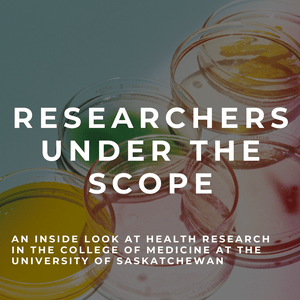 Download for free in the App Store
radio.net
Sleep timer
Save favorites
Researchers Under the Scope
University of Saskatchewan, OVDR, College of Medicine
Latest episode
Available Episodes
5 of 96
- Cross-Linked Clues: Jack Walther on Depression and Alzheimer'sAs a student, Jack Walther's friends often came to him when they needed a listening ear, or help with relationship struggles. This summer, Walther took his fascination with the brain and mood disorders to Dr. Darrell Mousseau's psychiatry laboratory, learning to untangle some of the tiny molecular threads that might explain why depression so often shows up alongside dementia. Walther and the research team dug into the physical interactions between serotonin and the beta amyloid peptides that build up in patients with Alzheimer's disease. . He admits going from the classroom to the laboratory felt like a sharp learning curve. "It was totally different," he said. "It's daunting once you get onto it, but once you get going, it makes a lot more sense and you feel way more comfortable." Using human embryonic kidney cells, Walther and lab staff used cross-linking chemicals to literally 'catch' proteins interacting. In this episode, Walther recalls the day Mousseau hustled into the lab, results in hand. "I could see the excitement in his face and it just made kind of the lab buzz a little," said Walther. "We found there is actually some kind of physical interaction between these beta amyloids and the serotonin receptor." Mousseau's laboratory is narrowing down biochemical events common to depression and Alzheimer's disease, looking for modifiable targets in the depressed brain that could slow or delay the onset of the neurodegenerative disorder. Walther said being part of that laboratory work felt 'incredible'. "I want to bring some good into this world," he said. "I would like to focus on people that struggle to help themselves. Whether that's neurodegenerative or it's people that are just stuck in place and don't know what to do." He aims to earn his honours degree in neuroscience, then keep pressing on. "Whichever way that takes me, that's when I'll be happy with what I've accomplished," Walther said.--------14:36
- EEEV-ident Passion: Eve Simpson on Doubt, Persistence and Viral SpreadEve Simpson knows from experience scientific research doesn't always follow a linear path. In the first of three student research episodes, the fourth-year biochemistry, microbiology and immunology student looks back at a summer spent decoding Eastern Equine Encephalitis Virus (EEEV) in Dr. Anil Kumar's lab. Simpson said she loved doing bench research, but felt frustrated in the moments where she hit setbacks and moments of doubt. "I felt like I was letting everyone down," she said. "But everyone I spoke to said they'd been through that. It's part of being a researcher. That's what drives us to do better and keep being curious and learning." Simpson realized those failures still tell researchers what doesn't work, and provide data for the greater scientific community. She is now pursuing her honours degree, and plans to return to Kumar's laboratory as she looks at graduate studies, driven by curiosity and a commitment to public health. "I want to do better. I want my research to help people and I want to do better for the world," she said.--------18:25
- That's So Metal: Dr. Jessica Sheldon Targets Acinetobacter BaumanniiJessica Sheldon (PhD) is on a mission to starve out Acinetobacter baumannii —one of the world's most virulent hospital-borne pathogens. Notorious for its speedy evolution and multi-drug resistance, the hospital-borne bacteria lingers on dry surfaces and infects critically-ill patients, leading to sepsis, pneumonia and high mortality rates. In this episode, Sheldon delves into the real-life events that drove her to investigate histamine, and its role in bacterial survival and immune response. In 2022, Sheldon joined the University of Saskatchewan's College of Medicine as an assistant professor of Biochemistry, Microbiology & Immunology -- something she now laughs about after an ill-fated high school placement in an immunology laboratory. "Cytokine cascades, pathways, the signaling just got way over my head real fast," said Sheldon. "I didn't really know what I was doing." Sheldon enrolled at Lakehead University, drawn to the tiny pathogens with outsized roles in movies like Outbreak. She estimates she read the book The Hot Zone 20 times. Her persistence paid off. "One of my second year microbiology teachers said, 'you know, I think you're kind of good at this. Maybe you should try it as a career.' Sheldon zeroed in on metals and wrote her doctoral dissertation on the role iron plays in the proliferation of bacteria such as Methicillin-resistant staphylococcus aureus (MRSA). Today, she studies both Morganella morganii and Acinetobacter baumannii — the multi-drug-resistant bacteria singled out twice in the last decade by the World Health Organization as a 'priority 1-critical pathogen'. "I'm perpetually fascinated by the idea that something so small can change the course of history," said Sheldon. "And we've seen that recently with COVID." Sheldon was already studying the metal uptake and signalling systems that grow and sustain A. baumannii when the bacteria ripped through hospitals during the pandemic, attacking Covid-infected patients on ventilators. By 2023, Sheldon landed a five-year CIHR grant of $900,000 to study A. Baumannii and the way it turns histidine into histamine. Her goal is to pinpoint the way the pathogen uses histamine to evade its host, as it sends out siderophores to steal iron and other nutrients. The compound appears to serve as a signalling mechanism for both the host and the invading pathogen, she said. "We know the bacteria are using histamine in the synthesis of these molecules to get iron, but they're also secreting it into the environment. We're not really sure why," Sheldon said. Her laboratory is working to trace and target those pathways, so researchers can identify and potentially develop new treatments — small molecules or antibody inhibitors that could disrupt multi-drug resistant pathogens. Beyond A. baumannii, histamine may hold the key to how some of the world's most notorious bacteria grow, spread, and evade immune defences, Sheldon said. "We're running out of drugs, but there's really not a full appreciation for the fact that we're losing the ability to treat bacterial infections," Sheldon said. "We need to develop supplementary therapies or alternative therapies."--------18:36
- Fluid Endeavour: Kirk Haan's Medical Balancing ActKirk Haan graduated from high school, thinking he'd study pharmacy at the University of Saskatchewan, and walk out five years later. After one summer at a pharmacy, Haan realized he was after a more 'hands-on' career in medicine. "I've kind of worked with my hands my whole life, just between rummaging around on a farm and always kind of building things," he said. "Now it's using them to help people in a direct way." Then, Haan found his passion — inside the laboratory. In 2018, Haan landed a summer position in Dr. Thomas Fisher's lab, studying osmoregulation — the mechanisms that govern our bodies' salt and fluid intake and output. He never looked back. By the time he entered medical school, Haan had completed two summer research projects, his honours degree, and his master's thesis in osmoregulation, all under Dr. Fisher's supervision. "He was a really good role model," Haan said, noting he returned to Fisher's lab for up to 30 hours a week during his first and second year of medical school. Haan is set to resume his work at medical school next summer, after he's completed his PhD. Until then, he and Fisher are unravelling mechanisms involved with Synaptotagmin-11, and later Endophilin-A1, proteins associated with keeping the body's fluid-salt balance in check. Changes in those complexes are often seen in patients with neurodegenerative conditions, such as Parkinson's, ALS (amyotrophic lateral sclerosis) and Alzheimer's disease. Dehydration and fluid imbalances also become more common as patients age. Haan calls this "low-hanging fruit" when patients arrive at Emergency Departments, worried about pharmaceutical interactions. "The more drugs you take, the more likely you are to have a drug interaction that causes a perturbation in this system," said Haan. He believes Synaptotagmin-11 and Endophilin-A1 may play "a massive role" in the long-term regulation of our body fluids. Haan also credits his wife — who just entered medical school with her own PhD — and an "incredible community" of friends in Saskatoon for their support during his decades-long journey through two academic worlds. Although they will likely have to leave Saskatchewan to pursue his residency as an ear, nose and throat surgeon, Haan said the plan is to return. "With some of the things that I've learned and my passion for blending this basic science with clinical medicine, maybe somewhere down the line we find something that's really cool that can really help people," he said.--------25:38
- Dr. Sébastien Gauvrit: Fishing for Answers in Vascular DevelopmentSébastien Gauvrit (PhD) was only ten when his family let him have his first tank of guppies. Within weeks, he was hooked. "I actually had to understand genetics directly by mixing these different fish together to get the colour or fin shape I was interested in," said the vascular biologist and genetic modelling pioneer. From his home in France, to post-doctoral work pioneering new models for vascular disease in Germany, to his current position as an assistant professor of Anatomy, Physiology and Pharmacology at the University of Saskatchewan's College of Medicine — tropical fish tanks remain a constant in Gauvrit's life. This year, two grants from the National Sciences and Engineering Research Council of Canada (NSERC) totalling $340,000 mean Dr. Gauvrit will expand the University of Saskatchewan's zebrafish aquariums — and refine his laboratory's modelling work and research on vascular development. Zebrafish are transparent in their first hours and days, which allows scientists to watch them forming vascular cells in real time. "Most genes that trigger vascular disease in humans are present in zebrafish," Gauvrit said, noting they share 70 per cent of of their genes with humans. Using both fish and rodent models, Gauvrit will do a deeper analysis of the transcription factor HHEX [Hematopoietically Expressed Homeobox], because of its cascading effect on the cells that eventually determine lymphatic health. "If you understand how this gene regulates others, we can identify new genes involved in lymphatic disease, and understand a bit more the process behind all these events," Gauvrit said. He's also looking at VEGF-A [vascular endothelial growth factor], a gene implicated in vascular diseases, including age-related macular degeneration [AMD]. Right now, patients with blurred vision and an overgrowth of blood vessels are treated with multiple injections to the eye, with the hope of limiting damage. "A high proportion of patients develop resistance against this therapy, which is a big issue," Gauvrit said. "It's also very costly." Mice die quickly without VEGF-A, but zebrafish without it survive — even thrive. Gauvrit wants to know what processes help zebrafish compensate, and where mammalian cells diverge. Gauvrit said the broader implications of vascular research will have ripple effects in treating lymphedema, strokes, and age-related macular degeneration. "We still discover new things," Gauvrit said. "Just by serendipity and by randomness, sometimes you can find a bit greater science than when you have a very specific question."--------25:49
More Health & Wellness podcasts
 The School of GreatnessBusiness, Education, Health & Wellness, Entrepreneurship, Mental Health, Self-Improvement
 The Dylan Gemelli PodcastHealth & Wellness, Alternative Health
 We're Out of TimeHealth & Wellness, Mental Health
 The NightlyComedy, Health & Wellness
 The Dr. John Delony ShowHealth & Wellness, Society & Culture, Mental Health, Relationships
 The Ultimate Human with Gary BreckaHealth & Wellness
 unPAUSED with Dr. Mary Claire HaverHealth & Wellness, Society & Culture, Medicine
 Huberman LabHealth & Wellness, Science, Life Sciences
 Passion Struck with John R. MilesEducation, Health & Wellness, Alternative Health, Self-Improvement
 The Peter Attia DriveHealth & Wellness, Fitness, Medicine
Trending Health & Wellness podcasts
 The Dr. Gundry PodcastHealth & Wellness
 SHE MDEducation, Health & Wellness, Medicine, Self-Improvement
 Savage LovecastHealth & Wellness, Society & Culture, Relationships, Sexuality
 the goop podcastEducation, Health & Wellness, Society & Culture, Self-Improvement
 I Have ADHD PodcastEducation, Health & Wellness, Mental Health, Self-Improvement
 Drift Off - Bedtime Stories for AdultsHealth & Wellness, Alternative Health, Mental Health
- The NightlyComedy, Health & Wellness
 Three of Seven PodcastHealth & Wellness, Religion & Spirituality, Christianity, Fitness
 ADHD ChatterEducation, Health & Wellness, Mental Health
 The Dr. Gabrielle Lyon ShowHealth & Wellness, Science, Life Sciences, Medicine
 OversharingEducation, Health & Wellness, Society & Culture, Mental Health, Relationships, Self-Improvement
 Tracks To Relax Sleep MeditationsHealth & Wellness, Alternative Health, Mental Health
 Juicebox Podcast: Type 1 DiabetesHealth & Wellness, Kids & Family, Medicine, Nutrition, Parenting
 Intermittent Fasting StoriesHealth & Wellness, Nutrition
 We're All InsaneHealth & Wellness, Mental Health
 The Cabral ConceptHealth & Wellness, Kids & Family, Alternative Health, Fitness
 The Genius LifeHealth & Wellness
 Rain SoundsHealth & Wellness, Society & Culture, Mental Health
 TED HealthHealth & Wellness
 UnF*ck Your Brain: Feminist Self-Help for EveryoneEducation, Health & Wellness, Society & Culture, Mental Health, Philosophy, Self-Improvement
 The Dr. Josh Axe ShowEducation, Health & Wellness, Religion & Spirituality, Christianity, Self-Improvement
 Recovery ElevatorEducation, Health & Wellness, Mental Health, Self-Improvement
 Boring Books for Bedtime Readings to Help You SleepArts, Health & Wellness, Books, Mental Health
 8 Hour Sleep MusicHealth & Wellness, Alternative Health
 You Make SenseEducation, Health & Wellness, Society & Culture, Mental Health, Relationships, Self-Improvement
 Rain Sounds - 10 HourHealth & Wellness, Science, Alternative Health, CATEGORY_NATURE
 8 Hour Binaural BeatsHealth & Wellness, Alternative Health
 Dr. Berg’s Healthy Keto and Intermittent Fasting PodcastHealth & Wellness
 Hacking Your ADHDHealth & Wellness, Mental Health
 The Empty BowlHealth & Wellness
About Researchers Under the Scope
Medicine is so much more than lab coats and stethoscopes. The research community at the University of Saskatchewan College of Medicine is a diverse group of humans, all working with their own unique motivations — and not all of them work in a hospital setting. Get to know what gets these researchers amped about their jobs, what they're doing, where they're doing it, and why. Presented by the Office of Vice-Dean of Research, College of Medicine at the University of Saskatchewan.
Podcast websiteListen to Researchers Under the Scope, The School of Greatness and many other podcasts from around the world with the radio.net app
Get the free radio.net app
- Stations and podcasts to bookmark
- Stream via Wi-Fi or Bluetooth
- Supports Carplay & Android Auto
- Many other app features
Get the free radio.net app
- Stations and podcasts to bookmark
- Stream via Wi-Fi or Bluetooth
- Supports Carplay & Android Auto
- Many other app features

Researchers Under the Scope
Scan code,
download the app,
start listening.
download the app,
start listening.
 USA
USA