

Listen to this podcast in the app for free: Download for free in the App Store
radio.net
Sleep timer
Save favorites
77 episodes
Foster Kids Weren’t Allowed Phones. Here’s Why That Changed
10/16/2026 | 39 mins.For years, one Oregon foster care program kept kids and smartphones completely separate, until the kids themselves said a no-phone rule was reason enough to pick a different program. What that team learned about screen time, supervision, and teen mental health applies to every family, not just kids in foster care.
Ana Day is a licensed marital and family therapist who has spent 21 years at Oregon Community Programs, working her way from therapist to Executive Director of an agency serving foster youth and their families.
She walks host Adam Brooks through how OCP piloted Bark Phones with just one or two foster families, why skeptical foster parents ended up asking to go next, and how alerts opened a new window into kids’ friendships and peer struggles. You’ll also hear why she sees sleep as the most widespread screen problem for all kids, how early exposure to sexualized content distorts what teens believe about love and intimacy, and why going home is when many kids get their first unrestricted phone.
Key insight: Kids leaving the program often got an unprotected phone right after going home, so OCP now uses its time with each kid to build digital skills gradually, starting locked down and loosening over time, because it’s easier to lighten up than to tighten up.
If you enjoyed this episode, please leave a review wherever you’re watching or listening. It only takes 30 seconds and helps other parents find us.
Join the conversation in our Parenting in a Tech World Facebook community: https://info.bark.us/join-pitw
Learn how Bark partners with schools, agencies, and organizations to keep kids safer online: https://www.bark.us/learn/barks-connected-communities/Parents Keep Asking Her for Permission to Say No
10/15/2026 | 24 mins.If you've ever felt like you need permission to take away your child's iPad or delete Snapchat from your 12-year-old's phone, you're not alone, and that hesitation is one of the biggest reasons screen time limits fall apart at home. The good news: you have far more power here than you think.
Katherine Martinko, author of Childhood Unplugged and the upcoming Hold the Phone, spent over a decade as a digital media editor and has delivered more than 70 keynotes and workshops on kids and screens across North America.
She and Titania Jordan, Bark's Chief Parent Officer and bestselling author of two books on digital parenting, break down how to hold a limit in the middle of a meltdown, why you need to "fill the void" before you take devices away, and why she recommends waiting until 16 for a smartphone. You'll also hear the parent habit that quietly makes screen conflict worse, plus a realistic first step you can take this week, even if you feel like you've already lost control.
Key insight: If you change only one thing, keep phones out of your teen's bedroom. Even kids with excellent self-control can't resist a device beside the bed, and the lost sleep shows up in their focus at school.
Resources discussed in this episode:
Preorder Hold the Phone: How Parents Can Rescue Their Kids From Too Much Screen Time (out Nov. 24, 2026): https://info.bark.us/hold-the-phone
Get Childhood Unplugged: Practical Advice to Get Kids Off Screens and Find Balance: https://info.bark.us/childhood-unplugged
Subscribe to Katherine's Substack, The Analog Family: https://info.bark.us/km-substack
Book Katherine to speak at your school or event: https://info.bark.us/katherine-martinko
If you enjoyed this episode, please leave a review wherever you're watching or listening. It only takes 30 seconds and helps other parents find us.
Join the conversation in our Parenting in a Tech World Facebook community: https://info.bark.us/join-pitw
Ready to set screen time limits that actually stick? Bark is an AI-powered online safety platform that monitors kids' devices and alerts parents to real threats, including cyberbullying, predators, self-harm, and sextortion, without reading every message. Learn more: https://www.bark.us/Foster Kids Are Easy Targets for Predators. He Refused to Wait
10/01/2026 | 48 mins.Kids in foster care are among the most targeted groups for online predators and grooming, and taking their phones away often makes them less safe, not more. Adam Rodakowski is the Director of Foster Care at Greater Oregon Behavioral Health, where he leads a treatment foster care program serving 40 to 50 youth after nearly a decade in Oregon's child welfare system.
He shares the two warning signs that forced his team to act. One was a teen who kept showing up with brand-new phones within days of losing one. The other was a known adult trying to groom a young person with a history of being trafficked. You'll hear why restricting devices led to runaways and broken trust, how his program rolled out Bark Phones and smartwatches to every youth after checking with the Oregon Department of Justice, and how early alerts about bullying turned potential crises into calm conversations. You'll also walk away knowing how to scaffold your own child's tech access by rolling privileges up and down instead of confiscating devices.
Key insight: When a child keeps getting new phones and no one knows where they're coming from, someone is spending real money to reach that child without the guardian knowing, and that is a red flag no family should ignore.
Connect with Adam on LinkedIn: https://www.linkedin.com/in/adamrodakowski/
Learn more about our Bark Community Partners program: https://www.bark.us/learn/solutions/
If you enjoyed this episode, please leave a review wherever you watch or listen. It only takes 30 seconds and helps other parents find us.
Join the conversation in our Parenting in a Tech World Facebook community: https://info.bark.us/join-pitw
Learn more about the Bark Phone, built with safety monitoring and parental controls from the ground up: https://www.bark.us/bark-phoneThe Sleepover Danger No One Warns Parents About
09/16/2026 | 19 mins.Sleepover safety today means more than sleeping bags and flashlights. It means knowing what happens to unsupervised phones, cameras, and internet access once the lights go out at someone else's house.
Titania Jordan, Bark's Chief Parent Officer and bestselling author of two books on digital parenting, breaks down the framework she calls the “sleep under.”
You'll learn how to protect your home Wi-Fi with tools like the Bark Home, why a device basket at the door removes temptation instead of relying on willpower, and how features like the Bark Phone's camera lock and contact approval close off common risks at sleepovers. Titania also shares the family code word trick that lets any kid quietly ask to be picked up without embarrassment, and why calling it a night by 11pm might be the simplest safety upgrade of all.
Key insight: Disabling a Bark Phone's camera also blocks screenshots and screen recording, and it stops camera-dependent apps like Snapchat from working at all, turning a photo or video risk into a full stop instead of a partial fix.
If you enjoyed this episode, please leave a review wherever you're watching or listening. It only takes 30 seconds and helps other parents find us.
Join the conversation in our Parenting in a Tech World Facebook community: https://info.bark.us/join-pitw
Learn more about the Bark Phone, built with parental controls like camera lock and contact approval, at https://www.bark.us/bark-phoneThe App Your Kid's Already On (And You're Not)
09/02/2026 | 23 mins.Discord is rated 17+ in the App Store, but kids can sign up at 13, a gap that leaves most parents feeling a step behind the moment their kid asks to join. This year Discord rolled out teen-by-default settings, a new age verification system, and a parental controls tool called Family Center, and today we break down what actually changed, what didn't, and the one gap no setting can fix.
You'll learn what "teen by default" actually restricts day to day, how Discord's age verification works (and why the global rollout was delayed), and exactly what Family Center shows a parent and what it deliberately doesn't. You'll also hear the honest recommendation on minimum age for a kid to be on Discord, and the specific setup every teen should have before they're allowed on it.
Key insight: Voice channels on Discord aren't recorded and leave no log, so no parental control tool, including Bark, can see what's said there. Experts describe a common pattern: a friendship starts in a game like Roblox or Fortnite, moves to Discord, escalates through DMs, then continues in voice calls, often paired with isolation language like "keep this between us."
If you enjoyed this episode, please leave a review wherever you’re watching or listening, it only takes 30 seconds and helps other parents find us.
Join the conversation in our Parenting in a Tech World Facebook community: https://info.bark.us/join-pitw
See how Bark monitors platforms like Discord for red flags in text and shared content: https://www.bark.us
More Kids & Family podcasts










Trending Kids & Family podcasts






















About Parenting in a Tech World
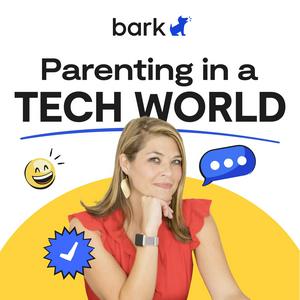
Welcome to Parenting in a Tech World, the podcast for families raising kids in the digital age. Join Bark CMO Titania Jordan as she unpacks digital dangers, discusses the latest viral social media trends, and shares expert tips for helping protect kids online and in real life.
Podcast websiteListen to Parenting in a Tech World, Circle Round and many other podcasts from around the world with the radio.net app
Get the free radio.net app
- Stations and podcasts to bookmark
- Stream via Wi-Fi or Bluetooth
- Supports Carplay & Android Auto
- Many other app features
Get the free radio.net app
- Stations and podcasts to bookmark
- Stream via Wi-Fi or Bluetooth
- Supports Carplay & Android Auto
- Many other app features
Parenting in a Tech World
Scan code,
download the app,
start listening.
download the app,
start listening.
 USA
USA