
Listen to this podcast in the app for free: Download for free in the App Store
radio.net
Sleep timer
Save favorites
100 episodes
Solving Transitions of Care with Dr. Steve Boslovich - CMO, PointClickCare
10/26/2026 | 31 mins.What if the number that matters most for an older patient isn't their age? Geriatrician Dr. Steven Buslovich, Chief Medical Officer for Senior Care at PointClickCare, joins host Rosa Hart, RN to talk about frailty, the messy handoff from hospital to post-acute care, and why ambient AI should be built for nurses and CNAs, not just physicians.
This episode is sponsored by PointClickCare.
Dr. Buslovich has spent his career on the receiving end of the hospital transfer packet. He shares how losing his mother and uncle within days of each other brought his grandparents into his daily life and led him to geriatrics. He explains how measuring frailty cut hospitalizations and lawsuits in the facilities he led, and how that work grew into Patient Pattern. He and Rosa also get into the quality-of-life conversations that often never happen before a procedure, and whether AI efficiency will protect clinician time or just add more patients to the load.
In this episode:
(00:16) Meet Dr. Steven Buslovich, geriatrician and CMO for Senior Care at PointClickCare (01:35) "Lazy people do everything twice" (03:11) Growing up with grandparents and becoming a geriatrician (06:00) What is frailty? Physiological age vs. chronological age (07:30) Data-driven conversations with families (08:37) The missing piece in U.S. healthcare (12:09) From problem to tech company: the start of Patient Pattern (12:35) Streamlining the "manila envelope" with digital referrals (17:00) A dedicated practitioner EHR for post-acute care (18:08) Ambient AI scribing for nurses and CNAs (20:30) The power of narrating care at the bedside (23:29) Protecting clinician time (26:13) The $1 billion question: a single source of truth for clinical data (28:55) Polypharmacy and medication reconciliation (29:10) Closing and how to connect
Connect:
Dr. Steven Buslovich: PointClickCare: https://pointclickcare.com
Learn more: PointClickCare
www.pointclickcare.com
Facebook: https://www.facebook.com/PointClickCare
Instagram: https://www.instagram.com/lifeatpointclickcare/
X: https://x.com/PointClickCare
LinkedIn: https://ca.linkedin.com/company/pointclickcare
Like, subscribe, and comment with who should answer the next Billion-Dollar Question!
Connect with Rosa Hart
Get or Gift a copy of her book: “Speak Up, Start Now” on Audible or Kindle
Follow @NurseRosaSpeaks on your favorite social media platform
Subscribe for weekly conversations on AI in healthcare, hospital innovation, nursing leadership, and the future of health technology.
Available on Spotify, Apple Podcasts, YouTube, and all major podcast platforms.The Nurses Preventing Readmissions with Catherine Terry
10/19/2026 | 39 mins.What if there was a nurse whose whole job was making sure patients don’t end up right back in the hospital? Catherine Terry started as a CNA in her small Texas hometown and is now Chief Nursing Officer at Sound Physicians, where she champions the Clinical Performance Nurse (CPN) role. In this episode, she shares the patient who gave her a handmade doll in 1997 that still sits on her desk, why she walked away from a leadership title to take a frontline job, and how she became Sound Physicians’ first CNO without ever wanting to lead.
We also get into the so-called nursing shortage, the RaDonda Vaught case and license protection, who carries the liability when AI makes clinical decisions, and how real-time patient feedback at the bedside builds trust and gets patients home safely.
If you’re a CNA, LVN, or RN wondering where your career can go, or a healthcare leader trying to cut readmissions, this one’s for you.
Timestamps
0:00 Introduction: Catherine’s journey from CNA to CNO
1:30 Meet Catherine Terry, CNO at Sound Physicians
2:18 What is a Clinical Performance Nurse?
3:37 How the CPN role works day to day
4:29 Who can become a CPN? (No advanced degree needed)
4:45 The 6 to 8 month onboarding and the analytics nurses never learn in school
5:31 Rosa’s own CNA origin story
6:20 Why the CNA years shaped Catherine’s whole career
7:08 The doll from 1997: a patient she never forgot
8:00 Lessons from being a one-on-one sitter
9:12 Advice for LVNs: “Keep your eyes wide open”
10:23 Creating an LVN partner role at Sound Physicians
10:43 ANA opening membership to LPNs and LVNs in 2027 and the return of team nursing
11:41 Why bedside leadership wasn’t enough
12:55 Finding Sound Physicians while working graveyard in the ER
14:09 The interview that showed her patient problems are the same everywhere
14:51 Stepping out of leadership and leading from the front
16:16 Growing from frontline CPN to regional VP
19:20 Becoming Sound Physicians’ first CNO in 2018
20:24 “Chat with Cats”: staying connected to a remote team
21:46 What is Sound Physicians?
23:16 CPNs are on site, not remote, plus the Ambassador CPN role
25:46 Working on planes vs. resting on planes
27:32 The billion-dollar question
28:12 Investing in proactive, preventive care after COVID
29:37 Funding community-based nursing roles nurses can afford to stay in
30:45 The myth of the nursing shortage
31:05 License protection and the RaDonda Vaught case
32:00 AI and who carries the liability
33:10 How the work environment has changed for new nurses
34:28 The “one good idea” that became real-time patient feedback
35:30 How real-time feedback builds trust and smoother discharges
37:20 Why the team approach matters
37:41 Closing and how to connect with Catherine
Connect with Catherine Terry on LinkedIN
Email: cabshire@soundphysicians.com
Sound Physicians: soundphysicians.com
About Your Host
Rosa Hart, BSN, RN, SCRN, FLAA, is a former Neuro ICU nurse and stroke nurse navigator, podcast host, speaker, and author of Speak Up, Start Now. Nurse Rosa’s INsights brings you conversations with the nurses, leaders, and innovators changing how healthcare works.
📖 Get Rosa's book: Speak Up, Start Now
📲 Follow @NurseRosaSpeaks on social media
👍 Like, subscribe, and share this episode with a nurse who needs to hear itMaking Nursing Human Again with Angel Bozard
10/12/2026 | 37 mins.Is there really a nursing shortage, or are we just making nursing too hard to stay in? Nurse leader Angel Bozard of VirtuAlly joins me to talk about how virtual nursing is taking the paperwork off bedside nurses, bringing experienced nurses back into the workforce, and helping patients feel truly heard.
Angel shares how the nurses who cared for her and her blind father inspired her career, why she went back to nursing school with three kids at home, and how a rural maternal fetal medicine program sparked her passion for virtual care. We get into 24/7 virtual observers, 45-minute admissions that uncover what busy bedside conversations can miss (including suicidal ideation), and why the average nurse’s experience has dropped from 15 years to just 2. Plus, Angel answers the billion-dollar question: what would she do to fix nursing’s future?
If you’re a nurse, nurse leader, or anyone curious about where healthcare technology is headed, this one’s for you.
⏱ Timestamps
0:55 Angel’s Background: Charleston, SC & Telehealth Leadership
1:21 The Nurses Who Cared for Angel & Her Blind Father
2:54 Going Back to Nursing School with Three Kids
3:31 From Bedside to Leadership
3:51 The Spark: Virtual Care for Rural Maternal Fetal Medicine
4:38 How the Pandemic Shattered Healthcare & Sped Up Virtual Care
5:27 Finding Virtual Ally: Culture & Innovation
6:18 Taking Administrative Burden Off Bedside Nurses
8:00 Nurses as Taskmasters: The Paperwork Problem
8:41 Virtual Care Is Not About Replacing Nurses
9:36 Bringing Back Legacy Nurses Through Care Team Models
11:11 Virtual Care for ED Boarders & Critical Access Hospitals
12:59 Mentorship Through Cameras: Experienced Nurses Teaching at the Bedside
13:58 VirtualAlly Provides the People, Not Just the Tech
14:53 Virtual Observers: 24/7 Monitoring from Command Centers
15:31 Virtual Nurses Working from Home: Admissions & Discharges
16:19 Thorough 45-Minute Admissions Without Bedside Distractions
17:10 Uncovering Suicidal Ideation Through Focused Conversations
17:54 Behavioral Health: Where Virtual Care Fills the Gap
19:33 Why Trust at Admission Shapes the Whole Hospital Stay
20:46 Shorter Length of Stay & Better Patient Experience
21:49 Lower Turnover: Nurses Feel Supported Again
23:40 Restoring Humanity to Healthcare Through Technology
24:22 The Billion-Dollar Question
25:33 Where the Question Came From: American Nurses Foundation Philanthropy Study
27:07 Angel’s Answer: Make Nursing Rewarding Again
28:52 The Real Shortage: Inhumane Conditions, Not a Lack of Nurses
30:13 Average Nurse Experience Dropped from 15 Years to 2
31:27 CAVRN Certification & Virtual “Website Manner”
33:10 Joint Commission Accreditation for Virtual Ally
34:33 The Future: Technology as a Tool, Not the Answer
35:23 Closing & How to Connect with Angel
🔗 Connect
Angel Bozard on LinkedIn
Learn about CAVRN (Certified Acute Care Virtual Registered Nurse) certification: https://www.msncb.org/CAVRN/Certification
Follow Rosa: @NurseRosaSpeaksAmbient AI for Senior Care with Julia Rizhevsky, VP PointClickCare
10/05/2026 | 25 mins.Ambient AI for Senior Care with Julia Rizhevsky, VP - PointClickCare
This episode is sponsored by PointClickCare.
Julia Rizhevsky didn't start in healthcare. She built her product management career at American Express, Mastercard, and Amazon's AI team before being pulled into the industry. Now she leads Vox Advantage, PointClickCare's ambient AI documentation tool built specifically for skilled nursing, not adapted from hospital workflows.
In this conversation, Rosa and Julia dig into the real cost of documentation burden (nearly three hours of a twelve-hour shift spent charting instead of with residents), how Vox Advantage listens during care encounters and turns them into structured notes while keeping nurses in full control of sign-off, and why tools built for physicians rarely translate cleanly to nursing homes. Julia also shares her "billion-dollar idea": a universal, real-time data exchange to fix the dangerous information gaps that happen during transitions of care.
Timestamps:
0:16 — Intro: welcome to Nurse Rosa's Insights, show's mission
0:35 — Guest intro: Julia Reshevsky, VP of Product & AI Strategy at PointClickCare, leads Vox Advantage
1:41 — Julia's path into healthcare: from fintech/Amazon AWS AI team to senior care
3:32 — Personal connection: her mother was an RN; discovering PointClickCare and senior care's overlooked impact
5:32 — The documentation burden: nearly 3 hours of a 12-hour shift spent charting instead of with residents
5:56 — How Vox Advantage works: ambient AI listens during care encounters and generates structured progress notes
9:10 — Nurse retains authorship — can edit/review before signing; results in more complete records
10:03 — Catching safety issues: detecting micro-changes/trends across shifts that could be missed manually
11:03 — How it's deployed: mobile app (not a wearable), future potential for always-on ambient listening
12:19 — Why hospital-style ambient AI doesn't easily transfer to skilled nursing: structured notes vs. narrative notes
14:28 — Comparing to physicians' head start with Dragon dictation; nurses historically excluded from that tech
15:36 — What makes a good beta-testing site; iterative feedback loop with engineers/AI researchers
18:07 — The "billion-dollar question": Julia's pick — universal real-time data exchange for care transitions
20:03 — Discussion on gaps in current data-sharing (fax machines, manila folders, inconsistent records)
22:26 — Standardizing information exchange; incentives and existing infrastructure for interoperability
23:48 — Closing thoughts and how to connect with Julia (LinkedIn, pointclickcare.com) or become a beta site
24:35 — Outro: call to action for listeners
Connect with Julia: LinkedIn
Learn more: PointClickCare
www.pointclickcare.com
Facebook: https://www.facebook.com/PointClickCare
Instagram: https://www.instagram.com/lifeatpointclickcare/
X: https://x.com/PointClickCare
LinkedIn: https://ca.linkedin.com/company/pointclickcare
Like, subscribe, and comment with who should answer the next Billion-Dollar Question!
Connect with Rosa Hart
Get or Gift a copy of her book: “Speak Up, Start Now” on Audible or Kindle
Follow @NurseRosaSpeaks on your favorite social media platform
Subscribe for weekly conversations on AI in healthcare, hospital innovation, nursing leadership, and the future of health technology.
Available on Spotify, Apple Podcasts, YouTube, and all major podcast platforms.Breaking Up Big Medicine: The Prior Authorization Crisis
09/21/2026 | 29 mins.What happens when the companies that profit from denying care also decide what care you get? Nurse Rosa sits down with Hannah Garden-Monheit and Emma Freer, senior fellows at the American Economic Liberties Project and leaders of the Break Up Big Medicine Coalition, to talk about their report on prior authorization.
Hannah shares the personal story behind her work: her father's cancer, his amputation, and the prior auth denials that followed. Emma explains the moral injury clinicians feel when paperwork pulls them away from the bedside. Together they walk through the numbers, the policy fixes, and what nurses, clinicians, and patients can do right now about a system that too often works against the people it's supposed to serve.
Timestamps
0:00 Welcome and guest introductions
1:12 Hannah's personal story: her father's cancer, amputation, and United Healthcare's prior auth denials
2:26 The Kafkaesque bureaucracy: "This is unreasonable, but I don't know how to fix it"
3:17 The inherent conflict of interest: insurers save money by denying care
3:37 Nurse Rosa on preventable disability and the economic cost of denied care
3:48 Emma on moral injury among healthcare professionals pulled away from the bedside
5:16 Heartbreaking stories: a cancer patient missing chemo infusions, migraine medication abruptly denied
5:18 Collecting patient stories at earful.us/c/prior-auth
6:19 The $32 billion annual paperwork cost, and why insurance-funded studies ignore it
8:14 What the American Economic Liberties Project does across all industries
9:30 Prior authorization as one symptom of a deeper disease in healthcare
10:00 Nurse Rosa on the moral injury of knowing treatment exists but being blocked from delivering it
10:49 Prior auth paperwork consumes the equivalent of 99,290 full-time physicians, more than the entire clinician shortage
12:29 What you can do: call your representatives, share your story, advocate for reform
14:05 Nurse Rosa on the reality of advocacy: it's on your own time and your own dime
15:31 The Break Up Big Medicine Coalition: 27 member organizations and growing (join at breakupbigmedicine.com)
16:26 The bipartisan Break Up Big Medicine Act (Sens. Warren and Hawley) and what it would do
17:09 Does this work extend to food and agriculture? Similar monopolist playbooks across industries
19:21 The $1 billion question: Emma's answer is to ban prior authorization and free patients and clinicians
20:48 Hannah's answer: invest in antitrust and consumer protection enforcement of existing laws
22:55 Don't miss the report: Emma recommends Hannah's personal foreword, and Hannah leaves us with a killer stat
24:04 Medicare Advantage vs. Traditional Medicare: 50 million vs. 600,000 prior auth determinations, and Medicare Advantage costs 22% more per patient
25:48 How to share your story at earful.us/c/prior-auth (open indefinitely, and you control your privacy)
26:42 How to reach Hannah and Emma: breakupbigmedicine.com
27:23 Closing, like and subscribe, and find Nurse Rosa at "Nurse Rosa Speaks" on all platforms
Links:
Break Up Big Medicine Coalition: breakupbigmedicine.com
Share your prior authorization story: earful.us/c/prior-auth
Follow Nurse Rosa on LinkedIn and all social media: @NurseRosaSpeaks
More Business podcasts




Trending Business podcasts






















About Nurse Rosa's INsights
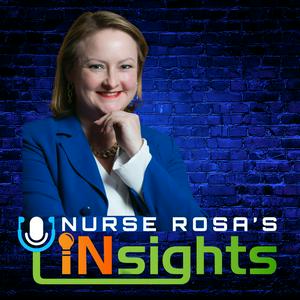
Rosa Hart interviews healthcare stakeholders to find out what needs they see in their specialty and learn about their proposed methods to meet them. Anyone can complain, but this podcast is for possibility thinkers who are ready to create solutions.
Podcast websiteListen to Nurse Rosa's INsights, The Level Up Podcast w/ Paul Alex and many other podcasts from around the world with the radio.net app
Get the free radio.net app
- Stations and podcasts to bookmark
- Stream via Wi-Fi or Bluetooth
- Supports Carplay & Android Auto
- Many other app features
Get the free radio.net app
- Stations and podcasts to bookmark
- Stream via Wi-Fi or Bluetooth
- Supports Carplay & Android Auto
- Many other app features
Nurse Rosa's INsights
Scan code,
download the app,
start listening.
download the app,
start listening.
Nurse Rosa's INsights: Podcasts in Family
 USA
USA