Listen to this podcast in the app for free: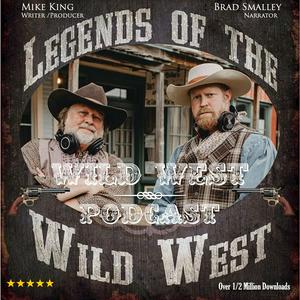 Download for free in the App Store
radio.net
Sleep timer
Save favorites
Available Episodes
5 of 292
- John Brown’s Gallows, A Nation’s ReckoningSend us a textA cold morning, a fortified town, and a scaffold placed just out of earshot—Charleston, Virginia tried to choreograph John Brown’s end and, with it, the story the country would remember. What they could not contain was a single handwritten note that slipped past the rope and into the bloodstream of a nation already splitting at the seams.We walk the final hours with four witnesses whose perspectives refract the moment: Thomas J. Jackson, the meticulous VMI professor whose faith and discipline frame the state’s show of force; Edmund Ruffin, the fire-eater who turns pikes into propaganda and sees opportunity in the gallows; David Hunter Strother, the conflicted journalist caught between honesty and editorial fear; and a young John Wilkes Booth, reading the scene as theater and quietly rehearsing a darker role. Alongside them, Brown tends his will, thanks his jailer, hands coins to his men, and chooses silence over spectacle—saving his last words for paper, not the crowd.The procession becomes public theater, the pause on the trapdoor stretches time, and the drop turns a man into a symbol. From controlled access to censored sketches, from church bells in the North to militia drills in the South, we trace how a state-managed execution became a catalyst. Keywords that matter here—John Brown, Harper’s Ferry, Bleeding Kansas, Stonewall Jackson, Edmund Ruffin, John Wilkes Booth, abolition, secession, Fort Sumter—aren’t just tags; they’re threads that stitch a straight line from a quiet cell to a continent at war.Listen for the details that history often blurs: the bronze guns on the field, the black box that is also a coffin, the exact phrasing of a prophecy that predicted blood. Stay for the larger question that lingers long after the body is cut down: can power manage meaning when memory prefers to travel light and fast? If this story moves you, follow the show, share it with a friend who loves American history, and leave a review telling us what single moment changed your view.Support the showIf you'd like to buy one or more of our fully illustrated dime novel publications, you can click the link I've included.--------29:58
- Night The Prairie BurnedSend us a textA single word—fire—ripped through a quiet winter night and changed Dodge City forever. We travel back to late 1885 as flames burst from the Junction Saloon, raced down Front Street, and turned landmark businesses into a corridor of embers. With no pressurized water system and winter winds pushing the blaze, neighbors hacked at ice for bucket brigades while heat made even brick buildings fail. The Long Branch Saloon, Delmonico’s, Zinnerman’s hardware, and more fell in hours, and embers leapt the tracks to ignite warehouses and strain the town’s last defenses.Amid chaos, Marshal Bill Tilghman and the fire brigade made a stark choice: blast a firebreak with gunpowder to stop the advance. By dawn, roughly 14 businesses were gone and losses neared $150,000—staggering in 1885. Yet the ashes carried a blueprint. The second major fire of that year forced Dodge City to abandon the fragile speed of wood construction and invest in brick, stone, and a modern waterworks. What began as catastrophe became a civic turning point, ending the bucket brigade era and setting the foundation for a safer, more durable city.We unpack how disasters reshape policy and place, why fireproof materials and infrastructure mark the shift from boomtown myth to municipal staying power, and how memory and rebuilding can coexist in the same streets. If you’re drawn to Western history, urban resilience, or the untold decisions behind a city’s survival, this story offers vivid detail and lasting lessons. Subscribe, share with a history-loving friend, and send us a local event from Ford County we should investigate next—your story might be the next page we bring to life.Support the showIf you'd like to buy one or more of our fully illustrated dime novel publications, you can click the link I've included.--------3:50
- A Frontier Christmas, A Stranger’s Song, And The Night The Miners Remembered HomeSend us a textA coffin rattles into a mining camp and turns out to be a piano—an unlikely miracle for a saloon that runs on cards, noise, and stubborn pride. We set the scene in a winter-struck gulch where 300 miners live by the hour and try not to think about the lives they left behind. Goskin, the gambler who owns the hall, wants one thing for Christmas: someone brave enough to bring that silent instrument to life.What follows is a story about fear, longing, and the strange ways grace finds a way in. A half-frozen stranger steps out of the storm, warms his hands by the fire, and admits he used to play. When he touches the keys, the room stops moving. Imperfect chords swell into old ballads and familiar carols that carry the men back to apple blossoms, Scottish heather, and candlelit aisles. Even the toughest faces fold when Home Sweet Home lands. The gambling halts, glasses lower, and hardened men drift out to write letters they’ve owed for years.Then comes the twist that only the frontier could provide. The player asks for a brother named Driscoll, vanishes before dawn, and leaves an empty till and a trail that dies in the snow. The white hair? A wig. The musician? The three-card man who watched the piano like a starving wolf watching a door. Yet the con can’t erase the truth of what happened. Music worked where bullets and bravado never could. It made space for memory, tenderness, and the kind of Christmas that holds time together, even in a place built on luck.If this tale moved you, follow the show, share it with a friend, and leave a review with the song that takes you home.Support the showIf you'd like to buy one or more of our fully illustrated dime novel publications, you can click the link I've included.--------18:52
- How The Old West Shaped American Christmas TraditionsSend us a textSnow that bites, winds that snap, and a cabin lit by a single candle—yet the room still fills with carols and the smell of plum pudding. We journey across the Old West to uncover how pioneers forged the Christmas we recognize today, transforming scarcity into ritual and distance into community. From homestead kitchens humming weeks in advance to stockings hung by a hard‑won fire, we explore the customs that stitched a shaken nation back together after the Civil War and blossomed into a national holiday by 1870.We share first‑hand accounts that feel close to the skin: a family pushing through storms to reach a new life in Oregon Territory, neighbors snowshoeing through four feet of powder for a frontier feast, and Dodge City’s Christmas Eve council where civic ambition briefly overshadowed goodwill. These vignettes reveal the texture of the season on the prairie—homemade ornaments from evergreens and ribbon, popcorn garlands, cookie‑dough keepsakes, and gifts carved, knitted, and stitched over months. Each detail reminds us that meaning grows where hands work and hearts wait.Midway, we read Robert W. Service’s “The Christmas Tree,” a moving tale of a discarded fir that becomes a beacon for a child in pain. The poem echoes the frontier ethic: rescue what the world overlooks, turn it into light, and let hope do the rest. By the close, we reflect on hospitality and charity as the enduring core of the holiday—values that carried pioneers through savage winters and still kindle warmth in ours. If these stories deepen your own traditions, share the episode with someone you love, leave a quick review, and subscribe so you never miss the next journey west.Support the showIf you'd like to buy one or more of our fully illustrated dime novel publications, you can click the link I've included.--------17:05
- The Great Western Hotel Wasn’t Named For The Cattle TrailSend us a textForget the postcard version of Dodge City. We open the door to the Great Western Hotel and step into a town intent on trading dust for dignity, noise for order, and short-term profits for a longer arc of respectability. The surprise is in the name itself: Great Western wasn’t a nod to cattle drives; it was a bid to borrow the prestige of Brunel’s railway and steamship, the Victorian shorthand for speed, reliability, and modern life. That branding choice tells us more about ambition on the plains than any staged gunfight ever could.We follow the transformation from the unpolished Western House to a hotel with plate glass, private rooms, and a no-whiskey policy under Dr. Samuel Galland, a German immigrant who believed Dodge City could be sober and civilized. Along the way, we separate trail reality from tourist memory: drovers called it the Western or the Dodge City Trail, while the phrase Great Western Trail arrived decades later through scholarship and heritage markers that retconned the landscape. The evidence runs through ledgers, newspapers, and the lived language of the men who drove the herds.The human stories make the stakes tangible. A silk-top-hatted dentist walks Front Street on principle and learns the cost of standing out before earning respect. Fires scorch the business district, owners come and go, the hotel changes names and survives the Dust Bowl, then vanishes in 1942—only to reappear as a museum gateway that sits near modern trail markers, inviting a tempting but false connection. What remains is the real takeaway: the West wasn’t just won by grit; it was branded into being by people who knew that names can move minds as surely as rails move trains.If this reframe challenged a myth you held, share the episode, leave a rating, and tell us which Western “truth” you want us to unpack next. Subscribe for more history with receipts and a clear eye.Support the showIf you'd like to buy one or more of our fully illustrated dime novel publications, you can click the link I've included.--------29:37
More Education podcasts
 Mick UnpluggedBusiness, Education, Entrepreneurship, Management, Self-Improvement
 Impact with Eddie WilsonBusiness, Education, Entrepreneurship, Investing, Self-Improvement
 The Skinny Confidential Him And Her ShowBusiness, Education
 The Daily StoicBusiness, Education, Society & Culture, Self-Improvement
 Ready For Love with Hilary SilverEducation, Health & Wellness, Society & Culture, Mental Health, Relationships, Self-Improvement
 IMO with Michelle Obama and Craig RobinsonEducation, Society & Culture, Self-Improvement
 Digital Social HourEducation, Self-Improvement
 The Jamie Kern Lima ShowBusiness, Education, Health & Wellness, Entrepreneurship, Mental Health, Self-Improvement
 The Mel Robbins PodcastEducation, Health & Wellness, Society & Culture, Mental Health, Relationships, Self-Improvement
 Miracle Mentality with Tim Storey (Motivation, Self Help, and Mental Health)Education, Health & Wellness, Mental Health, Self-Improvement
Trending Education podcasts
 HerLearn Legacy PodcastEducation, Tutorials
 Conversations with Dr. JenniferEducation, Health & Wellness, Mental Health, Self-Improvement, Sexuality
 Sean Michael Crane's Unstoppable MindsetEducation, Health & Wellness, Society & Culture, Personal Journals, Self-Improvement
 too much.Education, Health & Wellness, Society & Culture, Mental Health, Relationships, Self-Improvement
 Dreaming Spanish Podcast – Chats in Beginner SpanishEducation, Language Learning
 Try ThisEducation, Society & Culture, Self-Improvement
 Weirdly Helpful (formerly The Best Advice Show)Education, Health & Wellness, Tutorials, Mental Health, Self-Improvement
 5-Minute Videos | PragerUBusiness, Education, History, Non-Profit, Self-Improvement
 Bedros Keuilian Podcast ShowEducation, Self-Improvement
 UNBIASED PoliticsEducation
 صلح درونEducation, Self-Improvement
 The Other Side NDE (Near Death Experiences)Education, Religion & Spirituality
 Hillsdale DialoguesEducation
 Aware and AggravatedEducation, Health & Wellness, Mental Health, Self-Improvement
 No Hay Tos (Real Mexican Spanish)Comedy, Education, Language Learning
 Ketab Jibi | پادکست کتاب جیبیEducation, Self-Improvement
 The Let Them TheoryEducation, Self-Improvement
 SHE with Jordan Lee DooleyEducation, Self-Improvement
 El Podcast de Marco Antonio RegilEducation, Health & Wellness, Self-Improvement
 This Naked Mind PodcastEducation, Self-Improvement
 The Digital SisterhoodEducation, Society & Culture, Documentary, Self-Improvement
 Before BreakfastEducation, Self-Improvement
 رادیو راه با مجتبی شکوریEducation
 THE ED MYLETT SHOWBusiness, Education, Entrepreneurship, Self-Improvement
 Pulling The Thread with Elise LoehnenEducation, Religion & Spirituality, Self-Improvement
 Am I the Genius?Education, Self-Improvement
 The Rachel Cruze ShowBusiness, Education, Investing, Self-Improvement
 Financial Coaching for Women: How To Budget, Manage Money, Pay Off Debt, Save Money, Paycheck PlansEducation, Tutorials
 Cram The PanceEducation, Courses
 The Jefferson Fisher PodcastEducation, Society & Culture, Relationships, Self-Improvement
About Wild West Podcast
Welcome to the Wild West podcast, where fact and legend merge. We present the true accounts of individuals who settled in towns built out of hunger for money, regulated by fast guns, who walked on both sides of the law, patrolling, investing in, and regulating the brothels, saloons, and gambling houses. These are stories of the men who made the history of the Old West come alive - bringing with them the birth of legends, brought to order by a six-gun and laid to rest with their boots on. Join us as we take you back in history to the legends of the Wild West. You can support our show by subscribing to Exclusive access to premium content at Wild West Podcast + https://www.buzzsprout.com/64094/subscribe or just buy us a cup of coffee at https://buymeacoffee.com/wildwestpodcast
Podcast websiteListen to Wild West Podcast, Mick Unplugged and many other podcasts from around the world with the radio.net app
Get the free radio.net app
- Stations and podcasts to bookmark
- Stream via Wi-Fi or Bluetooth
- Supports Carplay & Android Auto
- Many other app features
Get the free radio.net app
- Stations and podcasts to bookmark
- Stream via Wi-Fi or Bluetooth
- Supports Carplay & Android Auto
- Many other app features

Wild West Podcast
Scan code,
download the app,
start listening.
download the app,
start listening.
 USA
USA