Listen to this podcast in the app for free: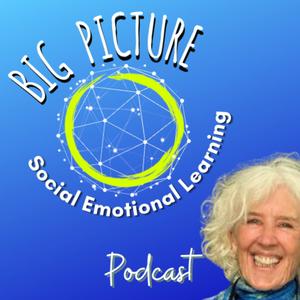 Download for free in the App Store
radio.net
Sleep timer
Save favorites
Available Episodes
5 of 118
- Ep. 117, Strong-Willed Kids, with Kirk MartinIf you've noticed that the standard responses of many teachers and parents to the strong-willed and neurodivergent kids in their care only creates more problems - for everyone, then you really want to tune into this conversation with Kirk Martin. Kirk is a master at providing deeply effective and easily implemented strategies that actually make life better for everyone - - - in the classroom and at home. I can confidently assure you that this conversation will exceed your highest expectations for providing wise and practical solutions. Please fill out the poll that coincides with this episode and/or send in your question for Kirk to address in the next conversation he and I share.--------44:05
- Ep. 116 - Defending SEL and Teachers' Professional Development, with Elizabeth PetersonWelcome again to the Big Picture Social Emotional Learning podcast, even though this upcoming conversation, in defense of SEL, is one I would never have predicted needing to be shared… but, and you don’t need me to tell you: these are wild times, in which just about any topic, especially around education, can ignite extreme and heated reactions. So troubling! …and so I reached out, again, to Elizabeth Peterson, a teacher with many years experience, who lights up with energetic joy and appreciation for what she accomplishes -alongside her elementary and middle school students- year after year, by incorporating SEL into the curriculum of all the subjects she teaches, from math to science to English. We all have a LOT to learn from Elizabeth. Listen all the way through this conversation. There are gems of empowering insight from start to finish, whether you’re a whole-hearted advocate of Social Emotional Learning - always on the lookout for more creative ways to integrate SEL into your classroom’s culture, OR …if you’re on the other end of the SEL spectrum, and you’ve been swayed by the disparaging remarks some groups have been promoting for whatever reasons... this conversation is sure to bring clarity to your thoughts and your conversations around this topic so central to our students' growth and development, not only socially and emotionally, but academically as well. Learn more at https://theinspiredclassroom.com/--------52:31
- Ep. 115 - Developing Clear-Headed, Unbiased ThinkersWe see so much division, and it's terrifying some of us. People trying to change others opinions is not doing much more than splitting us further apart, because (research has proven, beyond a doubt) people will ground into their own opinions, their own biases, their own perspectives when they experience differences of opinions and ideas. What to do? Give children, starting at an earlier age, thinking skills, unbiased analysis skills and critical thinking skills. Critical doesn't mean criticizing - it just implies the ability to analyze and consider from various points before coming to well-informed conclusions by objectively (as objectively as possible - we’re all human, after all) considering how those different points of view rest within our own values. From my own experiences as a teacher for over 20 years, I’ve seen, time again, consistently, that we can do this with today's youth. We can and we must do this in a way that is empowering to all parties. Students, youth, young children and us adults, as well. Mutual respect is the key. Because If we don't trust people's innate humanity, their innate capacity for compassion to see things from other people's point of view, which is empathy, (different from compassion - which is caring about other’s challenges, suffering, etc). Every child, every adult's ability to view from compassion and then from empathy,then we are starting at a place that is not respectful and does not invite mutual respect. … And that cannot be the model of how humanity keeps trodding along now, because it’s not going to end well. Who doesn’t see the cliff we're heading towards? We can do something about it. We can and it requires a mind shift. But not an impossible mind shift, not one that doesn't make sense to all of us really if we take a breath and consider it the value of it. What is the shift? Sitting with a group of children, it's always best, in my experience to do this work with a group of children. So they can find out how much in alignment their developing values are And so you will see in the podcast that I host, the Big Picture Social Emotional Learning podcast that every guest is someone who in their own way from their own perspective - from early child educators to art teachers to people who understand ADHD. This can and does work to everyone's benefit. Short term and long term. So we can veer away from the cliff that’s drawing us closer and closer to our own self-imposed divisive havoc So. Here I am, back on the podcast. I've been traveling out of the country. Partly I needed some rest and relaxation and partly because It's a big world that we live on, this planet has given rise to so many different cultural values and success in ways that the United States can learn from. It's been a fascinating journey and I don't want it to stop. I want to share conversations and ideas that need to be shared for everyone's benefit. How could this be wrong? How could it not be right? I don't want to be enemies with anyone. I want us to realize that We're all in this together. The bombs and the wars happening make you realize that we are affected by everything even if it's on the other side of the planet. We are affected. And we can have an effect with our impact on today's youth. We can have very positive effect by helping them to be thinkers to analyze things, to not just be in reaction mode all the time or in fear-based mindset that is so reactionary, emotional. We've got to move away from that. Win win. Really can work. Where no one needs to be afraid because one side is doing well, so that means the other side is not. That is a model that is so old and so based in a very, very unwise way. That model has seemed to serve certain people who thought dividing people is the way to weaken the majority...But we don't have to be divided. If we move in mutual respect. I hope you'll consider that and continue to listen to this, the Big Picture Social Emotional Learning podcast.--------10:05
- Ep. 114 - Artfully Integrating SEL Into All Subjects, with Elizabeth PetersonIn this episode of the Big Picture Social Emotional Learning Podcast, I share conversation with Elizabeth Peterson, a 3rd grade teacher in the state of New Hampshire. Our conversation started with Elizabeth’s deeply considered definition of a term with which we’re all familiar: whole child. I wanted to learn her personal perspective, because I feel that how we, as educators, define this term has an impact on how we relate to our students. See if your definition aligns with hers… Other topics we discussed included the need for teachers who are inspired, and the very real fact that inspiration is not a switch that can be flipped on, BUT it CAN be nurtured in ways that are truly meaningful for significant and enriching benefits in the classroom for students and for us, as well. We went on to learn about ways in which Elizabeth has explored ways to grow inspiration that are real, and fun, and truly rewarding on many levels using art, even tho she does not consider herself an artist in the common understanding of that word. Check out Elizabeth's website: www.theinspiredclassroom.com--------46:05
- Ep. 113 - Serving Students Who Are Deaf and Hard of Hearing with Necessary SEL SupportsYou know how sometimes you learn about something you didn’t have even a clue about the fact that you were completely unaware of what you didn’t know? That’s what happened to me in the following conversation with Sherri Fickensher who is an Education Support Specialist, serving deaf and hard of hearing students at Clarke Schools for Hearing and Speech for more than 20 years. Hearing is a sense most of us take for granted. In this conversation I learned about the multitude of ways that not hearing impacts, really impacts, social and emotional interactions. Throughout this conversation you’ll notice Sherri’s whole-hearted dedication to continual learning of ever-evolving resources and methodologies for serving deaf and hard of hearing students (and their families) to address and manage inevitable challenges so they can live and enjoy to their fullest potential. Please remember… if you’re enjoying this podcast, your Likes and Comments help it to become more visible for everyone’s benefit. Helpful links from this conversation: Low Empathy in Deaf and Hard of Hearing (Pre)Adolescents Compared to Normal Hearing Controls. Hearing impairment poses many challenges to the developing child. Deaf and hard of hearing (DHH) children for instance frequently encounter language and communication problems. These difficulties in communication may result in reduced opportunities for incidental learning. Especially abstract concepts such as emotions are therefore more difficult to understand for children with hearing loss [1]. Regulating and understanding one’s own emotions is essential for the development of adequate empathic abilities. Consequently, DHH children are prone to develop lower empathic skills than normal hearing (NH) peers. Because empathy is of major importance in initiating and maintaining social relationships, this could have ongoing consequences in the development of DHH children. Predicting social functioning in children with a cochlear implant and in normal-hearing children: The role of emotion regulation Cochlear implant children have less adequate emotion-regulation strategies and less social competence than normal hearing children. Since they received their implants relatively recently, they might eventually catch up with their hearing peers. Longitudinal studies should further explore the development of emotion regulation and social functioning in cochlear implant children. Instagram - @clarkeschools Twitter - @clarkeschools Facebook - @Clarke Schools for Hearing and Speech LinkedIn - @Clarke Schools for Hearing and Speech--------1:31:13
More Education podcasts
 The Mel Robbins PodcastEducation, Health & Wellness, Society & Culture, Mental Health, Relationships, Self-Improvement
 Living Your LegacyBusiness, Education, TV & Film, Entrepreneurship, Film Interviews, Self-Improvement
 Becoming UnDoneEducation, Health & Wellness, Society & Culture, Documentary, Self-Improvement
 The Skinny Confidential Him And Her ShowBusiness, Education
 Digital Social HourEducation, Self-Improvement
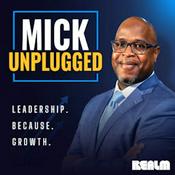 Mick UnpluggedBusiness, Education, Entrepreneurship, Management, Self-Improvement
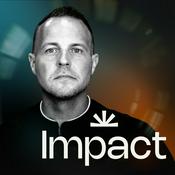 Impact with Eddie WilsonBusiness, Education, Entrepreneurship, Investing, Self-Improvement
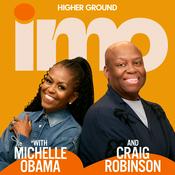 IMO with Michelle Obama and Craig RobinsonEducation, Society & Culture, Self-Improvement
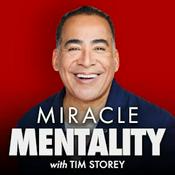 Miracle Mentality with Tim Storey (Motivation, Self Help, and Mental Health)Education, Health & Wellness, Mental Health, Self-Improvement
 The Daily StoicBusiness, Education, Society & Culture, Self-Improvement
Trending Education podcasts
 HerLearn Legacy PodcastEducation, Tutorials
 Conversations with Dr. JenniferEducation, Health & Wellness, Mental Health, Self-Improvement, Sexuality
 Sean Michael Crane's Unstoppable MindsetEducation, Health & Wellness, Society & Culture, Personal Journals, Self-Improvement
 too much.Education, Health & Wellness, Society & Culture, Mental Health, Relationships, Self-Improvement
 Dreaming Spanish Podcast – Chats in Beginner SpanishEducation, Language Learning
 Try ThisEducation, Society & Culture, Self-Improvement
 Weirdly Helpful (formerly The Best Advice Show)Education, Health & Wellness, Tutorials, Mental Health, Self-Improvement
 5-Minute Videos | PragerUBusiness, Education, History, Non-Profit, Self-Improvement
 Bedros Keuilian Podcast ShowEducation, Self-Improvement
 UNBIASED PoliticsEducation
 صلح درونEducation, Self-Improvement
 The Other Side NDE (Near Death Experiences)Education, Religion & Spirituality
 Hillsdale DialoguesEducation
 Aware and AggravatedEducation, Health & Wellness, Mental Health, Self-Improvement
 No Hay Tos (Real Mexican Spanish)Comedy, Education, Language Learning
 Ketab Jibi | پادکست کتاب جیبیEducation, Self-Improvement
 The Let Them TheoryEducation, Self-Improvement
 SHE with Jordan Lee DooleyEducation, Self-Improvement
 El Podcast de Marco Antonio RegilEducation, Health & Wellness, Self-Improvement
 This Naked Mind PodcastEducation, Self-Improvement
 The Digital SisterhoodEducation, Society & Culture, Documentary, Self-Improvement
 Before BreakfastEducation, Self-Improvement
 رادیو راه با مجتبی شکوریEducation
 THE ED MYLETT SHOWBusiness, Education, Entrepreneurship, Self-Improvement
 Pulling The Thread with Elise LoehnenEducation, Religion & Spirituality, Self-Improvement
 Am I the Genius?Education, Self-Improvement
 The Rachel Cruze ShowBusiness, Education, Investing, Self-Improvement
 Financial Coaching for Women: How To Budget, Manage Money, Pay Off Debt, Save Money, Paycheck PlansEducation, Tutorials
 Cram The PanceEducation, Courses
 The Jefferson Fisher PodcastEducation, Society & Culture, Relationships, Self-Improvement
About BIG PICTURE Social Emotional Learning Podcast
This Social Emotional Learning (#SEL) podcast shares actionable wisdom from the global community of inspiring teachers and parents.
Featuring fresh, effective perspectives and practices designed to equally benefit students, teachers, community.
Episodes always include:
• Solution-oriented insights around: emotions, thinking skills, empathy, trust, social justice, and much more
• Research-based
• Experience-validated
• Actionable advice
Especially helpful for, but not limited to, ECE (early childhood education).
Podcast websiteListen to BIG PICTURE Social Emotional Learning Podcast, The Mel Robbins Podcast and many other podcasts from around the world with the radio.net app
Get the free radio.net app
- Stations and podcasts to bookmark
- Stream via Wi-Fi or Bluetooth
- Supports Carplay & Android Auto
- Many other app features
Get the free radio.net app
- Stations and podcasts to bookmark
- Stream via Wi-Fi or Bluetooth
- Supports Carplay & Android Auto
- Many other app features

BIG PICTURE Social Emotional Learning Podcast
Scan code,
download the app,
start listening.
download the app,
start listening.
 USA
USA