

Listen to this podcast in the app for free: Download for free in the App Store
radio.net
Sleep timer
Save favorites
71 episodes
Conversation with Samuel Bercholz, founder of Shambhala Publications and my meditation teacher, Part One
09/04/2026 | 15 mins.Send us Fan Mail
I talk with my longest time spiritual friend, Samuel Bercholz, founder of Shambhala Publications and author of the new book, Rude Awakenings. It was written at the request of his second root teacher, Thinley Norbu Rinpoche, who asked Sam to write a book containing everything he learned from his first root teacher, the great and mysterious Chögyam Trungpa Rinpoche.
For me, this book lives up to its subtitle: An Unconventional Guide to the Buddhist Path. It was written by someone who has known and published almost all of the great Buddhist (and other) masters of our lifetime, checked everyone’s sincerity and realization, and drawn, as far as I can tell, impeccable conclusions about the true dharma and who and what to trust.
I trust him deeply. In addition to his extraordinary accomplishments, he is my closest spiritual friend. Sam taught me how to meditate more than 30 years ago and is still my meditation teacher. He gave me the refuge vow (by which one formally commits to the Buddhist Path), taught me how to give this vow, and, most importantly, introduced me to my root teacher, Tulku Thondup Rinpoche.
In this first of 3 short episodes, we talk about his beginnings as a practitioner, the centrality of Guru Rinpoche and Yeshe Tsogyal, wakefulness, lineage, and why the relationship with a teacher is so important in Vajrayana Buddhism. We also look at how to find a teacher without becoming confused by cultural forms or an individual’s charisma.
Highlights:
Why did Sam write this book?
Who are Guru Rinpoche and Yeshe Tsogyal and how do you invoke them?
What is the 7-Line Supplication?
How do you find a teacher? What qualities do you look for?
The relationship between teacher, lineage, and awakened mind
Why a teacher is indispensable in Vajrayana practice
How to investigate a potential teacher with both intelligence and heart
The difference between Buddhist teachings and the cultures in which they developed
For more on my personal thoughts about Chögyam Trungpa and other teachers who have influenced me, please listen to episode 8, “Who Can You Trust in the Spiritual World?”
Mentioned in this episode:
Traleg Kyagbon Rinpoche
Thinley Norbu Rinpoche
Ogyen Chowang
Watch this episode on video
If you’d like to watch the podcast, the video version is here.
My new book is now available - in print and in audio format
Inexplicable Magic: Meditation for Mystics, is available for purchase. Explore the spiritual path through 7 principles which run counter to conventional wisdom on mindfulness.
Learn more and buy your copy here.
If you enjoyed this episode:
Please rate, review, and share it with a friend who’s curious about mindfulness, spiritual commitment, or the Buddhist path.
For more on Buddhist teachings and how our humanity isn’t necessarily in our way, sign up for my free weekly newsletter or join the Open Heart Project sangha for more connection with community and with me.
If this podcast has been meaningful to you, it would be great if you would subscribe, give it a five star rating and share it with a friend. To join or learn more about The Open Heart Project please visit openheartproject.com.
Thoughts? Email us at info@susanpiver.com
Produced by Citizens of Sound
Music by: Derek O'Brien
©Open Heart ProjectThree Ways to Work With Heartbreak: Part Three
08/28/2026 | 10 mins.Send us Fan Mail
Heartbreak can make our usual strategies for managing pain useless. It can also show us what is true about being human: everything changes, everything ends, and love is precious because it cannot be held onto. In this episode, I look at how heartbreak itself can become part of the spiritual path.
Highlights:
Bringing heartbreak to the path without trying to turn it into a lesson
How impermanence shows us the preciousness of each moment
Why heartbreak reveals our deep connection with other people
Heartbreak as love unbound from an object
Being with what is, without trying to change it
Mentioned in this episode:
My book, The Wisdom of a Broken Heart
Watch this episode on video
If you’d like to watch the podcast, the video version is here.
My new book is now available - in print and in audio format
Inexplicable Magic: Meditation for Mystics, is available for purchase. Explore the spiritual path through 7 principles which run counter to conventional wisdom on mindfulness.
Learn more and buy your copy here.
If you enjoyed this episode:
Please rate, review, and share it with a friend who’s curious about mindfulness, spiritual commitment, or the Buddhist path.
For more on Buddhist teachings and how our humanity isn’t necessarily in our way, sign up for my free weekly newsletter or join the Open Heart Project sangha for more connection with community and with me.
If this podcast has been meaningful to you, it would be great if you would subscribe, give it a five star rating and share it with a friend. To join or learn more about The Open Heart Project please visit openheartproject.com.
Thoughts? Email us at info@susanpiver.com
Produced by Citizens of Sound
Music by: Derek O'Brien
©Open Heart ProjectThree Ways to Work With Heartbreak: Part Two
08/21/2026 | 14 mins.Send us Fan Mail
When heartbreak is overwhelming, the instinct is often to make it stop. But what if the practice is not to fix what we're feeling, but to learn how to be with it? In this episode, I continue looking at three ways Buddhism offers us a path through heartbreak. The second way is practicing loving-kindness.
Highlights:
Learning to make space for a racing mind instead of trying to shut it down
Working with the intensity of heartbreak without insisting that it disappear
How loving-kindness can turn suffering into compassion
Extending our wish for relief for ourselves, those we love, strangers, difficult people, and all beings
Why caring for others can bring back a sense of strength and agency
Watch this episode on video
If you’d like to watch the podcast, the video version is here.
My new book is now available - in print and in audio format
Inexplicable Magic: Meditation for Mystics, is available for purchase. Explore the spiritual path through 7 principles which run counter to conventional wisdom on mindfulness.
Learn more and buy your copy here.
If you enjoyed this episode:
Please rate, review, and share it with a friend who’s curious about mindfulness, spiritual commitment, or the Buddhist path.
For more on Buddhist teachings and how our humanity isn’t necessarily in our way, sign up for my free weekly newsletter or join the Open Heart Project sangha for more connection with community and with me.
If this podcast has been meaningful to you, it would be great if you would subscribe, give it a five star rating and share it with a friend. To join or learn more about The Open Heart Project please visit openheartproject.com.
Thoughts? Email us at info@susanpiver.com
Produced by Citizens of Sound
Music by: Derek O'Brien
©Open Heart ProjectThree Ways to Work With Heartbreak: Part One
08/14/2026 | 10 mins.Send us Fan Mail
Heartbreak is something we have the tendency to want to get rid of as quickly as possible. But some heartbreaks cannot be “fixed” or hurried. In this episode, I look at how Buddhist teachings can help us when heartbreak has a life of its own. We start with the mind: learning to be with what is happening rather than trying to change it. Meditation is a way to let the mind settle naturally in times of emotional upheaval.
Highlights:
Why some heartbreaks cannot be solved or pushed away quickly
The three yanas as three different ways to work with heartbreak
The first step is learning to work with your mind
What heartbreak can show us about love, compassion, and being of benefit
Mentioned in this episode:
My book, The Wisdom of a Broken Heart
More on the yanas in this podcast episode, Episode 26, How to Choose a Meditation Teacher
Watch this episode on video
If you’d like to watch the podcast, the video version is here.
My new book is now available
Inexplicable Magic: Meditation for Mystics, is available for purchase. Explore the spiritual path through 7 principles which run counter to conventional wisdom on mindfulness.
Learn more and buy your copy here.
If you enjoyed this episode:
Please rate, review, and share it with a friend who’s curious about mindfulness, spiritual commitment, or the Buddhist path.
For more on Buddhist teachings and how our humanity isn’t necessarily in our way, sign up for my free weekly newsletter or join the Open Heart Project sangha for more connection with community and with me.
If this podcast has been meaningful to you, it would be great if you would subscribe, give it a five star rating and share it with a friend. To join or learn more about The Open Heart Project please visit openheartproject.com.
Thoughts? Email us at info@susanpiver.com
Produced by Citizens of Sound
Music by: Derek O'Brien
©Open Heart ProjectLearning is Remembering: The Outer, Inner, and Secret Teachers
08/07/2026 | 21 mins.Send us Fan Mail
How do we recognize a true teacher? In this episode I talk about the outer teacher, the inner teacher, and the secret teacher. Along the way I share a story from teaching the Heart Sutra, reflect on an unexpected lesson about joy, and use a piece of music to show how wisdom can reach us through content, direct experience, and the context in which it all unfolds.
Highlights:
What the outer, inner, and secret teacher represent in Buddhist practice
Why real learning is often based in recognition rather than picking up new information
How expectations color the voice of the inner teacher
A story from a Heart Sutra retreat and an unexpected teaching on joy
How music shows three different ways of knowing
Why the outer teacher's job is to point us toward the wisdom we already have
Mentioned in this episode: The Heart Sutra
Watch this episode on video
If you’d like to watch the podcast, the video version is here.
My new book is now available
Inexplicable Magic: Meditation for Mystics, is available for purchase. Explore the spiritual path through 7 principles which run counter to conventional wisdom on mindfulness.
Learn more and buy your copy here.
If you enjoyed this episode:
Please rate, review, and share it with a friend who’s curious about mindfulness, spiritual commitment, or the Buddhist path.
For more on Buddhist teachings and how our humanity isn’t necessarily in our way, sign up for my free weekly newsletter or join the Open Heart Project sangha for more connection with community and with me.
If this podcast has been meaningful to you, it would be great if you would subscribe, give it a five star rating and share it with a friend. To join or learn more about The Open Heart Project please visit openheartproject.com.
Thoughts? Email us at info@susanpiver.com
Produced by Citizens of Sound
Music by: Derek O'Brien
©Open Heart Project
More Alternative Health podcasts
 The Dylan Gemelli PodcastAlternative Health, Health & Wellness
 I Can’t SleepAlternative Health, Health & Wellness, Mental Health, Science
 Biohack-itAlternative Health, Health & Wellness
 Chiro HustleAlternative Health, Business, Entrepreneurship, Health & Wellness, Mental Health, Technology
 SuperLife with Darin OlienAlternative Health, Education, Fitness, Health & Wellness, Self-Improvement
 Well with Arielle LorreAlternative Health, Arts, Fashion & Beauty, Health & Wellness, Personal Journals, Society & Culture
 Passion Struck with John R. MilesAlternative Health, Education, Health & Wellness, Mental Health, Self-Improvement
 Feel Better, Live More with Dr Rangan ChatterjeeAlternative Health, Health & Wellness
 Get Better FasterAlternative Health, Fitness, Health & Wellness, Medicine, Mental Health
 Get Sleepy: stories for sleepAlternative Health, Drama, Fiction, Health & Wellness, Kids & Family, Stories for Kids
Trending Alternative Health podcasts
About Buddhism Beyond Belief with Susan Piver
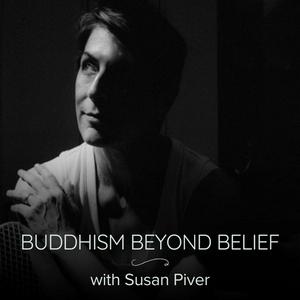
Buddhism Beyond Belief is a podcast from Susan Piver, a 30 year student of Tibetan Buddhism and founder of the Open Heart Project, an online meditation community with close to 20000 members.With Susan as a friend and guide, we will look at traditional teachings like the four noble truths and the six paramitas–but not from an academic standpoint. Rather, we will talk about how to make it all personal and relevant in everyday life. This podcast is not about Buddhist doctrine. It’s about how anyone can bring the profound wisdom of the dharma into their real life: at home, at work, and in love. The foundation for it all is meditation as a spiritual practice, not the latest life hack. Let’s go beyond the science and celebrity testimonials to discover the true power of meditation which is not based in self-improvement but in self-discovery.
Podcast websiteListen to Buddhism Beyond Belief with Susan Piver, The Dylan Gemelli Podcast and many other podcasts from around the world with the radio.net app
Get the free radio.net app
- Stations and podcasts to bookmark
- Stream via Wi-Fi or Bluetooth
- Supports Carplay & Android Auto
- Many other app features
Get the free radio.net app
- Stations and podcasts to bookmark
- Stream via Wi-Fi or Bluetooth
- Supports Carplay & Android Auto
- Many other app features

Buddhism Beyond Belief with Susan Piver
Scan code,
download the app,
start listening.
download the app,
start listening.
Buddhism Beyond Belief with Susan Piver: Podcasts in Family
 USA
USA