

Listen to this podcast in the app for free: Download for free in the App Store
radio.net
Sleep timer
Save favorites
414 episodes

Stop Doing the Work. Start Directing the AI - Solomon Thimothy
10/13/2026 | 56 mins.🤖 AI fluency is becoming a core business skill. But being AI fluent means much more than knowing how to prompt ChatGPT.
In this episode of Beginner's Guide to AI, Dietmar Fischer talks with entrepreneur and growth marketer Solomon Thimothy about the transition from using AI as a chatbot to using AI as part of the workforce.
Solomon describes how his teams use AI agents and coding tools to create software, automate workflows, prepare client work and increase capacity without simply adding more people.
One example captures the shift: a client had a design process that normally took about a week. After rebuilding the workflow around AI, multiple branded materials could be produced during a single call. According to Solomon, the client estimated that the new process saved him $18,000.
But this episode is not really about one tool.
It is about a different way of working.
Instead of employees doing every task themselves, Solomon argues that professionals increasingly need to direct AI systems that execute the work. That changes productivity, hiring, professional services, management and even the economics of running a company.
We discuss:
🤖 Why AI fluency matters beyond prompt engineering
⚙️ How AI agents change everyday knowledge work
📈 Why AI can increase capacity without immediately increasing headcount
🧠 Why employees need to learn to direct rather than simply execute
💼 What AI means for hiring and professional services
💻 How non-programmers can build working software with AI
⏱️ Why speed can be more valuable than pure cost reduction
💰 Why AI token costs are becoming a management problem
👥 Why human experience and context remain essential
The larger question is simple:
If AI can increasingly execute the work, what becomes your job?
📧💌📧
Tune in to get my thoughts and all episodes. Don't forget to subscribe to our Newsletter:
https://beginnersguideto.ai
📧💌📧
👤 About Dietmar Fischer
Dietmar Fischer is a podcaster and AI marketer from Berlin.
If you want help with AI strategy or digital marketing, visit:
https://argoberlin.com
💬 Quotes from the Episode
“We now need to drive the thing, we don't need to do the thing.”“I don't think we're going to be taken over by AI. I think we already are.”“It's your talent, your experience, your past work.”
⏱️ Chapters
00:00 Meet Solomon Thimothy
01:05 Scaling a Business With “Tokenized Labor”
07:02 How AI Changes the Agency Business Model
12:24 Building Software Without Being a Developer
18:24 Why Every Professional Needs AI Fluency
27:14 Hiring and Leading in an AI-First Company
36:09 Managing Multiple AI Agents and Models
40:31 Has AI Already Taken Over?
46:25 AI Costs, Books and Where to Find Solomon
🔗 Where to Find Solomon Thimothy
🌐 IMS: https://www.ims.net/
🌐 Personal website: https://www.thimothy.com/
💼 LinkedIn: https://www.linkedin.com/in/solomonthimothy/
🏢 OneIMS: https://www.oneims.com/
📚 Books: his upcoming "How to Have Buyers Chase You" is not yet out, you can find all the details here: https://www.thimothy.com/books
Hosted on Acast. See acast.com/privacy for more information.Jevons’ AI Paradox: Why Cheaper Models Raise Energy Demand
10/11/2026 | 22 mins.⚡ AI is getting cheaper, faster, and more efficient. So why are data centres preparing to use far more electricity?
In this episode of A Beginner’s Guide to AI, Professor GePhardT explores Jevons’ paradox and its uncomfortable lesson for artificial intelligence: using less energy per task does not guarantee that we use less energy overall.
Better chips, smaller models, efficient inference, and AI agents make AI more affordable. But lower cost also creates more demand. One AI task becomes ten. One assistant becomes an agent. One model call becomes a long automated workflow running quietly in the background.
We look at the AI rebound effect, AI energy consumption, data-centre electricity demand, sustainable AI, AI agents, and the infrastructure cost behind near-free inference. The episode also examines Google Gemini prompt efficiency alongside the larger growth in AI-focused data centres.
📧💌📧
Tune in to get my thoughts and all episodes. Don’t forget to subscribe to our Newsletter: beginnersguideto.ai
📧💌📧
👤 About Dietmar Fischer
Dietmar is a podcaster and digital marketer from Argo.berlin. If you want to get your AI or digital marketing going, contact him at argoberlin.com.
💬 Quotes from the Episode
“Each individual task may become cheaper. The total number of tasks can explode.”
“The efficient oven was not a failure. It did exactly what it was supposed to do.”
“Efficient per what? And more of how many?”
Hosted on Acast. See acast.com/privacy for more information.A Disturbing AI Story Big Tech Never Wants You to Hear, with Paul Hebert // REPOST
10/09/2026 | 53 mins.🎙️In this episode of Beginner’s Guide to AI, Dietmar Fischer sits down with Paul A. Hebert, founder of AI Recovery Collective and author of Escaping the Spiral, for a serious conversation about AI chatbot harm, hallucinations, digital dependency, and the real-world psychological risks of generative AI.
Paul shares how an intense experience with ChatGPT pushed him into a dangerous spiral, what he learned about the limits of large language models, and why AI literacy may be one of the most important skills of this decade.
🧠 This episode explores what happens when AI stops feeling like software and starts feeling personal. Dietmar and Paul talk about hallucinations, trust, chatbot addiction, AI companions, mental health risks, youth safety, and why companies building these systems cannot hide behind product language forever. The discussion is intense, but it is also practical. You will come away with a clearer sense of how to use AI more safely, what warning signs to watch for, and why regulation is quickly becoming a much bigger part of the AI conversation.
OpenAI has publicly discussed why language models hallucinate, while lawmakers in multiple U.S. jurisdictions have pushed new restrictions on AI systems acting like therapists or medical professionals.
📧💌📧
Tune in to get my thoughts and all episodes, don't forget to subscribe to our Newsletter: beginnersguide.nl
📧💌📧
👤 About Dietmar Fischer: Dietmar is a podcaster and AI marketer from Berlin. If you want to know how to get your AI or your digital marketing going, just contact him at argoberlin.com
🔥 Quotes from the Episode
“AI literacy is the most important thing anybody can work on.”
“Had OpenAI responded to that first message and said this is a hallucination and you’re physically safe, I would have been fine.”
“Never trust the thing it tells you. Even if it gives you a citation, go look.”
🕒 Chapters
00:00 Paul Hebert’s Shocking ChatGPT Experience
08:14 Why AI Hallucinations Can Spiral Into Real Fear
16:05 AI Literacy, Neurodivergence, and How He Got Out
23:32 Why AI Companies Must Be Accountable
30:02 AI Companions, Youth Safety, and Addiction Risks
38:28 Terminator, Consciousness, and Practical Rules for Safe AI Use
🔗 Where to find Paul
The AI Recovery Collective: airecoverycollective.com
Escaping the Spiral on Amazon
AI Recovery Collective Substack: airecoverycollective.substack.com/
LinkedIn: Paul A. Hebert: linkedin.com/in/paul-hebert-48a36/
🎵 Music credit: "Modern Situations" by Unicorn Heads
Hosted on Acast. See acast.com/privacy for more information.Why Your AI Content Feels Soulless - Diane Strand
10/07/2026 | 48 mins.🤖 AI and creativity do not have to be opponents. Used well, artificial intelligence can help people work faster, develop ideas, and remove repetitive tasks. But it cannot replace the human vision, judgment, and emotional connection that make creative work meaningful.
In this episode of Beginner’s Guide to AI, host Dietmar Fischer speaks with executive producer, educator, author, and creative entrepreneur Diane Strand about what generative AI means for creative professionals, entrepreneurs, marketers, and business leaders.
Diane believes that AI should remain a tool with “the human in the middle.” Like a hammer, it can make a task easier, but someone must still decide what to build and how to build it.
The conversation examines where AI adds genuine value and where automation begins to weaken the result. Diane explains why fully AI-generated content often feels generic, why businesses still need people who understand other people, and why creative professionals must retain control over their ideas.
She also shares a practical example from the development of her book cover. AI helped her turn the themes, colors, and emotional tone of her book into visual concepts. A professional designer then used those concepts to create the final cover. This reduced a process that could have taken weeks to only a few days, without replacing the designer or Diane’s creative direction.
Why This Matters
AI is changing creative work, marketing, filmmaking, and entrepreneurship. It can help small teams produce more, allow independent entrepreneurs to start with fewer resources, and move employees away from repetitive tasks.
However, faster production does not automatically create better work. If AI supplies the ideas, personality, and final judgment, the result can lose its originality and emotional value.
Diane offers a clear warning: AI may not replace creative professionals, but professionals who know how to use AI may replace those who refuse to learn it.
Key Takeaways
🎨 Why AI should support creative thinking rather than replace it
🧠 Why human judgment and iteration remain essential
⚡ How generative AI can reduce production time
📉 Why generic AI content often fails to connect
💼 What AI means for creative jobs and future hiring
🛠️ Why employees need AI fluency to remain competitive
👥 How leaders can introduce AI without creating unnecessary fear
🚀 How entrepreneurs can use AI to work with fewer resources
♿ How AI can make creative expression more accessible
🌍 Why the environmental cost of AI also deserves attention
📧💌📧
Tune in to get my thoughts and all episodes. Don't forget to subscribe to our Newsletter:
https://beginnersguideto.ai
📧💌📧
About Dietmar Fischer
Dietmar Fischer is a podcaster and AI marketer from Berlin.
If you want help with AI strategy or your digital marketing, visit:
https://argoberlin.com
Quotes from the Episode
“If you start relying on it to do your work, you're the first to be replaced.”“I don't think AI kills creativity. I think it forces us to be more creative.”“If you want a human to buy, you need to have a human initiating the marketing.”
Where to Find Diane Strand
🌐 Website: https://dianestrand.com
🔗 Official social links, including LinkedIn, Instagram, and Facebook: https://linktr.ee/diane_strand
🎬 JDS Studio: https://jdsstudio.live
🎥 JDS Video & Media Productions: https://jds-productions.com
🎭 JDS Creative Academy: https://jdscreativeacademy.org
Closing
If this conversation changed how you think about AI and creativity, share it with someone who is trying to find the right balance between automation and human judgment.
Subscribe to Beginner’s Guide to AI for more conversations about artificial intelligence, business, creativity, and the future of work. 🎧
Hosted on Acast. See acast.com/privacy for more information.Why Your Brain Needs to Go to the Gym in the Age of AI - DIETMARs OPINION
10/06/2026 | 13 mins.Dietmar Fischer explores cognitive offloading, critical thinking, and why learning must remain mentally demanding when AI can provide instant answers.
🧠 What happens when AI solves every problem before you have had time to think?
AI can make us faster and more productive. But if we use it to avoid every difficult mental task, we may also weaken the critical thinking, judgment, and problem-solving skills that make us valuable.
Inspired by the question of whether the classroom should function more like a gym, Dietmar Fischer examines why our brains need resistance, repetition, and deliberate exercise. Just as muscles become weaker without use, our intellectual abilities can suffer when we outsource too much of the thinking process.
The goal is not to compete with AI at everything. It is to recognize where AI performs better and where human abilities still matter. Creativity, empathy, strategic thinking, social intelligence, curiosity, and judgment remain essential. When we develop those abilities and use AI for the right tasks, humans and machines can become an effective team.
🎯 In this episode:
Why the classroom could become a gym for the brain
How AI can encourage cognitive offloading
Why easy answers do not always produce real learning
The difference between reaching a result and understanding it
Why intrinsic motivation matters in the age of AI
Which human skills will remain important at work
How to use AI without surrendering your ability to think
Why reading and difficult intellectual tasks still matter
AI should help us think better, not remove thinking from the process.
📧💌📧
Tune in to get my thoughts and all episodes. Don’t forget to subscribe to our newsletter: beginnersguideto.ai
📧💌📧
Quotes from the Episode
💬 “The better we train our brain, the better we can face what’s coming.”
💬 “If we use AI for the things where AI is better and we develop our abilities where we are better, then we have a good team.”
💬 “The middleman is the brain in this case. Don’t cut it out. You need it there.”
About Dietmar Fischer
Dietmar Fischer is the creator and host of Beginner’s Guide to AI and a digital marketer at Argo.berlin. If you want to get your AI project or digital marketing moving, contact him at argoberlin.com.
Chapters
00:00 Can We Still Think in the Age of AI?
02:16 The Classroom as a Gym for the Brain
04:31 Human Strengths AI Cannot Replace
06:28 The Danger of Outsourcing Problem-Solving
09:40 Learning as Lifelong Brain Training
10:30 Reading, Storytelling and the Final Challenge
Hosted on Acast. See acast.com/privacy for more information.
More Business podcasts







Trending Business podcasts

















About A Beginner's Guide to AI
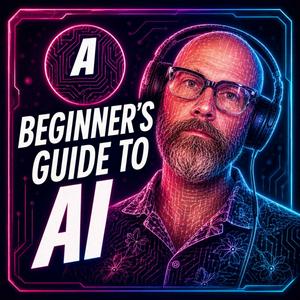
"A Beginner's Guide to AI" makes the complex world of Artificial Intelligence accessible to all. Each interview episode asks someone working with AI about what they do and how AI can help you. The explainer episodes take an important concept/idea and, yeah, explain it to you!Ideal for novices, tech enthusiasts, and the simply curious, this podcast transforms AI learning into an engaging, digestible journey. Join us and learn everything you need to know on how to use AI in the best way 🚀🎙️ About The Host, Dietmar FischerDietmar is a AI enthusiast and digital marketer from Berlin. If you want to know how to get your AI or your digital marketing going, just contact him at argoberlin.com Hosted on Acast. See acast.com/privacy for more information.
Podcast websiteListen to A Beginner's Guide to AI, The Learning Leader Show With Ryan Hawk and many other podcasts from around the world with the radio.net app
Get the free radio.net app
- Stations and podcasts to bookmark
- Stream via Wi-Fi or Bluetooth
- Supports Carplay & Android Auto
- Many other app features
Get the free radio.net app
- Stations and podcasts to bookmark
- Stream via Wi-Fi or Bluetooth
- Supports Carplay & Android Auto
- Many other app features

A Beginner's Guide to AI
Scan code,
download the app,
start listening.
download the app,
start listening.
A Beginner's Guide to AI: Podcasts in Family
 USA
USA