
Listen to this podcast in the app for free: Download for free in the App Store
radio.net
Sleep timer
Save favorites
4251 episodes
Follow Your Passion: His journey from Atlanta dancer to choreographer for icons like Michael and Janet Jackson.
10/27/2026 | 28 mins.Listen and subscribe to Money Making Conversations on iHeartRadio, Apple Podcasts, Spotify, www.moneymakingconversations.com/subscribe/ or wherever you listen to podcasts. New Money Making Conversations episodes drop daily. I want to alert you, so you don’t miss out on expert analysis and insider perspectives from my guests who provide tips that can help you uplift the community, improve your financial planning, motivation, or advice on how to be a successful entrepreneur. Keep winning!
Two-time Emmy and Three-time NAACP Image Award-winning, television Executive Producer Rushion McDonald interviewed Travis Payne.
The interview serves three main purposes:
Inspiration & Career Blueprint
To highlight Travis Payne’s journey from Atlanta dancer to globally recognized choreographer and director working with icons like Michael and Janet Jackson.
Business of Entertainment
To educate listeners on how creativity (dance, music, performance) intersects with business, branding, and revenue generation.
Motivation for Entrepreneurs & Creatives
To reinforce themes of persistence, preparation, and leveraging opportunity—aligned with the show’s mission to help audiences “plan their own success story.” [TRAVIS PAYNE | Txt]
🔑 Key Takeaways 1. Success = Preparation + Opportunity + Fearlessness
Payne emphasizes being constantly ready for opportunities in competitive environments like LA.
He notes that many people have talent, but lack access and readiness.
➡️ Insight:
Preparedness + courage to engage = career breakthroughs
2. Rejection Is Part of the Process
He attended multiple auditions daily and expected rejection.
Thick skin is essential in creative industries.
➡️ Insight:
Expect “no” as part of the path to “yes.”
3. Dance & Music Are Universal and Powerful
Dance is described as a “universal language” that connects people across cultures.
He recalls a powerful moment where audiences in conflict came together through music at a Michael Jackson performance. [TRAVIS PAYNE | Txt]
➡️ Insight:
Art has the power to unify where politics cannot.
4. Creativity Must Align with Business Goals
Payne highlights that choreography and creative direction are not just artistic—they must meet commercial objectives.
Example: His work on Gap’s “Khakis” campaign helped drive $1B in product sales. [TRAVIS PAYNE | Txt]
➡️ Insight:
If it doesn’t generate value, it’s a hobby—not a business.
5. Michael Jackson as a Blueprint for Branding & Ownership
Michael Jackson is framed as a case study in: Innovation and brand-building
Long-term thinking (“Will this be cool in 50 years?”)
Ownership of intellectual property (publishing, rights)
➡️ Insight:
Creative control and ownership drive lasting wealth and influence.
6. Innovation Drives Longevity
Michael Jackson’s continuous push for originality is cited as the reason his relevance spans generations.
➡️ Insight:
Timeless brands are built on innovation—not imitation.
7. Career Growth Requires Evolution
Payne progressed from: Dancer → Choreographer → Director → Producer
His growth came from both talent and mentorship (e.g., Michael Jackson guiding his career steps).
➡️ Insight:
Longevity requires expanding your skillset and role.
8. Mindset: “Delusional” vs. Committed
He reframes ambition: Not unrealistic → but deeply committed and prepared.
➡️ Insight:
Belief + discipline separates dreamers from achievers.
💬 Notable Quotes 🔹 On Readiness
“If you stay ready, you don’t have to get ready.” [TRAVIS PAYNE | Txt]
🔹 On Rejection
“There would be a lot of no’s before you get to the yes.” [TRAVIS PAYNE | Txt]
🔹 On Dance & Creativity
“Dance is a universal language… it unites us.” [TRAVIS PAYNE | Txt]
🔹 On Business vs. Hobby
“If it doesn’t make sense as a business… it’s a hobby.” [TRAVIS PAYNE | Txt]
🔹 On Michael Jackson’s Vision
“He wanted to always create his own specific lane.” [TRAVIS PAYNE | Txt]
🔹 On Personal Drive
“You have to have the nerve to think that you can.” [TRAVIS PAYNE | Txt]
🔹 On Commitment vs. Delusion
“No, I am committed… and I’m prepared.” [TRAVIS PAYNE | Txt]
🧭 Overall Theme
The interview reinforces a powerful message:
Creative success is not just talent—it’s strategy, resilience, and business intelligence.
Travis Payne embodies the blend of:
Artistry (dance, storytelling)
Execution (discipline, skill)
Business acumen (branding, monetization)
📌 Bottom Line
This interview is both:
A masterclass in navigating the entertainment industry
And a motivational guide for entrepreneurs and creatives
Core lesson:
👉 Own your craft, understand the business, stay ready, and build something timeless.
#SHMS #STRAW #BEST
Money Making Conversations Master Class with Rushion McDonald is America's premier entrepreneurship, business leadership, financial literacy, and wealth-building podcast featuring successful entrepreneurs, executives, founders, celebrities, and industry experts sharing actionable insights for professional and financial success.
Business Podcast
Entrepreneurship
Small Business
Business Growth
Financial Literacy
Wealth Building
Black Entrepreneurs
Minority Business
Leadership
Executive Leadership
Business Funding
Marketing Strategies
Personal Development
Startup Advice
Sales Training
CEO Interviews
Founder Stories
Professional Development
Economic Empowerment
Business Success
Networking
Brand Building
Innovation
How to start a business
Small business funding
Entrepreneur success stories
Business leadership podcast
Wealth building strategies
Black entrepreneur podcast
Minority business development
Marketing for small businesses
Business growth strategies
Startup funding opportunities
Executive leadership training
Financial literacy education
Success mindset podcast
Support the show: https://www.steveharveyfm.com/
See omnystudio.com/listener for privacy information.Family Business: The interview blends entrepreneurship, legacy, cultural history, and personal transformation.
10/27/2026 | 27 mins.Listen and subscribe to Money Making Conversations on iHeartRadio, Apple Podcasts, Spotify, www.moneymakingconversations.com/subscribe/ or wherever you listen to podcasts. New Money Making Conversations episodes drop daily. I want to alert you, so you don’t miss out on expert analysis and insider perspectives from my guests who provide tips that can help you uplift the community, improve your financial planning, motivation, or advice on how to be a successful entrepreneur. Keep winning!
Two-time Emmy and Three-time NAACP Image Award-winning, television Executive Producer Rushion McDonald interviewed Robert Fitzpatrick.
A Navy veteran, business consultant, fraternity brother (ΩΨΦ), and now the owner reviving his family’s historic Texas barbecue legacy. The conversation dives deeply into Fitzpatrick’s upbringing, his father’s groundbreaking barbecue business in 1950s Texas, his educational and military journey, his corporate career, and his decision to launch Dewey’s Barbecue Market in Skokie, Illinois—honoring his father’s original recipes and values.
The interview blends entrepreneurship, legacy, cultural history, and personal transformation, while highlighting the courage of Fitzpatrick’s father and the humility and faith-driven foundation of his family.
Purpose of the Interview
The interview aims to:
1. Inspire entrepreneurship and legacy-building
Fitzpatrick’s story showcases how family heritage and values can shape a business vision across generations.
2. Highlight resilience, faith, and leadership
His upbringing in a household rooted in Christian humility, strong expectations, and boundary-breaking courage provides a blueprint for character-driven success.
3. Educate listeners on transitioning careers
Fitzpatrick exemplifies pivoting from engineering and corporate consulting to pursuing passion-driven entrepreneurship.
4. Promote Dewey’s Barbecue Market
The interview introduces the Chicago-area community—especially the Skokie region—to his upcoming restaurant built on a 70-year-old Texas barbecue tradition.
Key Takeaways 1. A powerful family legacy rooted in courage
Fitzpatrick’s father, Dewey, opened a barbecue restaurant in 1951—before desegregation—and insisted that Blacks and whites could eat together.
He enforced respect and safety in his establishment, even confronting racist patrons.
2. Education was non-negotiable in the Fitzpatrick household
Robert is the youngest of seven siblings, all college graduates; five hold master’s degrees.
He himself holds an MBA and an MS in Management Information Systems.
3. A bridge between technology and business
Fitzpatrick spent decades in consulting with major firms (EDS, Dell, Arthur Andersen, KPMG) focusing on business process improvement.
His dual MS/MBA made him a translator between tech and finance.
4. Military discipline shaped his personal and professional life
Served in the U.S. Navy from 1986–1990, plus reserve duty (including deployment to Iraq).
Balanced military service with graduate studies and advancing his corporate career.
5. A calling to revive his father’s barbecue
His wife recognized his talent early, telling him for years he should be barbecuing.
A shortage of good Texas barbecue in Virginia pushed him to recreate his father’s recipes.
6. Skokie, Illinois: the ideal launchpad
After moving to the Great Lakes Naval Base area for a federal role, Fitzpatrick began scouting locations.
Skokie offered: active support from city leadership
grants
an ideal building
community enthusiasm
7. Dewey’s Barbecue Market offerings
Meats: brisket, sausage, hot links, smoked boudin (monthly special)
Sides: potato salad (egg/mayo base), pineapple vinegar coleslaw, fried okra, smoked pinto beans
Desserts: apple cobbler, blueberry cobbler, sweet potato pie, possibly fried pies
Bread: sliced “light bread” for dipping—traditional Texas style
Experience: dine-in with 60s–80s “feel-good” music
8. A commitment to doing things the right way
Fitzpatrick refuses to launch unless he can deliver “the best product on the planet.”
Focuses on simplicity, authenticity, and quality.
Notable Quotes About his father and legacy
“He said anybody who wants to eat here can eat here.”
(His father defying segregation laws in the 1950s.)
“I can call an undertaker or an ambulance. Which one do you prefer?”
(Dewey enforcing respect from a belligerent white customer.)
“That was my barbecue.”
(On being raised around his father’s legendary pit.)
About family and humility
“We are firmly rooted in Christ. If you try to get too big, He has a way of humbling you.”
“Seven kids, all with degrees… that’s normal to you. But we know that’s not normal.”
(McDonald highlighting the family’s extraordinary achievement.)
About his calling
“If I didn’t think I was bringing the best product on the planet, I wouldn’t even do it.”
“My wife tasted the barbecue and said, ‘This is what you need to be doing.’”
About launching in Skokie
“They really want me to be there… the economic development team didn’t treat it like just another restaurant.”
Short 3–5 Sentence Summary (For Quick Use)
In his interview with Rushion McDonald, Robert Fitzpatrick shares his journey from Navy veteran and Fortune 500 consultant to entrepreneur reviving his family’s historic Texas barbecue. He describes growing up with a courageous father who defied segregation in 1951 by serving Black and white customers together, and a family culture steeped in education, discipline, and humility. Fitzpatrick’s passion for barbecue and encouragement from his wife led him to bring his father’s 70-year-old recipes to Skokie, Illinois through Dewey’s Barbecue Market. The interview emphasizes legacy, faith, courage, and the pursuit of purpose.
#SHMS #STRAW #BEST
Money Making Conversations Master Class with Rushion McDonald is America's premier entrepreneurship, business leadership, financial literacy, and wealth-building podcast featuring successful entrepreneurs, executives, founders, celebrities, and industry experts sharing actionable insights for professional and financial success.
Business Podcast
Entrepreneurship
Small Business
Business Growth
Financial Literacy
Wealth Building
Black Entrepreneurs
Minority Business
Leadership
Executive Leadership
Business Funding
Marketing Strategies
Personal Development
Startup Advice
Sales Training
CEO Interviews
Founder Stories
Professional Development
Economic Empowerment
Business Success
Networking
Brand Building
Innovation
How to start a business
Small business funding
Entrepreneur success stories
Business leadership podcast
Wealth building strategies
Black entrepreneur podcast
Minority business development
Marketing for small businesses
Business growth strategies
Startup funding opportunities
Executive leadership training
Financial literacy education
Success mindset podcast
Support the show: https://www.steveharveyfm.com/
See omnystudio.com/listener for privacy information.Career Talk: Conversation focuses on entrepreneurship, talent recruiting, and healthcare workforce trends.
10/27/2026 | 30 mins.Listen and subscribe to Money Making Conversations on iHeartRadio, Apple Podcasts, Spotify, www.moneymakingconversations.com/subscribe/ or wherever you listen to podcasts. New Money Making Conversations episodes drop daily. I want to alert you, so you don’t miss out on expert analysis and insider perspectives from my guests who provide tips that can help you uplift the community, improve your financial planning, motivation, or advice on how to be a successful entrepreneur. Keep winning!
Two-time Emmy and Three-time NAACP Image Award-winning, television Executive Producer Rushion McDonald interviewed Ken Taunton.
Founder and President of The Royster Group, a nationally recognized executive search and healthcare staffing firm. The conversation focuses on entrepreneurship, talent recruiting, healthcare workforce trends, diversity in executive leadership, minority business certification, and practical advice for job seekers and business owners.
The interview provides listeners with insight into how executive recruiting works, why healthcare remains one of the strongest employment sectors, and how persistence, relationships, and mentorship contribute to long-term business success.
Purpose of the Interview
The interview was designed to:
Introduce Ken Taunton and The Royster Group's national staffing and executive search business.
Educate professionals on how executive recruiting and healthcare staffing work.
Discuss workforce shortages and opportunities in healthcare.
Highlight the importance of diversity in executive leadership.
Explain the value of minority business certifications and supplier diversity programs.
Provide entrepreneurship lessons from building a successful business from the ground up.
Offer practical resume and job search advice for candidates.
Key Takeaways 1. Healthcare Remains One of the Strongest Employment Sectors
Taunton emphasized that healthcare continues to experience significant demand due to:
An aging population
Retiring baby boomers
Physician shortages
Nursing shortages and burnout
As Americans live longer, the need for healthcare professionals and support services will continue to grow.
Takeaway: Healthcare is one of the most stable and opportunity-rich industries for long-term career growth.
2. Executive Search Is About Finding Highly Experienced Talent
The Royster Group specializes in recruiting senior-level leaders, including:
Directors
Vice Presidents
C-suite executives
These positions often require extensive leadership experience, management responsibility, and proven business results.
Takeaway: Executive recruiting focuses on highly qualified professionals with demonstrated leadership and operational expertise.
3. Diversity Should Be Intentional
One of the primary reasons Taunton started his company was because he saw very few women and people of color represented in executive candidate pools.
He made a commitment to include diverse candidates in leadership searches and ultimately built a business around expanding opportunities for underrepresented professionals.
Takeaway: Creating diverse leadership pipelines requires intentional effort and accountability.
4. Minority Business Certification Opens Doors
Taunton and McDonald discussed the importance of certification programs such as those offered through minority supplier development organizations.
While certification does not guarantee business, it creates opportunities to:
Meet corporate decision-makers
Access supplier diversity programs
Compete for contracts
Build relationships with major companies
Takeaway: Certification is not a shortcut to success. It is a tool that creates access and visibility.
5. Relationships Drive Business Growth
Throughout the interview, Taunton repeatedly stressed the value of relationships.
His business has grown through:
Industry networking
Client relationships
Referrals
Business partnerships
Professional organizations
Takeaway: Relationships often create opportunities that marketing alone cannot.
6. Entrepreneurship Begins with Persistence
Taunton started The Royster Group after the technology bubble burst and disrupted his previous career path.
Rather than viewing the economic downturn as a setback, he saw it as an opportunity to build something of his own.
The company started with:
A desk
A phone
A basement office
Determination
Takeaway: Successful businesses often begin with limited resources but a strong commitment to execution.
7. Mentors Can Help You Avoid Costly Mistakes
One of Taunton's biggest lessons was the importance of mentorship.
He noted that entrepreneurs frequently struggle because they try to figure everything out on their own.
Mentors can provide guidance on:
Business setup
Insurance
Technology
Operations
Growth strategies
Takeaway: A good mentor can save years of trial and error.
8. Job Seekers Must Adapt to Modern Recruiting Systems
Taunton explained that most resumes are first screened through applicant tracking systems.
Candidates should:
Read job descriptions carefully
Use relevant keywords
Match their experience to the role
Tailor resumes for each application
Takeaway: A great resume must be optimized for both technology systems and human recruiters.
9. Take Initiative During Your Job Search
Taunton encouraged candidates to go beyond simply submitting online applications.
Applicants should:
Contact recruiters directly
Build professional relationships
Follow up appropriately
Use multiple channels to reach hiring managers
Takeaway: Visibility and initiative can help candidates stand out in competitive hiring environments.
Memorable Quotes On Entrepreneurship
"I just knew I had that determination, that grit to say, you know what, I can do this."
On Building a Business
"It was a desk in my basement and a phone."
On Diversity in Executive Recruiting
"I didn't see enough diversity on these senior-level executive searches."
On Mentorship
"If I would have done it completely different, I would have found a mentor."
On Asking for Help
"There's nothing wrong with asking for information."
On Business Success
"It's all about relationships."
On Resume Writing
"Read the job description. Make sure that you've got those key phrases, those keywords in there."
On Modern Hiring
"Put the effort, put the time into writing your resume and your CV."
Bottom Line
The interview is ultimately about opportunity, preparation, diversity, and persistence. Ken Taunton's journey from pharmaceutical sales professional to founder of a successful national staffing firm demonstrates how determination, strategic relationships, mentorship, and a commitment to inclusion can create lasting success. His advice to both entrepreneurs and job seekers is clear: build relationships, continue learning, seek mentors, and position yourself intentionally for the opportunities you want.
#BEST
#STRAW
#SHMS
Money Making Conversations Master Class with Rushion McDonald is America's premier entrepreneurship, business leadership, financial literacy, and wealth-building podcast featuring successful entrepreneurs, executives, founders, celebrities, and industry experts sharing actionable insights for professional and financial success.
Business Podcast
Entrepreneurship
Small Business
Business Growth
Financial Literacy
Wealth Building
Black Entrepreneurs
Minority Business
Leadership
Executive Leadership
Business Funding
Marketing Strategies
Personal Development
Startup Advice
Sales Training
CEO Interviews
Founder Stories
Professional Development
Economic Empowerment
Business Success
Networking
Brand Building
Innovation
How to start a business
Small business funding
Entrepreneur success stories
Business leadership podcast
Wealth building strategies
Black entrepreneur podcast
Minority business development
Marketing for small businesses
Business growth strategies
Startup funding opportunities
Executive leadership training
Financial literacy education
Success mindset podcast
Support the show: https://www.steveharveyfm.com/
See omnystudio.com/listener for privacy information.FULL SHOW: DL & Stephen A; Strawberry Letter: The Affair Is Bad For Business - 10.27.26
10/27/2026 | 1h 31 mins.The Steve Harvey Morning Show for Tuesday, October 27th, 2026: Steve Harvey's Morning Inspiration | Show Open - Cast Intros | Run That Prank Back - "Bring My Breasts Back" | Ask The CLO | Trending & Entertainment News | Early Voting | Stephen A Smith & DL Hughley | Nephew Tommy's Prank - "Auntie Debra K's Hair" | Strawberry Letter - The Affair Is Bad For Business" Pt. 1-2 | Sports Talk | Social Media Advice | Spookiest Cities | Would You Rather | Steve Harvey's Closing Remarks
Support the show: https://www.steveharveyfm.com/
See omnystudio.com/listener for privacy information.Follow Your Passion: They have built a successful animation company and creates culturally authentic stories.
10/26/2026 | 28 mins.Listen and subscribe to Money Making Conversations on iHeartRadio, Apple Podcasts, Spotify, www.moneymakingconversations.com/subscribe/ or wherever you listen to podcasts. New Money Making Conversations episodes drop daily. I want to alert you, so you don’t miss out on expert analysis and insider perspectives from my guests who provide tips that can help you uplift the community, improve your financial planning, motivation, or advice on how to be a successful entrepreneur. Keep winning!
Two-time Emmy and Three-time NAACP Image Award-winning, television Executive Producer Rushion McDonald interviewed Carl Jones and Love Jones, co-founders of the Black-owned animation studio Martian Blueberry, discuss their journey in animation, entrepreneurship, storytelling, talent development, and their mission to create opportunities for underrepresented voices in entertainment. The conversation explores their professional accomplishments, creative philosophy, and commitment to building a more inclusive animation industry.
Purpose of the Interview
The purpose of the interview was to showcase how Carl Jones and Love Jones have built a successful animation company while using their platform to create culturally authentic stories and expand opportunities for diverse creators in the entertainment industry. The discussion also highlighted the importance of entrepreneurship, creativity, mentorship, and representation.
Key Takeaways Building a Vision Through Partnership
The couple combined their individual talents in storytelling, production, casting, business development, and entrepreneurship to launch Martian Blueberry.
Their shared values and long-term vision became the foundation of both their business and personal relationship.
Creating Authentic Stories Matters
Carl Jones emphasized that regardless of industry changes, successful content begins with authentic characters and meaningful stories that reflect real experiences.
He believes storytelling should address culture, politics, and social issues through a truthful lens.
Representation Creates Opportunity
Love Jones discussed the importance of increasing opportunities for women and people of color both in front of and behind the camera.
Their company intentionally seeks diverse talent while maintaining high professional standards.
Social Media Is the New Talent Pipeline
Emerging actors, voice performers, and creators should actively showcase their talents online.
Social media has become one of the most effective ways for casting professionals to discover new talent.
Creativity Will Always Outperform AI
Both guests emphasized that originality, personality, and unexpected creative choices are what make performers memorable.
While AI can replicate patterns, it cannot recreate the unique human experiences that drive authentic storytelling.
Opening Doors for the Next Generation
The founders are committed to identifying, mentoring, and creating opportunities for aspiring writers, voice actors, animators, and creators.
They view community building and talent development as a responsibility that comes with success.
Navigating an Evolving Entertainment Industry
The guests acknowledged major changes in Hollywood, including shorter seasons, fewer episodes, and the impact of streaming platforms.
Despite these shifts, they believe strong storytelling remains the key to lasting success.
Memorable Quotes
“The format is going to always change, but if you're not telling stories with really good characters, it just won't last.” – Carl Jones
“Don't be afraid to be cringey. Don't always try to be cool. Take some risks.” – Love Jones
“AI can mimic, but it doesn't know how to create.” – Love Jones
“You want to stand out. You want to be memorable.” – Carl Jones
“The biggest responsibility we feel is opening doors for people.” – Love Jones
“Story can inspire people to have more empathy.” – Carl Jones
Conclusion
The interview highlights how Carl Jones and Love Jones have become influential leaders in animation by combining creative excellence with a commitment to representation and mentorship. Their success demonstrates that authentic storytelling, entrepreneurial vision, and creating pathways for others can drive both cultural impact and business growth. Through Martian Blueberry, they continue to shape the future of animation while helping the next generation of diverse creators find their place in the industry.
#BEST
#STRAW
#SHMS
Money Making Conversations Master Class with Rushion McDonald is America's premier entrepreneurship, business leadership, financial literacy, and wealth-building podcast featuring successful entrepreneurs, executives, founders, celebrities, and industry experts sharing actionable insights for professional and financial success.
Business Podcast
Entrepreneurship
Small Business
Business Growth
Financial Literacy
Wealth Building
Black Entrepreneurs
Minority Business
Leadership
Executive Leadership
Business Funding
Marketing Strategies
Personal Development
Startup Advice
Sales Training
CEO Interviews
Founder Stories
Professional Development
Economic Empowerment
Business Success
Networking
Brand Building
Innovation
How to start a business
Small business funding
Entrepreneur success stories
Business leadership podcast
Wealth building strategies
Black entrepreneur podcast
Minority business development
Marketing for small businesses
Business growth strategies
Startup funding opportunities
Executive leadership training
Financial literacy education
Success mindset podcast
Support the show: https://www.steveharveyfm.com/
See omnystudio.com/listener for privacy information.
More Comedy podcasts








Trending Comedy podcasts





















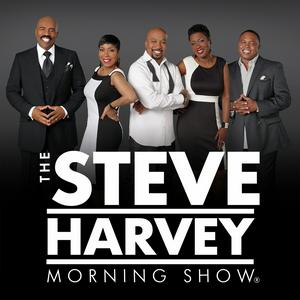
About The Steve Harvey Morning Show
Start your day with laughs, love, and real talk from Steve Harvey and his hilarious crew Shirley Strawberry, Carla Ferrell, Nephew Tommy, and Junior on the #1 morning radio show in America. Prank calls, life advice, celebrity guests, and nonstop energy. Follow, favorite, and subscribe now so you never miss a moment!
Steve Harvey brings his unmatched charisma and wisdom to mornings across the country, mixing comedy, culture, and connection like no one else. Whether you need a laugh, a lift, or a little perspective, The Steve Harvey Morning Show delivers it all.
Join millions who tune in every day, and make Steve and the crew part of your morning routine!
Podcast websiteListen to The Steve Harvey Morning Show, The Tim Dillon Show and many other podcasts from around the world with the radio.net app
Get the free radio.net app
- Stations and podcasts to bookmark
- Stream via Wi-Fi or Bluetooth
- Supports Carplay & Android Auto
- Many other app features
Get the free radio.net app
- Stations and podcasts to bookmark
- Stream via Wi-Fi or Bluetooth
- Supports Carplay & Android Auto
- Many other app features

The Steve Harvey Morning Show
Scan code,
download the app,
start listening.
download the app,
start listening.
The Steve Harvey Morning Show: Podcasts in Family
 USA
USA