Listen to this podcast in the app for free: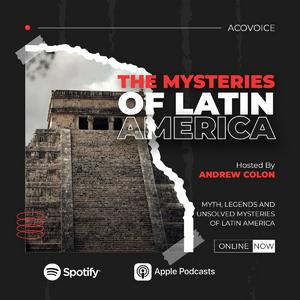 Download for free in the App Store
radio.net
Sleep timer
Save favorites
Available Episodes
5 of 88
- The Truth About Being a ‘No Sabo Kid’ (My Real Story)This episode is personal. Before I ever talked about lost cities, legends, or the history of the Americas… I was a kid who spent the Summer with my mother's family in Desamparados, Costa Rica. One afternoon in 1976, I said two words that changed how my entire family looked at me: “no sabo.” They laughed at me. They called us “los gringuitos.” And for years, I carried the shame of not speaking Spanish well enough. If you grew up in the U.S. and felt caught between languages or cultures, this story might be yours too. Being a “No Sabo kid” isn’t new, and it isn’t a joke. It’s the result of generations navigating survival, belonging, and identity on both sides of the border. In this episode, I break down: • What a “No Sabo kid” really is • The history behind language loss in Latino communities • How guilt and shame take root • How I reclaimed Spanish as an adult • Why language matters — but doesn’t define us Today I’m a bilingual voice-over artist and translator living in Mexico, telling the stories of our cultures from Mexico to Central America, South America, and the Caribbean. But it took a lifetime to get here. If you’ve ever been made to feel “not Latino enough,” I hope this helps you flip your script — and maybe start reclaiming whatever part of your identity you thought you lost. What’s your story? I genuinely want to hear it. 📲 Instagram:https://www.instagram.com/andycolonvoSHOP & SUPPORT THECHANNEL • Shirts, bags, mugs, and hats inspired by the show:https://mola-merch.creator-spring.com/ • Gear, books, and tools featured in the show:https://www.amazon.com/shop/themysteriesoflatinamericawithandrewcolonHIRE ME TO VOICE YOUR VIDEO Need a bilingual voice-over in English or Spanish for yourtraining video, documentary, or commercial? Narration, eLearning, corporate, time-synced dubbing, andmore. 🔗 Book me: https://andycancun.com Welcome to The Mysteries of LatinAmerica. I’m Andrew Colón, and I explore myths,legends, lost cities, and cultural stories from Mexico to Argentina and acrossthe Caribbean. If you’re reconnecting with your roots — or just love goodstorytelling — you’re in the right place. #NoSabo #LatinoIdentity #BilingualLatinos #LearnSpanish#Latinidad--------9:40
- Was the US Southwest REALLY MEXICO?What does it really mean when people say the American Southwest “used to be Mexico”? We're talking about Utah, Colorado, California, Arizona, New Mexico, Nevada. The real history stretches across 1,000 years — long before the word “Mexico” even existed — through the rise of the Mexica (Aztec origins), native american history presences in what would become "America", three centuries of New Spain, independence, the Texas revolt, the Mexican–American War, and the moment the border moved while families stayed exactly where they’d always been. In this episode of The Mysteries of Latin America, you’ll discover: • What the world looked like before “Mexico” was a country • How the Mexica migrated from Aztlán to Tenochtitlan • Why the northern territories were never part of the Mexica Empire • How New Spain stretched into California, Arizona, New Mexico, and Texas • How independence created the first people called “Mexicans” • Why Tejas broke away — and why Tejanos fought to defend Mexico • What really happened in the Mexican–American War • How the Treaty of Guadalupe Hidalgo redrew an entire continent • Why culture stayed even when borders didn’t And then YOU decide: Was it really Mexico… or does the deeper truth live in the layers of Indigenous, Spanish, and Mexican heritage that never left? ──────────────────────── SOURCES & REFERENCES • Durán, D. (1581). Historia de las Indias de Nueva España • Ixtlilxóchitl, F. de A. (17th c.). Relaciones Históricas • León-Portilla, M. (1959). La Visión de los Vencidos • Townsend, C. (2019). Fifth Sun — Oxford University Press • National Park Service — Indigenous Nations of the Southwest • Treaty of Guadalupe Hidalgo (1848) — U.S. National Archives • Gadsden Purchase (1853) — Library of Congress ──────────────────────── ❓ WHAT DO YOU THINK? Did these lands “used to be Mexico”? Or is the real answer hidden in the Indigenous, Spanish, and Mexican roots that never disappeared — even when the border did? Drop your thoughts — and your sources — in the comments below. ──────────────────────── ✅ SUBSCRIBE & FOLLOW YouTube https://www.youtube.com/channel/UC-mmWrV59t4X7wJClrm58kA Instagram https://www.instagram.com/andycolonvo Podcast — The Mysteries of Latin America Spotify → https://open.spotify.com/show/12rJLlkJLvPqv1Q6rSm9ll Apple → https://apple.co/4jGoTO0 ──────────────────────── 🛍️ SUPPORT THE CHANNEL MOLA Merch (shirts, hats, mugs): https://mola-merch.creator-spring.com/ Books, tools, and gear used in the show: https://www.amazon.com/shop/themysteriesoflatinamericawithandrewcolon ──────────────────────── 🎥 WATCH NEXT • Aztlán: The Original Migration Myth https://youtu.be/IpvObjsMlMU • Did The Aztecs Come From Califonia? https://youtu.be/pPWHr-jny6w • Is Utah The Original Home of the Aztecs? https://youtu.be/KUTtvebz8Vw ──────────────────────── 🎙️ NEED PROFESSIONAL VOICE-OVER? Narration in English or Spanish — documentaries, training, e-learning, character work, and time-synced dubbing. Book me directly: https://andycancun.com ──────────────────────── 🌎 ABOUT THIS CHANNEL Welcome to The Mysteries of Latin America. I’m Andrew Colón. Here we explore the myths, legends, ancient cities, and untold histories of Latin America — from northern Mexico to Argentina and across the Caribbean. If you’re reconnecting with your roots or just love learning the stories behind the places we come from… you’re in the right place.--------13:52
- Día de Muertos Is NOT Halloween! The True Story of Mexico's Sacred HolidayThis episode dives deep into the real origins of Día de Muertos (or do you call it Dia de los Muertos?), The Day Of the Dead—from the ancient Mexica (Aztec) festivals of Miccailhuitontli and Huey Miccailhuitl, to the Spanish Catholic traditions that blended with them centuries later, creating a vibrant celebration that honors the dead with love, not fear and one of the most important celebrations in Mexican culture. But isn't it just Mexican Halloween? #mexico culture You’ll discover: How Día de Muertos and Halloween evolved from completely different worlds.The true meaning behind the ofrenda (altar) — every flower, candle, and photograph has a purpose.The story of Mictēcacihuātl, the Mexica Lady of the Dead, who guided souls through Mictlán. How José Guadalupe Posada and Diego Rivera transformed a satirical drawing into La Catrina, Mexico’s timeless symbol of life and death.The fascinating history of Pan de Muerto and Sugar Skulls, from Spanish All Saints’ breads to Mexico’s artistry in sugar and spirit.And yes… how James Bond’s “Spectre” changed Día de Muertos forever. 🌎 A Journey Through Tradition From the candlelit lakes of Janitzio to the Maya Hanal Pixán of Yucatán, from the bustling Catrina Parade of Mexico City to quiet family altars in small towns — every region of Mexico celebrates differently. But each shares one truth: every life deserves to be remembered. 💬 Join the ConversationWhat’s on your ofrenda this year? Who are you honoring — a parent, a child, a friend, even a beloved pet?Share your story in the comments — it’s how these traditions stay alive. 🛍️ Support the ChannelFor Día de Muertos fans and supporters of The Mysteries of Latin America, explore the limited collection of T-shirts, hats, and bags inspired by this episode: 🛒 El Mercadito MOLA on Spring https://mola-merch.creator-spring.com/ 🎧 Want to go deeper? Discover the books and gear I use to make these videos and my voiceover work on my Amazon Store: https://www.amazon.com/shop/themysteriesoflatinamericawithandrewcolon?ref_=cm_sw_r_cp_ud_aipsfshop_N39WFB3YB9B5XW6THWY4 🎙️ Hire My Voice or CollaborateLooking for a bilingual voice for your next documentary, training video, or commercial? 🎤 Visit my site: https://www.andycancun.com/ 📧 Contact: 📧 Email: [email protected] 📱 Instagram: https://www.instagram.com/andycolonvo 🔔 Stay ConnectedIf you love stories that blend myth, history, and mystery from across Latin America, don’t forget to subscribe to the channel and tap the bell so you never miss an episode. Watch more here: https://www.youtube.com/channel/UC-mmWrV59t4X7wJClrm58k--------13:31
- Did the Aztecs Come From UTAH???Did the ancestors of the Mexica—the people we often call Aztecs—come from the red rock canyons of Utah? For years, legends have placed the Aztecs’ origin in a mythical homeland called Aztlán. But according to some researchers, Aztlán may not be mythical—or even Mexican. In this episode, I explore one of the most controversial and fascinating theories in Latin American history: Was Aztlán actually in the American Southwest? We'll look at: The Four Rivers theory near Moab, Utah The seven caves of Chicomoztoc and their real-world parallels Rock art in Sego Canyon and what some believe it shows The Uto-Aztecan language family and its northward roots What scholars like Miguel León-Portilla, Camilla Townsend, Alfredo López Austin, and Michael E. Smith say in response 🎧 With sources. With citations. With respect for the culture. And in the end—you decide. Check out the first episode on Aztlan here: Spotify: https://open.spotify.com/episode/2TS2B9D3bwXjRTEUYbxrYL?si=ak55sQZNRQat5HhX07OEUw Apple Podcasts: https://apple.co/3IauAWo 🔔 If you enjoy thoughtful storytelling about myth, migration, and identity, follow the show for new episodes every week. 🛍️ Support the project + grab gear inspired by these stories: https://www.andycancun.com/ 📲 Follow on Instagram: @andycolonvo 📩 Email: [email protected] 🎙️ YouTube channel: The Mysteries of Latin America 🛒 Amazon Storefront: https://www.amazon.com/shop/themysteriesoflatinamericawithandrewcolon #AztecOrigins #Aztlán #Mexica #UtahMysteries #LatinAmericanHistory #MOLA #IndigenousHistory #MythAndMigration Homework Sources: Campbell, L. (1997). American Indian languages: The historical linguistics of Native America. Oxford University Press. Deseret News. (1990, March 24). Researchers say Aztec homeland was in Utah. Deseret News Publishing Company. Durán, D. (1581). Historia de las Indias de Nueva España e Islas de Tierra Firme. (English version often cited in secondary sources; original Spanish text widely published in Mesoamerican studies.) Gillespie, S. D. (1998). Codex Boturini and migration traditions of the Mexica. In Carrasco, D. (Ed.), The Oxford Encyclopedia of Mesoamerican Cultures. Oxford University Press. Hill, J. H. (2001). Proto-Uto-Aztecan: A community of cultivators in central Mexico? American Anthropologist, 103(4), 913–934. Ixtlilxóchitl, F. de A. (17th century). Relaciones históricas. (Compiled in various editions; specific references vary by edition.) León-Portilla, M. (1959). La visión de los vencidos: Relaciones indígenas de la conquista. UNAM / Universidad Nacional Autónoma de México. (English edition: León-Portilla, M. (1962). The Broken Spears: The Aztec Account of the Conquest of Mexico. Beacon Press.) López Austin, A. (1980). Cuerpo humano e ideología: Las concepciones de los antiguos nahuas. UNAM / Instituto de Investigaciones Antropológicas. National Park Service. (n.d.). Archaeological resources of the southwestern United States. U.S. Department of the Interior. Rivas-Salmon, A., & Orosco, C. (1990). Aztec homeland theory and Utah. Interviewed and profiled in Deseret News (March 24, 1990). Shaul, D. (2014). The prehistory of the Uto-Aztecan languages. Anthropological Linguistics, 56(3–4), 255–302. Townsend, C. (2019). Fifth sun: A new history of the Aztecs. Oxford University Press. Utah Rock Art Research Association (URARA). (n.d.). Rock art styles of the Southwest. Retrieved from urara.wildapricot.org Whitley, D. S. (2005). Introduction to rock art research (2nd ed.). Left Coast Press.--------15:29
- WHAT ARE THE TOP 5 MYTHS OF MEXICAN INDEPENDENCE?Top 5 Myths About Mexican Independence — and the Truth Behind Them Hosted by Andrew Colón | The Mysteries of Latin America If you're Mexican-American — or just fascinated by Mexico’s history — you’ve probably heard some creative versions of how Independence really happened. Think Mexico’s Independence Day is Cinco de Mayo? Think Father Hidalgo shouted “¡Viva México!” and the next day everyone woke up free? Did Mexican Independence come after the Mexican Revolution? Think again. In this episode, we bust the top five myths about Mexican Independence — and reveal the messy, surprising, and often misunderstood truth behind each one. From important figures like Leona Vicario and Vicente Guerrero to the real timeline of independence (hint: it wasn’t overnight), this is the version of history you didn’t get in school or from your grandparents. What you’ll hear: Real words of El Grito — and why “¡Viva México!” may or may not be in there... Why Cinco de Mayo has nothing to do with independence The myth of a quick victory — and the decade-long war it actually was What the caste system tells us about who fought (and who didn’t) Mexican Independence vs The Mexican Revolution If you’ve ever been curious about what really happened on September 16, 1810 — and why it matters today — this episode is for you. History meets myth-busting. Culture meets truth. Follow the podcast for more myths, legends, and mysteries from across Latin America!--------13:43
More History podcasts
 The Rest Is HistoryHistory
 Short History Of...History
 Dan Carlin's Hardcore HistoryHistory
 RevolutionsEducation, History
 The AncientsHistory
 ThroughlineHistory, Society & Culture, Documentary
 American History TellersHistory, Kids & Family, Society & Culture, Education for Kids
 Dan Snow's History HitHistory
 History That Doesn't SuckEducation, History, Society & Culture
 American ScandalHistory, Society & Culture, Documentary
Trending History podcasts
 LegacyHistory, News, Society & Culture, News Commentary
 Edmund Fitzgerald: 50 Years BelowHistory, News
 The Gilded GentlemanArts, History, Society & Culture
 American Catholic HistoryEducation, History, Religion & Spirituality, Christianity
 SpyCastEducation, History, News
 School of WarArts, Business, History, Books
 The History PodcastHistory
 Tudors Dynasty & BeyondHistory
 Misquoting Jesus with Bart EhrmanHistory, Religion & Spirituality, Christianity
 Bad GaysHistory
 Provoked with Darryl Cooper and Scott HortonHistory
 BattlegroundHistory
 Ridiculous CrimeComedy, History, True Crime
 Emperors of RomeHistory
 This is History: A Dynasty to Die ForHistory, Society & Culture
 The Unauthorized History of the Pacific WarEducation, History, Society & Culture, Courses, Documentary
 Ask Haviv AnythingHistory
 Our Thing with Sammy The BullHistory, Society & Culture, True Crime
 Aaron Mahnke's Cabinet of CuriositiesHistory, Society & Culture
 Southern Mysteries PodcastHistory, Society & Culture, True Crime
 The History of the Twentieth CenturyHistory
 FloodlinesHistory, News, Society & Culture, Documentary, Politics
 Shield of the RepublicHistory, News
 Noble BloodHistory, Society & Culture
 This Day in HistoryEducation, History
 Ben Franklin's WorldHistory, Society & Culture
 The WallBuilders ShowHistory, News, Religion & Spirituality, Christianity, Politics
 SOGCast: Untold Stories of MAC V SOGHistory, Society & Culture, Documentary
 Vulgar History: Regency EraHistory
 Adolf Hitler: Rise and DownfallHistory, Society & Culture, Documentary
About The Mysteries of Latin America Podcast
On the Mysteries of Latin America podcast we tell stories of the myths, legends, history and mysteries set anywhere from the Northern Mexican border to the Southern tip of Argentina, and including the Caribbean Islands.
It’s so people with roots in the are know their stories and where people who don’t know the stories that have woven themselves into the cultural DNA of the region.
Hosted by Andrew Colón
Podcast websiteListen to The Mysteries of Latin America Podcast, The Rest Is History and many other podcasts from around the world with the radio.net app
Get the free radio.net app
- Stations and podcasts to bookmark
- Stream via Wi-Fi or Bluetooth
- Supports Carplay & Android Auto
- Many other app features
Get the free radio.net app
- Stations and podcasts to bookmark
- Stream via Wi-Fi or Bluetooth
- Supports Carplay & Android Auto
- Many other app features

The Mysteries of Latin America Podcast
Scan code,
download the app,
start listening.
download the app,
start listening.
 USA
USA