
Listen to this podcast in the app for free: Download for free in the App Store
radio.net
Sleep timer
Save favorites
162 episodes
Parliament under pressure: Select committees in the age of lawfare
10/16/2026 | 1h 7 mins.Are House of Commons select committees equipped to meet the new challenges facing parliamentary scrutiny? Liam Byrne, the Labour former minister leading a review of the committee system, joins us to explore whether committees have the powers, resources and support they need in the modern scrutiny environment.
Among his concerns is the increasing use of “lawfare” to force the disclosure of information provided by whistleblowers who give evidence to committees. How can Parliament protect witnesses from retaliation? And does the Commons have adequate powers to compel people to appear and obtain the documents its committees need?
With Andy Burnham promising closer ties with the EU, is it time to reinvent the European Scrutiny Committee? Could Westminster learn from New Zealand by setting aside a week for committees to examine departmental public spending? And does Parliament need a parliamentary budget office to help MPs interrogate the public finances and the cost of policy choices? It would not come cheap, Liam acknowledges, but he argues that it looks increasingly necessary.
Plus, how has the Burnham factor reshaped British politics? As MPs return to Westminster after the conference season, we explore how the shifting balance of power could play out in Parliament. The new Prime Minister has set out ambitious long-term goals. But he already has a commanding Commons majority. How might he use it?
We finish with some unsolicited advice for Ed Davey. Facing criticism that the Liberal Democrats have made too little impact since the election, how could he use his 72 MPs – the party’s largest-ever contingent – to make a bigger splash at Westminster?
____
🎓 Learn more using our resources for the issues mentioned in this episode.
❓ Send us your questions about Parliament:
✅ Subscribe to our newsletter.
📱 Follow us across social media @HansardSociety / @hansardsociety.bsky.social
£ - Support the Hansard Society and this podcast by making a donation today.
Parliament Matters is a Hansard Society production supported by the Joseph Rowntree Charitable Trust.
Presenters: Mark D’Arcy and Ruth Fox
Producer: Gareth Jones
Hosted on Acast. See acast.com/privacy for more information.This is No Way to Run a Country: A conversation with former veterans minister Johnny Mercer
10/01/2026 | 39 mins.Former veterans minister Johnny Mercer joins us to discuss his new book, No Way to Run a Country: An Outsider’s Journey into the Heart of our Broken Politics, and his struggle to change veterans’ policy from inside Westminster and Whitehall.
Mercer entered Parliament after serving in Afghanistan, determined to improve support for former service personnel. He recalls arriving with little knowledge of parliamentary politics, the unexpected impact of his maiden speech, and how he used his role on the Defence Select Committee and the media to press for change.
He takes us behind the scenes at Prime Minister’s Questions: what happens when an MP is chosen to ask a question, and why do so many use the opportunity to ask a planted question? He explains why select committees offered him a more effective way to hold people to account than exchanges in the Commons Chamber, and how party discipline and the pursuit of ministerial office can shape an MP’s choices.
Mercer also explains why he fought to establish an Office for Veterans’ Affairs outside the Ministry of Defence, and how political instability helped him win commitments from successive Prime Ministers. He is candid about the relationships he damaged, the mistakes he made, and what he learned about working with people whose priorities differed from his own.
Finally, he offers his prescription for a more effective Parliament, assesses the current government’s approach to veterans and the Northern Ireland legacy debate, and considers whether he would ever return to politics and Parliament.
🎓 Learn more using our resources for the issues mentioned in this episode.
❓ Send us your questions about Parliament:
✅ Subscribe to our newsletter.
📱 Follow us across social media @HansardSociety / @hansardsociety.bsky.social
£ - Support the Hansard Society and this podcast by making a donation today.
Parliament Matters is a Hansard Society production supported by the Joseph Rowntree Charitable Trust.
Presenters: Mark D’Arcy and Ruth Fox
Producer: Richard Townsend
Hosted on Acast. See acast.com/privacy for more information.PMQs: Parliament Matters Questions
09/17/2026 | 1h 9 mins.Recorded at Queen Mary University of London as part of Student Week, welcoming students at the start of the new academic year, this special live edition features three expert guests: historian Dr Robert Saunders; Private Members’ Bill specialist Dr Daniel Gover; and historian Dr Catherine Haddon, a senior fellow at the Institute for Government and former Queen Mary student.
The panel begins by assessing the new Burnham Government. Has the Prime Minister’s more optimistic, personable style marked a substantive break with Keir Starmer or merely improved the presentation? They consider the fiscal and geopolitical constraints facing the Government; Burnham’s management of Labour MPs; the balance of power among senior ministers and advisers; relations with the civil service; and whether experience as a metro mayor is useful preparation for Downing Street.
The students then put the questions. Should Britain cap political donations after Reform UK received unprecedented sums from two billionaires, and would retrospective legislation be justified? Is the emerging five-party system here to stay, and can Parliament’s rules properly accommodate smaller parties? Will social media displace traditional journalism, or make trusted scrutiny and fact-checking more important?
The discussion also covers whether Parliament has too many recesses; the tension between national infrastructure needs and local opposition; devolution, separatism and the future of the Union; and reform of Private Members’ Bills. Finally, the panel recommends essential reading for students of Parliament, from political diaries and Anthony Trollope to contemporary accounts by Rory Stewart and Jess Phillips.
_____
🎓 Learn more using our resources for the issues mentioned in this episode.
❓ Send us your questions about Parliament:
✅ Subscribe to our newsletter.
📱 Follow us across social media @HansardSociety / @hansardsociety.bsky.social
£ - Support the Hansard Society and this podcast by making a donation today.
Parliament Matters is a Hansard Society production supported by the Joseph Rowntree Charitable Trust.
Presenters: Mark D’Arcy and Ruth Fox
Producer: Richard Townsend
Sound mixing: Matthew Kowalczuk, Queen Mary University of London
Hosted on Acast. See acast.com/privacy for more information.MPs reject the assisted dying bill: What happened, and what next?
09/11/2026 | 53 mins.MPs have rejected the assisted dying bill – but why did a proposal they had previously supported lose this time, and what happens now?
Andrew Lewin MP, a supporter of the bill, hot-foots it from the Chamber to give us his immediate reaction. He describes the atmosphere when the result was announced, offers his explanation for the bill’s defeat and considers whether and how the campaign to change the law might continue.
Back in the studio, Hansard Society researcher Matthew England joins us to crunch the numbers. Turnout proved crucial to the final result: was the bill defeated because MPs changed their minds, or because previous supporters stayed away?
We explore why support has slowly ebbed in the Commons and examine the substantive and procedural problems that confronted the bill.
Could there now be a backlash against the House of Lords over the role Peers played in derailing the legislation? Might the Commons seek to curb the Upper House’s powers or was the Lords simply doing its job by scrutinising a deeply consequential and technically complex bill? And with this latest proposal defeated, is assisted dying now off Parliament’s agenda for the foreseeable future?
Plus, Nigel Farage told Reform UK’s conference that he would declare a “national emergency” over the small boats crisis. But would such a declaration actually give a Prime Minister any additional legislative powers? And Lee Anderson accused MPs of being lazy and suggested that, under a Reform government, Parliament would sit seven days a week to force through its legislative programme. What would that mean in practice for the management – and, more importantly, the scrutiny – of parliamentary business? Would MPs, officials and the wider parliamentary machinery be able to sustain it? And even if legislation were driven rapidly through the Commons, what would happen when it reached the House of Lords?
______
🎓 Learn more using our resources for the issues mentioned in this episode.
❓ Send us your questions about Parliament:
✅ Subscribe to our newsletter.
📱 Follow us across social media @HansardSociety / @hansardsociety.bsky.social
£ - Support the Hansard Society and this podcast by making a donation today.
Parliament Matters is a Hansard Society production supported by the Joseph Rowntree Charitable Trust.
Presenters: Mark D’Arcy and Ruth Fox
Producer: Richard Townsend
Hosted on Acast. See acast.com/privacy for more information.Andy Burnham’s rewired state: Can Parliament provide the circuit breaker?
09/03/2026 | 56 mins.Andy Burnham made his despatch box debut as Prime Minister in the House of Commons this week with one of the longest ministerial statements on record and a promise to strengthen the Prime Minister’s grip on Whitehall while transferring power and resources away from it.
We examine the new Office of the Prime Minister and Cabinet and No. 10 North. Are they instruments of genuine decentralisation or a more powerful prime-ministerial centre with a Manchester outpost? If Burnham wants Parliament to become the country’s “circuit breaker”, what powers, information and resources will MPs need to do the job?
We also ask whether “Parliament, not the courts” means clearer ministerial responsibility or executive power that is harder to challenge and what it all might mean for the future of judicial review. And will devolution without stronger scrutiny simply create powerful mayors and council leaders with weak legislative checks?
Plus: Keir Starmer leaves Parliament, Labour MPs contest three select committee chairships, and more than 6,000 written parliamentary questions land after the summer recess. At an estimated £219 each, why are a handful of MPs generating such a large bill and is it time for a recess cap?
_____
🎓 Learn more using our resources for the issues mentioned in this episode.
❓ Send us your questions about Parliament:
✅ Subscribe to our newsletter.
📱 Follow us across social media @HansardSociety / @hansardsociety.bsky.social
£ - Support the Hansard Society and this podcast by making a donation today.
Parliament Matters is a Hansard Society production supported by the Joseph Rowntree Charitable Trust.
Presenters: Mark D’Arcy and Ruth Fox
Producer: Richard Townsend
Hosted on Acast. See acast.com/privacy for more information.
More Government podcasts










Trending Government podcasts


























About Parliament Matters
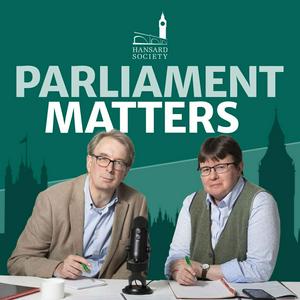
Join two of the UK's leading parliamentary experts, Mark D'Arcy and Ruth Fox, as they guide you through the often mysterious ways our politicians do business and explore the running controversies about the way Parliament works. Each week they will analyse how laws are made and ministers held accountable by the people we send to Westminster. They will be debating the topical issues of the day, looking back at key historical events and discussing the latest research on democracy and Parliament. Why? Because whether it's the taxes you pay, or the laws you've got to obey... Parliament matters!Mark D'Arcy was the BBC's parliamentary correspondent for two decades. Ruth Fox is the Director of the parliamentary think-tank the Hansard Society.❓ Submit your questions on all things Parliament to Mark and Ruth via our website here: hansardsociety.org.uk/pm#qs📱 Follow us across social media @HansardSociety and...✅ Subscribe to our newsletter for all the latest updates related to the Parliament Matters podcast and the wider work of the Hansard Society: hansardsociety.org.uk/nl.Parliament Matters is a Hansard Society production supported by the Joseph Rowntree Charitable Trust • Founding producer Luke Boga Mitchell; episode producer Richard Townsend. Hosted on Acast. See acast.com/privacy for more information.
Podcast websiteListen to Parliament Matters, The Chris Plante Show and many other podcasts from around the world with the radio.net app
Get the free radio.net app
- Stations and podcasts to bookmark
- Stream via Wi-Fi or Bluetooth
- Supports Carplay & Android Auto
- Many other app features
Get the free radio.net app
- Stations and podcasts to bookmark
- Stream via Wi-Fi or Bluetooth
- Supports Carplay & Android Auto
- Many other app features

Parliament Matters
Scan code,
download the app,
start listening.
download the app,
start listening.
 USA
USA