
Listen to this podcast in the app for free: Download for free in the App Store
radio.net
Sleep timer
Save favorites
105 episodes
How Gamers Are Organizing For Consumer Rights
10/20/2026 | 56 mins.For years, gamers and the gaming industry have been a testing ground for many of the topics we regularly discuss on Organized Money: digital licenses standing in for true ownership; unending subscriptions; dark patterns; endless consolidation; and more. Now gamers are organizing to fight corporate greed.
Today, David Dayen and Laurel Kilgore speak with Otis East, a founding member of Players Alliance HQ, and Zefrine, a Sims content creator, about the gaming industry, and their work around the $55 billion acquisition of Electronic Arts by Saudi Arabia’s Public Investment Fund and its partners, including a "raid" on EA headquarters As digital distribution gives publishers greater control over the games people buy, East and Zefrine argue that gamers need to organize to defend their rights and ensure that paying for a game still means owning it.Charting A New Course On AI Regulation (With Rep. Pramila Jayapal)
10/13/2026 | 57 mins.Over the last several weeks, AI regulation fever has swept Congress, with competing ideas coming from various corners of Congress and the AI giants. On the table are solutions ranging from formal bans on superintelligence to a self-regulatory regime similar to banks.
Today, David and Laurel sit down with Rep. Pramila Jayapal (WA-07) to discuss her approach. The National AI Charter Act Framework, which relies on an old but reliable method of regulating AI companies using corporate charters: "“The crux of this bill is simple: if you want to be an AI company in this country, you have to obtain a public charter that has a broad set of terms and conditions to operate and ensure public benefit without the harms.” With Rep. Jayapal, we get into her bill, a history of corporate charters, and what exactly we want from corporate regulations from AI to healthcare.The Bill Looking To Turn College Athletes Into Cheap Labor
10/06/2026 | 55 mins.With Matt on paternity leave, David is joined by co-host Laurel Kilgour to talk college sports!
The Protect College Sports Act is a piece of legislation which seeks to do the opposite of what it says on the tin. Instead of “saving” college sports, it seeks to roll back the recent spate of state and federal rulings that have granted college athletes more rights over their likenesses, easier mobility between teams, and pay from the schools themselves. The bill just passed the Senate easily, but is likely to face more opposition in the House of Representatives.
Today on the show, we’re joined by Organized Money alum Katie Van Dyck of the American Economic Liberties Project, to discuss the Protect College Sports Act, the recent history of pro-athlete rulings, and the ways the bigwigs who control college sports are trying to sell the bill to Congresspeople, and to the public at large.The Dark Side Of The McDonald's Monopoly Contest [Originally Aired Oct. 2025]
09/29/2026 | 56 mins.Matt is out (for happy reasons), so please enjoy this repeat from last year. It's one of our favorite episodes, and we'll be back soon!
Today on the show, Matt and David sit down with Sam Levine and Stephanie Nguyen, formerly of the FTC under Lina Khan, to discuss the dark side of customer loyalty programs like frequent flyer miles, corporate discount cards, and ordering apps from chains like Starbucks and McDonalds. Their new paper, The Loyalty Trap: How Loyalty Programs Hook Us with Deals, Hack our Brains, and Hike Our Prices, exposes the lengths these programs go to to get you into their ecosystem in order to harvest your data, exploit it, and manipulate you to spend more, sometimes with surveillance pricing strategies. Together they discuss why these programs have proliferated, why they are so effective, and why they have been so difficult to regulate.
If you love Organized Money, support us! Go to Organizedmoney.fm to subscribe to our newsletter, or Organizedmoney.fm/donate to throw us a donation. It helps us keep the lights on!What Do AI Giants Really Want?
09/22/2026 | 58 mins.Whether or not you buy into the argument that AI will kill all humanity, it’s inarguable that there’s suddenly a rush to find a regulatory framework for AI in DC with the support of the AI giants themselves. But until recently, Anthropic and OpenAI were full steam ahead—what gives? What if this is actually about something much more mundane? What are they really afraid of?
On today’s episode, we sit down with Organized Money alum David Seligman of Towards Justice, and Colorado State Representative Javier Mabrey to find out. David and Javier have been at the front lines of state-level regulation of AI, which descended into a morass of gubernatorial interference and lobbying muscle, all surrounding one very important, but also very normal issue: legal liability. We get into the history of Colorado’s AI legislation, the move to repeal and replace it, and the way big tech muscled in at the last moment to get what they wanted, which all just boiled down to not wanting to be liable for their potentially destructive products.
More Business podcasts



Trending Business podcasts
















About Organized Money
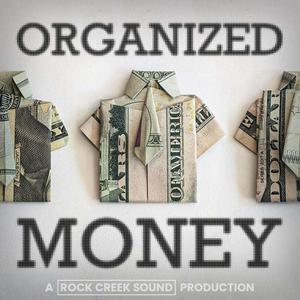
Organized Money is a podcast about how the business world really works, and how corporate consolidation and monopolies are dominating every sector of our economy. The series is hosted by writers and journalists Matt Stoller and David Dayen, both thought leaders in the antimonopoly movement. Organized Money is a fresh spin on business reporting, one that goes beyond supply and demand curves or odes to visionary entrepreneurs. Each week Matt and David break down the ways monopolies control everything from the food we eat, to the drugs we take, the way we communicate and even how we date. You’ll hear from workers, business leaders, antitrust lawyers, and policymakers who are on the front lines of the fight for open markets and fair competition.If you care about an economy that is free and open, one not controlled by a handful of corporations, Organized Money is for you. New episodes out every week until the end of the year. Organized Money is a Rock Creek Sound production, from executive producers Ari Saperstein and Ellen Weiss, and senior producer Benjamin Frisch.
Podcast websiteListen to Organized Money, The Code To Winning and many other podcasts from around the world with the radio.net app
Get the free radio.net app
- Stations and podcasts to bookmark
- Stream via Wi-Fi or Bluetooth
- Supports Carplay & Android Auto
- Many other app features
Get the free radio.net app
- Stations and podcasts to bookmark
- Stream via Wi-Fi or Bluetooth
- Supports Carplay & Android Auto
- Many other app features

Organized Money
Scan code,
download the app,
start listening.
download the app,
start listening.
 USA
USA