Listen to this podcast in the app for free: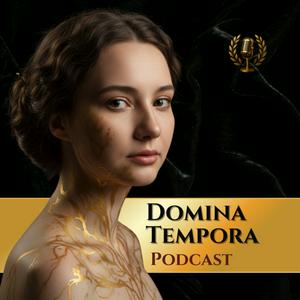 Download for free in the App Store
radio.net
Sleep timer
Save favorites
Available Episodes
5 of 240
- 2: The Women Who Held Rome by the Throat (Politely, of Course)The Sibyls were never passive cave-dwellers murmuring riddles into the dark. They were political weapons, divine mouthpieces, and dangerous women whose prophecies shaped empires. Long before Hollywood mystics and Renaissance murals softened them, the Sibyls walked into palaces, burned books in kings’ faces, defied gods, survived curses—and redirected the futures of entire civilizations.In this second voyage of the Domina Tempora Podcast, we follow the Sibyls across Greece, Rome, Libya, and the underworld itself. These women did not merely foretell history—they authored it, one prophecy at a time.🎧 In this episode:• The old woman who burned six prophetic books to teach a king fear• Apollo’s “gifts” to Cassandra, Marpessa & Deiphobe—and the violence behind them• The Sibyl in a jar: Ovid’s bleak portrait of immortality as imprisonment• How Sibylline Books steered Rome through crisis, prophecy, and politics• Why every era rewrote the Sibyls to fit its fantasies, fears, and power structures💋 If this episode unsettles—in the best way—good. Let it.✨ Explore the website: https://martinifisher.com/🖋 Become a member and receive the Monthly Members-Only Essay—myth retold with elegance, danger, and intellect.📚 Visit the shop for Domina Dossiers—bite-sized, collectible essays on myth & history.🎧 Subscribe to the YouTube channel for whispered ASMR readings of Ovid and Poe.🏛 Enrol in Greek Mythology 101: A Cultural Guide to the Gods and Myths on Udemy — a seductive, intelligent initiation into mythology as culture, identity, and power.🕯 The Sibyls didn’t ask for authority.They spoke, and the world rearranged itself.--------15:02
- 1: Sirens were Never "Sexy" (It was a Smear Campaign!)The Sirens were never “sexy.” That was a re-brand—a smear campaign against women whose voices held power. Long before Disney’s mermaids, they were winged, wise, and catastrophic: guardians of knowledge, not temptresses of flesh.In this first voyage of the all new Domina Tempora Podcast, we uncover how language, religion, and fear transformed the Siren from philosopher-musician to femme fatale—and what that says about how history punishes female intellect.🎧 In this episode:• The Odyssey’s original Sirens—what Homer really wrote• Ovid, Hyginus & Pliny on the bird-women of wisdom• How a translation changed everything• How medieval monks weaponised beauty💋 If this episode stirred something in you—feed it.✨ Explore the website: https://martinifisher.com/🖋 Become a member and receive the Monthly Members-Only Essay—myth retold with elegance, danger, and intellect.📚 Visit the shop for Domina Dossiers—bite-sized, collectible essays on myth & history.🎧 Subscribe to the YouTube channel for whispered ASMR readings of Ovid and Poe.🏛 Enrol in Greek Mythology 101: A Cultural Guide to the Gods and Myths on Udemy — a seductive, intelligent initiation into mythology as culture, identity, and power.🕯 Because the original Siren didn’t seduce with her body — she seduced with her mind.Her song wasn’t temptation; it was truth.And the truth, as always, is the most dangerous sound of all.--------14:10
- 237: The Trouble with Witches: Witches and the Boundaries of PowerFor centuries, witches have occupied a space between fear and fascination, their presence signaling both power and peril. From the three haggard figures inMacbeth to the Fates of Greek mythology, women who wield influence beyond the expected have been cast as threats to order. But why? In this episode, we examine the historical and cultural forces that turned witches into symbols of chaos, control, and rebellion. Were they truly dangerous, or did they simply exist outside the boundaries of what society deemed acceptable? Join us as we explore the tangled legacy of witches, prophecy, and the fear of women who refuse to obey.--------17:49
- 236: Sex and the Empire: Euphemia, Theodora and the Scandalous Literary Tradition of Ancient RomeIn this episode, we explore the extraordinary lives of Euphemia and Theodora, two women who rose from obscurity to become empresses of the Byzantine Empire. Their stories—filled with ambition, resilience, and reform—challenge traditional narratives of power and privilege in late antiquity. From the sensational accounts of Procopius to the lasting legacies of their reforms, we’ll uncover how their lives were shaped by, and in turn, shaped the cultural and political landscape of their time. Key Quotes: "Euphemia, born a slave and once known as Lupicina, transformed her identity to embody the piety expected of an empress." "Theodora’s reforms addressed marriage, dowry rights, and protections for women sold into slavery—legislation that echoed her own experiences." "Procopius described Theodora as 'Theodora from the Brothel,' highlighting not just his disdain for her origins, but his fear of women who wielded power." "The name Lupicina, linked to the Latin word for 'she-wolves,' connected Euphemia to both sacred Etruscan traditions and the lowest class of Roman society." "In Justinian and Theodora’s marriage, Procopius saw not just a union of two people but a symbol of societal upheaval that blurred class distinctions." Through the lens of Euphemia and Theodora’s lives, we’ll explore the tension between personal ambition and societal expectations, the power of identity and narrative, and the ways in which women shaped the empire from behind the scenes. Join me as we unravel the truths and myths surrounding these two remarkable empresses.--------20:52
- 235: Augustus' Women: Imperial Women and their Quest to become the Empress of RomeIn this episode, we explore the lives of the women who shaped and supported the reign of Emperor Augustus, the first ruler of the Roman Empire. From political alliances forged through marriage to personal sacrifices and public displays of loyalty, these women played vital roles in Augustus' ascent to power. While Livia Drusilla eventually became the first Empress of the Julian Dynasty, the stories of the other women in Augustus’ life are equally compelling. Key Quotes: "Clodia Pulchra’s marriage to Octavian was emblematic of Rome’s practice of using matrimony as a political tool." "Scribonia, Octavian’s second wife, was chosen for her aristocratic connections and political utility." "Julia, Augustus’ daughter, lived a life of contradictions—venerated as a symbol of the imperial family yet exiled for rebellion." "Livia embodied the ideal Roman matron while exercising immense behind-the-scenes political influence." "Through marriages and alliances, the women in Augustus' life helped to solidify his rule and secure his legacy." Uncover the intricate roles of Augustus’ women in consolidating power during one of history's most transformative periods. From the politically arranged marriages that strengthened alliances to the lasting influence of Livia, these women's stories reveal the human complexities behind the grandeur of Rome’s first emperor. Join us as we delve into their lives and legacies, unraveling the ways they shaped the foundation of the Roman Empire.--------25:37
More History podcasts
 ThroughlineHistory, Society & Culture, Documentary
 The AncientsHistory
 Stuff You Missed in History ClassHistory, Society & Culture
 American History TellersHistory, Kids & Family, Society & Culture, Education for Kids
 Dan Carlin's Hardcore HistoryHistory
 Short History Of...History
 LoreHistory, True Crime
 The Rest Is HistoryHistory
 American ScandalHistory, Society & Culture, Documentary
 RevolutionsEducation, History
Trending History podcasts
 LegacyHistory, News, Society & Culture, News Commentary
 Edmund Fitzgerald: 50 Years BelowHistory, News
 The Gilded GentlemanArts, History, Society & Culture
 American Catholic HistoryEducation, History, Religion & Spirituality, Christianity
 SpyCastEducation, History, News
 School of WarArts, Business, History, Books
 The History PodcastHistory
 Tudors Dynasty & BeyondHistory
 Misquoting Jesus with Bart EhrmanHistory, Religion & Spirituality, Christianity
 Bad GaysHistory
 Provoked with Darryl Cooper and Scott HortonHistory
 BattlegroundHistory
 Ridiculous CrimeComedy, History, True Crime
 Emperors of RomeHistory
 This is History: A Dynasty to Die ForHistory, Society & Culture
 The Unauthorized History of the Pacific WarEducation, History, Society & Culture, Courses, Documentary
 Ask Haviv AnythingHistory
 Our Thing with Sammy The BullHistory, Society & Culture, True Crime
 Aaron Mahnke's Cabinet of CuriositiesHistory, Society & Culture
 Southern Mysteries PodcastHistory, Society & Culture, True Crime
 The History of the Twentieth CenturyHistory
 FloodlinesHistory, News, Society & Culture, Documentary, Politics
 Shield of the RepublicHistory, News
 Noble BloodHistory, Society & Culture
 This Day in HistoryEducation, History
 Ben Franklin's WorldHistory, Society & Culture
 The WallBuilders ShowHistory, News, Religion & Spirituality, Christianity, Politics
 SOGCast: Untold Stories of MAC V SOGHistory, Society & Culture, Documentary
 Vulgar History: Regency EraHistory
 Adolf Hitler: Rise and DownfallHistory, Society & Culture, Documentary
About Domina Tempora
Domina Tempora examines the myths, symbols, and forgotten histories that shaped the ancient world. Hosted by Marianne Rosamund Fisher, each episode explores how stories of gods, women, monsters, and power were created, interpreted, and transformed. Thoughtful, atmospheric, and sharply researched—this is history told with clarity, elegance, and a touch of danger.
Podcast websiteListen to Domina Tempora, Throughline and many other podcasts from around the world with the radio.net app
Get the free radio.net app
- Stations and podcasts to bookmark
- Stream via Wi-Fi or Bluetooth
- Supports Carplay & Android Auto
- Many other app features
Get the free radio.net app
- Stations and podcasts to bookmark
- Stream via Wi-Fi or Bluetooth
- Supports Carplay & Android Auto
- Many other app features

Domina Tempora
Scan code,
download the app,
start listening.
download the app,
start listening.
 USA
USA