
Listen to this podcast in the app for free: Download for free in the App Store
radio.net
Sleep timer
Save favorites
102 episodes
Anthropic files its S-1 , AI cracks PHP, OpenAI buys Orchestra Bio
10/27/2026 | 36 mins.In this episode of Get the Check, Maya and Priya hold down the fort (RIP Anika) to cover Anthropic finally filing its S-1, AI uncovering a 14-year-old flaw in the code behind ~70% of the internet, and OpenAI acquiring Orchestra Bio.
They start with the long-awaited Anthropic S-1, filed the day of recording, with projections putting the IPO at a $1.5–2T valuation as early as the week of November 16th. The pod walks through how the filing likely saved the market from another “margin call Monday”: a 10% operating margin, compute spend down from $2 to about 55 cents per dollar of revenue, and enough cash after the IPO to have more net cash than any tech company except Berkshire Hathaway. They also point out what’s missing. 80% of revenue comes from models released in the last six months, and Q3 isn’t in the filing.
Next, the cyber segment, always Priya’s favorite. Wiz and Calif independently used AI to find PHP-to-Shell, an exploit that lets attackers take over the servers behind websites. The pod covers how responsible disclosure fell apart, from the first exploit attempt Amazon spotted on October 17th to government sites going dark.
Finally, they get into OpenAI acquiring Orchestra Bio, which builds agentic workflows that coordinate all the vendors behind getting a drug to market. The pod explains why every day a trial slips can cost a GLP-1 maker around $100M, why tech people overlook pharma (hi, Veeva), and how this fits into OpenAI’s push to deploy its own engineers inside enterprises. Would Orchestra Bio have gotten the pod’s check before the acquisition? Listen to find out why top-down selling in pharma is everything.
00:00 Anika leaves the pod (sort of)
00:24 Maya’s F1 weekend in Austin
01:40 Nicki Minaj at a Trump rally
02:22 Welcome and headlines
04:01 Breaking down Anthropic’s S-1
11:51 Cloud marketplaces, AI spend, and bubble talk
15:12 Token budgets and $6.6M revenue per employee
17:34 AI finds PHP flaws and sites go dark
23:25 Another cert disaster
26:38 OpenAI buys Orchestra Bio
29:49 Why pharma software is a goldmine
34:52 Would Orchestra Bio get our check?
If the Anthropic IPO has you wanting to call the market, you can trade on it on Kalshi. Sign up at kalshi.com/sign-up?referral=getthecheck and get $10 when you trade using our code.
Follow the pod on Instagram and X @getthecheckpod.AI market panic over CoreWeave, Bumble goes private at $1.3B, Modal’s $15B valuation
10/20/2026 | 45 mins.In this episode of Get the Check, the pod talks about everyone panicking over the market, Bumble going private for roughly a tenth of its peak valuation, and Modal hitting a $15.75B valuation. A really fun lineup, assuming you haven’t checked your portfolio…
They start with the rumored “Black Monday” that thankfully didn’t pan out, but the underlying concerns go deeper than AI companies signing contracts with each other. The pod breaks down how higher energy prices feed into inflation and Treasury yields, making future borrowing more expensive for companies like CoreWeave. Its data center buildout depends on debt, so higher financing costs eat into margins, which makes the business riskier to lend to, which can push borrowing costs even higher (not the kind of flywheel you want). CoreWeave’s CEO points to $100B+ in contracted revenue, but delivering on those commitments requires more GPUs, more data centers, and more financing. Maya, Anika, and Priya get into what hedge funds buying insurance on CoreWeave’s debt are betting on, and whether another big model drop could turn the mood around.
Next, the pod gets into Bumble’s $1.3B take-private deal by Ithaca Holdings and whether new ownership can make people excited about downloading Bumble again. The conversation covers Ithaca co-CEOs, former Meta executive John Hegeman and former Instacart COO and CFO Ravi Gupta, plus why Conviction backing this deal is an interesting departure from its usual AI bets. With paying users down 16%, the question is whether an AI concierge can fix the experience or whether the brand itself is the problem. The pod debates the advantage of an existing user base, whether ads could improve dating-app incentives, and a $10K success fee for finding love. Naturally, this comes with a few personal case studies because apparently SF has about seven single people (and two are on the podcast…).
Finally, they cover Modal going from $60M in annualized revenue to over $1B as its valuation climbed from $1B to $15.75B. The pod explains why coding agents need sandboxes, why running 20 agents on small tasks can beat giving one agent 20 tasks, and why labs don’t want to pay for idle compute between reinforcement learning runs. They also get into Modal’s cold-start optimizations and why paying only for the compute you use can make more sense than reserving GPUs around the clock. Modal gets the pod’s check, and GTC helps recruit for them if you’re interested in joining.
00:00 Maya and Priya hang out with Anika’s ex
00:57 OpenAI’s spy drama
03:39 101 episodes in and still scheming
07:27 Why everyone’s portfolio is down
09:31 CoreWeave’s debt is making everyone nervous
17:36 Anthropic’s growth, neo clouds, and the private credit boom
21:58 Bumble’s $1.3B reset
37:01 Why Modal gets our check even at $15B
If reading the CoreWeave news makes you want to track compute markets you can on Kalshi. Sign up at kalshi.com/sign-up?referral=getthecheck and get $10 when you trade using our code.
Follow the pod on Instagram and X @getthecheckpod.Inside Pie: Co-Founder Nadya Okamoto on IRL and growing an audience of 6M followers
10/13/2026 | 45 mins.Nadya Okamoto has built an audience of more than 6 million followers, founded the period care company August, and spent over a decade turning social media audiences into real communities. Now she’s co-founder and CMO of Pie, the social app bringing online communities into real life. We sat down only 30 minutes after a bird pooped on her but in typical Nadya fashion she still made the podcast and filmed the whole experience, which you can find on her socials (@nadyaokamoto).
Nadya originally joined Pie as a user. She started a run club in New York, wanted one place to manage its events and members, and became one of the app’s early power users. That eventually turned into a co-founder gig alongside Bonobos founder Andy Dunn…we wish our app addictions turned into co-founder offers!
She tells the pod about starting the role weeks before her wedding, leading her to work from her honeymoon in Switzerland (TikTok was NOT happy about this). She also learned that employees need to tell someone before leaving the country. In her defense, it’s her first time ever having a boss.
Nadya also explains why creators can bring early-stage companies both capital and distribution. She began writing $10K to $25K angel checks after raising for August. She talks about why equity, SAFEs, stock options, and advisor grants remain unnecessarily gatekept. She also shares what she’s building at Cherub to help more creators become investors.
Finally, the pod talks hustle culture and capitalism. Nadya responds to criticism over working until 1 AM, explains why ambition often overrides her anxiety, and shares how she handles feedback from millions of people. She also discusses losing 8,000 followers after a Meta partnership, whether creators can authentically use AI while criticizing the industry, and why opting out of imperfect systems rarely changes them.
00:00 Why Nadya posts every day01:34 From political organizing to content creation02:38 Building August and moving from CPG into tech04:20 Unconventional way Nadya became Pie’s co-founder05:42 Why creators should become angel investors08:20 The gatekeeping of startup equity11:38 Why the IRL economy is growing15:05 Nadya has a boss for the first time18:03 How she manages multiple companies and 6M followers20:05 Getting over the fear of posting online21:30 A bird poops on Nadya before the podcast??22:20 Compartmentalizing stress25:10 Hiring Pie’s marketing team27:15 Why influencing is viewed differently in New York and SF30:00 Using technology to fight the loneliness it helped create32:00 Pie is the matcha of social media??34:00 Capitalism, nonprofits, and changing systems from within38:05 Nadya responds to the hustle culture criticism45:25 Why TikTok hates AI46:15 Losing 8,000 followers after working with MetaInside HackerRank: Founder Vivek Ravisankar on shaping the way companies hire the top engineering talent
10/09/2026 | 32 mins.The first time Vivek ever flew internationally, he asked the flight attendant before takeoff, "This is going to San Francisco, right?" He was on his way to a 10-minute Y Combinator interview with PG, Sam, Jessica, Paul Buchheit, and Harj. His co-founder Hari couldn't come because his visa was denied. They got into YC, and started HackerRank which later became the template of how to hire engineering talent efficiently.
Vivek started the company in 2010 as Interview Street, a mock interview service. The idea came from his time interviewing engineers at Amazon, where he saw that resumes didn't say much about skill. HackerRank went on to create the online assessment which every engineer has grown to know and well, hate. Now, in what Vivek calls a "refounding moment," they're tearing it down and rebuilding it to match how the job of an engineer has changed in the era of AI.
Vivek walks through how tech interviews have always copied whoever the hottest company was. First it was Microsoft's "how many golf balls fit in a 747." Then Google's data structures and algorithms. Then Stripe's API integration rounds, which Maya had to grind through as a new grad in 2022. Now the job is orchestrating agents, so how do you tell a vibe coder from a real production engineer?
Vivek's answer is Chakra, HackerRank's agentic interviewer. Candidates work on real-world problems with whatever frontier model and harness they want, and Chakra watches the process. Vivek's take is that anyone can produce an output with AI, so the signal is in how you got there.
Chakra is now live and you can try it free at hackerrank.com/chakra.
This episode is brought to you by Kalshi. Sign up at kalshi.com/sign-up?referral=getthecheck and get $10 when you trade using our code GETTHECHECK.
Follow the pod on Instagram and X @getthecheckpod.
00:00 Meet Vivek, Founder of HackerRank
02:15 From counting Golf Balls in a 747 to LeetCode
05:55 Refounding HackerRank With Chakra
08:56 Process vs. Output and why partial credit matters
12:31 Who Adopted Online Assessments First
14:20 Why Hiring Is a Lagging Indicator
17:38 What Candidates Like About Chakra
18:20 How to Remove the Incentive to Cheat
22:44 The Three Ways People Cheat
26:59 Why Hiring Is a Hard Problem and Build-Your-Own Is Overrated
28:11 First Indian YC Company and a First International FlightInside Sentience: Founder Sam Kececi on digital twins that talk like you, not like Claude
10/06/2026 | 39 mins.One of Sam Kececi's investors never got pitched by Sam. They found a link to his Sentience, talked to his digital twin over several days, and by the end the investor asked to write a check. Sam (the real version) just had to send the SAFE.
Sam is the founder of Sentience, which builds digital twins of founders, operators, and execs that write, think, and communicate like them. Get the Check co-host Anika tried it over the last couple of weeks, and it actually writes exactly like her.
Sam’s hot take is that AI does have taste. It's just one taste, and it's Claude's. Sam's mission comes from a Naval one-liner: no one can compete with you at being you. He can't out-dunk LeBron, but nobody can out-Sam Sam at building his company.
They get into what converging on the mean has meant practically. Sam shares the YC startup idea that he’s pretty sure was just Claude slop.
Anika also asks about their moat against Anthropic (as any good podcaster or investor does). Sam explains why writing likely isn’t key to unlocking RSI. In fact, if you’re “dumb” your Sentience would be too.
They also discuss the technical evolution of agent memory and how to build a harness that remembers relevant context vs. all context. Sentience compresses older memories the way the brain does. And if you ask Sam’s Sentience to write you a poem, it should say "I'm good" instead of generating a haiku about digital twins. Anika also asks if down the line everyone will have their own model.
Sam runs his company on his product: nearly every email goes one shot through Sentience, engineering standup is just Sentiences talking to each other, and candidates chat with his twin late into the night after interviews. He also floats a future where you pay to talk to someone's twin, Cameo style.
Finally, a speed round where Anika asks about his favorite investor, what a post-AI high school should look like, and where he'd work if he weren't a founder.
Sentience is hiring across engineering and growth and you can try it here: https://sentience.com/.
This episode is brought to you by Kalshi. Sign up at kalshi.com/sign-up?referral=getthecheck and get $10 when you trade using our code GETTHECHECK.
Follow the pod on Instagram and X @getthecheckpod.
00:00 What’s the difference between a personal assistant and a digital twin
03:25 Wildest Sentience use case: it made someone invest in his company
06:54 Is taste actually a moat, or will AI catch up
08:36 The reason there are so many AI dentistry companies
12:39 Would Sam follow an AI-generated Anika on X
13:48 The answer to people who are anti-AI
14:39 Is AI replacing human relationships
17:31 Why is Anthropic bad at creative writing
18:24 Will Sentience be a dumb product if you’re dumb
20:42 Memory from a technical POV for AI assistants and digital twins
23:05 AI’s emergent behavior is anthropological
25:15 Why Sam doesn’t believe in engineering standups
26:30 How to monetize consumer AI agents
29:01 Sam’s favorite investor
30:16 Are we all going to have our own models, or will agent harnesses be durable?
33:12 Is the biggest business bottleneck compute
34:14 If you could talk to one digital twin, who would you pick?
36:00 What should a post-AI high school look like?
37:50 Where would you work if you weren’t a founder
39:37 What roles are they hiring for? DM us if you’re interested!
More Technology podcasts




Trending Technology podcasts
















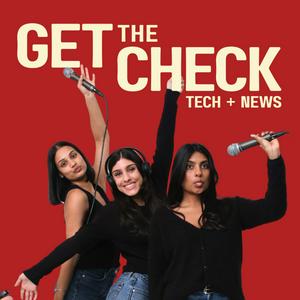
About Get the Check
Tune in on Tuesday at 6 AM ET to hear the latest tech news and listen to guests from emerging tech companies.
Podcast websiteListen to Get the Check, Building AI Boston and many other podcasts from around the world with the radio.net app
Get the free radio.net app
- Stations and podcasts to bookmark
- Stream via Wi-Fi or Bluetooth
- Supports Carplay & Android Auto
- Many other app features
Get the free radio.net app
- Stations and podcasts to bookmark
- Stream via Wi-Fi or Bluetooth
- Supports Carplay & Android Auto
- Many other app features

Get the Check
Scan code,
download the app,
start listening.
download the app,
start listening.
 USA
USA