Listen to this podcast in the app for free: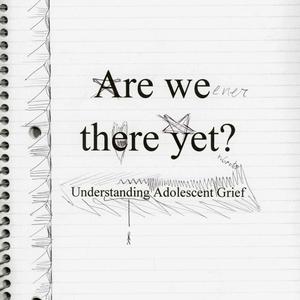 Download for free in the App Store
radio.net
Sleep timer
Save favorites
Available Episodes
5 of 65
- Ella and Tessa Fortich (ages 19 and 13)When I recorded this episode with Tessa and Ella Fortich in June, I didn't know it would be the last for a while, but it turned out to be the perfect season finale. My intention for this podcast has been to shed light on the experience of childhood and adolescent grief, and there's no better way to do that than to hear from kids and young adults themselves. Tessa and Ella Fortich set a great example by being open and honest about their feelings and what has helped them get through the last few months since their home was destroyed and Tessa's school was badly damaged. This conversation with two sisters, who are Altadena residents and grew up in the shadow of the San Gabriel Mountains that burned in the Eaton Fire in January 2025, is a powerful example of peers supporting one another through loss. I've seen this before at grief camps where kids who don't necessarily know each other very well benefit immensely from giving and receiving support. It's even more profound when siblings can do this, which is not always easy. But it was very clear from the start that Ella and Tessa have immense respect and compassion for each other. You can't see it in this audio-only interview, but they kept reaching for each other throughout the conversation, helping each other to articulate feelings and wade through their memories of January 7 and 8th. It was a great honor to interview them and to devote this mini-season to the 2025 Eaton Fire, which affected so many Altadena and Pasadena residents.Stay tuned for the next season! The theme and timing of which is yet to be determined.If you would like to support this show, please subscribe to my Substack to receive my newsletter (and eventually) the next season of the podcast in your inbox. You can also support the show monetarily by becoming a paid subscriber there.Special thanks to Josephine Wiggs for the song "Time Does Not Bring Relief" from her album "We Fall." Hosted on Acast. See acast.com/privacy for more information.--------47:41
- Michelle De Los Santos, LCSWThis highly informative episode focuses on how the trauma of fire loss, specifically the Eaton Fire, is affecting children and their parents, and how parents can help their kids manage. (I apologize for the unbalanced quality of this recording, which didn't manage to accommodate the low tones of Michelle's voice very well, and makes my voice louder.) I loved talking to Michelle because she's so knowledgeable about how to help kids manage after a traumatic experience or other stressful life events. She emphasizes the importance of parents taking care of themselves so they have the emotional stability and regulation to support their children. After a trauma, it's important to have the mental flexibility to be attuned to the different needs of different children, which can be a huge challenge when everyone is stressed. Just like when a death occurs, many parents worry about their kids without realizing that their own grief and stress are affecting the kids. And the kids will often downplay or repress their emotions because they don't want to add to their parents' stress. With compassion, Michelle emphasizes the importance of parents recognizing their own needs and taking care of themselves first, and then addressing their kids' emotional needs, while acknowledging that it's hard and no one is going to do anything perfectly under these circumstances. Michelle is also a mother of three teens, and her family lived right next to Eaton Canyon until the fires burned their neighborhood. While grateful that her home survived, Michelle's family is still displaced, so she also has firsthand experience with the trauma of the fires on her own life.If you would like to reach out to Michelle, you can find her website here: https://www.synapse-soul-therapy.com/If you would like to support this show, please subscribe to my Substack to receive bi-weekly episodes and occasionally a newsletter in your inbox. You can also support the show monetarily by becoming a paid subscriber there.Special thanks to Josephine Wiggs for the song "Time Does Not Bring Relief" from her album "We Fall." Hosted on Acast. See acast.com/privacy for more information.--------39:21
- Sitara FalconI always enjoy interviewing men because they tend to have a slightly different attitude about trauma and loss. Falcon and his family of four left their home up in the foothills of Altadena late on January 7 when the smoke was already thick and big embers were violently flying through the air. Their home didn't burn, but they could never go back because of the extensive damage and their landlord's decision to sell.Falcon is a TK/Kindergarten teacher, so he understands child development and has valuable insights to share. But on January 7th, he was in survival mode. He didn't think about the effects on his kids of leaving their home in the middle of the night, not knowing if they'd ever come back again.We talked about the gamut of losses, including our favorite hiking trails and the beauty and former vitality of the Altadena community. We all know Altadena will come back, but it will be different, and it will be a long time before people rebuild, and schools and businesses reopen. We had a great discussion about resilience and watching the students of Elliot Arts, whose school burned down, perform Shrek at the Ahmanson Theater in Los Angeles. It was an incredible experience to see the community come together to support kids who lost their school, and many of whom also lost homes.If you would like to support this show, please subscribe to my Substack to receive bi-weekly episodes and occasionally a newsletter in your inbox. You can also support the show monetarily by becoming a paid subscriber there.Special thanks to Josephine Wiggs for the song "Time Does Not Bring Relief" from her album "We Fall." Hosted on Acast. See acast.com/privacy for more information.--------44:38
- Daryl and Jessica BilandzijaIn this episode, I speak with two parents who lost their home in the Eaton Fire. Daryl and Jessica both teach in the community, so I was eager to find out how they see the kids in our area recovering from the destruction of their homes, schools, neighborhoods, and communities. They shared their unique experience of discovering their house was gone and processing the shock of seeing so many houses destroyed overnight. But they consider themselves lucky and are optimistic about what the future holds for their beloved Altadena. At the same time, they both expressed deep sadness over what has been lost and the many families for whom rebuilding may prove to be too challenging to pull off.I was especially interested to hear how Jessica and Daryl's different schools rose to the occasion and managed to support the kids and families who were directly affected by the fires. Jessica teaches in Pasadena Unified School District, and Daryl is in neighboring La Canada, an affluent district just west of Altadena. I was very happy to hear that, as teachers, they felt supported and were impressed by how well their communities and schools worked together to support everyone who needed it.We talked about the importance of working together to rebuild Altadena with special attention to community members who were residents long before it became a hot real estate market and are struggling to afford to rebuild. We mentioned a project called, "Voices From The Ground," organized by @altagether91001 (Instagram) and supported by My Tribe Rise and the NAACP Pasadena.If you would like to support this show, please subscribe to my Substack receive bi-weekly episodes, and an occasional newsletter in your inbox. You can also support the show monetarily by becoming a paid subscriber there.Special thanks to Josephine Wiggs for the song "Time Does Not Bring Relief" from her album "We Fall." Hosted on Acast. See acast.com/privacy for more information.--------48:50
- Staci MitchellStaci Mitchell has lived in Altadena all her life, but in this conversation she explains that it wasn't until the media coverage of the recent fires that she understood she and her family are at the center of the historic Black community there. Staci is a semi-retired professor of Pan-African Studies at CalState LA, as well as a playwright, yoga instructor, and all-around creative force. She talks about her and her husband's ancestors who came to Altadena during the Great Migration and how many of their extended family and their children still live in the area. So when Staci lost her home, many of her family members were also displaced. But she was quickly reminded of just how resilient her community is and how supported it has been by the larger Black community, as well as the global human community, who showed up with tangible support and action.We talked about her teenage son's reaction to the fires and how she navigated supporting him as well as herself and her whole family. I was struck by Staci's responses to the fires: The way she stayed calm as the fires raged and focused on figuring out what's next, once she understood her house was gone. Everyone responds to trauma and loss differently, but I loved Staci's immediate focus on recovery, centering, and healing.If you would like to support this show, please subscribe to my Substack to receive bi-weekly episodes and occasionally a newsletter in your inbox. You can also support the show monetarily by becoming a paid subscriber there.Special thanks to Josephine Wiggs for the song "Time Does Not Bring Relief" from her album "We Fall." Hosted on Acast. See acast.com/privacy for more information.--------50:59
More Arts podcasts
 Fresh AirArts, Society & Culture, TV & Film, Books
 The MothArts, Performing Arts
 Articles of InterestArts, Fashion & Beauty
 Bobby on the BeatArts, Society & Culture, Food
 Walk-In Talk PodcastArts, Health & Wellness, Society & Culture, Food, Mental Health, Places & Travel, Visual Arts
 ill-advised by Bill NighyArts, Comedy, Music, Books
 Zero to Well-ReadArts, Society & Culture, Books
 The Magnus ArchivesArts, Fiction, Drama, Performing Arts, Science Fiction
 The Neon TestamentArts, Performing Arts
 SpookedArts, Leisure, Society & Culture, Performing Arts
Trending Arts podcasts
 The Maria Liberati ShowArts, Food
 Gloss AngelesArts, News, Entertainment News, Fashion & Beauty
 Bourbon PursuitArts, Leisure, Food, Hobbies
 Be My Guest with Ina GartenArts, Food
 Fiction Writing Made Easy | Top Creative Writing Podcast for Fiction Writers & Writing TipsArts, Education, Fiction, Books, Tutorials
 The Von Haessler DoctrineArts, Comedy, Education, Music, News, Society & Culture, Sports, Technology, TV & Film, Daily News, Improv, Music Commentary
 How to DecorateArts, Business, Design
 Immaterial: 5,000 Years of Art, One Material at a TimeArts, Visual Arts
 BacklistedArts, Leisure, Books, Hobbies
 Old Time Radio WesternsArts, Kids & Family, Performing Arts
 Learn to Paint PodcastArts, Design, Visual Arts
 Gunsmoke | OTRWesterns.comArts, Fiction, Kids & Family, Drama, Performing Arts
 The Jimmy Dore ShowArts, Comedy, News, Performing Arts, Politics
 Meditation music. Peaceful calm music 528, 432 HzArts, Kids & Family, Music
 Throwing FitsArts, Fashion & Beauty
 A Cozy Christmas PodcastArts, Books
 THEMOVEArts, Sports
 The Next Big IdeaArts, Education, Books, Self-Improvement
 Radio Cherry BombeArts, Business, Society & Culture, Careers, Food
 Scary Stories and RainArts, Performing Arts
 Biscuits & JamArts, Music, Food, Music Interviews
 This Is TASTEArts, Food
 文化有限Arts, Fiction, TV & Film, Books, Drama, Film Reviews
 What Should I Read Next?Arts, Leisure, Books
 Business of Home PodcastArts, Business, Design, Entrepreneurship
 Fashion PeopleArts, Business, Fashion & Beauty
 History of Westeros (Game of Thrones)Arts, Books
 The Run-Through with VogueArts, Fashion & Beauty
 The AllusionistArts, Education, History
 The Newest OlympianArts, Comedy, TV & Film, Books, TV Reviews
About Are We There Yet?
Losing a parent or sibling at a young age is a life-defining event. In bi-weekly episodes, Ann Faison, an artist and grief specialist, and the author of two books that reflect on the grieving process, endeavors to better understand this rarely talked about form of trauma through interviews with adults who experienced grief as teens, parents of teens currently navigating a significant loss, and other experts. To learn more about Ann, visit https://www.helpwithgrief.me/ Hosted on Acast. See acast.com/privacy for more information.
Podcast websiteListen to Are We There Yet?, Fresh Air and many other podcasts from around the world with the radio.net app
Get the free radio.net app
- Stations and podcasts to bookmark
- Stream via Wi-Fi or Bluetooth
- Supports Carplay & Android Auto
- Many other app features
Get the free radio.net app
- Stations and podcasts to bookmark
- Stream via Wi-Fi or Bluetooth
- Supports Carplay & Android Auto
- Many other app features

Are We There Yet?
Scan code,
download the app,
start listening.
download the app,
start listening.
 USA
USA