
Listen to this podcast in the app for free: Download for free in the App Store
radio.net
Sleep timer
Save favorites
2130 episodes

Rep. Claudia Tenney on the Midterms, FBI Arrests & the Hunter Biden Laptop
10/25/2026 | 37 mins.With the 2026 midterm elections approaching, John Solomon examines the battle for control of Congress, the competing signals from political polls and prediction markets, and the possibility of election-night surprises.
Congresswoman Claudia Tenney joins the program to discuss her competitive New York House race, President Trump's recent visit to her district, and the arrests of two former FBI personnel accused of misleading Congress about the Hunter Biden laptop investigation.
Plus, veteran pollsters Scott Rasmussen and Rich Baris examine the latest election data, while Kalshi's David Piegaro explains how prediction markets work and why they've become an increasingly prominent part of political forecasting.
From congressional races to FBI accountability, Solomon brings together lawmakers, polling experts, and prediction-market perspectives to examine the issues surrounding the midterms.
See Privacy Policy at https://art19.com/privacy and California Privacy Notice at https://art19.com/privacy#do-not-sell-my-info.Fake Polls Exposed: Are Prediction Markets Changing Politics?
10/24/2026 | 34 mins.Are traditional political polls losing credibility as prediction markets reshape election expectations? John Solomon examines allegations that a polling company fabricated results to inflate support for progressive candidates and explores the growing influence of platforms like Kalshi.
Kansas Senator Roger Marshall joins the program to discuss his experience with prediction markets and the changing political landscape. President Trump's pollster, John McLaughlin, offers his perspective on polling accuracy, political forecasting, and what voters should understand about election data.
Plus, Allegiance Gold co-founder Alex Ebkarian discusses how potential changes in congressional control could affect investment portfolios, and Solomon examines a significant Fifth Circuit ruling involving immigration detention and bond hearings.
See Privacy Policy at https://art19.com/privacy and California Privacy Notice at https://art19.com/privacy#do-not-sell-my-info.FBI Agents Arrested in Hunter Biden Laptop Scandal as New Jack Smith Questions Emerge
10/24/2026 | 44 mins.Two former FBI officials have been arrested and accused of making false statements to Congress regarding the Hunter Biden laptop investigation. John Solomon examines the allegations against Nikki Flores and Bradley Benavides and what the arrests could mean for accountability within the FBI.
Former FBI official Marshall Yates joins the program to discuss the arrests and newly uncovered documents raising questions about Jack Smith's handling of privileged communications. Congressman Keith Self addresses an alleged ISIS-inspired assassination plot targeting him, while Dr. Chad Walding returns with the latest health news.
Plus, Solomon examines Politico's correction of its reporting involving White House Chief of Staff Susie Wiles.
See Privacy Policy at https://art19.com/privacy and California Privacy Notice at https://art19.com/privacy#do-not-sell-my-info.Sen. Rick Scott's Plan to Remake America
10/22/2026 | 46 mins.Senator Rick Scott joins John Solomon to discuss his ambitious vision for remaking America, including major changes to healthcare, taxes, and federal spending. As Washington faces consequential political and economic decisions, Scott lays out the priorities he believes could reshape the country's future.
Plus, John Solomon reports on newly uncovered information surrounding the Biden family's Ukraine dealings and questions about a Ukrainian witness who was prevented from testifying before Congress.
Also on today's show:
• Attorney Martin De Luca discusses the release of American Stephen Hubbard from Russian captivity, his reunion with family, and what the breakthrough could mean for future diplomacy.
• Former Senator and Ambassador Sam Brownback joins the program to discuss religious freedom and the growing challenges facing persecuted communities worldwide.
• Solomon examines election integrity developments, a Virginia political corruption case, and the latest headlines from Washington.
Don't miss this edition of John Solomon Reports for exclusive interviews, investigative reporting, and analysis of the issues shaping America's future.
Subscribe for more reporting and interviews from John Solomon and Just the News.
#JohnSolomon #RickScott #JustTheNews #WashingtonDC #TrumpAdministration
See Privacy Policy at https://art19.com/privacy and California Privacy Notice at https://art19.com/privacy#do-not-sell-my-info.Texas Senate Showdown: Beth Van Duyne on the Midterms and GOP Momentum
10/21/2026 | 43 mins.Is the political landscape shifting as Republicans fight to hold Texas and gain ground in key Senate races? Rep. Beth Van Duyne (R-TX) joins John Solomon to discuss the Texas midterms, the battle between Ken Paxton and James Talarico, and legislative solutions she's advancing in Congress.
Plus, Trafalgar Group pollster Robert Cahaly examines changing Senate race dynamics in Minnesota, Maine, Kansas, and New Hampshire. John also discusses potential breakthroughs in Russia-Ukraine peace negotiations, efforts to secure compensation for Camp Lejeune veterans, and President Trump's anticipated housing affordability proposals. Later, AMAC's Carl Holsfield explains how Americans can better navigate the complexities of Medicare.
See Privacy Policy at https://art19.com/privacy and California Privacy Notice at https://art19.com/privacy#do-not-sell-my-info.
More News podcasts


Trending News podcasts










About John Solomon Reports
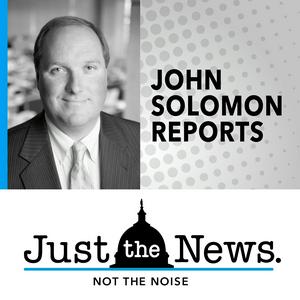
Award-winning investigative journalist John Solomon, who helped unravel the bogus Russia collusion scandal, gives you his exclusive reporting and big newsmaker interviews. To get the unvarnished truth about what’s really going on in Washington, subscribe today to John Solomon Reports. To find out more go to https://justthenews.com
Podcast websiteListen to John Solomon Reports, The Megyn Kelly Show and many other podcasts from around the world with the radio.net app
Get the free radio.net app
- Stations and podcasts to bookmark
- Stream via Wi-Fi or Bluetooth
- Supports Carplay & Android Auto
- Many other app features
Get the free radio.net app
- Stations and podcasts to bookmark
- Stream via Wi-Fi or Bluetooth
- Supports Carplay & Android Auto
- Many other app features

John Solomon Reports
Scan code,
download the app,
start listening.
download the app,
start listening.
John Solomon Reports: Podcasts in Family
 USA
USA