
Listen to this podcast in the app for free: Download for free in the App Store
radio.net
Sleep timer
Save favorites
300 episodes
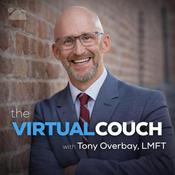
Your AI Is a Great Hype-Man - A Therapist Has a Few Notes (Plus Live QA)
10/14/2026 | 1h 31 mins.Using AI as a therapist? Your chatbot might be building a great plan for the person you’re hoping to become.
When a client’s chatbot asked if he was an extroverted go-getter, he answered as the man he’s working toward, and the AI wrote him a solid plan he couldn’t stick to. Tony explores why AI tools tend to agree with us, what that has in common with the people-pleasers in our own lives, and what you can learn from reading your side of the conversation out loud. Then he and his daughter Sydney take your questions in a late-night TikTok Live Q&A.
Episode highlights:
Understand why chatbots lean sycophantic, and what a Stanford study found when it ran 11 AI models through real interpersonal conflicts
Recognize the three layers of sycophancy in The Emperor’s New Clothes, from the swindlers to the people-pleasing ministers to the crowd
Learn the difference between self-explaining and self-examining, and how a 90% solid, 10% flexible sense of self leaves room to grow
Get answers on when it’s time to stop therapy, whether true crime affects your mental health, the anxious-avoidant loop, and why ACT calls the brain a “don’t get killed device”
Hear Tony’s five rules for interacting with someone emotionally immature or narcissistic, plus how a trauma bond can affect your memory
Tony Overbay is a licensed marriage and family therapist who has worked with more than 1,500 couples over 20+ years and builds AI tools for his own practice.
If you have a chatbot thread on your phone, try reading your side of it out loud and asking who was answering: the person who shows up every day or the person you’re working toward. Then send Tony your questions for the next Live.
Please follow Tony on Instagram @virtual.couch, on TikTok @virtualcouch, on Facebook https://www.facebook.com/tonyoverbaylmft and on Substack https://thevirtualcouch.substack.com/ You can reach out to Tony through his website tonyoverbay.com or by emailing contact @ tonyoverbay.com
Try the electrolyte drink Tony mentioned during this episode! Go to https://thegoodnutrition.com?bg_ref=7ziYAxnL8L for 15% off your entire order plus free shipping!
00:00 Welcome and Setup
00:41 Client Brings Chatbot
04:33 Why AI Feels Easy
05:12 Co-regulation Explained
07:26 Doctors and AI Pushback
08:55 Projection and Therapist Fear
09:59 When Bots Validate Too Much
12:36 Therapy Use Is Exploding
13:38 Sycophancy Defined
15:00 Emperor's New Clothes
16:29 Narcissism and System Effects
18:47 Studies on AI Agreeableness
19:51 Self-Explaining Machine
22:29 Bring Threads to Therapy
22:56 TikTok Live Begins
24:11 Therapist Using ChatGPT
26:13 Tony AI Notes Workflow
27:54 When To Stop Therapy
29:07 Crisis Sessions Versus Growth
31:02 Therapy Retainer Model
32:51 Sales Page Detour
34:57 Disagreeing With Coaches
36:31 Selling Destination Not Vehicle
38:08 The Shady Course Trap
38:25 Course Upsell Trap
38:50 Amen Clinic Brain Scans
39:46 True Crime Mental Effects
42:44 Couples Conflict and Control
45:04 Differentiation and Maturity
49:08 Hydration Sponsor Break
51:46 Therapy as Hangout Space
53:13 Healing Insecurity in Marriage
56:35 Insurance and Coaching Options
01:02:02 Codependency Awakening Stages
01:06:59 Relationship Attack Surfaces
01:08:00 Therapy Access and Sliding Scale
01:09:12 Finding the Right Therapist
01:10:27 Bald Story Break
01:11:19 ACT Versus CBT Explained
01:13:22 Why Days Feel Repetitive
01:17:31 Telehealth Licensing and Coaching
01:19:04 Trauma Bonds and CPTSD
01:23:54 Five Rules With Narcissists
01:26:32 Self-Explain Versus Self-Examine
01:28:41 Wrapping Up and Resources
01:30:03 Dog Cameo and GoodbyeWhy Good People Defend Leaders (and Others) Who Contradict Themselves: Identity, Bias & Belonging
09/24/2026 | 52 mins.Tony starts with a kid raised in an East Coast fishing town and another raised hiking Arizona trails. He uses them to show how beliefs tend to form through family, community, and identity, with the reasons showing up later. Then he brings the same lens to politics from a neutral place. He looks at how a trusted "Uncle Mike" can shape which questions feel worth asking, and why changing your mind can get psychologically expensive when your people are on the line. Along the way he makes the case that changing your mind can be a sign your mind is working.
In this episode:
Understand confabulation, the way the mind builds sincere explanations for a belief after the fact, with no dishonesty required
See how authority bias and confirmation bias work together, from what you type into a search bar to the evidence that ends up feeling convincing
Recognize when certainty is working as armor, and what emotionally mature leaders do with disagreement, uncertainty, and their own contradictions
Try a question that can get you further than "what evidence do I have?": who taught me to look at this in the first place, and what information would help me reconsider?
Practice understanding without agreement, so you can keep your convictions and still stay curious about the person across the table
Tony Overbay is a licensed marriage and family therapist with more than 20 years of experience helping individuals and couples move from defensiveness toward curiosity and connection.
Give it a listen, and maybe add one follow-up question to your week: how did I come to believe that? I'd love to hear what came up for you, so send me a message or drop it in the comments.
Please follow Tony on Instagram @virtual.couch on Tiktok @virtualcouch on Facebook https://www.facebook.com/tonyoverbaylmft and on Substack https://thevirtualcouch.substack.com/ You can reach out to Tony through his website tonyoverbay.com or by emailing contact @ tonyoverbay.com
00:00 Welcome and Setup
00:54 Fishing Town Identity
02:56 When Someone Hates Fishing
05:44 Politics as Fishing
08:14 Confabulation Explained
09:56 Authority Bias and Uncle Mike
13:42 Confirmation Bias in Search
15:20 Flip Side Conservation Lens
16:45 Hiking Permits Debate
19:48 Belonging Versus Being Right
21:58 Choosing Political Authorities
24:54 Cognitive Dissonance and Rationalizing
27:24 Identity Cost of Changing Minds
29:18 Certainty as Armor
30:12 Leader Follower Tradeoff
31:08 Questions for Leaders
32:16 Biases Hit Everyone
34:12 Confidence vs Insecurity
36:28 Uncle Mike Example
38:10 Groupthink Ecosystem
39:19 Why Followers Stay
41:34 Reconsidering Evidence
43:10 Healthy Leadership Model
45:11 Turn the Lens Inward
47:03 Understanding Without Agreement
48:49 Changing Minds Is Growth
51:20 Closing Thoughts and OutroIf You Can't Say No, Your Yes Doesn't Mean Anything: The Truth About Desire and Intimacy in Marriage
09/23/2026 | 1h 18 mins.Most couples sign an unwritten contract about sex and intimacy, and the terms rarely get said out loud.
Greg and Amy Langford, certified marriage and intimacy coaches and hosts of the “Undressing Intimacy” podcast, spent seventeen years as good partners, good friends, and good parents, but they couldn't figure out the intimacy piece. Amy's first no was hard to get to, and what came after it was the longer work, because saying no meant she then had to answer what she actually wanted, in a marriage where she had handed her sexuality over entirely and believed her job was to keep Greg happy.
Episode highlights:
Hear why Greg came to see the hiding as more damaging to the marriage than the pornography itself, and what changed when "you're an addict and always will be" stopped being the frame
Follow Amy past the no into "what do I want," "what's possible," and the work of taking up space
Steal their nightly emotion check-in: five minutes each, no responding, no fact-checking, no fixing
Try simmering, ten minutes of non-demand physical touch borrowed from Dr. Stephen Snyder
Sort your marriage into two buckets, domestic and erotic, swap high and low desire for spontaneous and responsive, and see why the tools that build one bucket can flatten the other
Tony Overbay is a licensed marriage and family therapist who has worked with well over 1,500 couples across 20-plus years, with advanced training in betrayal trauma.
Greg and Amy are coming back for a listener Q&A, so send in your questions. Their podcast is Undressing Intimacy, with new episodes Tuesday mornings, and you can find their coaching, group program, and free webinar at https://langfordlifecoaching.com/
Please follow Tony on Instagram @virtual.couch on Tiktok @virtualcouch on Facebook https://www.facebook.com/tonyoverbaylmft and on Substack https://thevirtualcouch.substack.com/ You can reach out to Tony through his website tonyoverbay.com or by emailing contact @ tonyoverbay.com
00:00 Welcome and Episode Setup
00:41 Why Talk Sex and Intimacy
05:13 Meet Greg and Amy
06:33 Their Coaching Origin Story
09:46 Amy’s Path Into Coaching
13:49 Honesty and Family Change
14:42 Porn Discovery and Shame
19:58 Unwritten Marriage Contract
22:56 Rejection and Direct Requests
24:34 From Enmeshment to Independence
29:09 Learning to Say No
40:23 Choosing Yourself Creates Desire
41:40 Emotional Regulation Basics
43:39 Nightly Emotion Check-In
45:17 Morning Simmering Ritual
48:45 Two Buckets of Marriage
50:26 Wrong Tools Kill Desire
53:23 Spontaneous vs Responsive Desire
55:35 Safety Without Timeframes
01:01:12 Anxious Avoidant Work
01:04:23 Greg's Validation Journey
01:11:30 Beliefs That Changed
01:15:52 Where to Find ThemStuck in the Messy Middle: Grief, Divorce, and Emotional Immaturity - Live Q&A with Tony Overbay
09/10/2026 | 1h 17 mins.Was it narcissistic abuse, or were you the problem? Why does the fog lift after a divorce, and you still can't trust your own judgment?
In this second live therapist Q&A, moderated by Tony's daughter Sydney, almost every question came from someone in the middle of something: a divorce after ten years of marriage, an only child clearing out her late mom's house, a man texting a grieving partner and hearing nothing back, a listener whose therapist of eight years had died. Tony opens with why the brain, a prediction engine that wants certainty now, grabs the nearest story and runs with it. Then he catches himself doing exactly that on air, and leaves it in.
In this episode you'll:
Reframe "am I the narcissist?" into a question that can get you further: what happened to you in the relationship, and who were you becoming inside it
Recognize "making the right mouth sounds," where "You're right, I'm the problem" brings relief for both people, and the effort for change never arrives
Use the four pillars of a connected conversation when every issue you raise gets turned back on you
Notice the pathologically kind pattern of absorbing blame that was never yours to carry
Stay in grief, estrangement, and overthinking without a formula, with a nod to Dr. Joshua Coleman's Rules of Estrangement and a passage from Alex Michaelides' The Fury on the child still waiting inside the adult
Tony Overbay is a licensed marriage and family therapist with more than 20 years of experience helping individuals and couples untangle emotional immaturity, high-conflict dynamics, and the stories the brain tells in the meantime.
If you have a question you didn't get to ask, send it to contact@tonyoverbay.com or through tonyoverbay.com, and there's a good chance Tony opens the next live with it. He also mentions scholarship spots for his revamped Magnetic Marriage course for anyone who was on the live.
Please follow Tony on Instagram @virtual.couch on Tiktok @virtualcouch on Facebook https://www.facebook.com/tonyoverbaylmft and on Substack https://thevirtualcouch.substack.com/ You can reach out to Tony through his website tonyoverbay.com or by emailing contact @ tonyoverbay.com
00:00 Welcome and Where to Follow
00:48 Mindfully Sick Storytime
03:25 The Messy Middle Theme
05:48 Brain as Prediction Engine
06:21 Jumping to Conclusions Live
09:03 Emotional Maturity and Safety
11:26 Discomfort and Relationship Dynamics
13:57 Live Q&A Begins
14:37 Divorce and Narcissism Question
19:39 Losing Yourself in Marriage
21:38 Journaling and Memory Doubt
23:47 Grief and Cleaning Out House
30:16 Self-Harm and Finding Help
32:15 Always the Problem Partner
34:16 Four Pillars Conversation Tool
37:11 Threats and Boundaries
39:14 Betrayal and Blame Shifting
41:21 Silent Since July Confusion
44:04 Supporting Grief Withdrawals
45:03 Grief Stages Mythbusting
47:15 Interdependence and Reaching Out
49:41 Boundaries and Respect
50:03 Breaking Things Abuse Cycle
51:18 Overthinking and Rumination
52:30 Accountability Versus Change
54:30 Leaving on Your Timeline
57:04 Estrangement and Parent Ego
01:00:46 Validation and Differentiation
01:07:24 Inner Child and IFS
01:13:47 Therapist Loss and Closure
01:16:10 Final Thanks and Next LiveThe Relationship Episode Everyone Needs to Hear: Why We Explain Instead of Understand
09/04/2026 | 1h 15 mins.When someone you love tells you, “Something you did hurt me,” what happens inside of you next? Do you become curious about what it was like to be on the receiving end of you, or does your brain immediately start building the case for why you did what you did, what you meant, what they misunderstood, and what they did first?
That difference may quietly shape almost everything that happens in a relationship.
In what may be one of the most important episodes of The Virtual Couch for anyone who is in a relationship, has been in one, or hopes to be in one someday, Tony explores the difference between self-explanation and self-examination—and why two people can genuinely love each other, both believe they are “working on themselves,” and still have completely different ideas about what that work actually means.
Drawing from more than two decades of couples therapy, Tony looks at what happens when one person is trying to understand while the other person’s nervous system is trying to make discomfort disappear. He explores defensiveness, emotional awareness, overthinking disguised as accountability, internal validation, boundaries, differentiation, people-pleasing, and the uncomfortable reality that sometimes we become so familiar with our story about our partner that we stop being curious about the actual person standing in front of us.
And then the conversation moves into one of the most vulnerable places this dynamic can appear: sex and intimacy. Tony walks through how two well-intentioned people can gradually create patterns of expectation, pressure, duty sex, resentment, withdrawal, and loneliness without either person fully understanding how they got there—and what can happen when both people finally become willing to look at the relationship with new eyes.
This episode isn’t about deciding who is the problem. It’s about learning how to remain yourself in the presence of someone else’s experience. How to hear something you don’t like without immediately defending against it. How to distinguish discomfort from danger. How to stop searching for the perfect explanation that will make everything okay and begin asking a much more useful question:
“What can I learn here?”
Because intimacy requires more than knowing someone’s history. It requires remaining curious enough to keep discovering who they are today.
Catch the moment your brain files its defense brief, usually before the other person has finished their sentence
Tell the difference between self-reflection that finishes and hands you something, and self-reflection that keeps combing the woods for evidence nobody asked you to find
Sit with the honest origin story of duty sex and pity sex in long marriages, and how two people build something painful out of materials neither of them was handed
Walk through the four pillars of a connected conversation, starting with the pre-pillar of separating observation from judgment
Try the week-long assignment: one genuinely curious question before the context, the explanation, or the correction
Twenty years and more than 1,500 couples in, Tony has noticed that the tools get far more useful once somebody can say, "I may not really know what this is that I'm doing."
A heads-up that the middle stretch talks openly about sex, intimacy, and coercion, so you may want to choose your listening company. Notice which person you identify with as you listen — and reach out through the website, and Tony will send you the PDF summary of everything covered here.
Please follow Tony on Instagram @virtual.couch on Tiktok @virtualcouch on Facebook https://www.facebook.com/tonyoverbaylmft and on Substack https://thevirtualcouch.substack.com/ You can reach out to Tony through his website tonyoverbay.com or by emailing contact @ tonyoverbay.com
More Education podcasts





Trending Education podcasts






















About The Virtual Couch
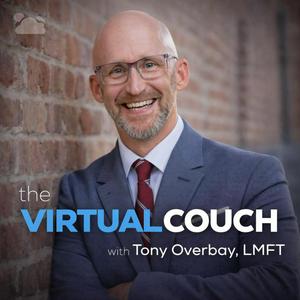
The Virtual Couch is a mental health podcast hosted by Tony Overbay, a licensed marriage and family therapist with more than two decades of experience who works with individuals and couples. Through relatable stories, practical psychology, and evidence-based tools, Tony helps listeners better understand relationships, parenting, addiction, emotional maturity, and personal growth, while also supporting those navigating faith crises and deconstruction from high-demand religions. The podcast offers clear strategies to break unhealthy patterns, improve communication, and build a more grounded sense of self while approaching life’s challenges with insight, clarity, and humor.
Podcast websiteListen to The Virtual Couch, How to Be a Better Human and many other podcasts from around the world with the radio.net app
Get the free radio.net app
- Stations and podcasts to bookmark
- Stream via Wi-Fi or Bluetooth
- Supports Carplay & Android Auto
- Many other app features
Get the free radio.net app
- Stations and podcasts to bookmark
- Stream via Wi-Fi or Bluetooth
- Supports Carplay & Android Auto
- Many other app features

The Virtual Couch
Scan code,
download the app,
start listening.
download the app,
start listening.
The Virtual Couch: Podcasts in Family
 USA
USA