
Listen to this podcast in the app for free: Download for free in the App Store
radio.net
Sleep timer
Save favorites
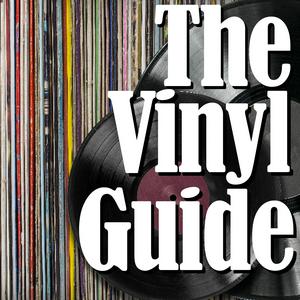
The Vinyl Guide - Artist Interviews for Record Collectors and Music Nerds
The Vinyl Guide
Latest episode
585 episodes
Ep569: Circle Jerks' Revenge of Nervous Breakdown with Joey Castillo
10/20/2026 | 56 mins.Circle Jerks drummer Joey Castillo reveals the story behind the new "Revenge of Nervous Breakdown" record, the importance of Raymond Pettibon cover art and what's next for the Keith Morris-fronted juggernaut.
Preorder Circle Jerks "Revenge of Nervous Breakdown" single here - or here in the UK
Topics Include:
Joey returns from tour and adjusts to life back home.
Tour life, family logistics, and dogs that act up when he's away.
How a Circle Jerks Black Flag single came together.
Fans kept asking for Black Flag songs; Keith said no pressure.
Road-testing Depression, Revenge and Nervous Breakdown at European festivals.
Why Joey calls Keith Morris the blueprint for every Black Flag singer.
Everything Went Black versions became Joey's template for the songs.
The first Black Flag EP and Keith's staccato vocal delivery.
Recording live, in set order, at Tim Armstrong's studio.
Keith rejects the first take: "That doesn't sound like us."
Pillow out of the kick drum; the second take nails it.
The closing block where these songs send crowds bananas.
Other contenders discussed: Gimme Gimme Gimme and Louie Louie.
Discovering Nervous Breakdown via older friends and Rodney on the ROQ.
Growing up in Gardena, where skating and punk went hand in hand.
South Bay bands like Redd Kross, Descendents and Nip Drivers.
A neighbour's red sparkle kit and an instant connection.
Self-taught by playing along to records, no formal lessons.
A friend's tip lands him the Wasted Youth gig as a teen.
Fixing bad habits, practice pads, and Neil Peart's mid-career reinvention.
Learning by watching Lucky Lehrer, Chuck Biscuits, Bill Stevenson and Spit Stix.
Replacing Chuck Biscuits and Dave Grohl: respect what's already there.
Why Chuck Biscuits remains his favourite drummer to watch.
Still feeling like a kid behind the kit at 60.
Dream gigs: Bon Scott-era AC/DC, Iggy Pop, and Cheap Trick.
A short reunion stretches into 2027, plus the Repo Man shows.
Keith's legendary stage raps, curfews, and when the band nudges him.
Six or so new songs demoed; only killer tracks will see release.
Raymond Pettibon's cover art and his lifelong bond with Keith.
What's next: Doom Regulator, a Bronx Halloween show, maybe Australia.
High resolution version of this podcast is available at: www.Patreon.com/VinylGuide
Apple: https://tinyurl.com/tvg-ios
Spotify: https://tinyurl.com/tvg-spot
Amazon Music: https://tinyurl.com/tvg-amazon
Support the show at Patreon.com/VinylGuideEp568: Mark Arm - Mudhoney, The Saints 73-78
10/15/2026 | 46 mins.Ahead of Mudhoney's Australian tour, Mark Arm talks vinyl rarities, bootlegs, Australian imports that blew Seattle's mind, and the daunting task of singing Chris Bailey's songs in The Saints 73–78.
Mudhoney's Aussie Tour Info & Tix here | The Saints 73-78 Aussie Tour Info here
Topics Include:
Mark Arm preps for Mudhoney's Australian tour, then the Saints.
He's worked at Sub Pop's warehouse for 21 years.
Not a collector anymore; he's cleaning out via Discogs.
Bandcamp lets fans try before buying; vinyl prices feel abhorrent.
The rarest "Touch Me I'm Sick"? The plain black radio copies.
Sub Pop's colored "Loser Edition" first runs get band input.
Holding Mr. Epp's first seven-inch felt unbelievable at age 20.
A cheeky flyering campaign caught the eye of Seattle's Pravda label.
Rodney on the ROQ played them, briefly charting above Toni Basil.
Music wasn't a career, just entertaining bored suburban friends.
Rock records were banned at home; his mother loved classical.
He smuggled forbidden seven-inches home under his coat.
Radio staples like "Radar Love" gave way to Cosmo's Factory.
Devo on Saturday Night Live was a Beatles-on-Ed-Sullivan moment.
He thought bands needed virtuosos, until friends started making noise.
Downtown punks, he realised, came from the same suburbs.
Steve Albini tipped him off to the Saints' Prehistoric Sounds.
A surf chat in Torquay sparked Saints 73–78.
Nailing Chris Bailey's phrasing and facing Saints purists felt daunting.
New Saints material? Ed has old songs; Mark's open.
Tom Hazelmyer ran Amphetamine Reptile from a Marine barracks footlocker.
His holy grail: Randy Holden's Population II, found in Vienna.
Records as time machines: even bad Jefferson Starship lyrics stick.
Doo-wop's market vanished, Stones records stall, yet Rumours keeps repressing.
His wife's first Stones album? Black and Blue, a stubbed-toe start.
Early Mudhoney bootlegs, possibly Long Gone John's, felt like a badge.
Deep Six codified Seattle's heavier punk underground.
Gambles on Australian imports like the Scientists and Feedtime paid off.
1990: bunking above the Lansdowne, and an empty second Auckland night.
Now: East Coast dates, Raglan surfing, and Saints shows with Jim White.
High resolution version of this podcast is available at: www.Patreon.com/VinylGuide
Apple: https://tinyurl.com/tvg-ios
Spotify: https://tinyurl.com/tvg-spot
Amazon Music: https://tinyurl.com/tvg-amazon
Support the show at Patreon.com/VinylGuideEp567: Beastie Boys' Licensed to Ill at 40 with Ben Merlis
10/12/2026 | 1h 36 mins.Author Ben Merlis traces the Beastie Boys' wild leap from young hardcore punks to rap's first number-one album, revealing the rare records, recordings and scrapped ideas behind Licensed to Ill.
Pick up "Licensed To Ill at 40" book here
Topics Include:
How a short 2017 article landed Ben Merlis this book deal
Why the Beasties' punk-to-rap story fits Ben's two obsessions perfectly
The process of writing the book
Pollywog Stew: an unknown pressing run
How a Black Flag show sparked the Beastie Boys' hardcore beginnings
The Upper Broadway loft where they formed, demoed and played first
Lucky, well-connected teens, and why young genres are meritocracies
Scrapping an EP, crank-calling Carvel, and stumbling into Cookie Puss
Downtown dance-punk, and sets that switched from hardcore to rapping
Def Jam's surprising origins as Rick Rubin's punk label
Meeting Rubin over a bubble machine; Kate Schellenbach gets pushed out
Rubin, Dr. Dre, Hurricane: were the Beastie Boys' DJs really members?
Rock Hard & Beastie Groove
Def Jam's collectible burgundy-sleeve era, and how to spot them
British Airways steals Beastie Revolution and pays out $40,000
The settlement money buys an 808 instead of a Rickenbacker
No band cooperation, then a surprise interview with Mike D
The grief behind the jokes: losing parents young
Counting the White Castle references on License to Ill
Opening for Madonna at $500 a night with fifteen minutes' material
Recording Licensed to Ill, and pinning down its real release date
Fight for Your Right: written last-minute on Palladium cocktail napkins
MTV, race and radio: how they scored rap's first number one
The album's shockingly offensive working title, and why CBS killed it
The crashing-plane cover, Led Zeppelin worship and uncleared samples
A runaway tour, alienated fans and a messy split from Def Jam
Rubin blocks their movie, royalties stop, and lawsuits follow
Legacy: everything dope and whack about the 80s in one album
Rare pressings: tour show vinyl, blank Spanish LP, "Licensed to Kill"
French seven-inch box sets, Peruvian covers and a Japanese laserdisc
High resolution version of this podcast is available at: www.Patreon.com/VinylGuide
Apple: https://tinyurl.com/tvg-ios
Spotify: https://tinyurl.com/tvg-spot
Amazon Music: https://tinyurl.com/tvg-amazon
Support the show at Patreon.com/VinylGuideEp566: Chad Channing - Love Buzz, Bleach & Early Nirvana
09/28/2026 | 1h 9 mins.Original Nirvana drummer Chad Channing shares stories from the Bleach era, Love Buzz single & other collectables, getting knocked out by Chris's bass and digging through his rare vinyl.
Topics Include:
Chad's prized find: an original Australian Dirty Deeds from a rummage sale
Hunting a Bill Evans record, and why jazz demands clean vinyl
Dad played LA jazz bass; Mom once sang with Chet Baker
How jazz quietly shaped his "drummer for the song" philosophy
Describing his drumming style in one word: adaptive
Nirvana's only instruction when he joined: powerful but simple
Coming from a math rock band with 13-part songs
The one time Kurt openly praised his drumming: In Bloom
How "About a Girl" got its name from Chad
Kurt finishing Bleach lyrics in a notebook while driving to the studio
Shelved songs, lost tapes, and Chad's forgotten cassette in the box set
Owning Love Buzz single #3; Kurt had #1, Chris #2
His blank-label Bleach test pressing, housed in a homemade cover
Nate authenticates Chad's Australian Waterfront blue vinyl live on air
The ultra-rare purple Waterfront pressing and why most were destroyed
Swirled Sub Pop variants, and why he's never played some
Knocked out by Chris's bass at the Bleach cover photo show
Tracy Marander's undeveloped rolls of never-seen Nirvana photos
Sub Pop steering early decisions while the band went along
Packed European shows: the moment they realized something big was happening
The Blew EP and its gynecologist-chair cover he never chose
Hiding under the drum riser with Kurt as bottles flew
Stuck alone in a broken Manchester elevator for half an hour
His European tour posters, including the coveted Lush show poster
Could his beat-up distortion pedal be Kurt's missing Astoria pedal?
A gifted Mustang, his kit at MoPOP, and heirlooms for his kids
Smart Studios sessions, and Dave Grohl keeping his drum parts
Here She Comes Now, Sappy, and becoming a Nirvana fan afterward
MS, a childhood leg injury, and a memoir about 73 moves
The wonderful photo by Rosetta Greek
High resolution version of this podcast is available at: www.Patreon.com/VinylGuide
Apple: https://tinyurl.com/tvg-ios
Spotify: https://tinyurl.com/tvg-spot
Amazon Music: https://tinyurl.com/tvg-amazon
Support the show at Patreon.com/VinylGuideEp565: Coop - Poster Boy, Record Collector
09/21/2026 | 55 mins.From teenage Flaming Lips flyers to Nirvana and Soundgarden posters and record covers galore, Coop shares art-creation stories and the chaos of his record collection.
Grab one of Coop's "Poster Boy" books here!
Topics Include:
Introduces Poster Boy, his massive new career-spanning art book
Kickstarter (via Zoop) already blew past $40k raised
Coop admits he's "too much" of a record collector
Closing in on 10,000 records, out of shelf space
3,000-4,000 are 45s he actively spins as a DJ
Recalls chasing UK punk records early in his Discogs days
Loves Jamaican 45s for their rough, charming pressings
Tells story of scoring a stash of 60s garage 45s
Traces another haul to a Miami DJ's Jamaica trips
Confesses completist streak for The Fall, Guided by Voices
Owns up to buying every Bandcamp vinyl color variant
Prefers Bandcamp since money goes straight to the band
Talks Austin's record fair and reconnecting with old LA dealers
Describes current obsession hunting weird beatnik novelty 45s
Buys mostly on vibes and wild, bizarre label artwork
Explains how he broke into art through poster connections
Credits Greg Shaw and Long Gone John's Sympathy label
Became a top poster artist alongside Frank Kozik
Poster work opened the door to major record covers
Tells the wild origin story of the Lords of Acid cover
Discusses keeping Discogs updated for his family's future
Shares recent grails: a Beefheart 45, rare beatnik pressing
Explains his (mostly) organized system for shelving and DJ crates
Talks trading doubles, then wraps with a final Poster Boy plug
High resolution version of this podcast is available at: www.Patreon.com/VinylGuide
Apple: https://tinyurl.com/tvg-ios
Spotify: https://tinyurl.com/tvg-spot
Amazon Music: https://tinyurl.com/tvg-amazon
Support the show at Patreon.com/VinylGuide
More Music podcasts


Trending Music podcasts








About The Vinyl Guide - Artist Interviews for Record Collectors and Music Nerds
Nate is a record collector, music lover and vinyl maniac. Join him on his journey to discuss, share and review all things related to vinyl records. We feature stories about and interviews with musicians, artists and people of knowledge in the area of vinyl records. Additionally we share information on desirable pressings of records, how to tell a $5 pressing from a $500 pressing and care and maintenance for your cratedigging hobby. Subscribe and share with your record-nerd friends. Cheers!
Podcast websiteListen to The Vinyl Guide - Artist Interviews for Record Collectors and Music Nerds, Jersey Made and many other podcasts from around the world with the radio.net app
Get the free radio.net app
- Stations and podcasts to bookmark
- Stream via Wi-Fi or Bluetooth
- Supports Carplay & Android Auto
- Many other app features
Get the free radio.net app
- Stations and podcasts to bookmark
- Stream via Wi-Fi or Bluetooth
- Supports Carplay & Android Auto
- Many other app features
The Vinyl Guide - Artist Interviews for Record Collectors and Music Nerds
Scan code,
download the app,
start listening.
download the app,
start listening.
The Vinyl Guide - Artist Interviews for Record Collectors and Music Nerds: Podcasts in Family
 USA
USA