
Listen to this podcast in the app for free: Download for free in the App Store
radio.net
Sleep timer
Save favorites
253 episodes
John Murphy (Shoes), Pt. 1
10/22/2026 | 50 mins.Shoes, the now-legendary power-pop band from Zion, Ill., is the most democratic of groups, with each album presenting equal servings of smart, hooky songs from brothers John and Jeff Murphy and their childhood friend Gary Klebe. In Part 1 of a two-parter, John Murphy revisits the band’s formation—when none of them played an instrument and he had to learn bass—and tells how Shoes recorded three DIY albums before its first official release, 1977’s Black Vinyl Shoes. For that one John designed the original (and soon to be replaced) cover art and wrote the first Shoes song to gain wide attention, “Boys Don’t Lie.” Then came the band’s signing with Elektra, which hoped Shoes would follow in the footsteps of its breakthrough artists Queen and the Cars. Confusion over the first singles, “Too Late” and “Tomorrow Night,” didn’t help, though. How did that all shake out? Also covered: the John song featured prominently in Mannequin Two: On the Move.Palmyra Delran
10/15/2026 | 57 mins.Palmyra Delran was a veteran East Coast pop-punk rocker when Stevie Van Zandt (a previous Caropop guest) offered her a hosting gig on his Little Steven’s Underground Garage Sirius XM channel. His instinct was dead on, as she turned out to be a natural, super-lively storyteller and record-spinner, especially when she’s dusting off her Trash Pop Treasures. She traces her love of 45s back to her aunt’s corner-store jukebox in New Jersey. She also developed a passion for drumming—and later would excel as a guitarist and singer as well. She recalls her stints in the bands Pink Slip Daddy and the Friggs and her solo work with the Doppel Gang, including their new cover of Joey Ramone’s “Spirit in My House.” She also discusses forming the Coolies with the late Kim Shattuck and tells how she puts together her Underground Garage shows. Is she playing her own records? Does Van Zandt have to approve her playlists? How did Nancy Sinatra come to record the “Trash Pop Treasures” intro?David Byrne
10/08/2026 | 48 mins.How did David Byrne go from being a twitchy art-rock frontman to one of our most beloved artists? At age 74, he’s got a new book, Sleeping Beauties: Why Good Ideas Go Dormant and How They Wake Up, plus associated live events; an ongoing immersive experience with Chicago’s Goodman Theatre, Theater of the Mind; the new Sirius XM pop-up channel Talking Heads Radio; an upcoming Talking Heads Fear of Music deluxe package; and a recently completed, dazzling live tour spotlighting his latest album, Who Is the Sky? Byrne discusses all this and more, including whether music needs movement; what he’s learned from Theater of the Mind; how Jonathan Demme and Spike Lee treated point-of-view while directing Stop Making Sense and American Utopia, respectively; what everyday people don’t understand about band dynamics; how involved he is in the Talking Heads-related projects; whether he would enjoy playing music with his ex-bandmates in an empty room; and which song of his is the biggest Sleeping Beauty of them all.Jim Babjak (The Smithereens)
10/01/2026 | 1h 11 mins.Smithereens guitarist Jim Babjak shared a love of the British Invasion and Beach Boys with classmate and drummer (and previous Caropop guest) Dennis Diken when they teamed up with bassist Mike Mesaros and signed on singer-songwriter-guitarist Pat DiNizio. Babjak describes this New Jersey power-pop group’s rise, fall and current resurgence as a live band featuring a rotating roster of lead singers substituting for the late DiNizio, including previous Caropop guests Marshall Crenshaw, John Cowsill and Wesley Stace. Who wrote the indelible riffs for songs such as “Only a Memory” and “A Girl Like You”? How did Babjak gain confidence in his own songwriting? He explores the thorny issue of publishing royalties and explains why he took a job with a bank for 20 years. He also describes DiNizio’s last years and what prompted the band to resume playing after he was gone. How did 2026 become the Smithereens’ busiest year since 1994? What’s happening with that prospective new Smithereens album?Bill Wyman (Writer)
09/24/2026 | 1h 29 mins.Song-ranking articles can be annoying clickbait, but those written by longtime journalist Bill Wyman are endlessly provocative, entertaining and informative, with individual entries becoming deep-diving, mind-opening essays. For Vulture, Wyman ranked every song by the Beatles, Michael Jackson, Led Zeppelin, the Clash and Pink Floyd, as well as every Rock & Roll Hall of Fame inductee. Now Wyman has added Nirvana and the Eagles songs to the mix and compiled it all in Bill Wyman’s Rock & Roll Lists. Here we bat around his ridiculous choice for the Beatles’ worst song; dissect how publishing royalties muddied the Pink Floyd waters; discuss why he ranked songs by the Eagles rather than, say, R.E.M., U2 or Prince; and weigh the Hall of Fame worthiness of Pat Benatar and Stevie Nicks vs. Aimee Mann and PJ Harvey. Wyman also reflects on Poptimism and Chicago’s early ‘90s glory, feud-fueled days featuring Steve Albini, Urge Overkill and Liz Phair.
More Music podcasts




Trending Music podcasts








About Caropop
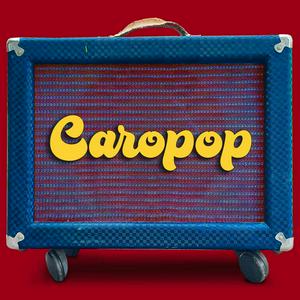
There may be nothing more inspiring and entertaining than relaxed, candid conversations among creative people. Mark Caro, a relentlessly curious journalist and on-stage interviewer, loves digging into the creative process with artists and drawing out surprising stories that illuminate the work that has become part of our lives. The Caropopcast is for anyone who wants to dig deeper into the music, movies, food and culture that they love.
Podcast websiteListen to Caropop, Jersey Made and many other podcasts from around the world with the radio.net app
Get the free radio.net app
- Stations and podcasts to bookmark
- Stream via Wi-Fi or Bluetooth
- Supports Carplay & Android Auto
- Many other app features
Get the free radio.net app
- Stations and podcasts to bookmark
- Stream via Wi-Fi or Bluetooth
- Supports Carplay & Android Auto
- Many other app features
Caropop
Scan code,
download the app,
start listening.
download the app,
start listening.
 USA
USA