Listen to this podcast in the app for free: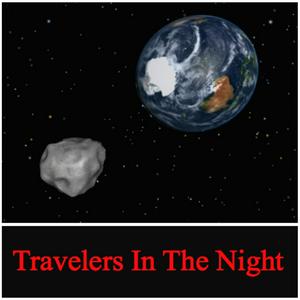 Download for free in the App Store
radio.net
Sleep timer
Save favorites
Available Episodes
5 of 1056
- 879-Lurking AsteroidThe Dark Energy Camera on the National Science Foundation’s Blanco 4-meter telescope on Cerro Tololo in Chile is taking near Sun twilight images to search for asteroids, hidden in the glare of our Sun, sneaking up on home planet.--------2:01
- 366E-398-Mars RocksAt about 2AM on July 18, 2011 several people in near Tata, Morocco saw a bright fireball which was described by one of them to be initially yellow, then turned green, and finally exploded into several pieces producing two sonic booms. In October of 2011 desert wandering nomads began finding very fresh looking dark fusion-crusted stones which were radioactively dated by Dr. John Duke of the University of Alberta to be less than 5 years old. In total 15-24 lbs of meteorites consistent with a very recent fall were found in a strewn field, were whisk away to receive high prices from collectors, and named after the town of Tissint [tee.seent] about 30 miles from their discovery location.--------2:01
- 878-Comet FragmentMy Catalina Sky Survey teammate Vivian Carvajal was asteroid hunting in the constellation of Eridanus with the 90 inch, University of Arizona’s Bok telescope on Kitt Peak when she was treated to an amazing sight. Comet COMET 240P/NEAT with a small version of itself cruising along beside it.It is virtually impossible to predict if Vivian’s fragment 240P-B will survive to make another approach to the Sun in 2033 or so.--------2:01
- 365E-397-Spotting MeteorsMeteors, shooting stars, or falling stars are different names for the streaks of light in the night sky which are in reality the dying embers of tiny asteroids. These small interplanetary travelers were speeding along at between 7 and 44 miles per second when they entered the Earth's atmosphere. In space, they are called meteoroids and typically ranged in size from that of a grain of sand to perhaps ones as big as of a piece of driveway gravel. Large space pebbles can produce fireballs which are brighter than the planet Venus. Most meteors burn up 50-70 miles above you, however, a very few of them produce fragments which fall to the Earth's surface. In rare occasions meteor observers are able to walk up to such a fallen space rock which is called a fall. The best time to view meteors is generally after midnight on a clear, moonless night. You will see many more meteors in a rural area than under city lights. On nights not during a meteor shower, you may expect to view sporadic meteors at the rate of between 2 and 16 per hour. Some meteor showers produce more than 100 events per hour. Rarely you will have a chance to view a meteor storm which will give you the feeling that you are seeing the Earth move through space. In 1966 one of these storms produced a WOW inspiring 40 meteors per second. During the year, there are a dozen major meteor showers. Check out the International Meteor Organization Calendar for a complete listing of the dates of meteor showers as well as how bright the moon will be on those dates. Happy viewing.--------2:01
- 877-Close GrazerOn a busy night of asteroid hunting with the 90 inch, University of Arizona’s Steward Observatory Bok telescope on Kitt Peak in Arizona, my Catalina Sky Survey teammate Vivian Carvajal discovered 13 new Earth approaching objects. One of them now known as 2025 TF immediately got her attention as it streaked through the constellation of Pegasus. Another space rock 2020 VT4 came about 30 miles closer to the surface of our home planet giving 2025 TF second place as a grazing non impactor.--------2:01
More Science podcasts
 RadiolabHistory, Science, Society & Culture, Documentary, Natural Sciences
 The Rest Is ScienceScience, Society & Culture, Technology, Philosophy
 Something You Should KnowEducation, Health & Wellness, Science, Self-Improvement, Social Sciences
 Ologies with Alie WardComedy, Science, Society & Culture
 StarTalk RadioEducation, Science
 The Nature Of with Willow DefebaughReligion & Spirituality, Science, Society & Culture, Philosophy, Spirituality, CATEGORY_NATURE
 Hidden BrainArts, Science, Performing Arts, Social Sciences
 Short WaveNews, Science, Daily News, Life Sciences
 Science FridayScience, Earth Sciences, Life Sciences, Natural Sciences
 Sasquatch ChroniclesScience, Society & Culture, Natural Sciences
Trending Science podcasts
 SkeptoidScience, Social Sciences
 Astronomy CastScience, Astronomy, Natural Sciences
 TheThinkingAtheistEducation, Science, Society & Culture
 From First PrinciplesScience
 BrainStuffScience, Technology, Natural Sciences
 Why This Universe?Science, Astronomy, Physics
 DiscoveryScience
 Intelligent Design the FutureScience, Society & Culture, Astronomy, Life Sciences, Philosophy
 UFO Chronicles PodcastScience, Natural Sciences, Social Sciences
 Inner Cosmos with David EaglemanEducation, Health & Wellness, Science, Mental Health, Self-Improvement
 You Are Not So SmartEducation, Science, Society & Culture, Social Sciences
 BioCentury This WeekBusiness, Science, Life Sciences
 Total Disclosure PodcastScience, Society & Culture, Technology
 Crime Pays But Botany Doesn'tComedy, Science, Earth Sciences, Natural Sciences
 The Couples Therapist CouchHealth & Wellness, Science, Society & Culture, Mental Health, Relationships, Social Sciences
 Big BrainsEducation, Science, Society & Culture
 Robinson's PodcastScience, Natural Sciences
 Backwoods Bigfoot StoriesFiction, Science, Society & Culture, Documentary, Drama, Natural Sciences
 SpaceTime with Stuart GaryScience, Astronomy, Natural Sciences
 پادکست آذرخش مکری - azarakhsh mokriHealth & Wellness, Science, Life Sciences, Mental Health, Social Sciences
 PlanetGeo: The Geology PodcastEducation, Science, Earth Sciences, Natural Sciences
 Overheard at National GeographicScience, Society & Culture
 New Books in Critical TheoryScience, Social Sciences
 Dr. Chapa’s OBGYN Clinical PearlsScience
 CREOGs Over CoffeeHealth & Wellness, Science, Medicine
 Bigfoot CrossroadsScience, Society & Culture, Documentary, Natural Sciences, CATEGORY_NATURE
 Origin StoriesEducation, Science, Life Sciences, Natural Sciences
 The Life ScientificScience, Society & Culture, Personal Journals
 HOLOSKY PODCASTScience, True Crime, Natural Sciences
 Bigfoot and Beyond with Cliff and BoboScience, Society & Culture, TV & Film, Natural Sciences
About Travelers In The Night
A real "Science Snack" for anyone who is interested in the extraterrestrial.Dr. Al Grauer is a member of the Catalina Sky Survey which has led the world in near Earth asteroid discoveries for 17 of the past 19 years.The music is "Eternity" by John Lyell.Astronomy Asteroids Space NASA Comets Earth Impact Aliens
Podcast websiteListen to Travelers In The Night, Radiolab and many other podcasts from around the world with the radio.net app
Get the free radio.net app
- Stations and podcasts to bookmark
- Stream via Wi-Fi or Bluetooth
- Supports Carplay & Android Auto
- Many other app features
Get the free radio.net app
- Stations and podcasts to bookmark
- Stream via Wi-Fi or Bluetooth
- Supports Carplay & Android Auto
- Many other app features

Travelers In The Night
Scan code,
download the app,
start listening.
download the app,
start listening.
 USA
USA