
Listen to this podcast in the app for free: Download for free in the App Store
radio.net
Sleep timer
Save favorites
40 episodes
Can Losing a French Cafe Push a Town to the Far Right?
11/24/2026 | 44 mins.The PMU bar-tabac is one of France's most familiar institutions, and it is quietly disappearing.
Caroline and Emily trace how these neighborhood cafés passed from Auvergnat to Kabyle to Wenzhou Chinese owners, and how the licence IV shaped who could run them. They also explore why closures are linked to loneliness and far-right voting in small towns, then share a listener story about dining in France with a severe egg allergy.
Podcast Show Notes
In this episode:
• What PMU stands for and how it differs from a bar-tabac
• Why so many Paris bar-tabacs are named after old cigarette brands like Balto and Maryland
• Smoking in France today, from the 2007 indoor ban to crème brûlée vapes
• How Auvergnat migrants founded the original bistros as coal and wine shops
• The Kabyle takeover of Paris cafés from the 1950s onward
• The licence IV, and why Algerians were the only non-French citizens allowed to hold one until 2017
• How Wenzhou families financed bar-tabac purchases through informal loan clubs
• Couscous, tagine, and dumplings on bar-tabac menus
• The PMU as a third space for older men and the loneliness of losing one
• A study linking small-town bar-tabac closures to far-right voting
• A listener story on eating out in France with an egg allergy
Key Takeaways
• PMU (Pari Mutuel Urbain) has held the monopoly on horse racing betting in France since 2010.
• Unlike wine bars and bistros, a bar-tabac lets you drink without ordering food, thanks to the licence IV.
• Ownership of Paris cafés passed from Auvergnats to Kabyle Algerians to people from Wenzhou, China.
• In 2025, 45% of bar-tabac owners in Île-de-France self-identified as being of Asian origin.
• Bar-tabacs in France fell from 200,000 in 1960 to 38,800 in 2023, a loss of about 80%.
• Researcher Hugo Subtil found that when a small town loses its café, the likelihood of a far-right vote rises, and a new café nearly reverses the effect.
• A 2025 law makes it easier to open a new licence IV in towns of fewer than 3,500 inhabitants.
• Diners with allergies in France do best asking for removals, not substitutions.
🇫🇷 PLANNING A TRIP TO PARIS OR LYON?
Get Emily's Paris Guide — a curated collection of our favorite places to eat, drink, and explore in Paris.
✨ https://cart.winedinecaroline.com/fishwives-guide-to-paris
Get Caroline's Lyon Guide - her favorite restaurants in Lyon.
✨ https://cart.winedinecaroline.com/lyon-restaurant-guide/
• • • • • • • • • •
🎙️ ABOUT THE HOSTS
🍷 Caroline Fazeli
Caroline is a French food and wine expert, WSET Diploma holder, former chef, and founder of Lyon Wine Tastings. She has spent nearly a decade helping visitors discover French food, wine, and culture.
📸 Instagram:
https://www.instagram.com/winedinecaroline
• • • • • • • • • •
🥐 Emily Monaco
Emily is a culinary journalist, author, and longtime Paris resident whose work focuses on French food culture, history, and tradition.
📸 Instagram:
https://www.instagram.com/emily_in_france
📰 Substack:
https://emilyinfrance.substack.com/
• • • • • • • • • •
🇫🇷 ABOUT FISHWIVES OF PARIS
Fishwives of Paris is a podcast about French food, wine, history, and gastronomy. Every episode uncovers the stories, myths, and surprising truths behind the foods and drinks that define France.
🎥 Filmed in Paris and Lyon.
📸 Follow Fishwives of Paris:
https://www.instagram.com/fishwivesofparis
Hugo Subtil's CEPREMAP study "Quand les bars ferment," the bar-tabac and far-right voting research Emily cites https://www.cepremap.fr/depot/2026/01/2026-02-Quand-les-bars-ferment-1.pdf
Our bistro episode, the backstory to the bar-tabac https://www.youtube.com/watch?v=36MYMvajnbg
Our substitutions episode, which prompted Juliana's listener story https://www.youtube.com/watch?v=SC3lyvsYloM
Pierre Boisard's "La vie de bistrot," the bistro history book Emily read https://www.gillespudlowski.com/?p=259675Is French Restaurant Service Finally Getting Better?
11/17/2026 | 37 mins.A real Lyon bouchon is about generous food at honest prices, not just checkered tablecloths and puppets.
Caroline and Emily sit down with César Ponsonnet, the restaurateur behind Le Mercière, a classic bouchon on Rue Mercière, who worked front of house at Le Bernardin before coming home. He explains how he blends American hospitality with bouchon tradition, why the Lyonnais refuse to overpay for ambiance, and what visitors should look for in an authentic Lyon bouchon.
Podcast Show Notes
In this episode:
• César's path from working in his stepfather's bouchon at 16, to Le Bernardin in New York, and back to Lyon
• Eating in a bouchon that spans a traboule, one of Lyon's old passageways, on Rue Mercière
• Why the owner on the floor is a defining mark of a real bouchon
• How locals and tourists react differently to elbow-to-elbow dining
• Blending American and French service, and why guests should never have to flag down a waiter
• Turning tables in Lyon, a lesson learned at a three-Michelin-star restaurant
• A wine list recognized by Star Wine List, with roots in the Beaujolais "gang of four"
• Preserving a bouchon's soul, from the Mona Lisa metaphor to Guignol on the walls
• The two Lyon bouchon labels and what keeps a bouchon authentic
• Why Lyon diners won't pay for vibes, and whether Paris is entering its "era of fine"
• Bistronomy, the future of fine dining, and the classic and modern dishes on a bouchon menu
Key Takeaways
• A true Lyon bouchon has its owner on the floor, greeting guests and recognizing regulars.
• Tight, elbow-to-elbow seating is part of the bouchon experience, not a flaw.
• An authentic bouchon is defined by generous portions, low prices, and classic dishes like quenelle de brochet, not by decor alone.
• Lyon has two bouchon labels, one created in 1997 and Les Bouchons Lyonnais, launched by the Lyon Chamber of Commerce in 2012.
• Lyonnais diners expect the price to match the food, while Paris diners will often pay extra for a beautiful room.
• Many French restaurants are understaffed, which is one reason waiters can be hard to flag down.
• You don't have to eat tripe at a bouchon, and many now offer lighter and even vegan dishes.
• • • • • • • • • •
ABOUT LE MERCIÈRE
Le Mercière is a classic Lyon bouchon on Rue Mercière, run by César Ponsonnet, who worked front of house at Le Bernardin in New York before coming home to take over the family restaurant. Opened by his stepfather in 1978, it spans one of Lyon's historic traboules and serves generous Lyonnais classics, from quenelle de brochet to blanquette de veau, alongside a wine list named the best among Lyon's bistros and bouchons in 2025.
56 rue Mercière, 69002 Lyon
Book a table:
https://lemerciere.com
Instagram:
https://www.instagram.com/le_merciere
• • • • • • • • • •
PLANNING A TRIP TO PARIS OR LYON?
Get Emily's Paris Guide — a curated collection of our favorite places to eat, drink, and explore in Paris.
https://cart.winedinecaroline.com/fishwives-guide-to-paris
Get Caroline's Lyon Guide - her favorite restaurants in Lyon.
https://cart.winedinecaroline.com/lyon-restaurant-guide/
• • • • • • • • • •
ABOUT THE HOSTS
Caroline Fazeli
Caroline is a French food and wine expert, WSET Diploma holder, former chef, and founder of Lyon Wine Tastings. She has spent nearly a decade helping visitors discover French food, wine, and culture.
Instagram:
https://www.instagram.com/winedinecaroline
• • • • • • • • • •
Emily Monaco
Emily is a culinary journalist, author, and longtime Paris resident whose work focuses on French food culture, history, and tradition.
Instagram:
https://www.instagram.com/emily_in_france
Substack:
https://emilyinfrance.substack.com/
• • • • • • • • • •
ABOUT FISHWIVES OF PARIS
Fishwives of Paris is a podcast about French food, wine, history, and gastronomy. Every episode uncovers the stories, myths, and surprising truths behind the foods and drinks that define France.
Filmed in Paris and Lyon.
Visit Caroline at Lyon Wine Tastings:
https://www.lyonwinetastings.com
Get 20% off your wine tasting with the code FISHWIVES
Last week's bouchon episode (S2E11), which Caroline tells listeners to watch first https://www.youtube.com/watch?v=GLcHUZh1ouM
Le Bernardin in New York, where César worked front of house https://www.le-bernardin.com
Star Wine List, which named Le Mercière's list the best bistro and bouchon wine list in 2025 https://starwinelist.com/wine-place/la-merciere
Les Bouchons Lyonnais, the label César says the restaurant will join https://lesbouchonslyonnais.org
Lindsey Tramuta's "The Era of 'Fine'," the piece Emily cites https://bonjour.lindseytramuta.com/p/the-era-of-fine
Café des Fédérations, the Lyon bouchon Caroline names for its over-the-top decor https://www.restaurant-cafedesfederations-lyon.fr/Is a Lyon Bouchon Just a Restaurant Tourist Trap?
11/10/2026 | 46 mins.A Lyon bouchon is not just a bistro with a different name, and its kitsch is part of the point.
Caroline and Emily break down the codes of Lyon's famously rowdy restaurants, from checkered tablecloths to tripe and pots of house wine. They trace the bouchon back to the silk workers of La Croix-Rousse, whose revolts and shared canteens shaped the city, and explain why these touristy, joyfully dated places remain the real thing.
Podcast Show Notes
In this episode:
• Why a bouchon is more than "a bistro, but in Lyon"
• The codes that define a bouchon, from red checkered tablecloths to a gregarious owner on site
• The classic bouchon menu, from œuf en meurette and salade lyonnaise to andouillette, quenelle de brochet, and the pot of house wine
• The likely origin of the word bouchon, and why it was not named after a wine cork
• Who the canut were, and how silk weaving transformed the Croix-Rousse hill
• The silk worker revolts of 1831 and 1848, and the fight for le prix juste
• The mâchon, a hearty pork feast built from the cuts nobody else wanted
• How worker-led cooperative canteens gave way to bouchon restaurants as the silk industry declined
• Why many Paris bistros feel like museums while bouchons remain authentic, or dans son jus
• Why restaurants called Bouchon outside Lyon miss the point, and what 85 euros buys two people at Café des Fédérations
Key Takeaways
• Bouchons are a distinct Lyonnais tradition, not simply Lyon's version of the bistro.
• A Lyon bouchon association lists 23 restaurants and has codified the style, including an owner who is present and part of the experience.
• The name most likely comes from bundles of pine or sticks hung outside to signal food and drink, not from the French word for a wine cork.
• Bouchon cooking is rooted in the canut, Lyon's silk workers, who needed cheap and filling food.
• The original gathering places were worker-led cooperative canteens, and the restaurants came later.
• The canut lost their revolts, but the episode credits them with laying the groundwork for later workers' rights.
• Kitsch and tourists are part of what makes a modern bouchon authentic.
• Bouchons remain accessible, with a three-hour, multi-course dinner for two and a pot of wine costing 85 euros at Café des Fédérations.
GET OUR GUIDE TO BOUCHONS!
https://news.fishwivesofparis.com/bouchon
PLANNING A TRIP TO PARIS OR LYON?
Get Emily's Paris Guide — a curated collection of our favorite places to eat, drink, and explore in Paris.
https://cart.winedinecaroline.com/fishwives-guide-to-paris
Get Caroline's Lyon Guide - her favorite restaurants in Lyon.
https://cart.winedinecaroline.com/lyon-restaurant-guide/
• • • • • • • • • •
ABOUT THE HOSTS
Caroline Fazeli
Caroline is a French food and wine expert, WSET Diploma holder, former chef, and founder of Lyon Wine Tastings. She has spent nearly a decade helping visitors discover French food, wine, and culture.
Instagram:
https://www.instagram.com/winedinecaroline
Substack:
https://winedinecaroline.substack.com/
• • • • • • • • • •
Emily Monaco
Emily is a culinary journalist, author, and longtime Paris resident whose work focuses on French food culture, history, and tradition.
Instagram:
https://www.instagram.com/emily_in_france
Substack:
https://emilyinfrance.substack.com/
• • • • • • • • • •
ABOUT FISHWIVES OF PARIS
Fishwives of Paris is a podcast about French food, wine, history, and gastronomy. Every episode uncovers the stories, myths, and surprising truths behind the foods and drinks that define France.
Filmed in Lyon.
Follow Fishwives of Paris:
https://www.instagram.com/fishwivesofparisIs Bordeaux Really That Expensive? Bordeaux Through the Decades with Jane Anson
11/03/2026 | 42 mins.Bordeaux is the most famous fine wine region in France, and also one of the most misunderstood.
Caroline and Emily sit down with Bordeaux expert and author Jane Anson to explain Bordeaux wine, from the en primeur futures system to the Left Bank and Right Bank divide. They also dig into climate change, the Robert Parker era, white Bordeaux, and what the Bordelais actually drink.
Podcast Show Notes
In this episode:
• What en primeur means and how Bordeaux futures are sold
• What it is like to taste 800 young wines in one April
• The Left Bank, the Right Bank, and Entre-Deux-Mers explained
• Why many Médoc châteaux are younger and showier than they look
• How Saint-Émilion and Pauillac work for wine tourism
• Why Bordeaux has always been a port and an export region
• How small estates are turning to direct sales and wine tourism
• The comeback of white Bordeaux and Sauvignon Blanc's roots
• New grape varieties and climate experiments in Bordeaux vineyards
• Why a flat Médoc makes wines that age so well
• Bordeaux Mentor Week and the next generation of wine professionals
• How Robert Parker reshaped Bordeaux style and the backlash since
• What the Bordelais really drink
Key Takeaways
• En primeur is a wine futures system where wine is sold before it is bottled, and it applies to only about 5 to 10 percent of Bordeaux wines.
• The Left Bank, centered on the Médoc, is mainly Cabernet Sauvignon on gravel, while the Right Bank is mainly Merlot on clay and limestone.
• Bordeaux is not all expensive, and prices run from about five euros to thousands of euros a bottle.
• Bordeaux has shrunk from about 120,000 hectares of vines to about 80,000 as growers balance supply and demand.
• White Bordeaux is making a comeback and is likely to keep gaining share as the market asks for it.
• Experimental grape varieties are being tested in Bordeaux, with results due around 2030.
• Robert Parker's influence pushed many Bordeaux wines toward riper, oakier, bigger styles, and the region is now moving back toward freshness.
• Bordeaux is for everyone, and the Bordelais themselves enjoy wines from around the world.
JANE ANSON'S BORDEAUX LINKS
Jane's Instagram: https://www.instagram.com/jane.anson
Jane Anson Inside Bordeaux (subscription site): https://janeanson.com
Bordeaux Chronicle: https://www.vendomepress.com/products/bordeaux-chronicle
Inside Bordeaux: https://janeanson.com/book/inside-bordeaux
Bordeaux Mentor Week: https://janeanson.com/meet-our-scholars-for-the-2025-bordeaux-mentor-week
PLANNING A TRIP TO PARIS OR LYON?
Get Emily's Paris Guide — a curated collection of our favorite places to eat, drink, and explore in Paris.
https://cart.winedinecaroline.com/fishwives-guide-to-paris
Get Caroline's Lyon Guide - her favorite restaurants in Lyon.
https://cart.winedinecaroline.com/lyon-restaurant-guide/
• • • • • • • • • •
ABOUT THE HOSTS
Caroline Fazeli
Caroline is a French food and wine expert, WSET Diploma holder, former chef, and founder of Lyon Wine Tastings. She has spent nearly a decade helping visitors discover French food, wine, and culture.
Instagram:
https://www.instagram.com/winedinecaroline
• • • • • • • • • •
Emily Monaco
Emily is a culinary journalist, author, and longtime Paris resident whose work focuses on French food culture, history, and tradition.
Instagram:
https://www.instagram.com/emily_in_france
Substack:
https://emilyinfrance.substack.com/
• • • • • • • • • •
ABOUT FISHWIVES OF PARIS
Fishwives of Paris is a podcast about French food, wine, history, and gastronomy. Every episode uncovers the stories, myths, and surprising truths behind the foods and drinks that define France.
Filmed in Paris, Lyon, and Bordeaux
Follow Fishwives of Paris:
https://www.instagram.com/fishwivesofparisCan You Make Substitutions at French Restaurants?
10/27/2026 | 41 mins.Asking for substitutions in French restaurants rarely goes the way American diners expect.
Caroline and Emily unpack why swapping fries for salad earns a firm non. They trace the refusal to French values of equality, expertise, and shared meals, explore the research on choice and culture, and share practical advice for dining in France with allergies or dietary restrictions.
Podcast Show Notes
In this episode:
• Why asking for substitutions at French restaurants gets a firm "non"
• Liberty versus equality, and how France and the US chose differently
• The American love of choice, from side dishes to 31 ice cream flavors
• Why the French prefer short menus and fewer options
• How fewer choices can lighten the mental load
• The UNESCO-listed structure of the French gastronomic meal
• Classic French pairings, from blanquette de veau with rice to saucisse purée
• Why the chef, not the customer, is right in a French dining room
• Hofstede's power distance and individualism scores, and the French paradox
• Universalism, commensality, and why the French share the same food at the table
• How to handle allergies and dietary restrictions when dining in France
Key Takeaways
• French restaurants treat a dish's side as part of the dish, not an interchangeable option.
• Research suggests the French expect fewer choices and less variation in their food than Americans do.
• The gastronomic meal of the French was added to UNESCO's Intangible Cultural Heritage list in 2010.
• France scores high on both power distance and individualism, a rare combination.
• French dining culture values the expertise of chefs and servers over the diner's preferences.
• Sharing the same food at the table matters, so personal swaps can feel antisocial.
• Real allergies should be flagged when booking, and choosing an accommodating restaurant helps.
• Personal dislikes are best handled quietly on your own plate.
More Arts podcasts






Trending Arts podcasts























About Fishwives of Paris
Lovie Awards Winners 2026: Best New Podcast, Best Writing, and Arts & Culture!
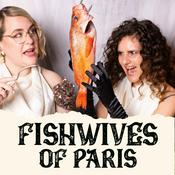
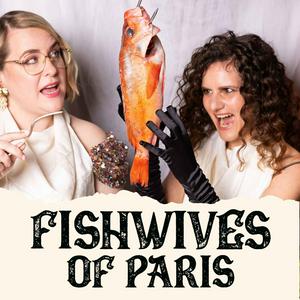
Flipping the table on French food mythology and serving the real stories behind your favorite cuisine, with culinary journalist Emily Monaco and wine expert Caroline Fazeli.
Want to watch us in 4k? Head over to https://youtube.com/@fishwivesofparis
Podcast websiteListen to Fishwives of Paris, Fresh Air and many other podcasts from around the world with the radio.net app
Get the free radio.net app
- Stations and podcasts to bookmark
- Stream via Wi-Fi or Bluetooth
- Supports Carplay & Android Auto
- Many other app features
 USA