Listen to this podcast in the app for free: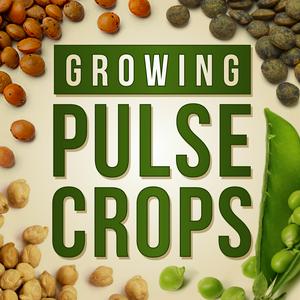 Download for free in the App Store
radio.net
Sleep timer
Save favorites
Available Episodes
5 of 92
- U.S. Pulse Quality SurveyDr. Clifford Hall is a professor in the dairy and food science department at South Dakota State University. He also oversees research on pulse quality and utilization of pulses in food systems. Over the years, Dr. Hall has mentored several students completing research on peas, lentils, and chickpeas. These projects range from including pulses in extruded snacks to using aquafaba as an egg replacer to looking at the functional properties of pulse flours and other pulse fortified products. Dr. Hall has also overseen the annual U.S. Pulse Quality Survey since 2014. He shares how this information is used by the industry, what trends he is seeing in food applications for pulse crops, and where pulses fit into the nutrient density conversation.“ If you are someone that looks at I want to sell the flour, I'm likely going to go to the functionality test, the water absorption index that tells you how much water the pulse can absorb. And that would be important if you want to make, say a gluten-free cookie or you want to put it in a wheat bread. So I think those are really kind of the ones that a lot of times the most interest is in the protein and then some of these functional properties.” - Dr Cliff HallThis Week on Growing Pulse Crops:Meet Dr. Clifford Hall, a professor in the dairy and food science department at South Dakota State UniversityDiscover possible new applications for pulse crops as a food additive and the benefits they offer processors Explore the data illustrated in the annual U.S. Pulse Quality Survey and how this information can be used in the pulse crop industryGrowing Pulse Crops is produced by Dr. Audrey Kalil and hosted by Tim Hammerich of the Future of Agriculture Podcast.--------30:27
- Faba Bean Production With Greg StampGreg Stamp is the seed sales manager at Stamp Seeds, which he runs with his two brothers, Matthew and Nathan. Stamp Seeds grows and processes retail pedigreed seed for about 60 different crops based out of Enchant, Alberta. Included in that long list of crops are some pulses like peas, chickpeas, lentils, and our subject for today’s episode, faba beans. Greg shares all things faba beans including markets, varieties, agronomic practices, pest and disease considerations, harvesting and more. “ The market I think where there's some value is domestic. It's the people that are fractionating and it's the trend, you know, what's the next new hot protein? Past peas, it's faba beans… They're higher protein than peas and so that's why they want to use them. And then they have a different taste and flavor profile and fractionation. So that's why they're going that way. And so you're going to see more and more of them used in food products as time goes on.” - Greg StampThis Week on Growing Pulse Crops:Meet Greg Stamp, the seed sales manager at Stamp SeedsDiscover all things faba beans including markets, varieties, agronomic practices and more.Explore unique techniques for pest management of faba beansListen to referenced guest Chuck Penner discuss drivers of supply and demand for pulse cropsReview integrated pest management with Dr. Hector Carcamo from a previous episodeVisit Stampseeds.com to learn more about faba beansGrowing Pulse Crops is produced by Dr. Audrey Kalil and hosted by Tim Hammerich of the Future of Agriculture Podcast.--------31:39
- MRLs and Pre-Harvest Desiccation With Greg BartleyGreg Bartley is the director of crop protection and crop quality at Pulse Canada. He’s an agronomist by training and a certified crop advisor who has been with Pulse Canada for over six years. Bartley discusses the Keep It Clean Program in Canada, the value and challenges associated with Maximum Residue Limits (MRLs), some helpful information about desiccants and how various perceptions about chemicals are impacting the global trade of pulses. “ Things are changing. What's been happening within the past five years is not going to be what's happened in the next five years. So even though this is what you did on your farm two years ago. These MRL policies and just policies in general are ever evolving, you need to pay attention and recognize that sometimes things are changing. The level of testing that's going on within the industry is unreal. So if you were doing something two years ago chances are it may not be acceptable moving forward.” - Greg BartleyThis Week on Growing Pulse Crops:Greg Bartley is the director of crop protection and crop quality at Pulse CanadaDiscover the Canadian Keep It Clean Program and what is involved in participatingExplore the limitations and significance of Maximum Residue Limit policyLearn about strategy for timing and use of desiccation products for pulse cropsGrowing Pulse Crops is supported by the Northern Pulse Growers Association, produced by Dr. Audrey Kalil and hosted by Tim Hammerich of the Future of Agriculture Podcast.--------28:08
- Managing Ascochyta Blight in Chickpea - Part TwoDr. Michael Wunsch is a Plant Pathologist at the Carrington Research Extension Center at North Dakota State University. He holds a Ph.D. from Cornell University in 2010, and has worked for NDSU ever since, focused on disease management problems on a wide breadth of crops grown in North Dakota. This episode is a follow up to the last episode where Michael focused on understanding disease biology and diagnosis of Ascochyta Blight of chickpea. Today we’re going to go deeper into what it takes to control ascochyta, and specifically how to optimize fungicide applications.When it comes to managing fungal diseases, fungicide resistance is a growing and very concerning issue. Just like you may have heard about herbicide resistance in weed management, we are seeing the same problems in fungal diseases: spraying the same group of chemistries that attack a site in a fungus eventually leads to individuals that mutate. That mutation in the fungus persists as those that are susceptible die off and that leaves room for the resistant strains to proliferate. This happens over time, but at first it can seem negligible, until the resistant strains take over and it appears to happen over night. So today, Michael is going to walk us through three critical areas of fungal disease management: product choice, timing and droplet size. “ So essentially what you want to do is you want to spray your tank mix at early bloom before your first rain as you get into bloom. We're talking at that point, you're typically looking at absolute trace levels of disease. Your goal is to keep it from spreading because at that stage you can control it.” - Michael Wunsch, Ph.D.This Week on Growing Pulse Crops:Hear from Dr. Michael Wunsch, a Plant Pathologist at the Carrington Research Extension Center at North Dakota State University.Explore what it takes to control ascochyta in chickpeaUnderstand how to optimize fungicide applications, including product considerations, timing and nozzle settingsGrowing Pulse Crops is produced by Dr. Audrey Kalil and hosted by Tim Hammerich of the Future of Agriculture Podcast.--------33:33
- Managing Ascochyta Blight in Chickpea - Part OneDr. Michael Wunsch is a Plant Pathologist at the Carrington Research Extension Center at North Dakota State University. He holds a Ph.D. from Cornell University in 2010, and has worked for NDSU ever since, focused on disease management problems on a wide breadth of crops grown in North Dakota. In this episode, Wunsch provides us with a lot of helpful details about Ascochyta Blight of chickpea, including some of the historical impacts of the disease, how it spreads, the range of hosts, the process to diagnosing it, and how we distinguish it from another common pathogen called Botrytis. Stay tuned for part two of this conversation where we will discuss how to optimize fungicide applications for this disease.“ You have some degree of Ascochyta in that field, whether it's catastrophic level or a trace level. Those chickpea residues, they're lying in that field, especially now that we're no-till and none of them are buried. They overwinter and that overwintering cycle induces the pathogen to form a different type of fruiting structure, which enables the pathogen to more quickly overcome management tools, whether that's host resistance or fungicides. And this produces spores that actually are emitted with some degree of force and they will get taken up by air currents and they can move hundreds of miles.” - Michael Wunsch, Ph.D. This Week on Growing Pulse Crops:Hear from Dr. Michael Wunsch, a Plant Pathologist at the Carrington Research Extension Center at North Dakota State University.Explore more details about the life cycle, hosts, and diagnosis of AscochytaUnderstand the differences between Botrytis and Ascochyta and the significance in making the distinction between the twoGrowing Pulse Crops is produced by Dr. Audrey Kalil and hosted by Tim Hammerich of the Future of Agriculture Podcast.--------24:27
More Science podcasts
 Science FridayScience, Earth Sciences, Life Sciences, Natural Sciences
 The Nature Of with Willow DefebaughReligion & Spirituality, Science, Society & Culture, Philosophy, Spirituality, CATEGORY_NATURE
 Particles of ThoughtScience, Astronomy
 Sasquatch ChroniclesScience, Society & Culture, Natural Sciences
 The Rest Is ScienceScience, Society & Culture, Technology, Philosophy
 StarTalk RadioEducation, Science
 Hidden BrainArts, Science, Performing Arts, Social Sciences
 Ologies with Alie WardComedy, Science, Society & Culture
 Something You Should KnowEducation, Health & Wellness, Science, Self-Improvement, Social Sciences
 RadiolabHistory, Science, Society & Culture, Documentary, Natural Sciences
Trending Science podcasts
 SkeptoidScience, Social Sciences
 Astronomy CastScience, Astronomy, Natural Sciences
 TheThinkingAtheistEducation, Science, Society & Culture
 From First PrinciplesScience
 BrainStuffScience, Technology, Natural Sciences
 Why This Universe?Science, Astronomy, Physics
 DiscoveryScience
 Intelligent Design the FutureScience, Society & Culture, Astronomy, Life Sciences, Philosophy
 UFO Chronicles PodcastScience, Natural Sciences, Social Sciences
 Inner Cosmos with David EaglemanEducation, Health & Wellness, Science, Mental Health, Self-Improvement
 You Are Not So SmartEducation, Science, Society & Culture, Social Sciences
 BioCentury This WeekBusiness, Science, Life Sciences
 Total Disclosure PodcastScience, Society & Culture, Technology
 Crime Pays But Botany Doesn'tComedy, Science, Earth Sciences, Natural Sciences
 The Couples Therapist CouchHealth & Wellness, Science, Society & Culture, Mental Health, Relationships, Social Sciences
 Big BrainsEducation, Science, Society & Culture
 Robinson's PodcastScience, Natural Sciences
 Backwoods Bigfoot StoriesFiction, Science, Society & Culture, Documentary, Drama, Natural Sciences
 SpaceTime with Stuart GaryScience, Astronomy, Natural Sciences
 پادکست آذرخش مکری - azarakhsh mokriHealth & Wellness, Science, Life Sciences, Mental Health, Social Sciences
 PlanetGeo: The Geology PodcastEducation, Science, Earth Sciences, Natural Sciences
 Overheard at National GeographicScience, Society & Culture
 New Books in Critical TheoryScience, Social Sciences
 Dr. Chapa’s OBGYN Clinical PearlsScience
 CREOGs Over CoffeeHealth & Wellness, Science, Medicine
 Bigfoot CrossroadsScience, Society & Culture, Documentary, Natural Sciences, CATEGORY_NATURE
 Origin StoriesEducation, Science, Life Sciences, Natural Sciences
 The Life ScientificScience, Society & Culture, Personal Journals
 HOLOSKY PODCASTScience, True Crime, Natural Sciences
 Bigfoot and Beyond with Cliff and BoboScience, Society & Culture, TV & Film, Natural Sciences
About Growing Pulse Crops
This show features the latest in research, agronomy, and economics of pulse crops (peas, chickpeas, lentils, etc.).
Demand for these nutrient-dense, high-protein foods continues to grow. There is also interest from farmers to include more pulses into diverse rotations for benefits like nitrogen fixation and soil health.
But the industry continues to face challenges, and we are eager to address these head on. So if you’re a pulse grower or in any way interested in these important crops, hit subscribe and stay tuned for future episodes. We’ll be back with plenty of information about challenges pulse farmers are facing throughout the U.S. and what solutions are working.
Brought to you by the Pulse Crops Working Group with support from the North Central IPM Center and USDA NIFA.
Podcast websiteListen to Growing Pulse Crops, Science Friday and many other podcasts from around the world with the radio.net app
Get the free radio.net app
- Stations and podcasts to bookmark
- Stream via Wi-Fi or Bluetooth
- Supports Carplay & Android Auto
- Many other app features
Get the free radio.net app
- Stations and podcasts to bookmark
- Stream via Wi-Fi or Bluetooth
- Supports Carplay & Android Auto
- Many other app features

Growing Pulse Crops
Scan code,
download the app,
start listening.
download the app,
start listening.
 USA
USA