

Listen to this podcast in the app for free: Download for free in the App Store
radio.net
Sleep timer
Save favorites
196 episodes
THROWBACK: Cesar Chavez & The Cult of Synanon!
09/24/2026 | 1h 11 mins.The year is 1966, in Santa Monica, California. Inside a large, dimly lit room, members of a controversial and increasingly violent group known as Synanon gather in a circle. At the center sits a single figure—another “Synanite”—alone on a folding chair, surrounded on all sides. Around the edges of the room, a few silent observers watch, waiting.
Then it begins.
One by one, the circle turns inward. Voices rise. Insults sharpen. What starts as confrontation quickly escalates into something far more intense—members unleashing a barrage of personal attacks, screaming accusations, cutting deep with words meant to break the person in the center. The assault doesn’t stop. It builds, relentlessly, until the individual finally collapses under the weight of it all, overcome with sobs.
They call it The Game.
Framed as “attack therapy,” The Game was a brutal exercise in psychological domination and public humiliation—part confession, part punishment, and entirely about control. Sessions could stretch on for hours… sometimes even days. Loyalty was tested. Weakness was exposed. And humiliation became a tool of obedience.
On this particular day, among those watching from the sidelines, was Cesar Chavez—the renowned labor organizer, founder of the United Farm Workers, and a personal friend of Synanon’s founder, Charles Dederich.
Some observers were disturbed by what they witnessed. Others were unsettled, even horrified.
But Chavez wasn’t.
He was inspired.
listener comments? Feedback? Shoot us a text!
Support the show
Order "NEVER WILL IT BE LOST" and get $5 off!
Support Lignum: A Cultural Haven in Mérida
Your Hosts:
Kurly Tlapoyawa is an archaeologist, ethnohistorian, and filmmaker. His research covers Mesoamerica, the American Southwest, and the historical connections between the two regions. He is the author of numerous books and has presented lectures at the University of New Mexico, Harvard University, Yale University, San Diego State University, and numerous others. He most recently released his documentary short film "Guardians of the Purple Kingdom," and is a cultural consultant for Nickelodeon Animation Studios.
@kurlytlapoyawa
Ruben Arellano Tlakatekatl is a scholar, activist, and professor of history. His research explores Chicana/Chicano indigeneity, Mexican indigenist nationalism, and Coahuiltecan identity resurgence. Other areas of research include Aztlan (US Southwest), Anawak (Mesoamerica), and Native North America. He has presented and published widely on these topics and has taught courses at various institutions. He currently teaches history at Dallas College – Mountain View Campus.
Find us:
Bluesky
...109: Hopi Kachina Dolls in Brooklyn!
09/17/2026 | 1h 11 mins.We are joined by Colleen Lucero to talk about the upcoming exhibit Hopi Kachina Dolls: Blessings for a Balanced World, which opens October 2 at the Brooklyn Museum, and her work with the Hopivewat Learning Center. Colleen is a Hopi community member from the village of Hotevilla. She is the Managing Director of the Hopivewat Learning Center, a community-designed organization that facilitates accessible opportunities for Hopi people to engage with their tribal and cultural heritage. She also consults with museums on Hopi cultural education, exhibitions, and programming. Lucero earned a BFA in Museum Studies from the Institute of American Indian Arts (IAIA) in Santa Fe and is currently pursuing an MFA in Cultural Administration at IAIA.
listener comments? Feedback? Shoot us a text!
This December, I'll be joining Skeptoid Adventures as your guide for The Mysteries of the Maya, where we'll travel through the Yucatán exploring remarkable archaeological sites, uncovering the real history behind the Maya civilization, and separating fact from fiction along the way.
To reserve your spot, all you need is a fully refundable $500 deposit. Your deposit is refundable through August 1, so you can reserve your place with confidence. After Au
Lignum is a haven for culture, rest, and resistance. We believe in celebrating community and honoring the land that holds us. At our urban “milpa,” we practice indigenous science that respects the natural cycles of the region, and most of our workshops are hosted by indigenous and local experts. Every project we do is grounded in collective memory, creativity, and respect for the land and its people.
Order "NEVER WILL IT BE LOST" and get $5 off!
Support Lignum: A Cultural Haven in Mérida
Your Hosts:
Kurly Tlapoyawa is an archaeologist, ethnohistorian, and filmmaker. His research covers Mesoamerica, the American Southwest, and the historical connections between the two regions. He is the author of numerous books and has presented lectures at the University of New Mexico, Harvard University, Yale University, San Diego State University, and numerous others. He most recently released his documentary short film "Guardians of the Purple Kingdom," and is a cultural consultant for Nickelodeon Animation Studios.
@kurlytlapoyawa
Ruben Arellano Tlakatekatl is a scholar, activist, and professor of history. His research explores Chicana/Chicano indigeneity, Mexican indigenist nationalism, and Coahuiltecan identity resurgence. Other areas of research include Aztlan (US Southwest), Anawak (Mesoamerica), and Native North America. He has presented and published widely on these topics and has taught courses at various institutions. He currently teaches history at Dallas College – Mountain View Campus.
Find us:
Bluesky
...108: Rebirth of an Aztec Codex!
09/10/2026 | 1h 2 mins.Rebirth of an Aztec Codex
There are some stories from Mesoamerican history that, when you first hear them, sound almost too good to be true. Take for example, the Tonalamatl Aubin. Now, for those not familiar, the story goes like this: a sacred Indigenous calendar survives the destruction of the Spanish invasion, vanishes into European collections where it gets passed from collector to collector, and eventually ends up sitting in a French library thousands of miles from where it was made. Then, in 1982, a Mexican reporter walks into that library, presents fake credentials in order to examine the manuscript, and then promptly puts it in a briefcase and walks out with it, sparking an international incident.
That would already make the Tonalamatl Aubin one hell of a story. I mean, Why hasn’t a movie been made about this incident? Someone, anyone, give me a budget and let’s fucking go.
Well dear listeners, somehow the story of the Tonalamatl Aubin just got even more awesome.
listener comments? Feedback? Shoot us a text!
This December, I'll be joining Skeptoid Adventures as your guide for The Mysteries of the Maya, where we'll travel through the Yucatán exploring remarkable archaeological sites, uncovering the real history behind the Maya civilization, and separating fact from fiction along the way.
To reserve your spot, all you need is a fully refundable $500 deposit. Your deposit is refundable through August 1, so you can reserve your place with confidence. After Au
Lignum is a haven for culture, rest, and resistance. We believe in celebrating community and honoring the land that holds us. At our urban “milpa,” we practice indigenous science that respects the natural cycles of the region, and most of our workshops are hosted by indigenous and local experts. Every project we do is grounded in collective memory, creativity, and respect for the land and its people.
Order "NEVER WILL IT BE LOST" and get $5 off!
Support Lignum: A Cultural Haven in Mérida
Your Hosts:
Kurly Tlapoyawa is an archaeologist, ethnohistorian, and filmmaker. His research covers Mesoamerica, the American Southwest, and the historical connections between the two regions. He is the author of numerous books and has presented lectures at the University of New Mexico, Harvard University, Yale University, San Diego State University, and numerous others. He most recently released his documentary short film "Guardians of the Purple Kingdom," and is a cultural consultant for Nickelodeon Animation Studios.
@kurlytlapoyawa
Ruben Arellano Tlakatekatl is a scholar, activist, and professor of history. His research explores Chicana/Chicano indigeneity, Mexican indigenist nationalism, and Coahuiltecan identity resurgence. Other areas of research include Aztlan (US Southwest), Anawak (Mesoamerica), and Native North America. He has presented and published widely on these topics and has taught courses at various institutions. He currently teaches history at Dallas College – Mountain View Campus.
Find us:
Bluesky
...Throwback: Human Sacrifice!
09/03/2026 | 1h 9 mins.When people hear phrases like “human sacrifice” or “cannibalism” their minds don’t immediately jump to the Crusades, Rome, medieval Europe, or the Bible. They jump straight to brown skin, feathered headdresses, and temples drenched in blood. Type in a quick Google search for the phrase and Mesoamericans (the Mexika/Aztec, in particular) become humanity’s favorite villains. “Savage.” “Bloodthirsty.” “Barbaric.” And rest assured, this narrative didn’t just happen by accident. It was deliberately engineered.
listener comments? Feedback? Shoot us a text!
Support the show
Order "NEVER WILL IT BE LOST" and get $5 off!
Support Lignum: A Cultural Haven in Mérida
Your Hosts:
Kurly Tlapoyawa is an archaeologist, ethnohistorian, and filmmaker. His research covers Mesoamerica, the American Southwest, and the historical connections between the two regions. He is the author of numerous books and has presented lectures at the University of New Mexico, Harvard University, Yale University, San Diego State University, and numerous others. He most recently released his documentary short film "Guardians of the Purple Kingdom," and is a cultural consultant for Nickelodeon Animation Studios.
@kurlytlapoyawa
Ruben Arellano Tlakatekatl is a scholar, activist, and professor of history. His research explores Chicana/Chicano indigeneity, Mexican indigenist nationalism, and Coahuiltecan identity resurgence. Other areas of research include Aztlan (US Southwest), Anawak (Mesoamerica), and Native North America. He has presented and published widely on these topics and has taught courses at various institutions. He currently teaches history at Dallas College – Mountain View Campus.
Find us:
Bluesky
...THROWBACK: The Chicano Moratorium!
08/27/2026 | 45 mins.Given the current climate here in Occupied America, we thought it would be worth taking a look at the Chicano Moratorium march of August 29, 1970. The event serves as a good example of how we organized as a community to speak out against an unjust war and the price our people paid fighting in it. This episode was originally released as a Premium (paid only) episode, but we wanted to give everyone a chance to check out our discussion. Enjoy!
listener comments? Feedback? Shoot us a text!
Support the show
Order "NEVER WILL IT BE LOST" and get $5 off!
Support Lignum: A Cultural Haven in Mérida
Your Hosts:
Kurly Tlapoyawa is an archaeologist, ethnohistorian, and filmmaker. His research covers Mesoamerica, the American Southwest, and the historical connections between the two regions. He is the author of numerous books and has presented lectures at the University of New Mexico, Harvard University, Yale University, San Diego State University, and numerous others. He most recently released his documentary short film "Guardians of the Purple Kingdom," and is a cultural consultant for Nickelodeon Animation Studios.
@kurlytlapoyawa
Ruben Arellano Tlakatekatl is a scholar, activist, and professor of history. His research explores Chicana/Chicano indigeneity, Mexican indigenist nationalism, and Coahuiltecan identity resurgence. Other areas of research include Aztlan (US Southwest), Anawak (Mesoamerica), and Native North America. He has presented and published widely on these topics and has taught courses at various institutions. He currently teaches history at Dallas College – Mountain View Campus.
Find us:
Bluesky
...
More History podcasts
 You're Wrong AboutHistory, Society & Culture, True Crime
 The AncientsHistory
 Dan Carlin's Hardcore HistoryHistory
 American History TellersEducation for Kids, History, Kids & Family, Society & Culture
 The Team HouseDocumentary, Government, History, Society & Culture
 History That Doesn't SuckEducation, History, Society & Culture
 The Rest Is HistoryHistory
 American ScandalDocumentary, History, Society & Culture
 LoreHistory, True Crime
Trending History podcasts
 True Weird StuffDocumentary, History, Science, Society & Culture
 Conflicted: A History PodcastEducation, History, Society & Culture
 Past Present FutureHistory, News, Philosophy, Politics, Society & Culture
 Ask Haviv AnythingHistory
 History's Greatest Conspiracy TheoriesHistory
 The Big DigHistory
 Romance of the Three Kingdoms PodcastArts, Books, History
 D-Day: The Tide TurnsHistory
 The History of the Twentieth CenturyHistory
 WW2: Both Sides of The WireHistory
 More PerfectCourses, Documentary, Education, History, Society & Culture
 Southern Mysteries PodcastHistory, Society & Culture, True Crime
 Rachel Maddow Presents: UltraHistory, News
 Master PlanHistory, News, Politics
 The Big Dig Season 4: Mitt & Ted, a healthcare storyHistory
 A History of the World in 100 ObjectsHistory
 American Catholic HistoryChristianity, Education, History, Religion & Spirituality
 Provoked with Darryl Cooper and Scott HortonHistory, News, Politics
 Ben Franklin's WorldArts, Books, History, Society & Culture
 In Our Time: HistoryHistory
 REDACTED: Declassified Mysteries with Luke LamanaHistory, True Crime
 Let The Record ShowHistory, News
 The History of Egypt PodcastHistory, Society & Culture
 Done & DunneHistory, True Crime
 Rachel Maddow Presents: Burn OrderGovernment, History, News
 The Gilded GentlemanArts, History, Society & Culture
 Long ShadowHistory
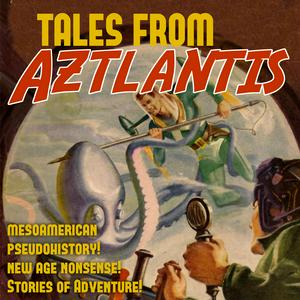
About Tales From Aztlantis
We explore Chicano, Mexicano, and Mesoamerican history, archaeology, and culture, and combat the spread of disinformation about these very topics. Your hosts Kurly Tlapoyawa and Ruben Arellano Tlakatekatl invite you to join them on a fascinating journey through Mesoamerica's past, present, and future! Goodpods #1 in the Top 100 Chicano Podcasts (3 years running!)
Podcast websiteListen to Tales From Aztlantis, You're Wrong About and many other podcasts from around the world with the radio.net app
Get the free radio.net app
- Stations and podcasts to bookmark
- Stream via Wi-Fi or Bluetooth
- Supports Carplay & Android Auto
- Many other app features
Get the free radio.net app
- Stations and podcasts to bookmark
- Stream via Wi-Fi or Bluetooth
- Supports Carplay & Android Auto
- Many other app features

Tales From Aztlantis
Scan code,
download the app,
start listening.
download the app,
start listening.
 USA
USA