

Listen to this podcast in the app for free: Download for free in the App Store
radio.net
Sleep timer
Save favorites
53 episodes
Episode 48: Leaky Foundations, Low Spoons, and Building Something That Lasts
05/29/2026 | 27 mins.Matt and Erin are wrapping up Season 1 of The Autistic VOICE Project this week — and after 48 episodes, they’re talking honestly about burnout, sustainability, community, and what it takes to keep showing up as Autistic people doing work they care about.
We cover:
Why we're taking a summer break and what autistic burnout actually looks like in real life
Energy accounting, reducing barriers, and finding ways to make daily life more sustainable
The difference between stopping completely and intentionally cutting back before burnout gets worse
Why asking for help can be part of healthy community care
Building a podcast without burning ourselves out financially, emotionally, or physically
Ideas for Patreon, merch, sponsors, and ways listeners can help support the future of the show
Upcoming plans for Season 2, including new guests from the Autistic community, artists, and creators
Also: leaking foundation walls, Prius appreciation, shampoo-bodywash-conditioner "all-in-one goo," PBS pledge drive energy, dethroning Joe Rogan, Dan Aykroyd's elusive guest appearance, Star Wars memes, Godzilla sponsorship dreams, and Bob from Topeka.
We're taking the summer to rest, regroup, and build something more sustainable behind the scenes. Thank you for listening, sharing, and being part of this community.
We'll see you in August.Episode 47: Friend-Shaped People, Autism Sparkle, and the Spreadsheet Method of Making Friends
05/25/2026 | 50 mins.Matt, Erin, and friend of the show Hunter Hammersen are here this week talking about something a whole lot of Autistic people want and struggle with at the same time: friendship. Specifically, how do you make local, in-person friends when leaving the house already feels exhausting?
Hunter shares her deeply Autistic, surprisingly effective friendship protocol involving spreadsheets, rules, recurring events, and finding “friend-shaped people” in places like libraries, rock shops, yarn stores, and grocery stores. The conversation digs into rejection sensitivity, masking, awkwardness, and why being “one sentence weirder” in public can actually help you find your people.
We cover:• Why Autistic people aren’t actually “bad at people”• Going to events three times before deciding you hate them• “Autism sparkle” and signaling safely to other weirdos in public• Different levels of friendship and why acquaintances matter too• Building community through low-pressure invitations and shared activities• The difference between authentic connection and performing neurotypical social rules
Also: Joanne Fabrics grief, silent book clubs, purple grocery store masks, Mary Poppins crack dealer energy, fabric scissors as weapons, and Matt describing himself as Gollum in public.Episode 46: Autistic Grief, Co-Regulation, and the People Who Keep Us Human
05/15/2026 | 46 mins.Matt and Erin are back for another mailbag episode — and this one gets deeply personal. From losing an “anchor person” to navigating autistic grief, relationships, PDA parenting, and co-regulation, this episode explores what happens when the people who help hold our world together are suddenly gone or overwhelmed. It’s vulnerable, funny, heartbreaking, and very, very autistic.
We cover:
Why autistic grief can feel like losing your “internal compass” — not just a loved one
How partners, friends, and safe people often function as essential disability supports
The fear, disorientation, and loneliness that can come after losing an “anchor person”
Matt and Erin’s personal experiences with divorce, loss, burnout, and rebuilding stability
PDA parenting, “dueling gremlins,” and how co-regulation creates room for flexibility
Why autistic love is often rooted in safety, routine, and nervous system relief
Transformers, Doctor Who, fountains, art galaxies, chicken nuggets, and the sacred role of biscuits and gravy
Also: the loneliest whale in the ocean, emotional support toast, “people…” as a replacement swear word, and Matt casually admitting he’d probably make a good spicy audiobook narrator.Episode 45: Nintendo Fidgets, Neutrality, and the Nervous System We Forgot About
05/08/2026 | 41 mins.Matt, Erin, and guest Nyck Walsh are here this week — and this episode turns into a really good conversation about somatic therapy, autistic processing, nervous systems, sensory joy, and why neutrality can feel radical when your body has spent years stuck in survival mode.
We talk about:
Rocks, Nintendo buttons, foodgasms, hypervigilance, and the very real experience of trying to exist in a world that keeps demanding “normal”
Nyck explains “VAST” (Variable Attention Stimulus Trait) as a more affirming alternative to ADHD language
Why a lot of somatic therapy can accidentally become ableist when interoception differences aren’t considered
The autistic processing pause: looking away, slowing down, and needing time to actually build an accurate response
Using rocks, pets, blankets, textures, fidgets, and sensory anchors to ground in the present moment
The difference between sympathetic overdrive and parasympathetic rest — and why many autistic people rarely get to experience neutrality
How pleasure, sensory joy, and “stopping to smell the roses” can become survival tools instead of luxuries
Cats, Caprese omelets, NES controller fidgets, and the very important concept of the food dance
Nyck’s new book Neurodivergent Somatics and Therapy and the upcoming audiobook narrated by Nyck themself
Also: Erin accidentally inventing “somagic,” Tuck the adventure cat making emotional drive-bys, and a surprisingly deep discussion about how touching a really good rock can help keep your nervous system online. This is a ride. We’re glad you’re here.Episode 44: Perimenopause, Medical Gaslighting, and Figuring It Out Without a Map
05/01/2026 | 32 mins.This episode gets into perimenopause through an autistic lens—what it actually feels like, why it hits differently in autistic bodies, and how little real guidance exists. Matt, Erin, and Eleda talk through the biology, the lived experience, and the frustration of trying to make sense of something that affects so many people but still isn’t well understood—especially when you add autism into the mix.
We cover:
How sensory differences can amplify menopause symptoms (hot flashes, sweat, fatigue, migraines) into something much more intense
The overlap between hormones, histamines, and autoimmune conditions—and why everything can spike at once
The lack of research, missed diagnoses, and why so many autistic people are left figuring this out on their own
Real, often overlooked symptoms (phantom smells, joint pain, anxiety surges) and what it’s like not knowing what’s happening to your body
What it takes to advocate for care, find informed providers, and experiment with supports like HRT
There’s no clean roadmap here. Just real talk, shared experience, and a starting point for conversations we should’ve been having a long time ago.
More Science podcasts
 Short WaveDaily News, Life Sciences, News, Science
 Big Ideas LabGovernment, History, Physics, Science
 Science of Perception BoxHealth & Wellness, Life Sciences, Mental Health, Science
 Ologies with Alie WardComedy, Science, Society & Culture
 RadiolabDocumentary, History, Natural Sciences, Science, Society & Culture
 Boring History for SleepScience, Social Sciences
 Hidden BrainArts, Performing Arts, Science, Social Sciences
 Something You Should KnowEducation, Health & Wellness, Science, Self-Improvement, Social Sciences
 Care More Be Better: A Podcast For Sustainable Social Impact and RegenerationDocumentary, Earth Sciences, Education, Personal Journals, Science, Self-Improvement, Society & Culture, Tutorials
 Get Obsessed : With Living Your Best LifeAlternative Health, Business, Documentary, Entrepreneurship, Health & Wellness, Mental Health, Personal Journals, Science, Social Sciences, Society & Culture, True Crime
Trending Science podcasts
 The Micah Hanks ProgramScience, Society & Culture
 The Michael Shermer ShowNatural Sciences, Science
 Cryptids Of The CornNature, Science
 Into the Impossible With Brian KeatingNatural Sciences, Science
 The Weirdest Thing I Learned This WeekEducation, Science, Society & Culture
 Origin StoriesEducation, Life Sciences, Natural Sciences, Science
 Completely ArbortraryComedy, Education, Science
 MCAT BasicsScience
 The Naked Scientists PodcastHealth & Wellness, Life Sciences, Medicine, Natural Sciences, Science
 Bite Back with Abbey SharpHealth & Wellness, Science, Society & Culture
 Planet Visionaries – SEASON 6Documentary, Education, Nature, Science, Society & Culture, Sports, Wilderness
 Ask a Spaceman!Astronomy, Natural Sciences, Physics, Science
 The Prairie Farm PodcastNature, Science
 Weird & DeadEarth Sciences, Science
 Nature PodcastNews, Science, Technology
 Outside/InDocumentary, Natural Sciences, Nature, Science, Society & Culture
 Navigating NeuropsychologyScience, Social Sciences
 The Behavioral Observations Podcast with Matt CicoriaHealth & Wellness, Mental Health, Science, Social Sciences
 SASQUATCH THEORYNatural Sciences, Nature, Personal Journals, Science, Society & Culture
 SpaceTime with Stuart GaryAstronomy, Natural Sciences, Science
 Planetary Radio: Space Exploration, Astronomy and ScienceScience, Technology
 NOVA PresentsScience
 Universe Today PodcastAstronomy, Natural Sciences, Physics, Science
About The Autistic VOICE Project
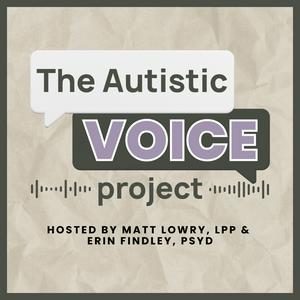
VOICE stands for Validating Our Identity, Culture, and Experience. This is a show led by Autistic professionals who talk about Autistic experiences and how to live happier and healthier Autistic lives. We'll be joined by Autistic people from different walks of life in search of finding ways to live more authentically Autistic!
Want to reach us? Please email podcast@autisticvoiceproject.com
Podcast websiteListen to The Autistic VOICE Project, Short Wave and many other podcasts from around the world with the radio.net app
Get the free radio.net app
- Stations and podcasts to bookmark
- Stream via Wi-Fi or Bluetooth
- Supports Carplay & Android Auto
- Many other app features
Get the free radio.net app
- Stations and podcasts to bookmark
- Stream via Wi-Fi or Bluetooth
- Supports Carplay & Android Auto
- Many other app features
The Autistic VOICE Project
Scan code,
download the app,
start listening.
download the app,
start listening.
 USA
USA