
Listen to this podcast in the app for free: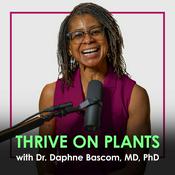 Download for free in the App Store
radio.net
Sleep timer
Save favorites
66 episodes
#66 - The Surprising Connection Between Melatonin, Mitochondria, and Aging
10/21/2026 | 1h 10 mins.Melatonin isn't just a sleep aid. It might be one of the most misunderstood molecules in your body, and understanding it could impact your healthspan.
Most of us know melatonin from the supplement aisle: something you take when you can't sleep. But Dr. Deanna Minich has spent years making the case that this "sleep hormone" is actually a primordial, multitasking molecule she calls the "mother molecule," made not only in your pineal gland but in your gut, skin, ovaries, and even inside your mitochondria.
In this conversation, Dr. Minich and Dr. Daphne get into what melatonin really is, why your own production drops sharply as you age (a decline she calls "melatonopause"), and the practical, plant-forward ways you can protect it starting tonight.
Dr. Deanna Minich is a nutrition scientist with a doctorate in medical sciences, a Fellow and past president of the American College of Nutrition, and Chief Science Officer at Symphony Natural Health. She spent a decade working alongside Dr. Jeffrey Bland, the father of functional medicine, and is the author of The Rainbow Diet and Whole Detox. In 2022 she published the review "Is Melatonin the Next Vitamin D?"
Read Dr. Minich's full bio: https://deannaminich.com/professional-bio/
In this episode:
Why melatonin is far more than a sleep hormone, and what it does in your mitochondria
"Melatonopause": how your levels fall from childhood to your 50s and 60s
The single most important lever for your circadian health (hint: it's free)
Why so many of us have a "darkness deficiency," and how to fix it
How your plate builds melatonin, from tryptophan to the cofactors you need
The dosing "sweet spot," and why more is often not better
Why you might feel groggy on melatonin, and what caffeine tells you about your own metabolism
The plant-based melatonin conversation, and what the early research actually shows
A note on the science: Melatonin is a true hormone with real interactions, so please talk with your own clinician before starting any supplement. This conversation is educational, not medical advice.
Learn more about Dr. Minich: https://deannaminich.com (visit the Resources tab for free downloads, including a melatonin summary)
Explore the plant-based melatonin discussed: Symphony Natural Health at https://symphonynaturalhealth.com
Disclosure: Dr. Minich serves as Chief Science Officer at Symphony Natural Health. Some research referenced involves their formulations.
#Melatonin #Menopause #Healthspan #CircadianRhythm #PlantBased #FunctionalMedicine #Longevity #Perimenopause #SleepHealth #WomensHealth
Additional resources to help you thrive on plants:
🌱 Access the free Plant-Powered Body course: Access Here
🌱 Take the free health assessment for women 40+: Start Here
🌱 Watch every episode on YouTube
⭐️ If you loved this episode, please leave a review! ⭐️
Here’s how to do it on Apple Podcasts:
Go to the Thrive on Plants Podcast page: Click here
Scroll down to the ‘Ratings & Reviews’ section. Tap ‘Write a Review’
(you may be prompted to log in with your Apple ID).
Thank you for your support!#65 - Your Gut Is the Missing Link in Menopause
10/07/2026 | 1h 11 mins.What if the missing piece of your menopause care isn't a hormone at all?
Cynthia Thurlow, NP, has spent more than two decades in clinical medicine. But no one, not her training, her colleagues, or her own doctors, prepared her for what perimenopause would do to her body. Or for how much of it would trace back to her gut.
After a serious infection, a 13-day hospitalization, and weeks of antibiotics, she had to rebuild her microbiome in the middle of perimenopause. That experience became The Menopause Gut, which she calls "the book I wish I had had 10 years ago."
In this conversation, we talk about why the gut microbiome deserves a seat at the center of midlife care, and what you can start doing about it now.
You’ll learn more about:
Why women can do everything right, including HRT, and still not feel well
How chronic stress and early-life adversity may influence ovarian aging and the timing of menopause
Why sleep and stress can't be fixed separately, and simple daily ways to calm your nervous system
What progesterone and estrogen can and can't do for sleep
Why heart disease remains the leading killer of women, and which labs (ApoB and Lp(a)) to ask your clinician about
Why Cynthia calls fiber "the new F-word," and how it may help protect your bones after menopause
Connect with Cynthia
The Menopause Gut: https://www.cynthiathurlow.com/the-menopause-gut
Website: https://www.cynthiathurlow.com
Everyday Wellness Podcast: https://www.cynthiathurlow.com/podcast
Instagram: https://www.instagram.com/cynthia_thurlow_/
YouTube: https://www.youtube.com/cynthiathurlow
This video is for educational purposes only and is not medical advice. Please talk with your own healthcare provider before making changes to your health care, medications, or hormone therapy.
#menopause #guthealth #perimenopause #gutmicrobiome #womenshealth #hormonehealth #midlifehealth #plantbased #longevity #lifestylemedicine #longevitylab #longevityathlete
Additional resources to help you thrive on plants:
🌱 Access the free Plant-Powered Body course: Access Here
🌱 Take the free health assessment for women 40+: Start Here
🌱 Watch every episode on YouTube
⭐️ If you loved this episode, please leave a review! ⭐️
Here’s how to do it on Apple Podcasts:
Go to the Thrive on Plants Podcast page: Click here
Scroll down to the ‘Ratings & Reviews’ section. Tap ‘Write a Review’
(you may be prompted to log in with your Apple ID).
Thank you for your support!#64 - From Rowing Coach to Vegan Leader: The Remarkable Life of Anne Dinshah
09/23/2026 | 58 mins.She was born vegan. Her mother had been vegan for nine years before Anne arrived. Her father founded the American Vegan Society the year John F. Kennedy was elected president.
And now, at 56, Anne Dinshah is the CEO of that same organization, taking up springboard diving for the first time since high school, rowing fifteen miles at a stretch on the Schuylkill River, and building bridges between people who think differently and a philosophy she has lived every single day of her life.
This is not a conversation about protein.
It is a conversation about ahimsa: the Sanskrit word for non-harming that Anne's father translated as dynamic harmlessness. Doing the least harm and the most good, every day, with whatever options you have available.
In this episode, Anne and I explore what that framework offers people navigating midlife. We talk about what her father understood about behavior change that the modern wellness world has still not figured out. We talk about why so many people who go vegan eventually step back, and what community has to do with staying the course. And we talk about what it means to keep saying yes to life at every age, whether that means returning to a sport you loved, leading an organization your father built, or simply getting out of bed and doing five minutes of movement before the day begins.
One line from her father has stayed with her for decades, something she may have read rather than heard him say directly:
"I can only do what I can do. But I can do it every day."
That is what this episode is about.
Contact Anne Dinshah
American Vegan Society: americanvegan.org
Instagram: @AmericanVegans
Additional resources to help you thrive on plants:
🌱 Access the free Plant-Powered Body course: Access Here
🌱 Take the free health assessment for women 40+: Start Here
🌱 Watch every episode on YouTube
⭐️ If you loved this episode, please leave a review! ⭐️
Here’s how to do it on Apple Podcasts:
Go to the Thrive on Plants Podcast page: Click here
Scroll down to the ‘Ratings & Reviews’ section. Tap ‘Write a Review’
(you may be prompted to log in with your Apple ID).
Thank you for your support!#63 - Why We Need to Rethink Mental Health Care
09/09/2026 | 1hWhat if the way you eat is directly shaping how you think, feel, and cope?
Serotonin, dopamine, norepinephrine- the molecules your brain uses to regulate mood, motivation, and stress response- are synthesized from essential amino acids. Amino acids that come from food. That means what you put on your plate every day either supports your brain health or quietly undermines it.
In this episode of Thrive on Plants, I sit down with Dr. Elizabeth Winings, Psychiatric-Mental Health Nurse Practitioner, Diplomate of the American College of Lifestyle Medicine, Assistant Professor of Nursing at Jacksonville University, and founder of Winings Wellness, a seven-provider integrative mental health practice built on a premise most clinics still haven't adopted: mental health care should be preventive, not just reactive.
Dr. Winings' path to this work started at the VA, watching patients lose limbs to poorly controlled diabetes and asking a question most clinicians don't ask out loud: when do we stop treating the consequences and start addressing the cause? That question led her to a doctoral internship at TrueNorth Health Center in California, years in inpatient pediatric psychiatry, and ultimately to founding a practice where nutrition, lifestyle medicine, and mental health care operate as one.
In this episode, we discuss:
The concept of preventive mental health care: what it is, why most people don't know it's possible, and how to start building it now
How emotions work as neurobiological signals and why learning to read them changes everything
The grief, identity, and psychological weight of cancer survivorship that medicine rarely addresses
Adverse childhood experiences (ACEs), nervous system regulation, and the long arc of mental health across a lifetime
Breaking down cultural and systemic barriers to mental health care access
What Dr. Winings actually asks her patients about food at every single visit
How to know when your intuition is speaking and how to stop talking yourself out of it
This is a conversation about eating, thinking, feeling, and building a life that is not just longer, but genuinely more whole.
Connect with Dr. Elizabeth Winings
Website: https://winingswellness.com/
Additional resources to help you thrive on plants:
🌱 Access the free Plant-Powered Body course: Access Here
🌱 Take the free health assessment for women 40+: Start Here
🌱 Watch every episode on YouTube
⭐️ If you loved this episode, please leave a review! ⭐️
Here’s how to do it on Apple Podcasts:
Go to the Thrive on Plants Podcast page: Click here
Scroll down to the ‘Ratings & Reviews’ section. Tap ‘Write a Review’
(you may be prompted to log in with your Apple ID).
Thank you for your support!#62 - Eat More, Exercise Less: Rethinking Fitness After 50
08/26/2026 | 1h 14 mins.Most women over 50 are doing everything they were told to do. Eating less. Exercising more. And getting nowhere.
In this episode of Thrive on Plants, Dr. Daphne Bascom sits down with Debra Atkinson, an exercise physiologist, former Iowa State kinesiology lecturer, and founder of Flipping 50, to discuss why the old fitness rules stop working in midlife and what actually builds a strong, capable body for the long haul.
Debra spent more than thirty years in the fitness industry before realizing that almost everything women had been taught about exercise was built on research done on young men. So she built what was missing: a science-based, hormone-smart approach to training, nutrition, and recovery for women navigating menopause and beyond.
This is a practical, myth-busting conversation about strength, sleep, stress, and what it really means to age on your own terms.
What we cover:
Why "eat less, exercise more" backfires in midlife, and what to do instead
The two at-home tests (grip strength and the sit-to-stand) that tell you more than your scale
Why body composition matters far more than the number you weigh
The sleep research showing better-rested women lost more fat and kept more muscle
Why your ability to recover, not your ability to work hard, becomes the key to aging well
The one strength move Debra would keep above all others
Building a legacy of health that ripples out to the people who are watching you
Whether you are 40, 50, 60 or 80 years young, this conversation will change how you think about aging racefully
Debra Atkinson, MS, CSCS
Founder of Flipping 50, TEDx speaker, and bestselling author of You Still Got It, Girl! and Hot, Not Bothered.
Website: https://www.flippingfifty.com
Instagram: @flipping50tv
Podcast: The Flipping 50 Show
#DebraAtkinson #FitnessAfter50 #Flipping50 #MenopauseFitness #WomenOver50 #StrengthTraining #MidlifeHealth #Menopause #HealthyAging #Longevity #WomensHealth #BodyComposition #PlantBased #ThriveOnPlants
This episode is for educational purposes and is not a substitute for personalized medical advice. Always consult your own clinician.
Additional resources to help you thrive on plants:
🌱 Access the free Plant-Powered Body course: Access Here
🌱 Take the free health assessment for women 40+: Start Here
🌱 Watch every episode on YouTube
⭐️ If you loved this episode, please leave a review! ⭐️
Here’s how to do it on Apple Podcasts:
Go to the Thrive on Plants Podcast page: Click here
Scroll down to the ‘Ratings & Reviews’ section. Tap ‘Write a Review’
(you may be prompted to log in with your Apple ID).
Thank you for your support!
More Arts podcasts



Trending Arts podcasts



















About Thrive on Plants
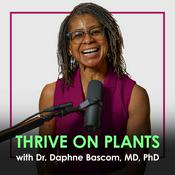
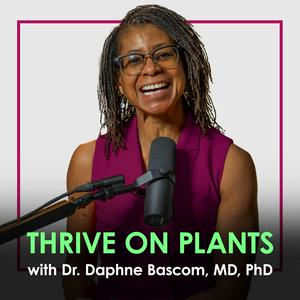
The Thrive on Plants podcast, hosted by Dr. Daphne, empowers women to navigate menopause and midlife with confidence through expert insights on plant-based nutrition, weight loss, hormones, and mindset. Each episode blends education, inspiration, and real-life success stories to help listeners thrive on a plant-based lifestyle.https://www.youtube.com/@drdaphnebascom
Podcast websiteListen to Thrive on Plants, Walk-In Talk Podcast and many other podcasts from around the world with the radio.net app
Get the free radio.net app
- Stations and podcasts to bookmark
- Stream via Wi-Fi or Bluetooth
- Supports Carplay & Android Auto
- Many other app features
Get the free radio.net app
- Stations and podcasts to bookmark
- Stream via Wi-Fi or Bluetooth
- Supports Carplay & Android Auto
- Many other app features

Thrive on Plants
Scan code,
download the app,
start listening.
download the app,
start listening.
 USA
USA