

Listen to this podcast in the app for free: Download for free in the App Store
radio.net
Sleep timer
Save favorites
29 episodes
Rot-Resistant Lumber and The Market for Black Locust — with Zach Rike
07/21/2026 | 57 mins.Black locust is a fast growing hardwood, native to the Allegheny Plateau and surrounding bioregions in the eastern half of the United States. The wood is highly durable, and rot resistant, and lasts 2-3x as pressure treated wood in contact with the soil. Robi Decking is a company that mills, processes, markets, and distributes black locust decking to all 50 US states and throughout Canada.
Today, Robi’s founder Zach Rike joined us to dive into the uses of black locust, the downsides of tropical hardwoods, why pressure treated pine means planned obsolescence, the nuances of building with black locust, how much creativity you want in architecture, and more.
A huge thanks to Zach Rike for joining us on Plant The Trees. Zach closed a lot of loops with this podcast, and it’s great to hear from one of the foremost users of black locust in the United States. Like he said, check them out at RobiDecking.com — both Jeremy and I have built with and experienced their products and we are extremely satisfied.
If you’d like to plant trees on non-forested land that you own or manage in the United States, don’t hesitate drop us a line at propagateag.com.
If you have questions for us or a guest, about agroforestry, send us a message on social media or comment on this episode on Spotify or Apple Podcasts.The Nuance of Invasive Species
05/26/2026 | 18 mins.An audio-version of our written article:
https://www.propagateag.com/blog/the-nuance-of-invasive-species
The Threat of Invasive Species
The American Chestnut (blight) and Climate Analogues
Native to when? → Black Locust's native range
Those who live in glass houses... Introspection without despair.
What can we do? Narrative vs. Action.
Agroforestry Systems as an actionable next step
Intro:
Invasive species are non-native plants, animals, fungi, and pathogens that spread aggressively and disrupt native ecosystems.
Documentary films on invasive species abound. Complete with dark humor and foreboding music, one memorable film featured cane toads in Australia. In 1935, 100 cane toads were introduced for pest control. They swiftly became a fleet of 200 million toads. These frogs are 6-10 inches long, and have toxic glands behind their head which poison the animals that attempt to eat them. When these predators die, the ecosystem loses balance: animals that would have otherwise been their prey explode in population. Invasive animals can be extremely problematic, given how fast they move. Domestic cats, introduced to Australia with British colonization, are responsible for the extinction of 29 species of mammals indigenous to Australia. After broad habitat destruction, domestic cats are the #1 cause of bird death in North America. Stateside, feral swine are responsible for $1.6b in damages to the agricultural industry. Burmese pythons are decimating native mammal populations in the Florida Everglades. Alien invasive animals, fungi, and insects make for a loaded term: invasive. Trees and shrubs can also be invasive, even though they move more slowly than animals. But there’s nuance here. Today we’ll unpack invasive species.Building with Whole Trees and Structural Round Timber — with Amelia Baxter
05/20/2026 | 38 mins.Amelia Baxter is the CEO and co-founder of WholeTrees. WholeTrees Architecture and Structures uses structural round timber (literal whole trees) to create durable, functional, aesthetically-breathtaking buildings and features of the built environment. The company was founded in 2007 to develop and sell products and technologies that would scale the use of underutilized or waste-trees in commercial construction. This increases forest revenues, and offers green construction markets a new material for the 21st century.
Whole trees uses species from the classic conifers to rot-resistant white oak and black locust.
We talked about how round timber can be dramatically stronger than milled lumber, designing buildings that feel like forests and how wood naturally calms the nervous system, how black locust behaves more like stone than it does wood, profit plus ecological balance as the definition of prosperity, and how structural round timber can re-shape rural forest economies.
Please welcome Amelia Baxter.Agritourism and Agroforestry in Costa Rica — with Scott Gallant
05/06/2026 | 1h 10 mins.Costa Rica has one of the highest standards of living in Latin America. Quite a few years ago now, they dissolved their military and placed their focus on services. Not just education and public health, but ecosystem services. Water quality, flood mitigation, biodiversity, weather stability…
Scott Gallant is an agroforestry practitioner based in Costa Rica, and has worked there for over a decade. Today we dove into the agriculture, agroforestry, and agrotourism of Costa Rica. We talked about how trees create experiences, and how recreation might be the most accessible ecosystem service for farmers.
We talked syntropic farming, and making it accessible. Understory and overstory tree crops, perennial vegetables, how we experience some of the best food you can grow.
How do you design agroforestry for a hospitality operation? Where is the overlap between agrotourism in Costa Rica, The United States, and Italy? Without further ado, please welcome Scott Gallant.Bear, Lynx, Goshawks, and 350 Beaver Dams per Sq. Mile: Forest Management and Biodiversity — With Ethan Tapper
04/22/2026 | 1h 4 mins.We’re planting all of these trees, many of which carry the goal of ecological benefit: conservation, regeneration, fish, wildlife, water quality, flood mitigation, relative homeostasis in weather and climate. But what does intact nature really look like in the forested biome (biomes) of the Northeast United States? The Mid Atlantic, Great Lakes, the Humid midwest? How can we know? How can we get there?
There is no one answer, and often many answers are inherent, given that diversity is the spice of life and the spice of the forest.
Ethan Tapper is a forester from Vermont.
He’s an internationally-recognized ecologist, and bestselling author of How to Love a Forest. An Audobon-endorsed forester, Ethan works with landowners to steward forests for both wildlife habitat and income.
Ethan works as a consulting forester across Vermont, New Hampshire, New York, and Maine, and served as the Chittenden County Forester from 2016-2024. Ethan stewards Bear Island, his 175 acre forest, homestead and sugarbush in Vermont.
More Earth Sciences podcasts
 DrilledEarth Sciences, Science, Social Sciences, True Crime
 PlanetGeo: The Geology PodcastEarth Sciences, Education, Natural Sciences, Science
 Geology BitesEarth Sciences, Science
 Quirks and QuarksEarth Sciences, Science
 The Great Simplification with Nate HagensEarth Sciences, Natural Sciences, Science
 Care More Be Better: A Podcast For Sustainable Social Impact and RegenerationDocumentary, Earth Sciences, Education, Personal Journals, Science, Self-Improvement, Society & Culture
 Bedrock: Earth's Earliest HistoryEarth Sciences, Life Sciences, Science
 The Market Gardener PodcastEarth Sciences, Science
 Real Organic PodcastBusiness, Earth Sciences, Health & Wellness, Non-Profit, Nutrition, Science
 Regenerative Agriculture PodcastEarth Sciences, Natural Sciences, Science
Trending Earth Sciences podcasts
About Plant The Trees
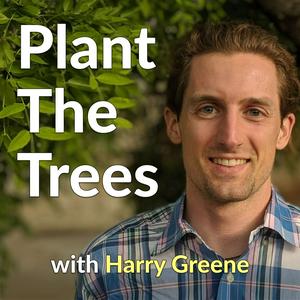
In this podcast, we'll talk about all things agroforestry and what you need to know to plant, grow, and monetize your trees.
Podcast websiteListen to Plant The Trees, Drilled and many other podcasts from around the world with the radio.net app
Get the free radio.net app
- Stations and podcasts to bookmark
- Stream via Wi-Fi or Bluetooth
- Supports Carplay & Android Auto
- Many other app features
Get the free radio.net app
- Stations and podcasts to bookmark
- Stream via Wi-Fi or Bluetooth
- Supports Carplay & Android Auto
- Many other app features

Plant The Trees
Scan code,
download the app,
start listening.
download the app,
start listening.
 USA
USA